Old Maps of Mazonia, Illinois for Genealogy
Trace your family roots with 12 historic maps of Mazonia. These high-res maps reveal old neighborhoods, homesites, landmarks, and streets — helping you uncover where your ancestors lived and how the area evolved over time.
- Explore historic neighborhoods: Identify where your relatives may have lived in the 1800s or 1900s.
- Compare maps over time: Trace the changes in streets, buildings, and landmarks for multi-generational research.
- Perfect for genealogy & ancestry research: Used by family historians and researchers to map out lineage and migration.
These maps are an incredible resource for exploring your personal connection to Mazonia's past.
Mazonia, IL maps
(12)- 1948 Map of Dwight, 1965 Print
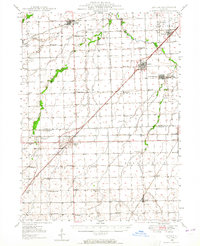 1948 Dwight1965 Print · USGSLivingston and Grundy counties appear here just after the war, showing a region of dense rural settlements and early coal mining activity. Genealogists can locate family names via numerous country schools like Goodfarm Sch and landmarks such as the State Reformatory for Women.
 - 1950 Map of Dwight
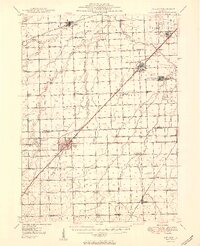 1950 Dwight1950 Print · USGSNortheastern Illinois at mid-century shows a landscape shaped by coal mining and a dense network of rural school districts. Genealogists can trace family footprints through dozens of local landmarks like Round Grove Cemetery, Goodfarm School, and the State Reformatory for Women.2 unique versions available
 - 1958 Map of Aurora, 1969 Print
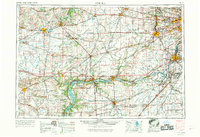 1958 Aurora1969 Print · USGSNorthern Illinois in the late fifties shows a landscape of powerful river industry and expanding transport corridors. Genealogists and historians can trace the development of Aurora and Joliet or locate sites like the Elwood Ordnance Plant and Starved Rock.3 unique versions available
 - 1961 Map of Aurora
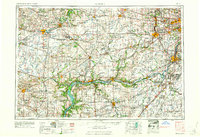 1961 Aurora1961 Print · USGSNorthern Illinois at the height of the post-war era reveals a landscape of massive industrial works and thriving river towns. Genealogists and historians can trace the paths of the Lincoln Highway or locate long-standing landmarks like the Green River Ordnance Plant and Starved Rock State Park.
 - 1983 Map of Gardner
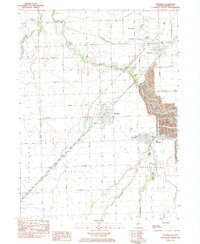 1983 Gardner1983 Print · USGSThe Illinois coal fields of Grundy County are seen here in the early eighties, where industrial mining and prairie farming meet. Researchers can trace the sprawling Mine Dumps near South Wilmington or find family landmarks like Cotton Cem.
 - 1985 Map of Ottawa
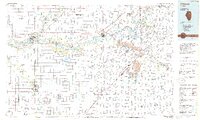 1985 Ottawa1985 Print · USGSThe Illinois River valley in the mid-1980s shows a landscape balancing river commerce with sprawling energy and mining operations. Researchers can trace the layout of mining towns like Coal City or find family landmarks such as Oakwood Memorial Cem and Smiths Mound.
 - 1991 Map of Ottawa
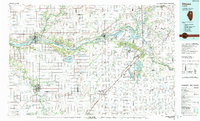 1991 Ottawa1991 Print · USGSNorth-central Illinois in the early nineties remains a vital corridor of river commerce and heavy rail. Genealogists and historians can trace the legacy of industrial mining near Morris or explore the river-bluff geography of Starved Rock State Park and Buffalo Rock.
 - 2012 Map of Gardner, 2012 Print
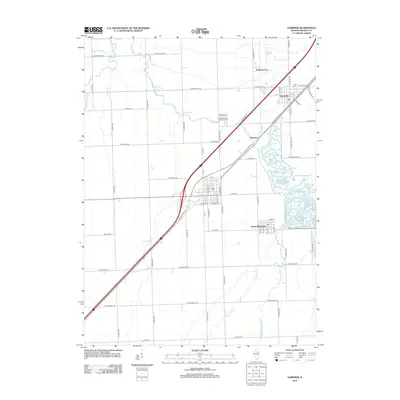 2012 Gardner2012 Print · USGSGrundy County prairie and the Mazon River watershed are documented here during the early twenty-first century. Researchers can trace local lineage at Cotton Cem and explore the historic layout of Braceville, South Wilmington, and Mazonia.
 - 2015 Map of Gardner, 2015 Print
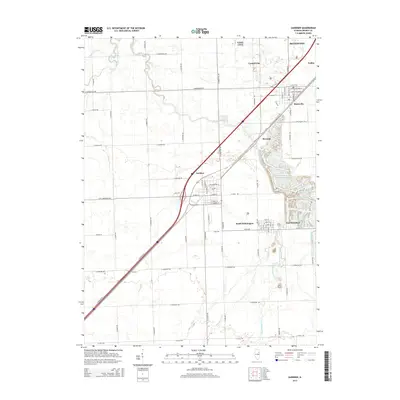 2015 Gardner2015 Print · USGSGrundy County settlements and prairie waterways are documented here during the mid-2010s. Researchers can trace local lineages near Cotton Cem or follow the paths of the Mazon River and Granary Creek through Gardner and Braceville.
 - 2018 Map of Gardner, 2018 Print
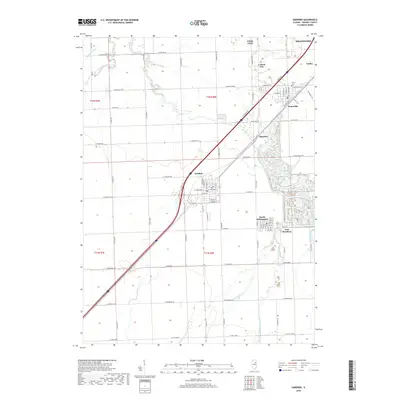 2018 Gardner2018 Print · USGSGrundy County's prairie and mining heritage are on display in the late 2010s as traditional towns meet modern infrastructure. Trace family ties and local history across Gardner, South Wilmington, and Braceville, or locate the Cotton Cem near the river forks.
 - 2021 Map of Gardner, 2021 Print
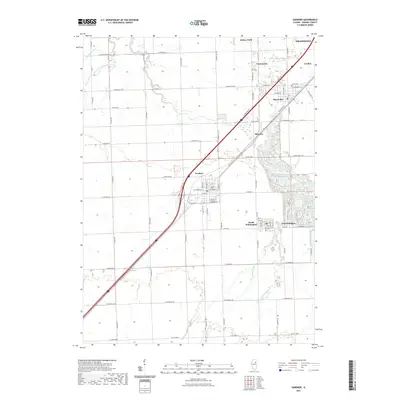 2021 Gardner2021 Print · USGSIn this modern survey of Grundy County, the interconnected villages of the Illinois prairie are shown in high detail. Researchers can trace family sites near Cotton Cem or explore the layouts of Gardner, South Wilmington, and Braceville.
 - 2024 Map of Gardner, 2024 Print
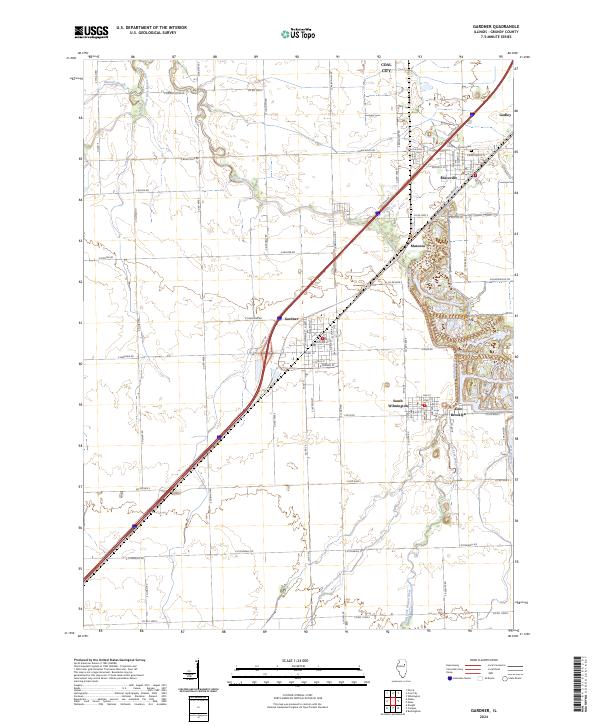 2024 Gardner2024 Print · USGSThe Grundy County prairie south of the Illinois River is mapped here in the modern era, showing a cluster of coal-country towns. Researchers can trace the layout of Gardner, South Wilmington, and Braceville, or locate family sites near Cotton Cem.
End of results
Showing maps 1-12 of 12
Top cities near Mazonia
- Joliet historical maps
- Channahon historical maps
- Morris historical maps
- Minooka historical maps
- Aux Sable historical maps
- Braidwood historical maps
See more
Frequently asked questions
- What are the different types of historical maps available for Mazonia?
- What is the oldest map of Mazonia?
- Where can I purchase historical maps of Mazonia for my home or office?
- Where can I download high-res historical maps of Mazonia?
- Are there historical topographic maps available for Mazonia?
- Is there historical aerial imagery available for Mazonia?
- Where are historical maps of Mazonia sourced from?