Old Maps of Knox County, Illinois for Metal Detecting
Plan your next treasure hunt with 197 historic maps of Knox County. Find old homesites, ghost towns, trails, and gathering spots that may be lost to time — perfect for identifying promising metal detecting locations.
- Locate forgotten sites: Uncover places like long-lost settlements, abandoned rail lines, or gathering spots.
- Plan better hunts: Use map overlays combined with LiDAR or satellite views to narrow in on historically rich areas.
- Made for detectorists: Thousands of hobbyists use these maps to discover relics, coins, and hidden history.
Use these historic maps to boost your research and find new opportunities beneath the surface of Knox County.
Knox County, IL maps
(197)- 1912 Map of Canton
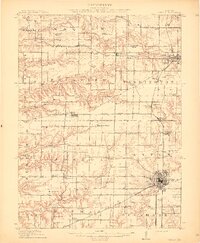 1912 Canton1912 Print · USGSFulton County's coal-and-rail corridor is in full operation at the beginning of the twentieth century, with Canton serving as the regional center. Genealogists and local historians can trace family roots through dozens of rural landmarks like Lone Elm School, the Seller Mine, and the County Farm.4 unique versions available
 - 1915 Map of Avon
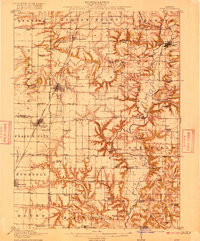 1915 Avon1915 Print · USGSWestern Illinois farm country and the Spoon River valley are shown here in the early twentieth century. Family history researchers can trace the locations of dozens of vanished rural schoolhouses like Oldtown School and Gross School, along with the small settlement of Check Row.3 unique versions available
 - 1925 Map of Galesburg, 1968 Print
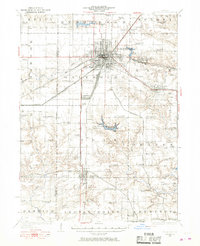 1925 Galesburg1968 Print · USGSGalesburg and the surrounding Knox County townships appear here as a thriving rail and agricultural center between the world wars. Researchers can trace dozens of rural school sites and early landmarks like Lake Bracken, Orange Chapel, and the East Galesburg Randall PO.2 unique versions available
 - 1927 Map of Galesburg
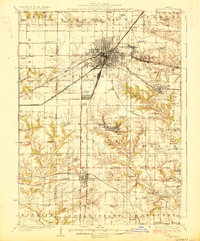 1927 Galesburg1927 Print · USGSKnox County is captured in the mid-twenties at its peak as a Midwestern rail hub centered on Galesburg. Local historians can trace dozens of rural school sites like Log City School or explore the early footprints of Knoxville and Abingdon.3 unique versions available
 - 1930 Map of Glasford
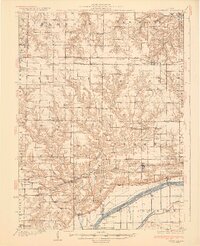 1930 Glasford1930 Print · USGSCentral Illinois river towns and upland prairie farms thrive in the late twenties between the Illinois River and Hanna City. Researchers can trace old coal operations at Baxter Mine or locate family roots at Penn Ridge Ch and Union Cemetery.3 unique versions available
 - 1931 Map of Galva
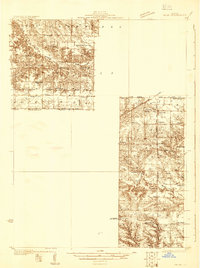 1931 Galva1931 Print · USGSThe Henry and Knox County borderlands are mapped here in the early 1930s, showing a thriving network of rural townships and rail corridors. Researchers can locate dozens of country schools and churches, from Swamp College Sch to the North Ontario Ch and the Galva Cem.
 - 1940 Map of Galva, 1957 Print
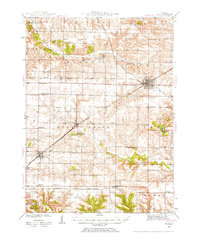 1940 Galva1957 Print · USGSHenry and Knox counties are captured here as a bustling railroad landscape in the early 1940s. Genealogists can trace the rural school and church networks of the era, from the uniquely named Swamp College Sch to the settlement at Bishop Hill.2 unique versions available
 - 1941 Map of Maquon, 1961 Print
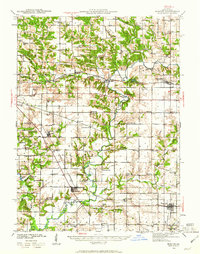 1941 Maquon1961 Print · USGSKnox County's river valleys and rail corridors are captured here in the early 1940s as the local coal and agricultural economies thrived. Researchers can locate dozens of country schools and family landmarks, from Van Gilder Cem to the Knoxville Mine and Union Grove Ch.2 unique versions available
 - 1943 Map of Maquon
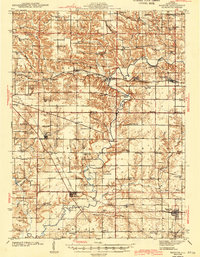 1943 Maquon1943 Print · USGSKnox County's river valleys and coal-rich hills are captured in the early 1940s, showing a landscape defined by the Spoon River. Genealogists and historians can trace numerous rural cemeteries and country schools, from Van Gilder Cem to Center Prairie Sch.2 unique versions available
 - 1944 Map of Galva
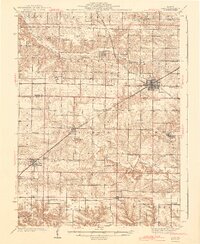 1944 Galva1944 Print · USGSNorthwestern Illinois farmland is captured in the 1940s as a thriving network of rail towns and country schools. Genealogists can locate family landmarks like Piatt Cem or trace the early layout of historic Bishop Hill and Galva.2 unique versions available
 - 1944 Map of Kewanee
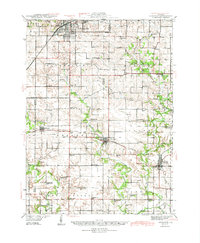 1944 Kewanee1944 Print · USGSHenry and Stark Counties in the 1940s show a landscape of thriving rail towns and closely spaced country schoolhouses. Genealogists can locate family-named landmarks like Cavanagh Cem and Bumble Bee Sch along the Spoon River valley.3 unique versions available
 - 1944 Map of Avon, 1962 Print
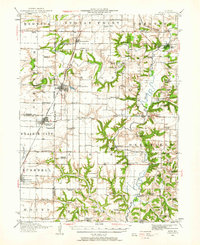 1944 Avon1962 Print · USGSThe Illinois prairie landscape between Bushnell and London Mills is shown here as it appeared in the mid-forties. Genealogists can trace family footprints across dozens of country school sites like Oldtown School and small junctions including Blyton and Babylon.
 - 1944 Map of Elmwood, 1967 Print
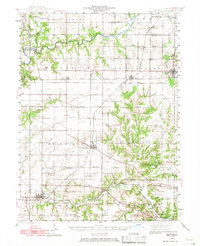 1944 Elmwood1967 Print · USGSPeoria and Stark counties during the mid-forties reveal a landscape of thriving rail hubs and tightly knit rural school districts. Researchers can trace the legacy of local education and faith at Paradise Chapel Sch, Jubilee College State Park, and the Southport Cem.2 unique versions available
 - 1947 Map of Woodhull
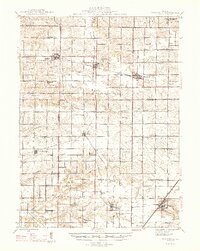 1947 Woodhull1947 Print · USGSThe Illinois prairie at mid-century reveals a dense network of family farms and rural institutions near the Henry and Knox county lines. Genealogists can trace ancestral sites through dozens of named schools and cemeteries like Prairie Flower Sch and Oxford Cem.2 unique versions available
 - 1948 Map of Elmwood
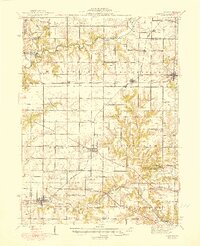 1948 Elmwood1948 Print · USGSPeoria and Stark counties were bustling agricultural and rail hubs in the late 1940s. Genealogists and historians can trace dozens of country schools and churches, including Paradise Chapel, Dixie Sch, and Southport Cem near the Spoon River.2 unique versions available
 - 1948 Map of Glasford, 1965 Print
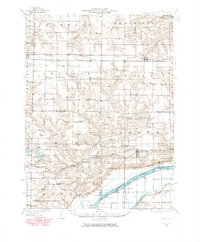 1948 Glasford1965 Print · USGSThe Illinois River valley near Glasford is captured here during the post-war era, showing a landscape defined by river commerce and coal extraction. Genealogists can locate dozens of country schools and churches, such as Graham Chapel, Blue Sch, and the Lightbody Mine.
 - 1953 Map of Nekoma, 1957 Print
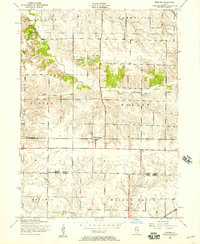 1953 Nekoma1957 Print · USGSNekoma and the surrounding prairie are captured here in the early 1950s as a thriving rail-side agricultural community. Genealogists and local historians can trace family roots through landmarks like Piatt Cemetery, North Ontario Church, and the River Side School.2 unique versions available
 - 1953 Map of Woodhull, 1957 Print
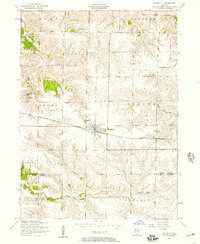 1953 Woodhull1957 Print · USGSWoodhull and the surrounding Henry County farmlands are captured here in the early fifties, centered on the Chicago Burlington and Quincy rail line. Genealogists can locate family sites near Bethany Church, Summit Level Cemetery, and Alwood High School.2 unique versions available
 - 1953 Map of New Windsor, 1957 Print
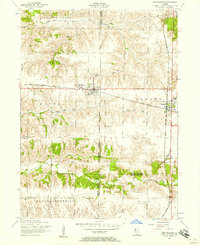 1953 New Windsor1957 Print · USGSNorthwestern Illinois farm country in the early fifties shows a transition from local rail reliance to industrial coal extraction. Genealogists can locate family burial plots at Oxford Cemetery or trace the rural school system through sites like Oakridge School and Hopewell School.2 unique versions available
 - 1953 Map of Galva, 1957 Print
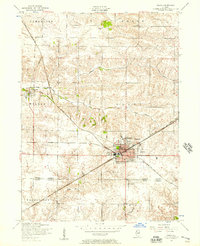 1953 Galva1957 Print · USGSWestern Illinois farm country and bustling rail corridors come to life in this mid-century survey of Henry County. Genealogists and local historians can locate St Johns Cemetery, the historic colony at Bishop Hill, and rural landmarks like Deem School.2 unique versions available
 - 1958 Map of Burlington, 1968 Print
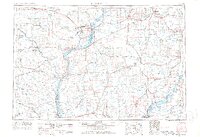 1958 Burlington1968 Print · USGSThe tri-state river country of Iowa, Illinois, and Missouri is captured here in the mid-fifties, dominated by the Mississippi River and major rail lines. Genealogists and historians can trace the development of river towns like Keokuk or locate the sprawling Iowa Army Ammunition Plant.4 unique versions available
 - 1958 Map of Davenport, 1968 Print
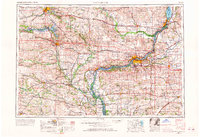 1958 Davenport1968 Print · USGSEastern Iowa and western Illinois thrive along the river during the late fifties, defined by the industrial Quad Cities and a robust rail network. Genealogists can trace family roots through settlements like Oasis and Stanwood or along the Cedar River.2 unique versions available
 - 1958 Map of Aurora, 1969 Print
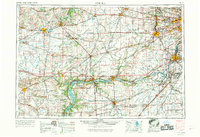 1958 Aurora1969 Print · USGSNorthern Illinois in the late fifties shows a landscape of powerful river industry and expanding transport corridors. Genealogists and historians can trace the development of Aurora and Joliet or locate sites like the Elwood Ordnance Plant and Starved Rock.3 unique versions available
 - 1958 Map of Peoria, 1969 Print
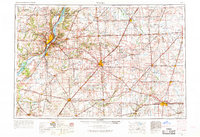 1958 Peoria1969 Print · USGSCentral Illinois thrived as a hub of education and transport during the late sixties, as the new interstate system began to reshape the prairie. Genealogists and historians can trace local landmarks like Springdale Cem, Bradley University, and the sprawling grounds of Chanute AFB.4 unique versions available
 - 1961 Map of Aurora
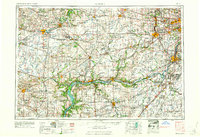 1961 Aurora1961 Print · USGSNorthern Illinois at the height of the post-war era reveals a landscape of massive industrial works and thriving river towns. Genealogists and historians can trace the paths of the Lincoln Highway or locate long-standing landmarks like the Green River Ordnance Plant and Starved Rock State Park.
Showing maps 1-25 of 197
Top cities of Knox County
- Galesburg historical maps
- Abingdon historical maps
- Knoxville historical maps
- Ontario historical maps
- Wataga historical maps
- East Galesburg historical maps
See more
Frequently asked questions
- What are the different types of historical maps available for Knox County?
- What is the oldest map of Knox County?
- Where can I purchase historical maps of Knox County for my home or office?
- Where can I download high-res historical maps of Knox County?
- Are there historical topographic maps available for Knox County?
- Is there historical aerial imagery available for Knox County?
- Where are historical maps of Knox County sourced from?