1950s Maps of Peru, Indiana
Explore 6 historic maps of Peru from the 1950s. These maps offer a rare glimpse into what life looked like during the 1950s — showing old roads, neighborhoods, homes, and landmarks that have changed or disappeared over time.
Whether you're researching your family's past, planning a metal detecting trip, or studying how Peru's landscape evolved across the 1950s, these high-resolution maps are a powerful tool for exploring the history of this region.
- Focus on a specific era: All maps on this page are from the 1950s, giving you a focused view of this time period.
- See what’s changed: Compare century-old streets, trails, and buildings to today's modern landscape using overlays and satellite layers.
- Research with precision: Use these maps for genealogy, historical research, land use analysis, or educational projects.
- View, download, or print: Maps are fully viewable online in high resolution, and can be downloaded or printed for your own records.
Start exploring Peru's history through authentic maps from the 1950s. This is your window into the past.
Peru, IN maps
(6)- 1951 Map of Peru
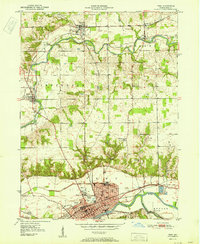 1951 Peru1951 Print · USGSThe city of Peru serves as a bustling rail and river hub in the early fifties, where the Wabash and Mississinewa rivers meet. Researchers can trace historic family names at Mount Hope Cemetery or locate old schoolhouses like Victory School and Richland Sch.2 unique versions available
 - 1951 Map of Twelve Mile
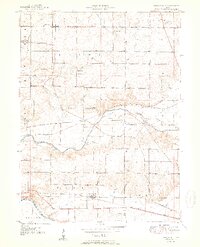 1951 Twelve Mile1951 Print · USGSCass and Miami County farmstead life and rail transit are captured here in the early fifties, as three major railroads crossed the landscape. Researchers can trace family roots through numerous rural landmarks like Old German Ch, Twelve Mile, and Eel River Chapel Cem.2 unique versions available
 - 1951 Map of Bunker Hill
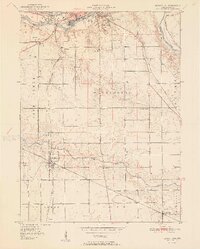 1951 Bunker Hill1951 Print · USGSBunker Hill and southern Miami County are shown here in the early fifties at a peak of midwestern rail activity. Genealogists can trace family roots at Springdale Cem or locate rural landmarks like Santa Fe Ch and the County Farm.2 unique versions available
 - 1953 Map of Danville, 1965 Print
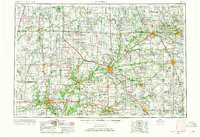 1953 Danville1965 Print · USGSIndiana and Illinois crossroads come to life in this mid-century survey as the interstate era begins to reshape the river-and-rail landscape. Genealogists and collectors can trace the historic paths of the Nickel Plate railroad or locate smaller communities like Veedersburg, Goodland, and Bismarck.3 unique versions available
 - 1955 Map of Danville
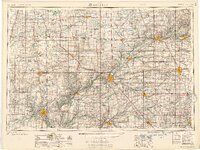 1955 Danville1955 Print · USGSThe Indiana-Illinois borderlands during the mid-fifties reveal a landscape of thriving rail hubs and university towns. Researchers can trace the legacy of Purdue University, the Tippecanoe Battlefield, and the path of the Pennsylvania RR.
 - 1956 Map of Danville
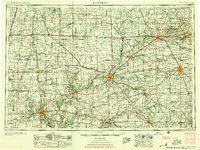 1956 Danville1956 Print · USGSMid-century Indiana and Illinois are captured here as the river-and-rail economy evolved into the modern highway era. Researchers can trace ancestral roots and old transport lines through Logansport, Battle Ground, and the dams at Lake Shafer.
End of results
Showing maps 1-6 of 6
Top cities near Peru
- Logansport historical maps
- Wabash historical maps
- Galveston historical maps
- Bunker Hill historical maps
- Mexico historical maps
- Denver historical maps
See more
Top neighborhoods of Peru
- Ridgeview historical maps
- Park View Heights historical maps
- Oakdale historical maps
- South Peru historical maps
Frequently asked questions
- What are the different types of historical maps available for Peru?
- What is the oldest map of Peru?
- Where can I purchase historical maps of Peru for my home or office?
- Where can I download high-res historical maps of Peru?
- Are there historical topographic maps available for Peru?
- Is there historical aerial imagery available for Peru?
- Where are historical maps of Peru sourced from?