1960s Maps of Pulaski County, Indiana
Explore 13 historic maps of Pulaski County from the 1960s. These maps offer a rare glimpse into what life looked like during the 1960s — showing old roads, neighborhoods, homes, and landmarks that have changed or disappeared over time.
Whether you're researching your family's past, planning a metal detecting trip, or studying how Pulaski County's landscape evolved across the 1960s, these high-resolution maps are a powerful tool for exploring the history of this region.
- Focus on a specific era: All maps on this page are from the 1960s, giving you a focused view of this time period.
- See what’s changed: Compare century-old streets, trails, and buildings to today's modern landscape using overlays and satellite layers.
- Research with precision: Use these maps for genealogy, historical research, land use analysis, or educational projects.
- View, download, or print: Maps are fully viewable online in high resolution, and can be downloaded or printed for your own records.
Start exploring Pulaski County's history through authentic maps from the 1960s. This is your window into the past.
Pulaski County, IN maps
(13)- 1960 Map of Grass Creek, 1964 Print
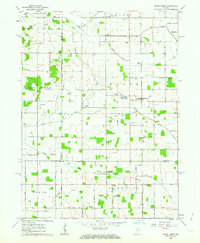 1960 Grass Creek1964 Print · USGSIndiana farm country in the early sixties is defined here by the iron rails of the Pennsylvania and a complex web of drainage ditches. Genealogists can locate family-named sites like Bowman Cem, O'Brien Lake, and the rural West Union Ch.3 unique versions available
 - 1962 Map of Buffalo, 1963 Print
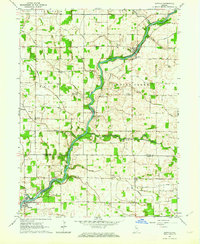 1962 Buffalo1963 Print · USGSNorthern White County and southern Pulaski County are defined here by the winding Tippecanoe River in the early sixties. Genealogists can trace family roots through sites like Hoover Cem, White Oak Ch, and the rural community of Headlee.2 unique versions available
 - 1962 Map of Monon NE, 1963 Print
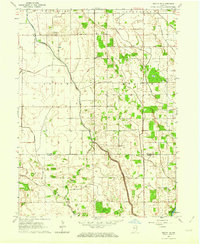 1962 Monon NE1963 Print · USGSThe rural borderlands of Pulaski and White Counties are captured here in the early 1960s, showing a landscape defined by an extensive drainage system. Local historians can trace family ties at Roseland Cem, the St James Ch, and the old Beaver Center Sch.
 - 1962 Map of Winamac, 1964 Print
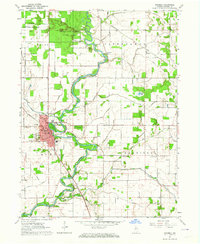 1962 Winamac1964 Print · USGSIndiana's Tippecanoe River valley at the start of the 1960s shows a landscape of conservation and local industry. Researchers can trace the Pennsylvania RR through Winamac or locate family roots at St Peters Cem and Fairview Sch.2 unique versions available
 - 1962 Map of Star City, 1964 Print
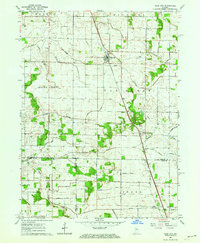 1962 Star City1964 Print · USGSPulaski County agricultural life is captured here in the early 1960s, showing the intersection of rail transport and rural community centers. Researchers can trace the lineage of Star City and Thornhope, locating the I O O F Cem and the local Twp Sch.
 - 1962 Map of Kewanna, 1964 Print
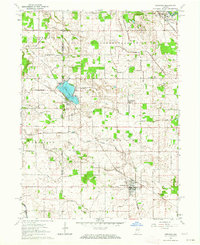 1962 Kewanna1964 Print · USGSFulton County and its agricultural landscape are shown here in the early sixties, centered on the crossroads of Kewanna. Local historians can trace the Indian Treaty Boundary and locate family burial grounds like Shaffer Cem and Moon Cem.2 unique versions available
 - 1962 Map of Medaryville, 1964 Print
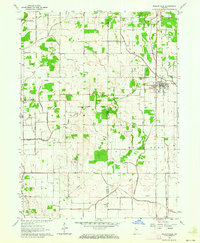 1962 Medaryville1964 Print · USGSMedaryville and the surrounding Pulaski County plains are captured in the early sixties, showing a landscape defined by industrial drainage and rail transport. Genealogists can trace family roots through numerous local sites like St Marks Cem, Mason Cem, and the rural Independence Ch.
 - 1962 Map of Denham, 1964 Print
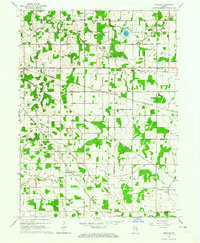 1962 Denham1964 Print · USGSStarke and Pulaski counties are shown in the early sixties as a bustling crossroads for four major railroads. Genealogists and rail historians can trace the Erie-Lackawanna and Pennsylvania lines near Denham and the Center Cem.
 - 1962 Map of Ripley, 1964 Print
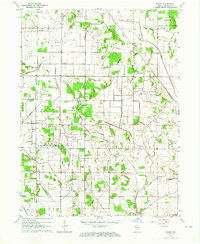 1962 Ripley1964 Print · USGSPulaski County during the early sixties shows a landscape defined by industrial agriculture and rail transit. Researchers can trace family roots at Burroughs Cem or locate the old Aurora Sch and the PENNSYLVANIA railroad stop at Ripley.
 - 1962 Map of Bass Lake, 1964 Print
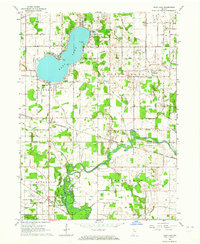 1962 Bass Lake1964 Print · USGSStarke and Pulaski Counties are shown in the early sixties as the region balanced lakeside recreation with its rail-and-river economy. Researchers can locate family landmarks like the Township Sch, Hartz Cem, and the old rail siding at Bass Station.2 unique versions available
 - 1962 Map of North Judson SE, 1964 Print
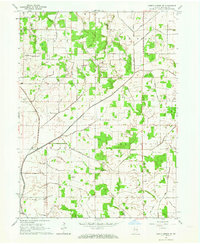 1962 North Judson SE1964 Print · USGSPulaski County’s rural townships are captured here in the early sixties, showing a landscape defined by an intricate drainage system and the Monon Railroad. Genealogists can trace family landmarks like Koster Cem, St Johns Ch, and homes along Tiede Road.
 - 1962 Map of Francesville, 1964 Print
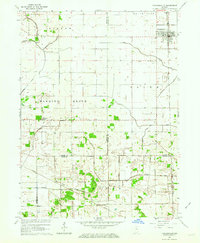 1962 Francesville1964 Print · USGSNorthwest Indiana's agricultural prairie is seen in the early sixties as a network of drainage ditches and rail lines. You can trace the MONON railroad through Francesville or locate rural landmarks like Osborne Cem and the settlement of Lee.2 unique versions available
 - 1962 Map of Culver, 1964 Print
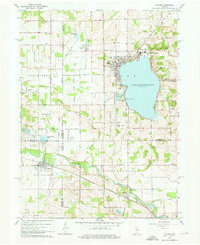 1962 Culver1964 Print · USGSThe Lake Maxinkuckee region in the early sixties is dominated by the prestigious Culver Military Academy and the busy riverfront village of Monterey. Researchers can trace the Old Indian Treaty Boundary and locate family names at North Union Cem and Masonic Cem.3 unique versions available
End of results
Showing maps 1-13 of 13
Top cities of Pulaski County
- Winamac historical maps
- Francesville historical maps
- Medaryville historical maps
- Monterey historical maps
Frequently asked questions
- What are the different types of historical maps available for Pulaski County?
- What is the oldest map of Pulaski County?
- Where can I purchase historical maps of Pulaski County for my home or office?
- Where can I download high-res historical maps of Pulaski County?
- Are there historical topographic maps available for Pulaski County?
- Is there historical aerial imagery available for Pulaski County?
- Where are historical maps of Pulaski County sourced from?