Old Maps of McCausland, Iowa for Academic Research
Study the evolution of McCausland with 23 high-resolution historic maps. Whether you're teaching, researching, or modeling changes in land use, these maps provide essential visual documentation of urban, environmental, and geographic change.
- Analyze long-term change: Track patterns in development, transportation, and natural features.
- Ideal for environmental or urban studies: Support academic projects with primary historical map data.
- Use in the classroom or lab: Educators and researchers rely on these maps to bring historical context to life.
These maps are a powerful tool for teaching, research, and visualizing how McCausland has changed over the decades.
McCausland, IA maps
(23)- 1892 Map of Goose Lake
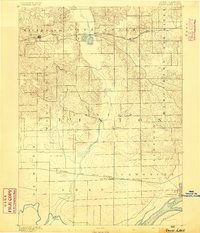 1892 Goose Lake1892 Print · USGSClinton County thrived at the end of the nineteenth century as a hub of river commerce and expanding rail lines. Genealogists and local historians can trace the early development of Camanche on the Mississippi River or the inland rail stops of Charlotte and Low Moor.
 - 1892 Map of Leclaire
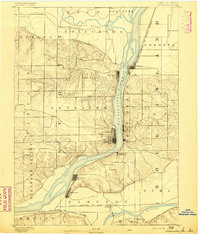 1892 Leclaire1892 Print · USGSThe Mississippi River border between Iowa and Illinois comes alive in the 1890s, before modern locks reshaped the shoreline. Genealogists and historians can trace riverside settlements like Leclaire, Port Byron, and the railroad junction at Watertown.
 - 1893 Map of Leclaire
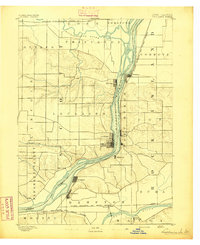 1893 Leclaire1893 Print · USGSThe riverfronts of Scott County and Rock Island County thrived in the late nineteenth century as vital hubs for steamboats and steam rail. Researchers can trace the early grids of Leclaire, Port Byron, and Valley City alongside the sprawling banks of the Mississippi River.4 unique versions available
 - 1894 Map of Goose Lake
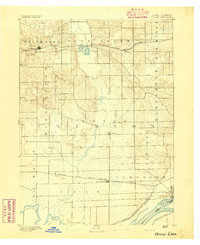 1894 Goose Lake1894 Print · USGSClinton County and the banks of the Mississippi are shown here in the 1890s as the railroad and river trade defined local growth. Researchers can trace the original footprints of settlements like Charlotte, Low Moor, and the river landing at Camanche.3 unique versions available
 - 1899 Map of Clinton
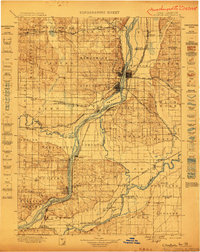 1899 Clinton1899 Print · USGSThe Mississippi River valley comes alive in the late 1890s, capturing the river-and-rail economy of Iowa and Illinois before modern channelization. Genealogists and historians can trace early townships and river landings, finding precise locations for Low Moor, Folletts, and Pink Prairie.5 unique versions available
 - 1953 Map of Malone, 1957 Print
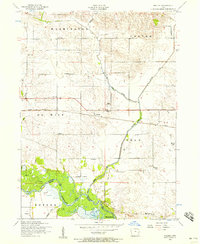 1953 Malone1957 Print · USGSClinton County’s rural landscape is captured here in the early fifties, showing a transition from traditional district schools to a more connected rail-and-river economy. Genealogists can locate family names at Pehlam Cemetery or trace the old Chicago and Northwestern line through Malone.2 unique versions available
 - 1953 Map of Mc Causland, 1957 Print
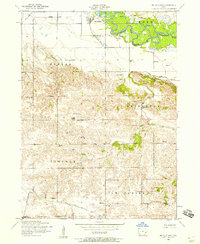 1953 Mc Causland1957 Print · USGSIn the mid-1950s, the rural border between Scott and Clinton counties remained a landscape of small schools and country churches. Genealogists can trace family roots at Fessler Cemetery or Mt Union Church and locate several country schoolhouses like Argo School.3 unique versions available
 - 1958 Map of Davenport, 1968 Print
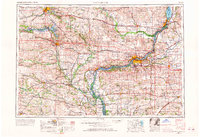 1958 Davenport1968 Print · USGSEastern Iowa and western Illinois thrive along the river during the late fifties, defined by the industrial Quad Cities and a robust rail network. Genealogists can trace family roots through settlements like Oasis and Stanwood or along the Cedar River.2 unique versions available
 - 1961 Map of Davenport
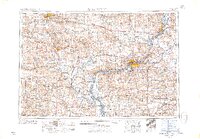 1961 Davenport1961 Print · USGSThe Quad Cities and the eastern Iowa riverlands are captured here in the early sixties, showing the region's transition into a modern industrial and transit hub. Genealogists and historians can trace the paths of major railroads and find river landmarks like Rock Island Arsenal, Huron Island, and the Coralville Reservoir.
 - 1962 Map of Davenport
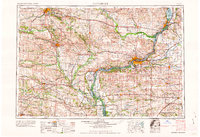 1962 Davenport1962 Print · USGSThe Quad Cities and the Mississippi River corridor are shown at their industrial peak just before the interstate era fully transformed the region. Researchers can trace the sprawling rail networks of the Chicago Rock Island and Pacific and find landmarks like the Rock Island Arsenal and Wild Cat Den State Park.
 - 1984 Map of Davenport, 1985 Print
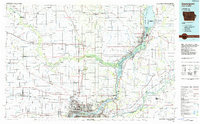 1984 Davenport1985 Print · USGSThe Quad Cities and the eastern Iowa riverlands are captured in the mid-eighties as industry and conservation converged along the Mississippi. Genealogists and local historians can trace rural roots through Stender Church, Oxford Mills, and the Elmwood Cem burial grounds.2 unique versions available
 - 1991 Map of Mc Causland, 1992 Print
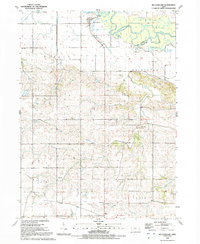 1991 Mc Causland1992 Print · USGSThe rural borderlands of Scott and Clinton counties come into focus in the early nineties, centered on the Wapsipinicon River valley. Genealogists and local historians can trace rural settlements like McCausland and Argo, as well as landmarks like Fessler Cem and the historic Territorial Road.
 - 1991 Map of Malone, 1992 Print
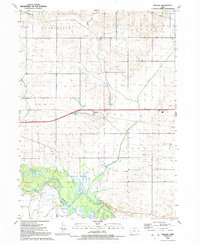 1991 Malone1992 Print · USGSClinton County’s agricultural heartland is documented here in the early nineties, centered on the settlement of Malone and the Wapsipinicon River bottomlands. Genealogists can trace several family-named burial grounds like Cousin-Smith Cem and Bowers-Dannatt-Hill Cem.
 - 2010 Map of McCausland, 2010 Print
 2010 McCausland2010 Print · USGSScott County enters the twenty-first century as a landscape of deep frontier roots and quiet rural settlements. Researchers can trace the legacy of the Old West at the Buffalo Bill Cody Homestead or locate family plots at Salem Cemetery and McCausland Cemetery.
 - 2010 Map of Malone, 2010 Print
 2010 Malone2010 Print · USGSIn the fertile lowlands of Clinton and Scott counties during the early 21st century, the rural landscape is anchored by the Wapsipinicon River. Family history researchers can trace local roots at Pehlarm Cemetery or explore the settlement area of Malone along the Old Hwy 30 corridor.
 - 2013 Map of Malone, 2013 Print
 2013 Malone2013 Print · USGSIn the early twenty-first century, this Scott County landscape remains defined by the winding Wapsipinicon River and its many tributaries. Researchers can trace the layout of Malone and the surrounding road network between Cherry Cr and Brophy Cr.
 - 2013 Map of McCausland, 2013 Print
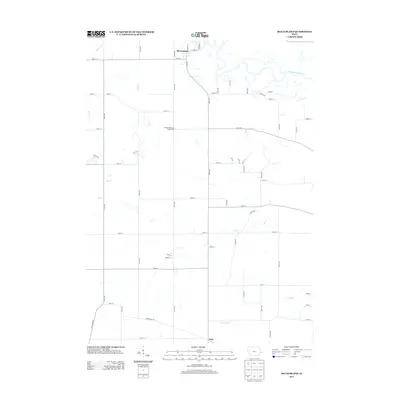 2013 McCausland2013 Print · USGSScott County's agricultural heartland is documented here in the early twenty-first century, centered on the Wapsipinicon River valley. Genealogists and local historians can trace the rural road network near Argo and locate the Buffalo Bill Cody Homestead.
 - 2015 Map of McCausland, 2015 Print
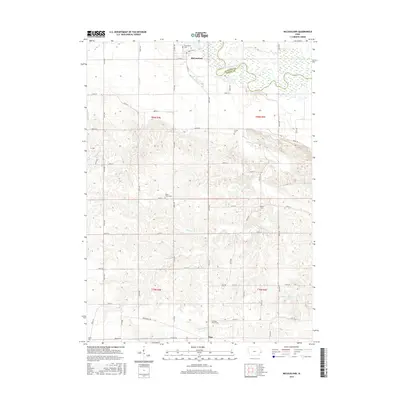 2015 McCausland2015 Print · USGSScott and Clinton Counties appear here as they were in the mid-2010s, defined by the winding Wapsipinicon River and its rural townships. Genealogists can trace family names and locations through several local burial sites like Salem Cem, Mount Union Cem, and LeClaire Prairie Cem.
 - 2015 Map of Malone, 2015 Print
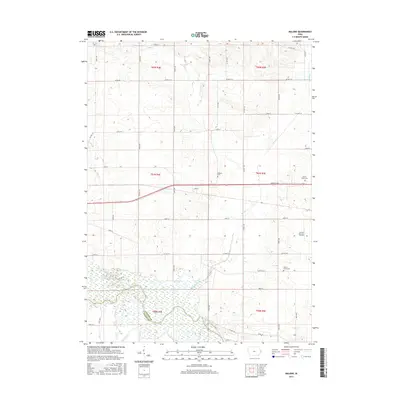 2015 Malone2015 Print · USGSThe river bottomlands of eastern Iowa are captured here in the mid-2010s, showing the intersection of agricultural townships and the Wapsipinicon River. Genealogists and local historians can trace family locations through several rural burial grounds like Pehlam Cem and Prairie Union Cem.
 - 2018 Map of Malone, 2018 Print
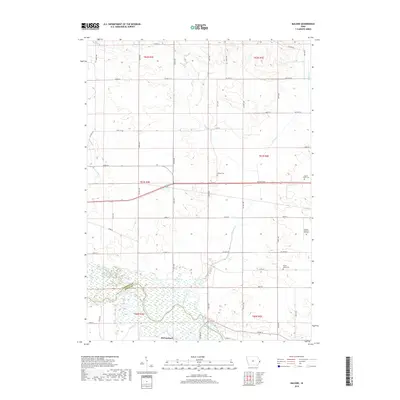 2018 Malone2018 Print · USGSThe rural borderlands of Clinton and Scott Counties are captured here in the modern era, centered on the riverfront community of McCausland. Researchers can locate several family and pioneer burial sites like Cousin-Smith Cem and Bowers-Dannatt-Hill Cem along the Wapsipinicon River valley.
 - 2018 Map of McCausland, 2018 Print
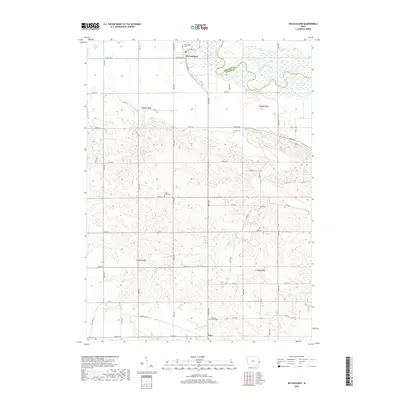 2018 McCausland2018 Print · USGSMcCausland and Argo are captured here in the late 2010s as the river valleys and upland farms of Scott County continue to evolve. Genealogists can trace family heritage through numerous local burial sites, including McCausland Cem, Fessler Cem, and LeClaire Prairie Cem.
 - 2022 Map of McCausland, 2022 Print
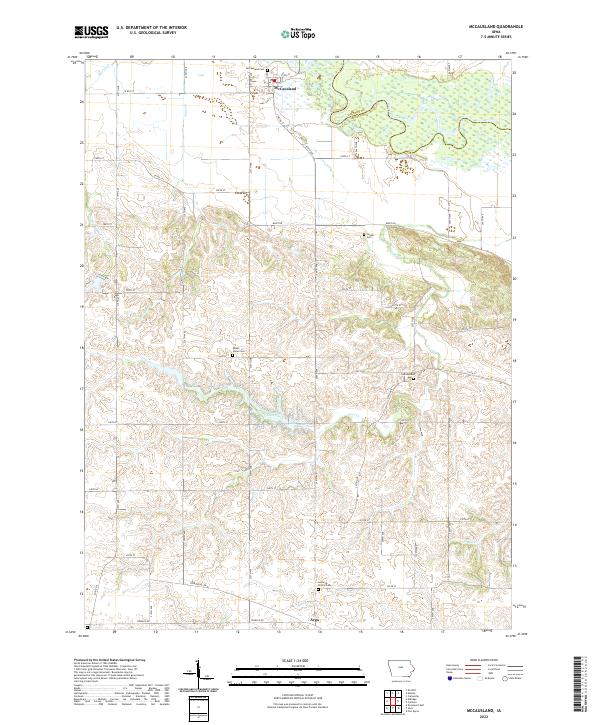 2022 McCausland2022 Print · USGSEastern Iowa's river borderlands come into focus in the early 2020s, centered on the Wapsipinicon River valley. Genealogists can trace family sites at McCausland Cem, Mount Union Cem, or LeClaire Prairie Cem and locate the historic settlement of Argo.
 - 2022 Map of Malone, 2022 Print
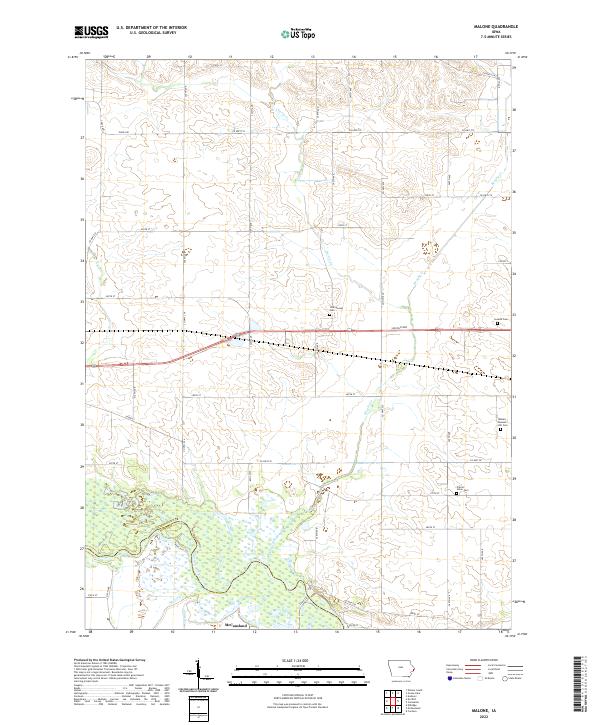 2022 Malone2022 Print · USGSEastern Iowa's rural landscape is captured here in the 2020s, centered on the Wapsipinicon River border between Clinton and Scott counties. Researchers can trace family history through numerous local sites like McCausland, Prairie Union Cem, and Cherrywood Cem.
End of results
Showing maps 1-23 of 23
Top cities near McCausland
- Davenport historical maps
- Bettendorf historical maps
- Clinton historical maps
- East Moline historical maps
- Silvis historical maps
- Eldridge historical maps
See more
Frequently asked questions
- What are the different types of historical maps available for McCausland?
- What is the oldest map of McCausland?
- Where can I purchase historical maps of McCausland for my home or office?
- Where can I download high-res historical maps of McCausland?
- Are there historical topographic maps available for McCausland?
- Is there historical aerial imagery available for McCausland?
- Where are historical maps of McCausland sourced from?