1960s Maps of Barber County, Kansas
Explore 10 historic maps of Barber County from the 1960s. These maps offer a rare glimpse into what life looked like during the 1960s — showing old roads, neighborhoods, homes, and landmarks that have changed or disappeared over time.
Whether you're researching your family's past, planning a metal detecting trip, or studying how Barber County's landscape evolved across the 1960s, these high-resolution maps are a powerful tool for exploring the history of this region.
- Focus on a specific era: All maps on this page are from the 1960s, giving you a focused view of this time period.
- See what’s changed: Compare century-old streets, trails, and buildings to today's modern landscape using overlays and satellite layers.
- Research with precision: Use these maps for genealogy, historical research, land use analysis, or educational projects.
- View, download, or print: Maps are fully viewable online in high resolution, and can be downloaded or printed for your own records.
Start exploring Barber County's history through authentic maps from the 1960s. This is your window into the past.
Barber County, KS maps
(10)- 1968 Map of Capron
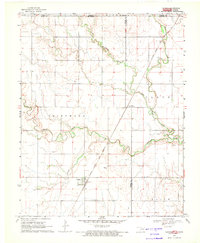 1968 Capron1968 Print · USGSWoods County and Alfalfa County meet along the Kansas border in the late sixties, where the railroad and winding creeks shaped rural life. Genealogists and local historians can locate the Capron Cem and trace the Atchison Topeka and Santa Fe tracks through Capron and Loder Siding.3 unique versions available
 - 1968 Map of Sun City SW, 1969 Print
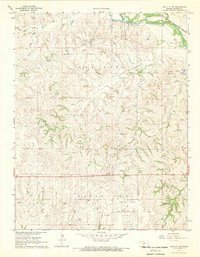 1968 Sun City SW1969 Print · USGSBarber County’s energy and rail landscape is caught in detail during the late sixties, highlighting the intersection of the Medicine Lodge River and industrial growth. Researchers can trace the Atchison Topeka and Santa Fe rail line alongside the Sun City Oil and Gas Field and landmarks like Memorial Bridge.2 unique versions available
 - 1968 Map of Sun City, 1969 Print
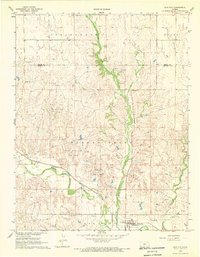 1968 Sun City1969 Print · USGSSun City and the Barber County cattle country are captured in the late sixties as the local economy balanced rail transport with a growing energy sector. Genealogists and researchers can trace the Medicine Lodge River and find Chinn Cem, Sunnyside Cem, and the Sun City Oil Field.
 - 1968 Map of Wilmore SE, 1970 Print
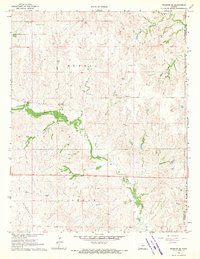 1968 Wilmore SE1970 Print · USGSComanche County was a landscape of active energy extraction and winding prairie streams in the late sixties. Genealogists and researchers can trace the drainage of Mule Creek and locate early infrastructure like the Glick Oil and Gas Field and Baker Canyon.
 - 1968 Map of Belvidere, 1970 Print
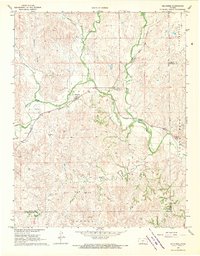 1968 Belvidere1970 Print · USGSThe rail-and-river corridor of southeastern Kiowa County comes alive in the late sixties, centered on the settlement of Belvidere. Local historians can trace the Atchison Topeka and Santa Fe line as it follows the Medicine Lodge River past the Belvidere Cem and into the Glick Oil and Gas Field.
 - 1969 Map of Tegarden NE, 1971 Print
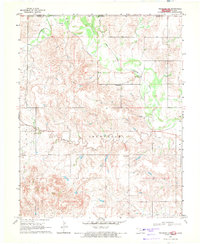 1969 Tegarden NE1971 Print · USGSNear the Oklahoma-Kansas border in the late sixties, this rural landscape centers on the winding Salt Fork Arkansas River. Genealogists and local historians can locate community pillars like Cedar Grove Ch, Winchester, and the Greenleaf Sch.
 - 1969 Map of Amorita, 1971 Print
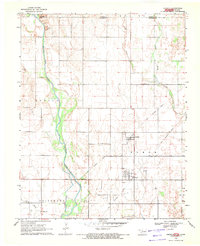 1969 Amorita1971 Print · USGSAlfalfa County's borderlands are captured here in the late sixties, where the Medicine Lodge River winds through a landscape of farming and oil extraction. Local historians can trace the Old Railroad Grade and find family sites at the Byron-Amorita Cem or near the small town of Byron.
 - 1969 Map of Burlington, 1971 Print
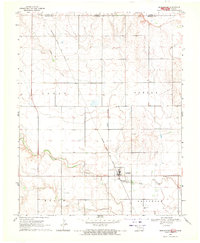 1969 Burlington1971 Print · USGSBurlington sat at a critical railroad juncture near the Kansas-Oklahoma border in the late sixties. Researchers can trace the path of the Atchison Topeka and Santa Fe railroad and locate the Apostolic Cemetery and Apostolic Church.
 - 1969 Map of Tegarden NW, 1971 Print
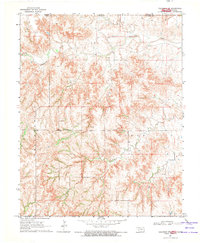 1969 Tegarden NW1971 Print · USGSThe Oklahoma-Kansas border country comes into focus in the late sixties, showing the rural townships of Woods County. Genealogists and explorers can locate Ewing Cemetery and Fulkner Cave, or trace the winding paths of Yellowstone Creek and Greenleaf Creek.
 - 1969 Map of Alva NW, 1971 Print
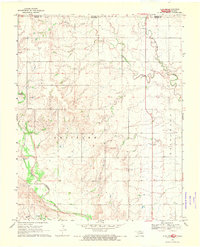 1969 Alva NW1971 Print · USGSThe Oklahoma-Kansas borderlands in the late sixties come into focus here, showing a landscape shaped by the Salt Fork Arkansas River. Genealogists and local historians can locate Fairview Cem and the Fritzlen terrain near Driftwood Creek.
End of results
Showing maps 1-10 of 10
Top cities of Barber County
- Medicine Lodge historical maps
- Kiowa historical maps
- Sharon historical maps
- Hardtner historical maps
- Hazelton historical maps
- Isabel historical maps
See more
Frequently asked questions
- What are the different types of historical maps available for Barber County?
- What is the oldest map of Barber County?
- Where can I purchase historical maps of Barber County for my home or office?
- Where can I download high-res historical maps of Barber County?
- Are there historical topographic maps available for Barber County?
- Is there historical aerial imagery available for Barber County?
- Where are historical maps of Barber County sourced from?