Old Maps of Labette County, Kansas for Genealogy
Trace your family roots with 180 historic maps of Labette County. These high-res maps reveal old neighborhoods, homesites, landmarks, and streets — helping you uncover where your ancestors lived and how the area evolved over time.
- Explore historic neighborhoods: Identify where your relatives may have lived in the 1800s or 1900s.
- Compare maps over time: Trace the changes in streets, buildings, and landmarks for multi-generational research.
- Perfect for genealogy & ancestry research: Used by family historians and researchers to map out lineage and migration.
These maps are an incredible resource for exploring your personal connection to Labette County's past.
Labette County, KS maps
(180)- 1886 Map of Independence
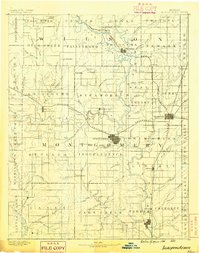 1886 Independence1886 Print · USGSSoutheastern Kansas is captured here in the mid-1880s as the railroad network began to reshape the prairie landscape. Genealogists and researchers can trace the early foundations of Independence, Cherryvale, and Coffeyville, or locate smaller places like Radical City and La Fontaine.
 - 1886 Map of Parsons
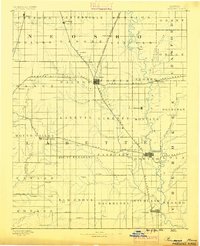 1886 Parsons1886 Print · USGSSoutheast Kansas at the height of the railroad boom is anchored here by the growing hub of Parsons. Genealogists and historians can trace the early townships and rail sidings that shaped Labette County, from Oswego and Chetopa to rural stops like Ladore and Altamont.
 - 1893 Map of Parsons
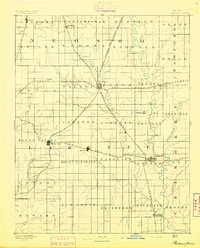 1893 Parsons1893 Print · USGSSoutheastern Kansas was a booming rail center in the late nineteenth century, dominated by the rise of Parsons. Genealogists can trace family connections through early settlements like Ladore, Mound Valley, and Altamont or along the Little Labette Creek drainage.4 unique versions available
 - 1894 Map of Independence
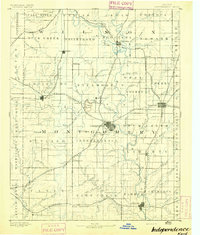 1894 Independence1894 Print · USGSSoutheast Kansas comes alive in the late nineteenth century as a major railroad junction before the turn of the century. Genealogists and historians can trace early settlements like Radical City, Sternerton, and Harrisonville, or locate family sites near Table Mound.
 - 1901 Map of Nowata
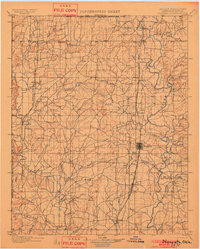 1901 Nowata1901 Print · USGSThe Cherokee Nation in Indian Territory is captured here at the start of the twentieth century, showing the lands that would soon become northeast Oklahoma. Researchers can trace early rail-town growth in Nowata and Bartlesville or locate smaller settlements like Alluwe and Coodys Bluff.2 unique versions available
 - 1901 Map of Vinita
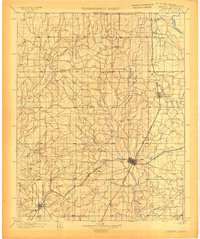 1901 Vinita1901 Print · USGSIndian Territory at the turn of the century shows a landscape of burgeoning railroad towns and Cherokee Nation settlements. Genealogists can trace family roots in early townsites like Vinita, Bluejacket, and Chelsea or locate rural homesteads near Cabin Creek.2 unique versions available
 - 1905 Map of Independence
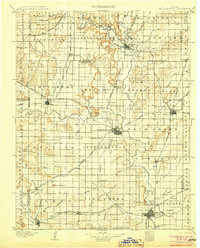 1905 Independence1905 Print · USGSSoutheastern Kansas at the turn of the century is a landscape of expanding rail-hubs and river commerce. Genealogists can trace early homesteads and rail-stops like Lafontaine, Havana, and Sycamore, or locate family landmarks near Table Mound and the Verdigris River.4 unique versions available
 - 1913 Map of Vinita
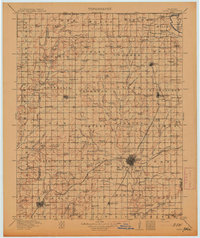 1913 Vinita1913 Print · USGSNortheast Oklahoma at the height of its rail-and-ranch era is meticulously detailed here just as the state was entering its second decade. Genealogists can trace family roots through dozens of local landmarks like W H School, Big Cabin, and the Blue Hawk School.3 unique versions available
 - 1914 Map of Nowata
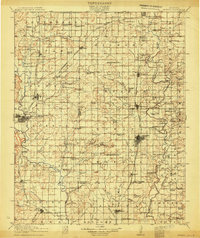 1914 Nowata1914 Print · USGSNortheastern Oklahoma at the height of its early statehood growth is documented here as the railroad network expanded across the Verdigris River valley. Genealogists can locate dozens of country schools like Go-back School and vanished post offices such as Avelia Wayside PO.5 unique versions available
 - 1943 Map of McCune, 1968 Print
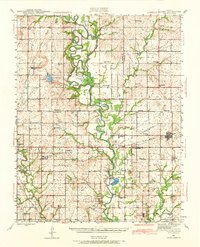 1943 McCune1968 Print · USGSSoutheast Kansas at the height of the Second World War reveals a landscape where traditional farming meets heavy military industry. Researchers can trace the massive Kansas Ordnance Plant alongside vanished rural school districts like Stone Palace Sch and Ideat Sch.
 - 1944 Map of Oswego, 1970 Print
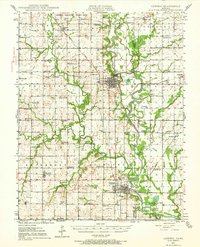 1944 Oswego1970 Print · USGSSoutheast Kansas during the mid-forties reveals a landscape defined by the Neosho River and a dense network of railroad towns. Genealogists and historians can trace dozens of country schools like Mosquito Valley Sch and Eclipse Sch, as well as the footprint of the Kansas Ordnance Plant Area.
 - 1945 Map of Mc Cune
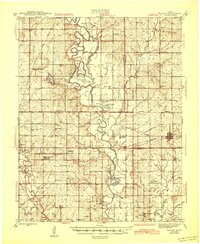 1945 Mc Cune1945 Print · USGSSoutheastern Kansas at the close of the Second World War shows a landscape of river-bottom farms and emerging industry. Genealogists can locate dozens of country schools like Quick Sch and trace family ties at the Franklin Cem or Oakwood Cem.2 unique versions available
 - 1945 Map of Parsons, 1956 Print
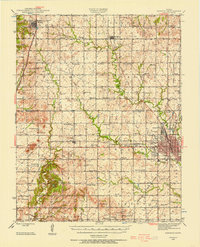 1945 Parsons1956 Print · USGSSoutheastern Kansas at the end of World War II reveals a landscape of thriving rail hubs and vanishing rural hamlets. Researchers can trace the legacy of school districts like New Hope Sch, the grounds of the State Asylum, and the location of the Site of Wilsonton.
 - 1946 Map of Oswego
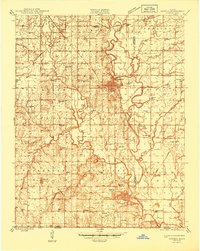 1946 Oswego1946 Print · USGSSoutheastern Kansas at the end of the war reveals a landscape of river-bottom farming, active coal extraction, and defense-era industrial expansion. Genealogists can trace family roots through numerous rural sites like Friendship Sch, Pleasant Valley Cem, and the town of Bartlett.
 - 1946 Map of Parsons
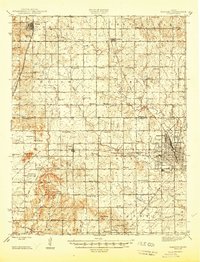 1946 Parsons1946 Print · USGSSoutheast Kansas at the close of the 1940s reveals a landscape defined by busy rail hubs and a dense network of one-room schoolhouses. Genealogists can trace family names through dozens of rural sites like Sylvandale Sch, Mt Calvary Cem, and the State Asylum at Parsons.
 - 1946 Map of Mound Valley, 1965 Print
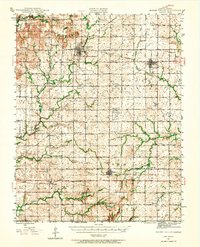 1946 Mound Valley1965 Print · USGSLabette County's rural townships are documented here just after the war, showing a landscape defined by small-town rail junctions and an abundance of country schools. Genealogists can locate family landmarks like Hopewell Cem, Union Ch, and dozens of rural schools from Blackford Sch to Hiatt Sch.
 - 1947 Map of Parsons
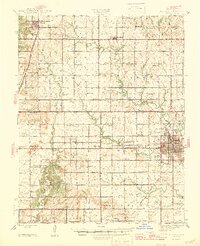 1947 Parsons1947 Print · USGSParsons and the surrounding Labette County plains are caught here in the mid-1940s, a time of heavy rail traffic and established rural townships. Genealogists can trace family roots through numerous small landmarks like Mt Calvary Cem, Shiloh Sch, and the Site of Wilsonton.2 unique versions available
 - 1947 Map of Joplin, 1954 Print
 1947 Joplin1954 Print · USGSThe borderlands of Missouri, Kansas, and Oklahoma are shown here during the late 1940s, a period of heavy industrial and military activity. Researchers can trace the extensive Tri-State Mining District, the layout of Camp Crowder, and local landmarks like Mount Hope Cem.
 - 1948 Map of Oswego
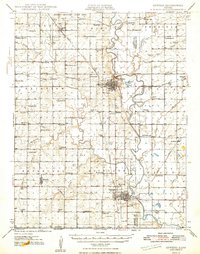 1948 Oswego1948 Print · USGSSoutheast Kansas in the late 1940s reveals a landscape defined by the Neosho River and a bustling extractive economy. Researchers can trace dozens of rural school sites like Shiloh Sch and Liggett Sch, alongside numerous strip mines and family cemeteries.3 unique versions available
 - 1948 Map of Mound Valley
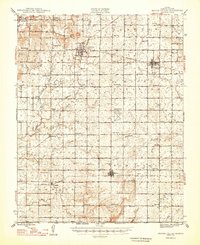 1948 Mound Valley1948 Print · USGSLabette County underwent a period of stable agrarian growth in the late 1940s, anchored by bustling rail towns and a grid of rural schoolhouses. Genealogists can locate family landmarks like Hopewell Cem, the U S Auxiliary Landing Field, and the M K T railroad line.2 unique versions available
 - 1949 Map of Joplin
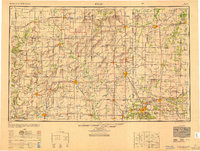 1949 Joplin1949 Print · USGSThe Kansas-Missouri borderlands thrive in the late 1940s, showing a robust network of railroad towns and river valleys. Researchers can trace historic rail lines like the Missouri Pacific RR and locate rural centers such as Chanute, Iola, and Fort Scott.
 - 1954 Map of Tulsa
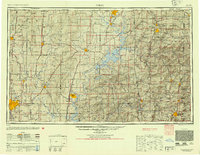 1954 Tulsa1954 Print · USGSNortheast Oklahoma and the Ozark border are shown here during a period of massive industrial and infrastructure growth. Researchers can trace the legacy of the Tri-State Mining District and the development of major reservoirs like Grand Lake O' The Cherokees.2 unique versions available
 - 1954 Map of Joplin, 1967 Print
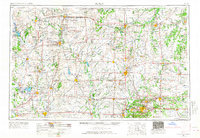 1954 Joplin1967 Print · USGSThe tri-state border region of Kansas, Missouri, and Oklahoma is captured here during a peak era of mid-century industrial and agricultural activity. Researchers can trace family history through dozens of rural cemeteries or locate landmarks like the Kansas Army Ammunition Plant and Pittsburg State University.3 unique versions available
 - 1958 Map of Joplin
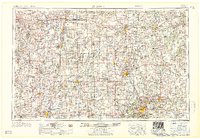 1958 Joplin1958 Print · USGSThe tri-state border region of Missouri, Kansas, and Oklahoma is shown during the late fifties, a time of heavy rail traffic and mining activity. Local historians can trace the industrial landscape through the Joplin & Pittsburg Ry or locate family sites like Zion Ch and Bender Mounds.
 - 1958 Map of Tulsa, 1968 Print
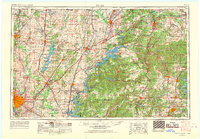 1958 Tulsa1968 Print · USGSNortheast Oklahoma and the Ozark borderlands are captured here during a massive era of reservoir construction and highway expansion. Researchers can trace the mid-century footprints of Tulsa, the sprawling Lake O' the Cherokees, and historical sites like Pea Ridge National Military Park.3 unique versions available
Showing maps 1-25 of 180
Top cities of Labette County
- Parsons historical maps
- Oswego historical maps
- Chetopa historical maps
- Altamont historical maps
- Edna historical maps
- Mound Valley historical maps
See more
Frequently asked questions
- What are the different types of historical maps available for Labette County?
- What is the oldest map of Labette County?
- Where can I purchase historical maps of Labette County for my home or office?
- Where can I download high-res historical maps of Labette County?
- Are there historical topographic maps available for Labette County?
- Is there historical aerial imagery available for Labette County?
- Where are historical maps of Labette County sourced from?