Old Maps of Phillips County, Kansas for Metal Detecting
Plan your next treasure hunt with 186 historic maps of Phillips County. Find old homesites, ghost towns, trails, and gathering spots that may be lost to time — perfect for identifying promising metal detecting locations.
- Locate forgotten sites: Uncover places like long-lost settlements, abandoned rail lines, or gathering spots.
- Plan better hunts: Use map overlays combined with LiDAR or satellite views to narrow in on historically rich areas.
- Made for detectorists: Thousands of hobbyists use these maps to discover relics, coins, and hidden history.
Use these historic maps to boost your research and find new opportunities beneath the surface of Phillips County.
Phillips County, KS maps
(186)- 1893 Map of Norton
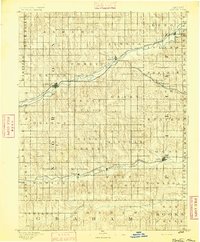 1893 Norton1893 Print · USGSNorthwest Kansas during the mid-1890s shows a region defined by the growth of railroad towns and water-carved valleys. Genealogists and historians can trace early town sites and rail lines including Norton, Almena, and the Pacific Railroad route through Logan.4 unique versions available
 - 1893 Map of Phillipsburg
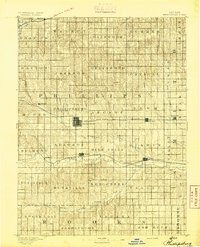 1893 Phillipsburg1893 Print · USGSPhillips County was a burgeoning rail and river corridor in the 1890s, with three major railroads carving paths through the prairie townships. Genealogists and researchers can trace the early layouts of Phillipsburg, Kirwin, and Agra as they appeared before the turn of the century.4 unique versions available
 - 1896 Map of Holdrege
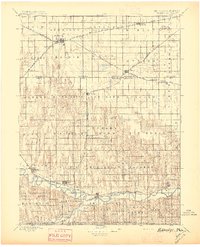 1896 Holdrege1896 Print · USGSSouth-central Nebraska was a burgeoning network of rail towns and river settlements in the late nineteenth century. Genealogists can trace family roots along the Republican River valley in Alma, Bloomington, and Naponee, or explore the early growth of Holdrege as a vital railroad junction.5 unique versions available
 - 1896 Map of Arapahoe
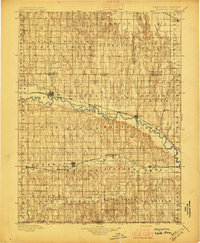 1896 Arapahoe1896 Print · USGSThe Republican River valley thrived in the 1890s as a vital railroad corridor through south-central Nebraska and northern Kansas. Genealogists and local historians can trace the early rail stops and rural precincts like Arapahoe, Oxford, and the remote Rock Falls district.3 unique versions available
 - 1898 Map of Arapahoe, 1920 Print
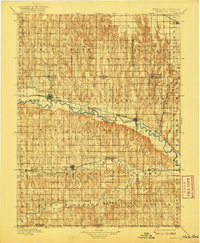 1898 Arapahoe1920 Print · USGSSouthwestern Nebraska was rapidly developing at the turn of the century as railroads mirrored the river valleys. Genealogists can trace family roots in towns like Arapahoe, Beaver City, and Oxford or locate landmarks like Rock Falls.2 unique versions available
 - 1955 Map of Grand Island, 1967 Print
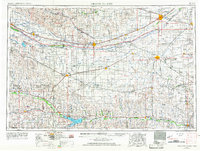 1955 Grand Island1967 Print · USGSCentral Nebraska is seen here during a period of industrial and agricultural growth, centered on the vital Platte River corridor. Researchers can trace the mid-century footprints of the U S Naval Ammunition Depot and the Cornhusker Ordnance Plant.3 unique versions available
 - 1955 Map of Beloit, 1971 Print
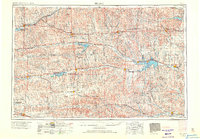 1955 Beloit1971 Print · USGSNorth Central Kansas in the mid-fifties shows a landscape of river-valley agriculture and expanding water infrastructure. Genealogists can trace the rail lines of the Union Pacific through towns like Nicodemus, Cawker City, and the State Sanatorium.3 unique versions available
 - 1957 Map of Grand Island
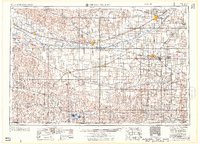 1957 Grand Island1957 Print · USGSCentral Nebraska and Northern Kansas are shown here during a period of massive hydraulic and military expansion in the mid-fifties. Researchers can trace the development of the Harlan County Reservoir and the massive wartime legacy of the Cornhusker Ordnance Plant.
 - 1957 Map of Precept, 1958 Print
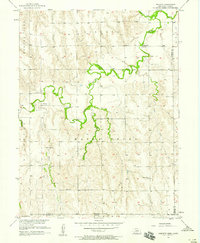 1957 Precept1958 Print · USGSFurnas County, Nebraska, near the Kansas state line is captured here in the late fifties as a landscape of established farmsteads and rural precincts. Genealogists can trace the exact locations of local landmarks like the Precept Sch, Bethel Ch, and Maple Creek Cem.
 - 1957 Map of Stamford SE, 1958 Print
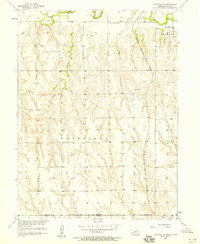 1957 Stamford SE1958 Print · USGSHarlan County, Nebraska, and northern Kansas appear in the late 1950s as a landscape of established prairie farms and rural school districts. Genealogists and historians can trace family locations near Home Cem, the Lutheran Cem, and the high point of Sappa Peak.2 unique versions available
 - 1958 Map of Grand Island
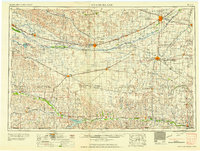 1958 Grand Island1958 Print · USGSSouth-central Nebraska thrived as a rail and industrial hub during the late fifties, shaped by the braided Platte River. Genealogists and historians can trace rail lines like the Union Pacific RR through towns such as Kearney or locate the sprawling Cornhusker Ordnance Plant.
 - 1959 Map of Beloit
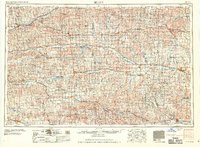 1959 Beloit1959 Print · USGSNorth Central Kansas at mid-century reveals a landscape shaped by river valleys and the expansion of massive water reservoirs. Genealogists and historians can trace the rail-town connections of Beloit and Norton or locate the site of the new Webster Dam.3 unique versions available
 - 1961 Map of Kirwin SE, 1962 Print
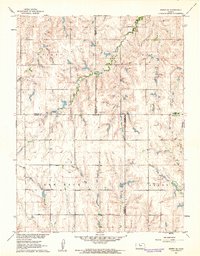 1961 Kirwin SE1962 Print · USGSThe rural crossroads of Rooks, Phillips, Smith, and Osborne counties are captured here in the early sixties. Genealogists can locate family sites and rural landmarks like Bohemian Cem, Spring Branch Cem, and Ash Rock Sch 2.
 - 1961 Map of Kirwin SW, 1963 Print
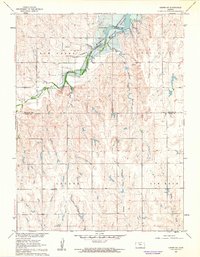 1961 Kirwin SW1963 Print · USGSPhillips and Rooks County lands are captured here in the early sixties as the reservoir system reshaped the valley. Genealogists can locate family landmarks like the Greenwood Cem, Delmar Community Hall, and the West Hope Sch.
 - 1967 Map of Almena, 1969 Print
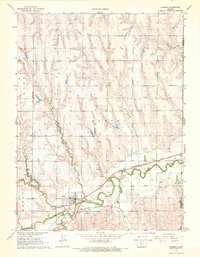 1967 Almena1969 Print · USGSNorthwestern Kansas in the late sixties reveals a landscape shaped by the paths of Prairie Dog Creek and two major regional railroads. Researchers can trace family history at several rural sites like Mt Hope Cem or Farmingdale Cem and follow the routes of the C B & Q and Chicago Rock Island and Pacific.
 - 1967 Map of Long Island, 1969 Print
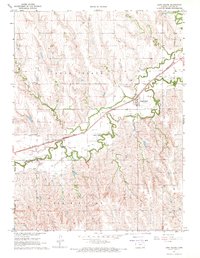 1967 Long Island1969 Print · USGSPhillips County in the late sixties shows a landscape shaped by the waters of Prairie Dog Creek and the steel of the Chicago Burlington and Quincy. Genealogists and historians can trace family roots at Vineman Cem or study the town center of Long Island.
 - 1968 Map of Woodruff, 1969 Print
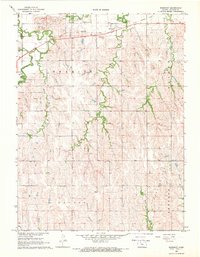 1968 Woodruff1969 Print · USGSWoodruff and the surrounding Phillips County plains are captured here in the late sixties as a landscape defined by its creek valleys and rail history. You can trace the Old Railroad Grade along Prairie Dog Creek and locate family sites at the Woodruff Cem or near the local Quarries.
 - 1972 Map of Speed, 1974 Print
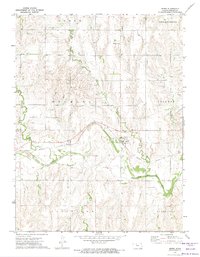 1972 Speed1974 Print · USGSPhillips County in the early seventies shows a landscape where prairie agriculture meets a growing energy industry. Researchers can locate family roots at Belmont Cem and trace the influence of the Missouri Pacific railroad through Speed.
 - 1972 Map of Kirwin, 1974 Print
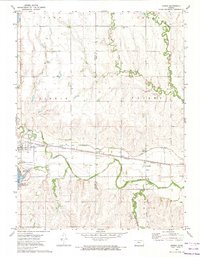 1972 Kirwin1974 Print · USGSThe North Fork Solomon River valley in the early 1970s shows a landscape transformed by the Kirwin Dam. Researchers can trace the Missouri Pacific rail line through Kirwin and Claudell or locate the Olive Branch Cem near the reservoir.
 - 1972 Map of Glade SW, 1974 Print
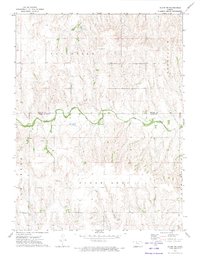 1972 Glade SW1974 Print · USGSThe Kansas borderlands of Phillips and Rooks counties come alive in the early seventies, centered on the winding Bow Creek. Researchers can trace local heritage through the Plainview Cem, Mt Pleasant Ch, and various township Townhall sites.
 - 1972 Map of Kirwin Reservoir, 1974 Print
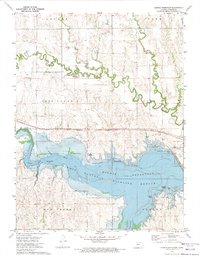 1972 Kirwin Reservoir1974 Print · USGSPhillips County in the early seventies shows a landscape reshaped by the Kirwin Reservoir and its surrounding wildlife refuge. Genealogists and researchers can trace local history through Kirwin Cem, the Missouri Pacific railroad, and the Old Railroad Grade.
 - 1972 Map of Phillipsburg South, 1974 Print
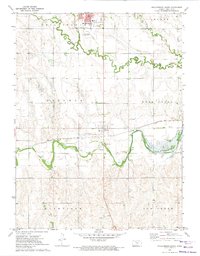 1972 Phillipsburg South1974 Print · USGSPhillips County in the early seventies shows a landscape shaped by the Solomon River and the Missouri Pacific rail line. Researchers can trace the layout of Phillipsburg and Glade, or locate specific landmarks like Fairview Cemetery, the Drive-in Theater, and the Kirwin Reservoir.
 - 1972 Map of Glade SE, 1974 Print
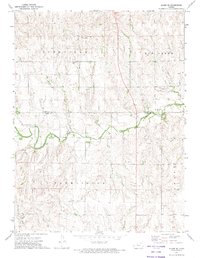 1972 Glade SE1974 Print · USGSThe borderlands of Phillips and Rooks counties come into focus in the early 1970s, showcasing a landscape of section-line roads and prairie creek beds. Genealogists and local historians can pinpoint the Lockwood Cem, the local Townhall, and the winding course of Bow Creek.
 - 1973 Map of Kensington, 1975 Print
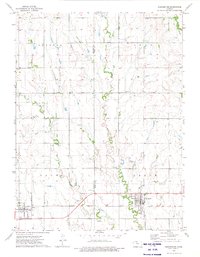 1973 Kensington1975 Print · USGSNorth-central Kansas farmland comes into focus in the early 1970s as the rail line connects small prairie towns. Genealogists can trace family footprints near Johnson Ch, the Germantown Cem, and the rail stops at Agra and Kensington.
 - 1973 Map of Kensington NE, 1975 Print
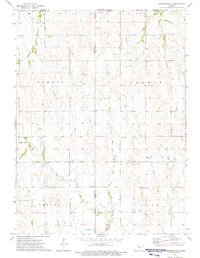 1973 Kensington NE1975 Print · USGSThe rural borderlands of Phillips and Smith counties are captured in the early 1970s, showing a traditional Kansas farm landscape. Researchers can locate remote landmarks like Pleasant Green Ch, Stone Cem, and the various branches of Cedar Creek.
Showing maps 1-25 of 186
Top cities of Phillips County
- Phillipsburg historical maps
- Logan historical maps
- Agra historical maps
- Kirwin historical maps
- Long Island historical maps
- Prairie View historical maps
See more
Frequently asked questions
- What are the different types of historical maps available for Phillips County?
- What is the oldest map of Phillips County?
- Where can I purchase historical maps of Phillips County for my home or office?
- Where can I download high-res historical maps of Phillips County?
- Are there historical topographic maps available for Phillips County?
- Is there historical aerial imagery available for Phillips County?
- Where are historical maps of Phillips County sourced from?