1960s Maps of Rush County, Kansas
Explore 14 historic maps of Rush County from the 1960s. These maps offer a rare glimpse into what life looked like during the 1960s — showing old roads, neighborhoods, homes, and landmarks that have changed or disappeared over time.
Whether you're researching your family's past, planning a metal detecting trip, or studying how Rush County's landscape evolved across the 1960s, these high-resolution maps are a powerful tool for exploring the history of this region.
- Focus on a specific era: All maps on this page are from the 1960s, giving you a focused view of this time period.
- See what’s changed: Compare century-old streets, trails, and buildings to today's modern landscape using overlays and satellite layers.
- Research with precision: Use these maps for genealogy, historical research, land use analysis, or educational projects.
- View, download, or print: Maps are fully viewable online in high resolution, and can be downloaded or printed for your own records.
Start exploring Rush County's history through authentic maps from the 1960s. This is your window into the past.
Rush County, KS maps
(14)- 1965 Map of Otis, 1967 Print
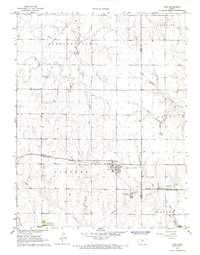 1965 Otis1967 Print · USGSThe town of Otis is captured in the mid-sixties as a center of Kansas energy production and agriculture. Researchers can trace the rail-side refinery, the Bureau of Mines Helium Plant, and local burial sites like the Lutheran Cem.
 - 1965 Map of Mc Cracken, 1967 Print
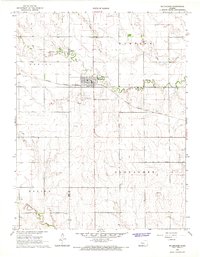 1965 Mc Cracken1967 Print · USGSRush and Ness counties come into focus during the mid-sixties, centered on the railroad town of McCracken. Researchers can trace the Missouri Pacific line past local landmarks like McCracken Cem, Big Timber Creek, and early oil wells.
 - 1965 Map of Albert, 1967 Print
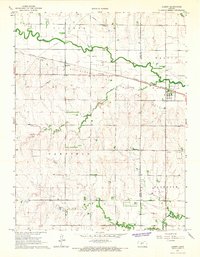 1965 Albert1967 Print · USGSMid-century Barton and Rush counties are captured here as a productive landscape of grain and gas along the Walnut Creek valley. Trace the early energy boom through the local GAS FIELD or locate family sites at Shaffer, Walnut View Sch, and the Albert Cem.
 - 1966 Map of Alexander, 1967 Print
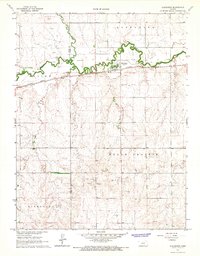 1966 Alexander1967 Print · USGSThe rural landscapes of Rush and Ness counties are captured here in the mid-1960s, centered on the rail-side town of Alexander. Genealogists and historians can trace the Atchison Topeka and Santa Fe line, old quarries, and the Weber Oil Field.
 - 1966 Map of Rush Center, 1967 Print
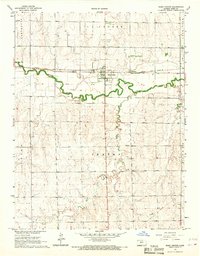 1966 Rush Center1967 Print · USGSRush Center and the surrounding townships are documented in the mid-1960s as a vital hub for rail and oil. Researchers can trace the Atchison Topeka and Santa Fe line, locate Locust Hill Cem, and see the extent of the Rush Center Oil Field.
 - 1966 Map of Nekoma, 1967 Print
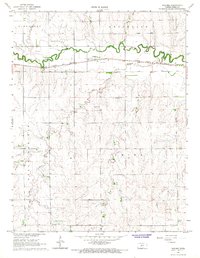 1966 Nekoma1967 Print · USGSRush County agriculture meets the railroad in the 1960s as the rail line follows the winding course of Walnut Creek. Researchers can locate several burial grounds like Abbey Cem and early energy sites including various Oil Wells near Nekoma.
 - 1966 Map of La Crosse, 1967 Print
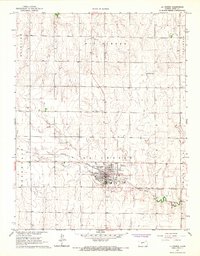 1966 La Crosse1967 Print · USGSLa Crosse was a busy rail-centered town in the mid-1960s, serving as a hub for the surrounding Rush County farm country. Local historians can trace family sites at St Michaels Cem or locate community landmarks like the County Fairground and Grass Park.2 unique versions available
 - 1966 Map of Hargrave, 1967 Print
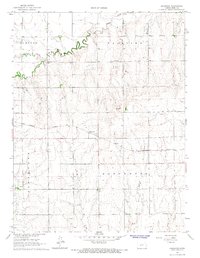 1966 Hargrave1967 Print · USGSRush County farming and rail life are preserved here during the mid-sixties, centered on the Missouri Pacific tracks. Genealogists can locate family sites near Hampton Cem and Hall Cem, or trace the winding course of Big Timber Creek.
 - 1966 Map of Bison, 1967 Print
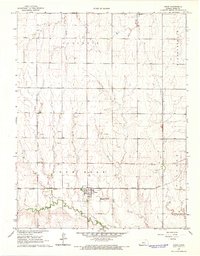 1966 Bison1967 Print · USGSBison and the surrounding Rush County plains are captured here in the mid-1960s, a period when rail and agriculture still defined the local rhythm. Genealogists can locate family sites near Lone Star Cem, the Baptist Cem, or along the Missouri Pacific tracks.
 - 1966 Map of Timken, 1967 Print
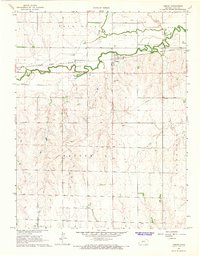 1966 Timken1967 Print · USGSRush County agriculture and industry meet in the mid-1960s as the rail line and river valleys define the local landscape. Genealogists can locate Holy Cross Cem and Bohemian Cem while tracing the Atchison Topeka and Santa Fe railroad through Timken.
 - 1968 Map of Liebenthal, 1971 Print
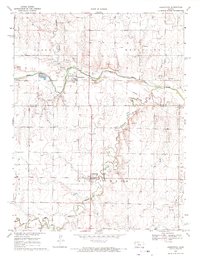 1968 Liebenthal1971 Print · USGSThe Rush and Ellis County border comes alive in the late sixties as the river-and-rail landscape shifts between agriculture and industry. Genealogists and local historians can locate Liebenthal and Schoenchen, tracing family roots at St Joseph Cem and St Anthony Cem.
 - 1968 Map of La Crosse NW, 1971 Print
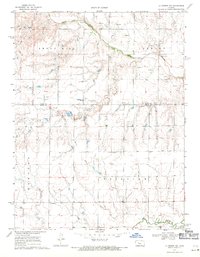 1968 La Crosse NW1971 Print · USGSIn the late 1960s, the plains of western Kansas were a landscape of cattle, oil, and river-valley farming. Genealogists and researchers can locate family burial sites at Cordia Cem and Nickel Cem or trace the early energy economy through several Oil Wells.
 - 1969 Map of Pfeifer, 1971 Print
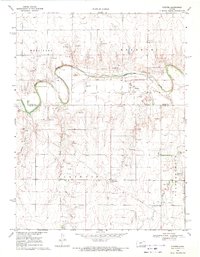 1969 Pfeifer1971 Print · USGSThe Smoky Hill River valley and the rural townships of Ellis and Rush Counties are captured here in the late sixties. Genealogists and local historians can trace family sites near Pfeifer, Loretta, Holy Cross Cem, and the many Oil Wells dotting the plains.
 - 1969 Map of Otis NE, 1971 Print
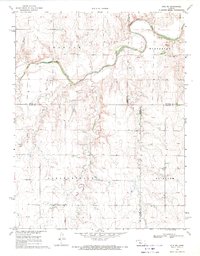 1969 Otis NE1971 Print · USGSFour rural townships in central Kansas come into focus during the late 1960s as oil extraction begins to mark the agricultural landscape. Genealogists and historians can locate family landmarks like Pleasantdale Cem or trace the winding course of the Smoky Hill River and Duck Creek.
End of results
Showing maps 1-14 of 14
Top cities of Rush County
- La Crosse historical maps
- Otis historical maps
- Bison historical maps
- McCracken historical maps
- Rush Center historical maps
- Liebenthal historical maps
See more
Frequently asked questions
- What are the different types of historical maps available for Rush County?
- What is the oldest map of Rush County?
- Where can I purchase historical maps of Rush County for my home or office?
- Where can I download high-res historical maps of Rush County?
- Are there historical topographic maps available for Rush County?
- Is there historical aerial imagery available for Rush County?
- Where are historical maps of Rush County sourced from?