1960s Maps of Wichita, Kansas
Explore 11 historic maps of Wichita from the 1960s. These maps offer a rare glimpse into what life looked like during the 1960s — showing old roads, neighborhoods, homes, and landmarks that have changed or disappeared over time.
Whether you're researching your family's past, planning a metal detecting trip, or studying how Wichita's landscape evolved across the 1960s, these high-resolution maps are a powerful tool for exploring the history of this region.
- Focus on a specific era: All maps on this page are from the 1960s, giving you a focused view of this time period.
- See what’s changed: Compare century-old streets, trails, and buildings to today's modern landscape using overlays and satellite layers.
- Research with precision: Use these maps for genealogy, historical research, land use analysis, or educational projects.
- View, download, or print: Maps are fully viewable online in high resolution, and can be downloaded or printed for your own records.
Start exploring Wichita's history through authentic maps from the 1960s. This is your window into the past.
Wichita, KS maps
(11)- 1960 Map of Rose Hill, 1961 Print
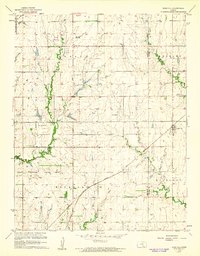 1960 Rose Hill1961 Print · USGSThe Kansas prairie south of Wichita comes alive in this mid-century survey as the region's agricultural and aviation sectors expanded. Researchers can trace the heritage of Rose Hill and its surrounding townships through local landmarks like Branson Cem, Hamilton Airport, and the Atchison Topeka and Santa Fe railroad line.2 unique versions available
 - 1960 Map of Greenwich, 1961 Print
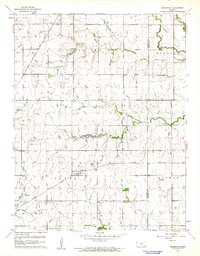 1960 Greenwich1961 Print · USGSIn the early sixties, the prairie surrounding Greenwich was a landscape of rail junctions, oil production, and deep-rooted farming communities. Genealogists can trace family connections at Greenwich Cem, Palmyra Ch, and along the historic Old Indian Boundary.3 unique versions available
 - 1960 Map of Derby, 1961 Print
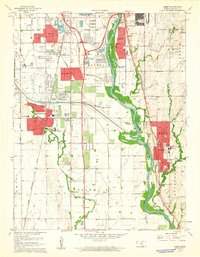 1960 Derby1961 Print · USGSThe Arkansas River valley south of Wichita appears here in the early sixties as suburban growth begins to overtake rural townships. Researchers can trace family roots through several local landmarks like Waco Cem, St Marys Sch, and the riverside community of Derby.4 unique versions available
 - 1960 Map of Valley Center, 1961 Print
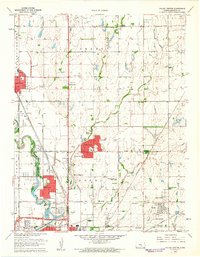 1960 Valley Center1961 Print · USGSSedgwick County experiences significant mid-century growth and industrial development as oil fields and new suburbs expand across the prairie. Researchers can trace family roots through Marble Grove Cem or locate former landmarks like the Drive-in Theater and Hillside Grove Sch.4 unique versions available
 - 1961 Map of Wichita West
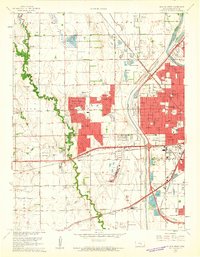 1961 Wichita West1961 Print · USGSWichita's western suburbs and industrial fringes take shape in the early sixties as new residential developments meet the prairie. Researchers can find numerous mid-century landmarks like the Wichita Municipal Airport, Sacred Heart College, and Westlink Village.5 unique versions available
 - 1961 Map of Maize
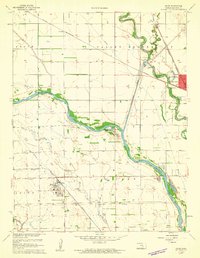 1961 Maize1961 Print · USGSThe Sedgwick County plains are shown in the early sixties as a vital crossroads of rail lines and river floodways. Genealogists and local historians can trace the Old Indian Boundary and locate landmarks like Maize Cem and West Elementary Sch.4 unique versions available
 - 1961 Map of Bayneville
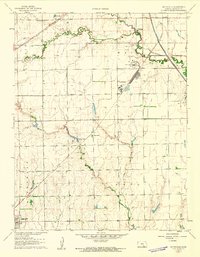 1961 Bayneville1961 Print · USGSThe Sedgwick County prairie in the early sixties shows a landscape of small agricultural towns and emerging energy infrastructure. Researchers can locate Greenwood Cem, trace the rail lines of the Missouri Pacific, and find the local Townhall and Oatville Sch.3 unique versions available
 - 1961 Map of Wichita East
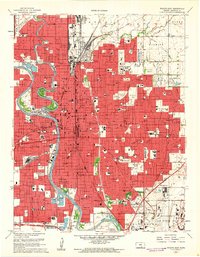 1961 Wichita East1961 Print · USGSWichita is seen here in a period of significant post-war expansion, with the city's residential grid pushing toward the suburban enclave of Eastborough. Genealogists and historians can trace numerous neighborhood landmarks, from the Masonic Home and VA Hospital to family names at White Chapel Cemetery.5 unique versions available
 - 1961 Map of Andover
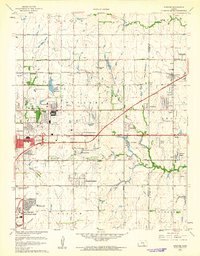 1961 Andover1961 Print · USGSEast of Wichita in the early 1960s, the landscape is a mix of rapid suburban growth and significant aviation infrastructure. Researchers can trace mid-century developments like Beech Landing Field, Mc Connell Air Force Base, and local landmarks like Seltzer Church.4 unique versions available
 - 1965 Map of Goddard, 1966 Print
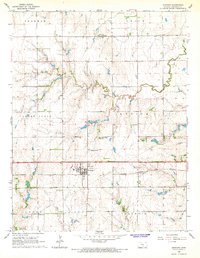 1965 Goddard1966 Print · USGSGoddard and the surrounding Sedgwick County townships are shown here in the mid-sixties, dominated by agricultural tracts and the Atchison Topeka and Santa Fe rail line. Genealogists can locate family sites like Afton Cem and St Marks.2 unique versions available
 - 1965 Map of Lake Afton, 1966 Print
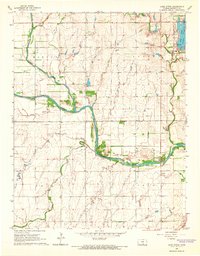 1965 Lake Afton1966 Print · USGSWestern Sedgwick County in the mid-sixties reveals a landscape defined by the winding Ninnescah River and the emerging recreational hub at Lake Afton. Genealogists and local historians can trace the Peotone Cem and old institutional sites like the Lake Afton Boys Ranch and Camp Hyde.2 unique versions available
End of results
Showing maps 1-11 of 11
Top cities near Wichita
- Derby historical maps
- Haysville historical maps
- Park City historical maps
- Bel Aire historical maps
- Mulvane historical maps
- Valley Center historical maps
See more
Top neighborhoods of Wichita
- The Dell historical maps
- Westlink Village historical maps
- Prospect historical maps
- Prospect Park historical maps
- Park East historical maps
- Midland historical maps
See more
Frequently asked questions
- What are the different types of historical maps available for Wichita?
- What is the oldest map of Wichita?
- Where can I purchase historical maps of Wichita for my home or office?
- Where can I download high-res historical maps of Wichita?
- Are there historical topographic maps available for Wichita?
- Is there historical aerial imagery available for Wichita?
- Where are historical maps of Wichita sourced from?