1900s (20th Century) Maps of Wichita, Kansas
Explore 36 historic maps of Wichita from the 1900s (20th Century). These maps offer a rare glimpse into what life looked like during the 1900s — showing old roads, neighborhoods, homes, and landmarks that have changed or disappeared over time.
Whether you're researching your family's past, planning a metal detecting trip, or studying how Wichita's landscape evolved across the 1900s, these high-resolution maps are a powerful tool for exploring the history of this region.
- Focus on a specific era: All maps on this page are from the 1900s, giving you a focused view of this time period.
- See what’s changed: Compare century-old streets, trails, and buildings to today's modern landscape using overlays and satellite layers.
- Research with precision: Use these maps for genealogy, historical research, land use analysis, or educational projects.
- View, download, or print: Maps are fully viewable online in high resolution, and can be downloaded or printed for your own records.
Start exploring Wichita's history through authentic maps from the 1900s. This is your window into the past.
Wichita, KS maps
(36)- 1901 Map of Cheney, 1910 Print
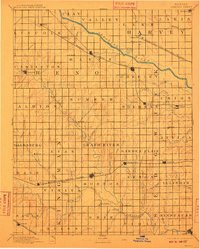 1901 Cheney1910 Print · USGSSouth Central Kansas was a landscape of budding rail towns and rural post offices at the turn of the century. Genealogists can trace family roots through now-vanished locales like Stella P.O. and Mona P.O. or early hubs like Cheney and Mt. Hope.2 unique versions available
 - 1941 Map of Maize
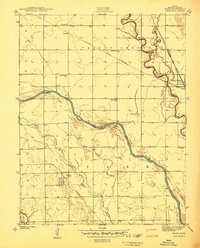 1941 Maize1941 Print · USGSSedgwick County prairie life is captured here just before the war, showing the area's transition into a major rail and river hub. Local historians can trace early schools like Prairie Queen Sch and the unique route of the Arkansas Valley Interurban Electric.
 - 1941 Map of Valley Center
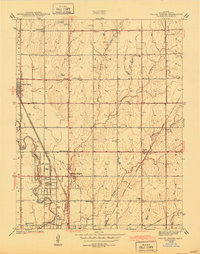 1941 Valley Center1941 Print · USGSSedgwick County agricultural lands and growing townships are captured here at the start of the 1940s. Local historians can trace the foundations of Valley Center and Keehi alongside vanished landmarks like the Stearns Race Track and Hoss Sch.
 - 1942 Map of Valley Center
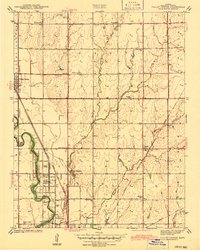 1942 Valley Center1942 Print · USGSNorth of Wichita just before the war, this area shows a landscape defined by the Little Arkansas River and a busy intersection of four major railroads. Genealogists can locate numerous country schoolhouses like Riverview Sch and Hillside Grove Sch, as well as the MARBLE GROVE CEM and the old STEARNS RACE TRACK.
 - 1942 Map of Maize
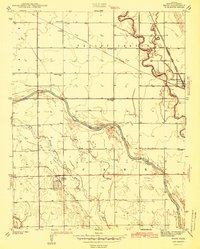 1942 Maize1942 Print · USGSSedgwick County at the start of the 1940s reveals a landscape of thriving rural schools and critical rail junctions. Genealogists can locate family landmarks like the Maize Cem or trace the early paths of the St Louis San Francisco railroad through Valley Center and Maize.2 unique versions available
 - 1943 Map of Wichita West
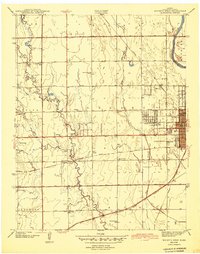 1943 Wichita West1943 Print · USGSWestern Sedgwick County appears at a pivotal moment in the 1940s as the suburbs began to press into the surrounding prairie. Genealogists and historians can trace numerous rural schools like Jamesburg Sch and Daisy Sch, alongside rail stops and the Jamesburg Park Cem.2 unique versions available
 - 1943 Map of Wichita East
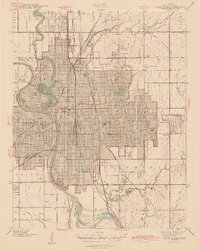 1943 Wichita East1943 Print · USGSMid-century Wichita serves as a bustling rail and aviation center just as it emerged as a critical hub of the Great Plains. Researchers can trace the layout of historic neighborhoods and landmarks like Union Station, Friends University, and St Marys Academy.2 unique versions available
 - 1943 Map of Derby
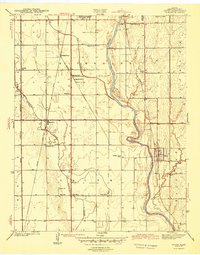 1943 Derby1943 Print · USGSSouthern Sedgwick County in the early 1940s is a landscape of river-valley farms and essential rail corridors just before the region's rapid growth. Researchers can locate original sites for Old Waco, Derby, and numerous rural schools like Blood Sch.2 unique versions available
 - 1943 Map of Bayneville
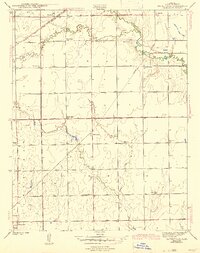 1943 Bayneville1943 Print · USGSSedgwick County farming townships are caught here in the early 1940s, showing a landscape defined by crossing rail lines and small-town junctions. Genealogists can trace family roots through numerous local schools like Richmond Hill Sch and Pleasant Plains Sch, or the rural community around Bayneville.3 unique versions available
 - 1945 Map of Andover
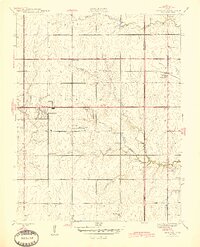 1945 Andover1945 Print · USGSAndover and the Sedgwick-Butler county line are documented here in the early 1940s as rural townships began to transition toward residential growth. Local researchers can trace family-named schoolhouses like Mammoth Cave Sch and Fidelity Sch or locate gravesites in the Andover Cem.2 unique versions available
 - 1950 Map of Bayneville, 1952 Print
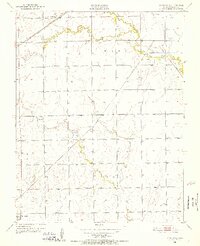 1950 Bayneville1952 Print · USGSMid-century Sedgwick County shows a traditional prairie landscape of townships and rail-stop towns before the suburban expansion of nearby cities. Genealogists and historians can trace family roots at Greenwood Cem or locate the site of the Richmond Hill Sch.2 unique versions available
 - 1955 Map of Greenwich, 1956 Print
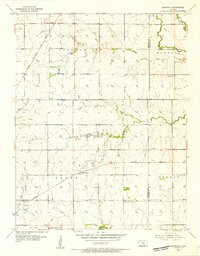 1955 Greenwich1956 Print · USGSThe rural landscapes of Sedgwick and Butler Counties are captured here in the mid-fifties at a peak of rail and oil activity. Researchers can trace family sites at Greenwich or locate pioneer burials at Old Benton Cem and Fairview Cem.
 - 1955 Map of Rose Hill, 1956 Print
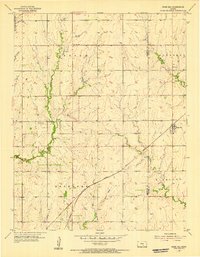 1955 Rose Hill1956 Print · USGSThe Butler and Sedgwick County line in the mid-fifties shows a landscape of steady agricultural growth and rising aviation influence. Researchers can trace family sites near Branson Cem, aviation history at Hamilton Landing Field, and the path of the Atchison Topeka and Santa Fe railroad.
 - 1955 Map of Wichita, 1959 Print
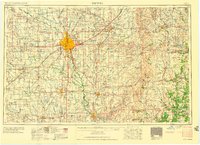 1955 Wichita1959 Print · USGSSouth-central Kansas comes alive in the mid-1950s as Wichita grows into its role as a regional industrial and military powerhouse. Trace the rail-and-river network connecting El Dorado and Arkansas City through the Atchison Topeka and Santa Fe lines.3 unique versions available
 - 1956 Map of Valley Center, 1957 Print
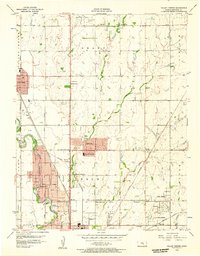 1956 Valley Center1957 Print · USGSNorthern Sedgwick County undergoes a post-war transition in the mid-1950s as suburban growth meets established oil fields. Trace family roots and early subdivisions near Valley Center, Park City, and Riverview alongside historic schools like Kistler Sch.
 - 1956 Map of Maize, 1957 Print
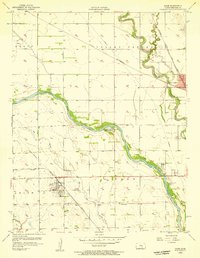 1956 Maize1957 Print · USGSMid-century Sedgwick County is captured here as a bustling intersection of river life and rail industry. Genealogists can locate the Maize Cem and early footprints of Maize and Valley Center, while tracing the paths of the Missouri Pacific and other legacy railroads.
 - 1956 Map of Wichita West, 1957 Print
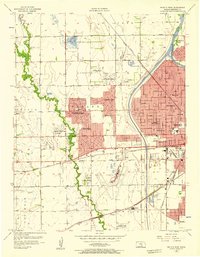 1956 Wichita West1957 Print · USGSMid-century Wichita is captured in a moment of rapid westward expansion as suburban subdivisions begin to displace the old township farms. Genealogists and historians can trace the foundations of Air View Estates, locate Sacred Heart College, and see the early layout of the Wichita Municipal Airport.
 - 1956 Map of Derby, 1957 Print
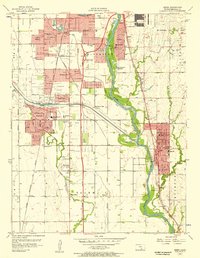 1956 Derby1957 Print · USGSSouth of Wichita in the mid-fifties, this area shows the rapid suburbanization of Sedgwick County alongside major aviation and transit projects. Trace the early layouts of Haysville and Derby or locate mid-century landmarks like the Drive-in Theater and Mc Connell Air Force Base.
 - 1956 Map of Andover, 1957 Print
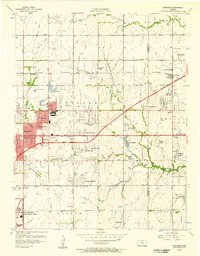 1956 Andover1957 Print · USGSEastern Wichita and Andover appear here during a mid-century boom in aviation and infrastructure. Researchers can trace the development of Mc Connell Air Force Base alongside local landmarks like Seltzer Spring and Mammoth Cave Sch.
 - 1956 Map of Wichita East, 1957 Print
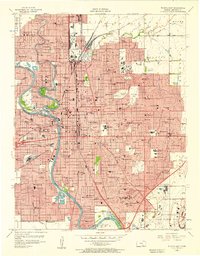 1956 Wichita East1957 Print · USGSMid-century Wichita is captured here during a period of massive suburban and industrial growth. Genealogists and historians can trace neighborhood schools like Louverture Sch, early aviation sites including Cessna Landing Field, and the sprawling McConnell Air Force Base.
 - 1958 Map of Wichita
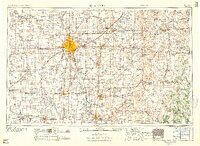 1958 Wichita1958 Print · USGSSouth Central Kansas in the late fifties was a landscape of aviation industry, oil exploration, and expanding turnpikes. Researchers can trace mid-century growth through McConnell Air Force Base, major facilities for Cessna Aircraft Company, and the active El Dorado Oil Field.
 - 1960 Map of Rose Hill, 1961 Print
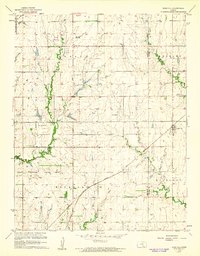 1960 Rose Hill1961 Print · USGSThe Kansas prairie south of Wichita comes alive in this mid-century survey as the region's agricultural and aviation sectors expanded. Researchers can trace the heritage of Rose Hill and its surrounding townships through local landmarks like Branson Cem, Hamilton Airport, and the Atchison Topeka and Santa Fe railroad line.2 unique versions available
 - 1960 Map of Greenwich, 1961 Print
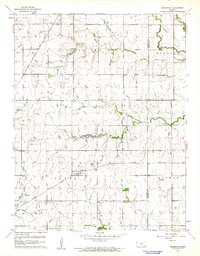 1960 Greenwich1961 Print · USGSIn the early sixties, the prairie surrounding Greenwich was a landscape of rail junctions, oil production, and deep-rooted farming communities. Genealogists can trace family connections at Greenwich Cem, Palmyra Ch, and along the historic Old Indian Boundary.3 unique versions available
 - 1960 Map of Derby, 1961 Print
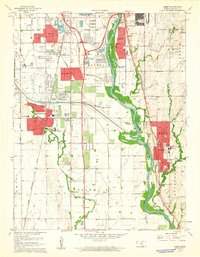 1960 Derby1961 Print · USGSThe Arkansas River valley south of Wichita appears here in the early sixties as suburban growth begins to overtake rural townships. Researchers can trace family roots through several local landmarks like Waco Cem, St Marys Sch, and the riverside community of Derby.4 unique versions available
 - 1960 Map of Valley Center, 1961 Print
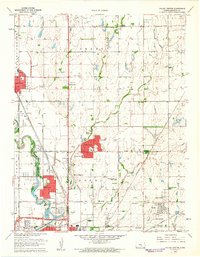 1960 Valley Center1961 Print · USGSSedgwick County experiences significant mid-century growth and industrial development as oil fields and new suburbs expand across the prairie. Researchers can trace family roots through Marble Grove Cem or locate former landmarks like the Drive-in Theater and Hillside Grove Sch.4 unique versions available
Showing maps 1-25 of 36
Top cities near Wichita
- Derby historical maps
- Haysville historical maps
- Park City historical maps
- Bel Aire historical maps
- Mulvane historical maps
- Valley Center historical maps
See more
Top neighborhoods of Wichita
- The Dell historical maps
- Westlink Village historical maps
- Prospect historical maps
- Prospect Park historical maps
- Park East historical maps
- Midland historical maps
See more
Frequently asked questions
- What are the different types of historical maps available for Wichita?
- What is the oldest map of Wichita?
- Where can I purchase historical maps of Wichita for my home or office?
- Where can I download high-res historical maps of Wichita?
- Are there historical topographic maps available for Wichita?
- Is there historical aerial imagery available for Wichita?
- Where are historical maps of Wichita sourced from?