1950s Maps of Boone County, Kentucky
Explore 19 historic maps of Boone County from the 1950s. These maps offer a rare glimpse into what life looked like during the 1950s — showing old roads, neighborhoods, homes, and landmarks that have changed or disappeared over time.
Whether you're researching your family's past, planning a metal detecting trip, or studying how Boone County's landscape evolved across the 1950s, these high-resolution maps are a powerful tool for exploring the history of this region.
- Focus on a specific era: All maps on this page are from the 1950s, giving you a focused view of this time period.
- See what’s changed: Compare century-old streets, trails, and buildings to today's modern landscape using overlays and satellite layers.
- Research with precision: Use these maps for genealogy, historical research, land use analysis, or educational projects.
- View, download, or print: Maps are fully viewable online in high resolution, and can be downloaded or printed for your own records.
Start exploring Boone County's history through authentic maps from the 1950s. This is your window into the past.
Boone County, KY maps
(19)- 1950 Map of Union, 1952 Print
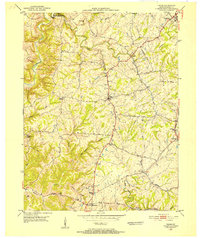 1950 Union1952 Print · USGSBoone County's rolling landscape is captured here in the early fifties, showing a rural world of crossroads hamlets and family-named landmarks. You can trace the community life of the era through Sugartit, the New Haven Sch, and old burial grounds like Rice Cem.
 - 1950 Map of Independence, 1952 Print
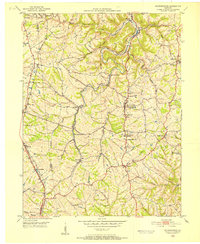 1950 Independence1952 Print · USGSNorthern Kentucky in the early postwar years reveals a landscape of ridge-top farms and creek-bottom rail lines. Researchers can trace family sites near Independence or locate rural landmarks like New Banklick Ch and Independence Sta.
 - 1950 Map of Verona, 1952 Print
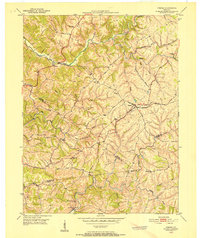 1950 Verona1952 Print · USGSNorthern Kentucky’s rolling hills come alive in this mid-century survey, showcasing the rural intersections where Boone, Gallatin, and Grant Counties meet. Genealogists can trace family names at St Patricks Cem or locate the old rail-stop at Zion Station.
 - 1950 Map of Walton, 1952 Print
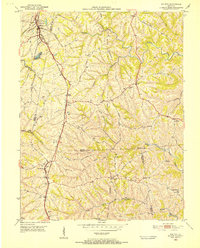 1950 Walton1952 Print · USGSNorthern Kentucky's rail-dependent landscape is captured here at mid-century, centered on the busy junction at Walton. Genealogists can trace family heritage through dozens of small burial grounds like Cook-Smith Cem and Grayson Cem or rural stops at Bracht Station.
 - 1950 Map of Covington, 1953 Print
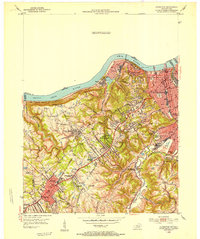 1950 Covington1953 Print · USGSNorthern Kentucky's riverfront and southern suburbs are captured here at the mid-century mark as neighborhoods expanded along the Dixie Highway. Genealogists and historians can trace family plots in Highland Cem or locate community landmarks like the Villa Madonna and Dixie Heights High Sch.
 - 1951 Map of Burlington, 1953 Print
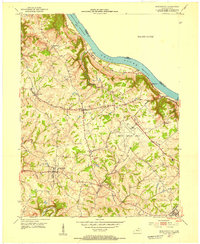 1951 Burlington1953 Print · USGSBoone County and the Ohio River shoreline appear here in the early fifties, showing the region as it transitioned into a major aviation hub. Genealogists can locate family burial sites like I O O F Cem and Watts Cem, or trace early roads near Hebron and Florence.
 - 1951 Map of Rising Sun, 1953 Print
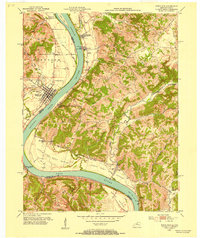 1951 Rising Sun1953 Print · USGSThe Ohio River valley at the start of the 1950s reveals a landscape of fertile bottomlands and established river towns. Researchers can trace the heritage of Rising Sun and Rabbit Hash while locating family sites like East Bend Ch and the Stephens Cem.
 - 1951 Map of Patriot, 1953 Print
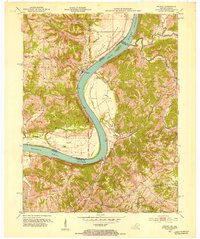 1951 Patriot1953 Print · USGSThe Indiana-Kentucky border along the Ohio River is captured here in the early fifties, showing a landscape of fertile river bottoms and upland farms. Genealogists can trace family roots at Patriot or locate rural landmarks like Searcy Crossroads, Concord Ch, and McNutt Cem.
 - 1953 Map of Aberdeen, 1955 Print
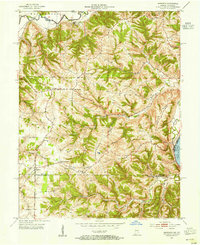 1953 Aberdeen1955 Print · USGSSoutheastern Indiana's rural character is preserved here in the early fifties, showing the upland ridges above the OHIO RIVER. Genealogists and historians can trace family locations near Aberdeen, Bovard Cem, and the Cass-Union Sch along the county lines.2 unique versions available
 - 1953 Map of Aurora, 1955 Print
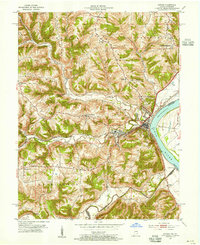 1953 Aurora1955 Print · USGSThe Ohio River valley near Aurora was a bustling corridor of rail and river commerce in the early 1950s. Genealogists and local historians can locate early landmarks such as the Riverview Cemetery and trace the paths of the Baltimore and Ohio railroad through Wilmington.2 unique versions available
 - 1953 Map of Cincinnati, 1965 Print
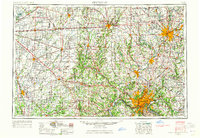 1953 Cincinnati1965 Print · USGSThe Ohio River valley and the industrial heartland of Indiana and Ohio are captured here during the mid-century peak of rail and river commerce. Genealogists and historians can trace connections between Cincinnati and outlying military sites like Camp Atterbury and Bakalar AFB.3 unique versions available
 - 1954 Map of Hooven, 1955 Print
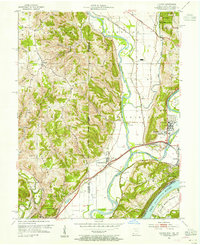 1954 Hooven1955 Print · USGSThe tri-state confluence of the Whitewater, Miami, and Ohio Rivers was a busy industrial and transit corridor in the 1950s. You can trace early family sites at Sugar Ridge Cem, follow the New York Central Railroad through Valley Junction, or locate the mid-century Gas Refinery.3 unique versions available
 - 1954 Map of Addyston, 1955 Print
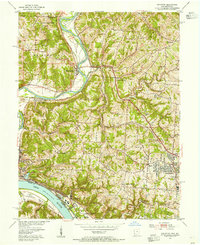 1954 Addyston1955 Print · USGSThe Ohio River valley and its industrial corridors are captured here in the mid-fifties as the Cincinnati suburbs began to crest the western hills. Genealogists and historians can trace the paths of the Baltimore and Ohio railroad through Addyston, North Bend, and landmarks like Bethel Cem.
 - 1955 Map of Burlington, 1956 Print
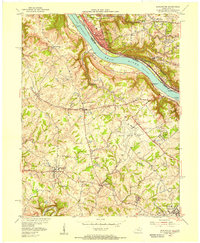 1955 Burlington1956 Print · USGSThe Ohio River valley in the mid-fifties reveals a bustling industrial riverfront alongside quiet Kentucky hillsides. Genealogists and historians can trace family cemeteries like Chambers Cem, locate the Anderson Ferry, and see the early Greater Cincinnati Airport.
 - 1955 Map of Independence, 1956 Print
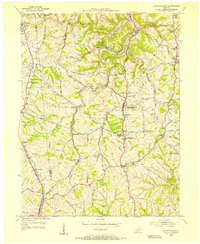 1955 Independence1956 Print · USGSKenton County communities like Independence and Florence are shown in the mid-fifties as they balanced rural tradition with post-war growth. Researchers can trace family history through several local landmarks, including Independence Cem, Eggleston Ch, and the Simon Kenton High Sch.
 - 1955 Map of Union, 1956 Print
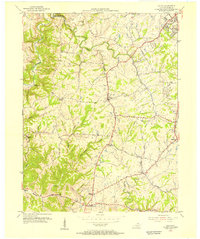 1955 Union1956 Print · USGSMid-century Boone County is captured here just before the suburban surge, centered on the historic crossroads of Union and Florence. Researchers can pinpoint family-named landmarks and rural centers like Sugartit, Beaverlick, and the New Haven Sch.
 - 1955 Map of Covington, 1957 Print
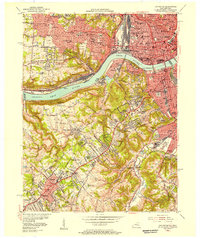 1955 Covington1957 Print · USGSGreater Cincinnati and Northern Kentucky come alive in this mid-fifties survey of the bustling riverfront and its growing suburbs. Researchers can trace historical church parishes and schools like St Marys Hosp, St Johns Cem, and Villa Madonna Academy across the river valley.
 - 1956 Map of Louisville, 1971 Print
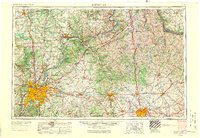 1956 Louisville1971 Print · USGSThe Ohio River valley and the Kentucky Bluegrass are captured here during a period of rapid mid-century growth and industrial activity. Genealogists and historians can trace rail-centered towns and military land use at Fort Knox and the Jefferson Proving Ground.2 unique versions available
 - 1957 Map of Cincinnati
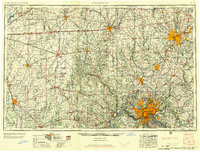 1957 Cincinnati1957 Print · USGSThe Ohio River valley and its surrounding highlands thrived during the mid-fifties industrial peak, centered on the bustling Cincinnati and Dayton metropolitan hubs. Researchers can trace the extensive rail networks and military sites like Wright-Patterson AFB and Camp Atterbury.
End of results
Showing maps 1-19 of 19
Top cities of Boone County
Frequently asked questions
- What are the different types of historical maps available for Boone County?
- What is the oldest map of Boone County?
- Where can I purchase historical maps of Boone County for my home or office?
- Where can I download high-res historical maps of Boone County?
- Are there historical topographic maps available for Boone County?
- Is there historical aerial imagery available for Boone County?
- Where are historical maps of Boone County sourced from?