1900s (20th Century) Maps of Lawrence County, Kentucky
Explore 62 historic maps of Lawrence County from the 1900s (20th Century). These maps offer a rare glimpse into what life looked like during the 1900s — showing old roads, neighborhoods, homes, and landmarks that have changed or disappeared over time.
Whether you're researching your family's past, planning a metal detecting trip, or studying how Lawrence County's landscape evolved across the 1900s, these high-resolution maps are a powerful tool for exploring the history of this region.
- Focus on a specific era: All maps on this page are from the 1900s, giving you a focused view of this time period.
- See what’s changed: Compare century-old streets, trails, and buildings to today's modern landscape using overlays and satellite layers.
- Research with precision: Use these maps for genealogy, historical research, land use analysis, or educational projects.
- View, download, or print: Maps are fully viewable online in high resolution, and can be downloaded or printed for your own records.
Start exploring Lawrence County's history through authentic maps from the 1900s. This is your window into the past.
Lawrence County, KY maps
(62)- 1901 Map of Ceredo, 1953 Print
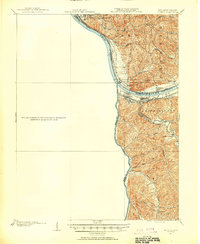 1901 Ceredo1953 Print · USGSThe tri-state convergence of West Virginia, Ohio, and Kentucky comes alive in this early 20th-century survey of the Ohio River valley. Genealogists and rail historians can trace the vital transport networks of Kenova and Ceredo, alongside family-named landmarks like Walker Br and Rice Run.2 unique versions available
 - 1903 Map of Kenova
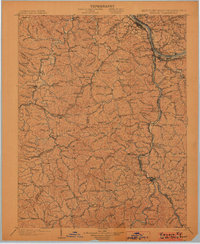 1903 Kenova1903 Print · USGSThe tri-state river junction at Ashland and Kenova was a bustling industrial hub after the turn of the century. Trace early rail lines and mining settlements like Coalton and Boghead, or locate family landmarks along the Little Sandy River and Means Tunnel.5 unique versions available
 - 1904 Map of Kenova
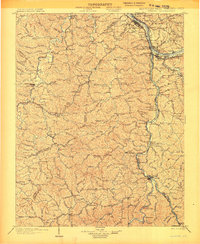 1904 Kenova1904 Print · USGSThe tri-state confluence of the Ohio River and Big Sandy River hums with early industrial activity at the start of the century. Genealogists can trace rail-side settlements and remote homesteads along Blaine Creek and near Mt Savage or Webbville.
 - 1910 Map of Naugatuck
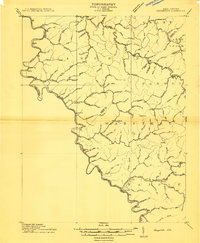 1910 Naugatuck1910 Print · USGSMingo and Wayne Counties come into focus in the early twentieth century as the coal and timber industry transformed these hollows. Genealogists and researchers can trace the Norfolk and Western rail line through early settlements like Kermit, Breeden, and Naugatuck.
 - 1911 Map of Louisa
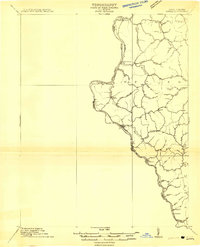 1911 Louisa1911 Print · USGSThe West Virginia borderlands along the Big Sandy River come to life in this early twentieth-century study of Wayne County. Trace family roots and vanished rail stops like Fort Gay, Glenhayes, and Saltpeter along the Norfolk and Western Railway line.
 - 1912 Map of Naugatuck
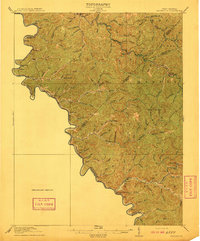 1912 Naugatuck1912 Print · USGSMingo and Wayne County borderlands are shown here in the early twentieth century, as the river-and-rail economy transformed these Appalachian hollows. Genealogists and historians can trace family-named sites along the Tug Fork and Norfolk and Western Ry, including Kermit, Naugatuck, and Breeden.
 - 1913 Map of Ceredo
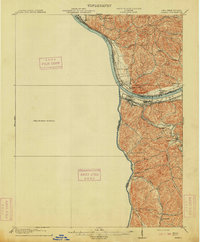 1913 Ceredo1913 Print · USGSThe confluence of the Ohio and Big Sandy rivers comes alive in this pre-war survey of the West Virginia-Ohio borderlands. Genealogists and rail historians can trace the early footprints of Kenova, Ceredo, and the winding path of Twelvepole Creek.4 unique versions available
 - 1913 Map of Louisa
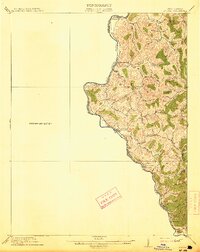 1913 Louisa1913 Print · USGSThe river borders of West Virginia and Kentucky come alive in this pre-World War I survey of the Big Sandy valley. Genealogists can trace family footprints in Fort Gay, Saltpeter, and Glenhayes or locate the rural Buck Church.3 unique versions available
 - 1914 Map of Inez
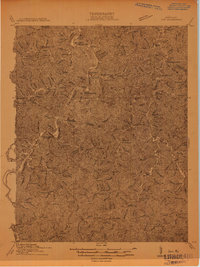 1914 Inez1914 Print · USGSThe Big Sandy River valley in the early twentieth century was a landscape of coal-country settlements and riverside rail stops. Researchers can trace the development of small communities like Whitehouse and Inez or locate vanished landmarks like Wells Chapel and Graves Shoals Sta.
 - 1915 Map of Paintsville
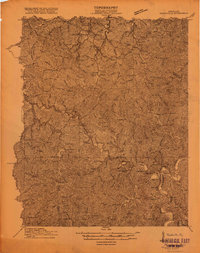 1915 Paintsville1915 Print · USGSEastern Kentucky during the first World War is captured here as the river-and-rail economy takes hold. Genealogists can trace family names through dozens of rural school districts and communities like Flatgap, Van Lear, and Staffordsville.
 - 1915 Map of Naugatuck
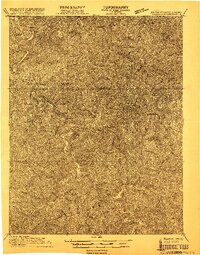 1915 Naugatuck1915 Print · USGSThe Tug Fork valley in the early twentieth century appears in fine detail here along the Kentucky and West Virginia border. Genealogists and historians can trace early settlements and valley schools including Warfield, Naugatuck, and the Priest School.
 - 1916 Map of Inez
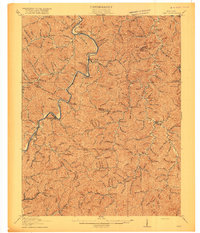 1916 Inez1916 Print · USGSMartin and Lawrence Counties are shown here during a period of rural growth and river-based transport. Genealogists can locate specific homesteads near Wells Chapel, track old post offices like Graves Shoals, or find local landmarks such as Sandlick School.3 unique versions available
 - 1917 Map of Paintsville
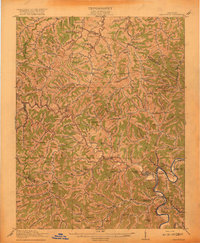 1917 Paintsville1917 Print · USGSEastern Kentucky during the first World War is meticulously documented here, showing the densely packed hollows of Johnson County. Genealogists can trace family roots through numerous numbered schools and rural settlements like Oil Springs, Flat Gap, and Hager Hill PO Johnson Sta.3 unique versions available
 - 1917 Map of Naugatuck
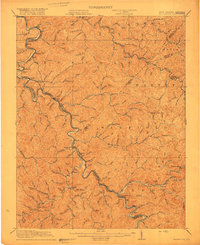 1917 Naugatuck1917 Print · USGSThe Tug Fork borderlands of Mingo and Wayne counties were defined by the rail-and-river economy during the early twentieth century. Genealogists and historians can trace riverside settlements like Kermit and Naugatuck, or search for upland landmarks such as Priest School and the Breeden Breading Post Office.3 unique versions available
 - 1926 Map of Naugatuck, 1957 Print
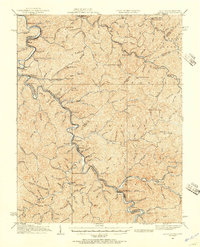 1926 Naugatuck1957 Print · USGSThe Tug Fork valley hums with activity in the 1920s as the rail-and-river economy shapes the West Virginia and Kentucky border. Genealogists and historians can trace numerous rural schools and early settlements like Kermit, Warfield, and the Cassie post office.
 - 1928 Map of Naugatuck
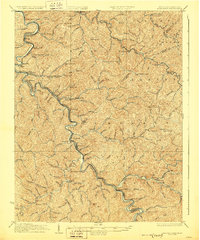 1928 Naugatuck1928 Print · USGSThe Tug Fork valley at the close of the 1920s reveals a landscape defined by the Norfolk and Western RR and riverside coal towns. Genealogists can trace family footprints through remote schoolhouses like The Bend Sch and rural post offices at Cassie Po and Kermit.2 unique versions available
 - 1939 Map of Louisa
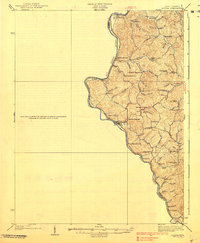 1939 Louisa1939 Print · USGSThe borderlands of West Virginia and Kentucky are captured here in the late thirties, centered on the river junctions. Researchers can trace family ties at small rural sites like Double Cabin Sch, Elijah Ch, and the settlement of Fort Gay.3 unique versions available
 - 1950 Map of Isonville, 1952 Print
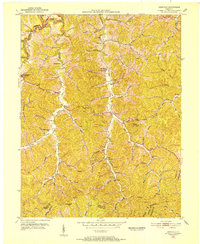 1950 Isonville1952 Print · USGSMid-century Elliott County is mapped here during a period of active rural life and early oil exploration. Researchers can trace ancestral locations through numerous schools like Fairview Sch and landmarks including Peters Hill Lookout Tower and Isonville.
 - 1951 Map of Dingus, 1953 Print
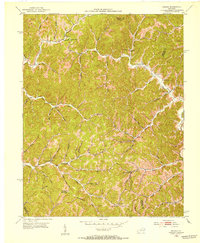 1951 Dingus1953 Print · USGSThe Morgan County backcountry in the early fifties reveals a network of tight-knit hollows defined by the coal and creek-bottom economy. Researchers can trace family history through numerous rural landmarks like Peddler Gap Sch, Lenton Ch, and the Daniel Cem.
 - 1953 Map of Prichard, 1954 Print
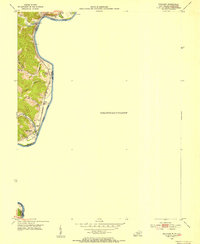 1953 Prichard1954 Print · USGSThe Big Sandy River corridor comes into focus in the early 1950s as a vital transportation link between Kentucky and West Virginia. Genealogists and rail historians can trace the paths of the Norfolk and Western railroad and locate local landmarks like Buchanan Chapel and Catalpa.2 unique versions available
 - 1953 Map of Boltsfork, 1955 Print
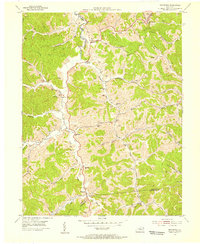 1953 Boltsfork1955 Print · USGSBoyd and Lawrence Counties are shown in the early fifties as the region's energy economy expanded through large gas fields and strip mines. Genealogists can trace family roots through dozens of local cemeteries and landmarks like Mt Olive Ch, Mavity, and Ararat Sch.2 unique versions available
 - 1953 Map of Mazie, 1955 Print
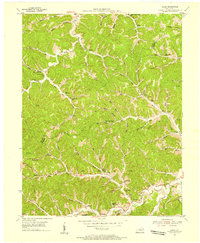 1953 Mazie1955 Print · USGSLawrence and Elliott Counties in the early 1950s reveal a landscape of ridge-top farms and creek-bottom communities. Genealogists can locate family landmarks like the Jason Boggs Cemetery, Mazie Church, and the widespread Gas and Oil Field.3 unique versions available
 - 1953 Map of Louisa, 1955 Print
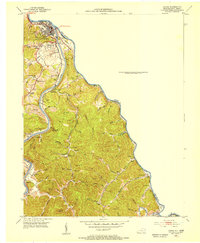 1953 Louisa1955 Print · USGSLawrence County at the mid-century shows a landscape shaped by the confluence of the Big Sandy River and the Tug Fork. Genealogists can trace family names through numerous burial sites and rural churches like Elizabeth Jarrell Ch, Chapman Ch, and the Preece Cem.
 - 1953 Map of Webbville, 1955 Print
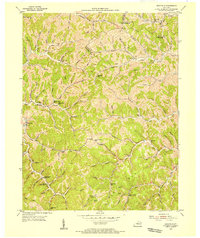 1953 Webbville1955 Print · USGSLawrence County saw a landscape of remote hollows and narrow creek-side settlements in the early fifties. Genealogists and historians can trace family locations through named sites like Pollys Chapel, Hammond Cem, and the Old Kentucky Home Sch.3 unique versions available
 - 1953 Map of Willard, 1955 Print
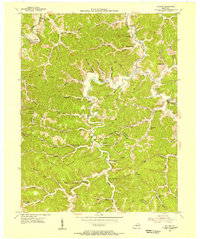 1953 Willard1955 Print · USGSThe hill country of Carter and Lawrence counties is captured here in the early fifties as small mining and farming communities lined the Little Sandy River. Local researchers can locate family landmarks like Kitchen Cem, several rural schoolhouses, and industrial sites such as E K Mines Br.2 unique versions available
Showing maps 1-25 of 62
Top cities of Lawrence County
Frequently asked questions
- What are the different types of historical maps available for Lawrence County?
- What is the oldest map of Lawrence County?
- Where can I purchase historical maps of Lawrence County for my home or office?
- Where can I download high-res historical maps of Lawrence County?
- Are there historical topographic maps available for Lawrence County?
- Is there historical aerial imagery available for Lawrence County?
- Where are historical maps of Lawrence County sourced from?