Old Maps of Rowan County, Kentucky for Metal Detecting
Plan your next treasure hunt with 89 historic maps of Rowan County. Find old homesites, ghost towns, trails, and gathering spots that may be lost to time — perfect for identifying promising metal detecting locations.
- Locate forgotten sites: Uncover places like long-lost settlements, abandoned rail lines, or gathering spots.
- Plan better hunts: Use map overlays combined with LiDAR or satellite views to narrow in on historically rich areas.
- Made for detectorists: Thousands of hobbyists use these maps to discover relics, coins, and hidden history.
Use these historic maps to boost your research and find new opportunities beneath the surface of Rowan County.
Rowan County, KY maps
(89)- 1929 Map of Morehead
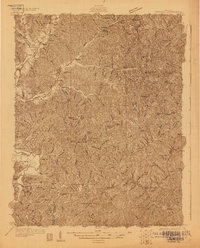 1929 Morehead1929 Print · USGSRowan and Morgan counties were centers of rail and clay production when this late-1920s survey was conducted. Local historians can locate early post offices like Elliottville PO (Hogtown) and trace the paths of the Chesapeake and Ohio through the Clack Mtn Tunnel.
 - 1929 Map of Salt Lick, 1961 Print
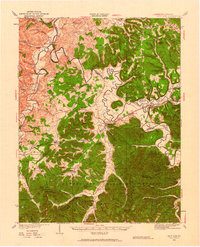 1929 Salt Lick1961 Print · USGSBath and Fleming counties are shown here as the Licking River valley was transitioning into a modern rail corridor. Genealogists and historians can trace numerous rural schoolhouses and river crossings like Moores Ferry, Arnold Chapel, and the historic Olympia Springs.
 - 1934 Map of Salt Lick
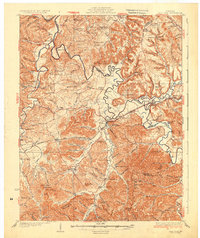 1934 Salt Lick1934 Print · USGSNortheastern Kentucky’s river valleys and ridgelines are captured here in the 1930s, centered on the vital rail corridor through Salt Lick. Genealogists and historians can trace dozens of rural schoolhouses and churches, including Arnold Chapel Sch, Olympia Springs, and Moores Ferry on the Licking River.
 - 1935 Map of Morehead
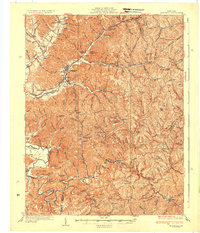 1935 Morehead1935 Print · USGSIn the mid-1930s, the mountain hollows around Morehead were connected by a dense network of country schools and the Chesapeake and Ohio railroad. Trace family sites at Blairs Mills PO, Zilpo, and the tunnels through Clack Mountain.
 - 1950 Map of Ault, 1952 Print
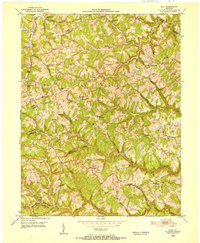 1950 Ault1952 Print · USGSNortheastern Kentucky life in the early fifties revolves around winding creek-beds and ridge-top schools. Trace ancestral roots through localized landmarks like Gimlet (PO), Mocabee Ford, and the many rural schools including Rock Springs Sch and Bunker Hill Sch.
 - 1951 Map of Soldier, 1952 Print
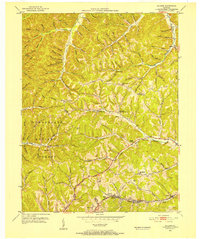 1951 Soldier1952 Print · USGSEastern Kentucky hills at the start of the 1950s show a landscape shaped by narrow creek valleys and the Chesapeake and Ohio railroad. Researchers can locate remote rural landmarks like the Bald Point School, Masters Cem, and the village of Bedford.2 unique versions available
 - 1951 Map of Cranston, 1953 Print
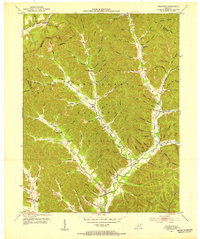 1951 Cranston1953 Print · USGSRowan County in the early fifties shows a landscape of deep hollows and rural outposts within the Cumberland National Forest. Genealogists can trace family lines through sites like McRoberts Cem and schools such as Rock Fork Sch.2 unique versions available
 - 1951 Map of Stricklett, 1953 Print
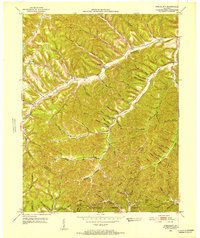 1951 Stricklett1953 Print · USGSLewis County in the early fifties is mapped here as a network of creek-side communities and upland lookouts. Researchers can find old schools and churches like Kinniconick Sch, Thackers Chapel, and Union Ch along the winding Kinniconick Creek.4 unique versions available
 - 1951 Map of Plummers Landing, 1953 Print
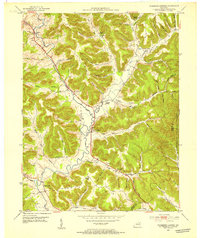 1951 Plummers Landing1953 Print · USGSFleming and Rowan counties are captured in the early fifties, showing a rural Kentucky landscape of mill towns and winding creeks. Genealogists can trace family names through landmarks like Daulton Sch, Goddard, and the mill sites at Ringos Mills.3 unique versions available
 - 1953 Map of Haldeman, 1954 Print
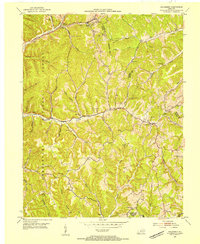 1953 Haldeman1954 Print · USGSRowan County in the early 1950s is shown here as a landscape of rural schools and winding creek valleys. Researchers can trace the Chesapeake and Ohio rail line or locate community hubs like Haldeman, Elliottville, and the Oak Grove Ch.2 unique versions available
 - 1953 Map of Farmers, 1954 Print
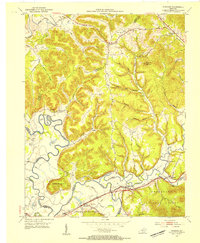 1953 Farmers1954 Print · USGSThe borderlands of Rowan, Bath, and Fleming counties are captured here in the early fifties, centered on the rail-and-river hub of Farmers. Local researchers can trace family roots through sites like Jones Cemetery, Moores Ferry, and the Three Lick School.2 unique versions available
 - 1953 Map of Bangor, 1954 Print
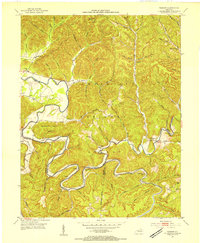 1953 Bangor1954 Print · USGSRowan County in the early fifties is defined by the winding Licking River and the small upland communities of the Cumberland National Forest. Researchers can locate several rural schools like Cave Branch Sch and unusual landmarks such as Poppin Rock Tunnel.2 unique versions available
 - 1953 Map of Salt Lick, 1954 Print
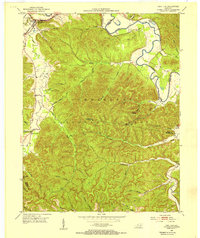 1953 Salt Lick1954 Print · USGSBath County at the start of the fifties shows a landscape where timber and rail define the community. Researchers can locate the C & O railroad through Salt Lick, the Tater Knob Lookout Tower, and burial sites like Dickerson Cem.2 unique versions available
 - 1953 Map of Wrigley, 1954 Print
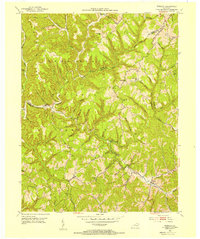 1953 Wrigley1954 Print · USGSEastern Kentucky's mountain communities were still centered on local valley schools and remote post offices in the early fifties. Genealogists and historians can trace family locations through Blairs Mills Sch, Oak Hill Sch, and the settlement at Wrigley.2 unique versions available
 - 1953 Map of Morehead, 1955 Print
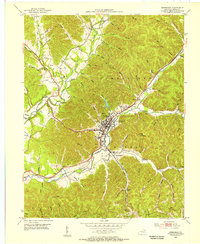 1953 Morehead1955 Print · USGSRowan County in the early fifties shows a bustling mountain economy centered on the campus of State College and the industrial yards of Clearfield. Genealogists and historians can trace the Chesapeake and Ohio railroad past family landmarks like Bratton Br Ch and the Morehead Lookout Tower.2 unique versions available
 - 1953 Map of Colfax, 1955 Print
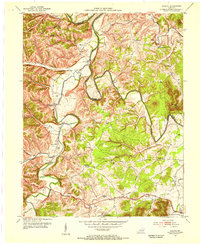 1953 Colfax1955 Print · USGSBath and Fleming Counties during the early fifties show a landscape of winding river valleys and ridge-top schools. Genealogists can trace family names at the Atchison Cem or locate community centers like Slate Valley and Baileys Chapel.
 - 1957 Map of Huntington, 1966 Print
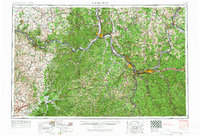 1957 Huntington1966 Print · USGSThe industrial heart of the Ohio River valley is captured here in the mid-sixties, showing the growth of Huntington and Ashland. Researchers can trace the extensive rail networks of the Chesapeake and Ohio RR and locate sites like the Chief Cornstalk Hunting Ground.3 unique versions available
 - 1960 Map of Huntington
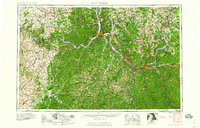 1960 Huntington1960 Print · USGSThe tri-state river valley thrived in the late fifties as a hub of heavy industry and Appalachian rail transit. Genealogists and historians can trace the connection between river towns like Ashland and Portsmouth or locate family homesteads near Coleman Ridge.
 - 1962 Map of Ault, 1964 Print
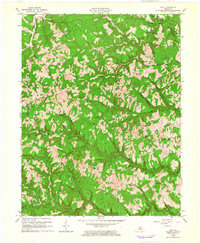 1962 Ault1964 Print · USGSElliott County and its neighbors are captured here in the early 1960s, showing a landscape of upland ridges and deep-cut creek settlements. Trace the history of rural communities at Stark, Ordinary, and Dewdrop, or locate family landmarks like Mary Mabry Cem.2 unique versions available
 - 1970 Map of Morehead, 1972 Print
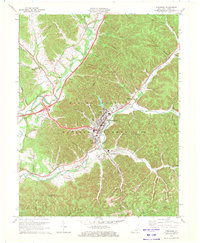 1970 Morehead1972 Print · USGSMorehead and the surrounding Rowan County hills are captured here in the early 1970s, as the university and railroad shaped the local landscape. Researchers can trace the development of Morehead State University or locate family sites like Caddill Cem and Dry Creek Ch.2 unique versions available
 - 1970 Map of Farmers, 1972 Print
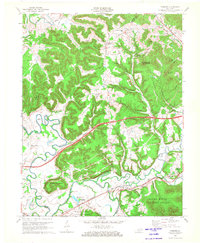 1970 Farmers1972 Print · USGSRowan and Bath counties in the early seventies reveal a landscape of river-bend settlements and deep forest ridges. Genealogists and locals can trace family sites like Eldridge Cem, find the old crossing at Moores Ferry, and follow the Chesapeake and Ohio rail line.2 unique versions available
 - 1970 Map of Colfax, 1972 Print
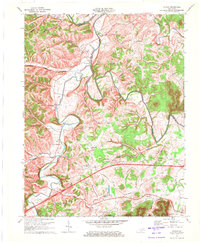 1970 Colfax1972 Print · USGSBath and Fleming Counties appear here in the early seventies, as rural life moved along the high ridges and deep hollows of the Licking River. Genealogists and historians can trace local family lineages through remote sites like Old Virginia Cem, Grange City, and Atchison Cem.2 unique versions available
 - 1970 Map of Cranston, 1972 Print
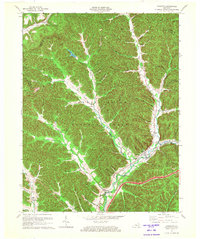 1970 Cranston1972 Print · USGSThe Daniel Boone National Forest in the 1970s reveals a landscape of isolated hollows and ridge-top lookouts. Genealogists can locate family landmarks like Evans Cem and rural centers such as Cranston, Smile, and the Hickory Flats Lookout Tower.
 - 1970 Map of Soldier, 1972 Print
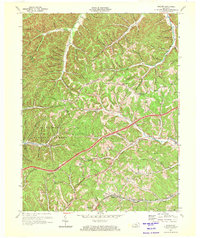 1970 Soldier1972 Print · USGSThe foothills of eastern Kentucky come into focus here in the early seventies, detailing the rail and river corridor between Carter and Lewis counties. Researchers can trace the Chesapeake and Ohio tracks through Soldier and Haldeman or locate Bowen Chapel and Patton Cem.
 - 1975 Map of Salt Lick, 1977 Print
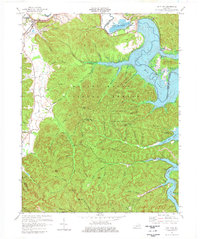 1975 Salt Lick1977 Print · USGSBath and Rowan counties in the mid-seventies reveal a landscape reshaped by the waters of Cave Run Lake and the Licking River. Genealogists and historians can trace the C & O rail corridor and find local sites like Clear Creek Furnace and Upper Salt Lick Ch.
Showing maps 1-25 of 89
Top cities of Rowan County
Frequently asked questions
- What are the different types of historical maps available for Rowan County?
- What is the oldest map of Rowan County?
- Where can I purchase historical maps of Rowan County for my home or office?
- Where can I download high-res historical maps of Rowan County?
- Are there historical topographic maps available for Rowan County?
- Is there historical aerial imagery available for Rowan County?
- Where are historical maps of Rowan County sourced from?