Old Maps of Rangeley, Maine for Academic Research
Study the evolution of Rangeley with 57 high-resolution historic maps. Whether you're teaching, researching, or modeling changes in land use, these maps provide essential visual documentation of urban, environmental, and geographic change.
- Analyze long-term change: Track patterns in development, transportation, and natural features.
- Ideal for environmental or urban studies: Support academic projects with primary historical map data.
- Use in the classroom or lab: Educators and researchers rely on these maps to bring historical context to life.
These maps are a powerful tool for teaching, research, and visualizing how Rangeley has changed over the decades.
Rangeley, ME maps
(57)- 1931 Map of Cupsuptic
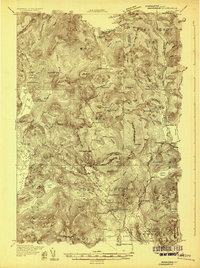 1931 Cupsuptic1931 Print · USGSOxford County's rugged northern interior comes to life in this early 1930s survey of the Maine woods. Trace the network of remote outposts and waterways that defined the region, from the Parmachenee Club and Riverside Camp to the waters of Cupsuptic Lake.5 unique versions available
 - 1932 Map of Kennebago Lake
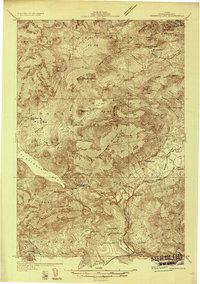 1932 Kennebago Lake1932 Print · USGSThe Franklin County backcountry in the early thirties is a landscape of isolated timber camps and mountain lakes. Researchers can locate remote industrial sites like Langtown Mill, rural schoolhouses such as Dallas Sch, and the rail-linked Dead River Sta.4 unique versions available
 - 1933 Map of Rangeley
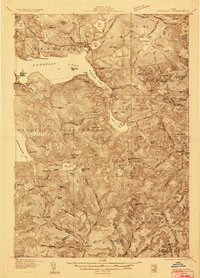 1933 Rangeley1933 Print · USGSThe Rangeley Lakes region is shown here in the early 1930s, capturing a landscape of timber townships and mountain peaks. Genealogists and historians can locate rural schoolhouses like the Lakeside School, the Dallas station railroad stop, and the abandoned Flagg Dam.2 unique versions available
 - 1934 Map of Cupsuptic
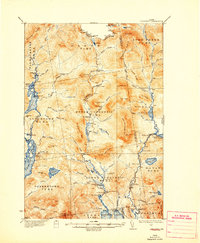 1934 Cupsuptic1934 Print · USGSThe Maine wilderness at the edge of the Canadian border was a landscape of remote camps and river systems in the early thirties. Trace the locations of early outposts like Cupsuptic Sporting Camp, the Game Wardens Camp, and the high-elevation Fire Tower on West Kennebago Mtn.
 - 1935 Map of Kennebago Lake
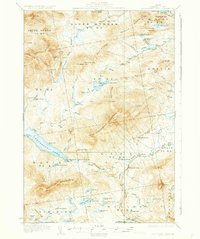 1935 Kennebago Lake1935 Print · USGSFranklin County's timberlands and sporting camps are preserved here as they were in the mid-1930s. Researchers can locate remote schools and industry sites like Langtown Sch and Langtown Mill, or trace the historic Arnold Trail north toward the border.
 - 1935 Map of Cupsuptic
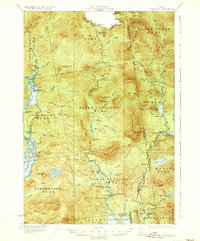 1935 Cupsuptic1935 Print · USGSNorthwestern Maine's remote forests are documented in the 1930s, showing a landscape defined by hunting camps and logging rivers. Researchers can locate vanished outposts like Moochers Home, Parmachenee Club, and Cupsuptic Sporting Camp along the river networks.3 unique versions available
 - 1936 Map of Kennebago Lake
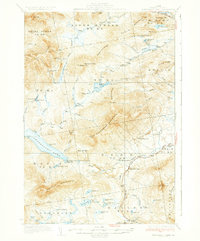 1936 Kennebago Lake1936 Print · USGSThe North Woods of Maine are shown in the mid-1930s, as traditional logging and sporting life persisted around Kennebago Lake. Genealogists and historians can trace isolated schoolhouses like the Kennebago School and old local landmarks such as Langtown Mill.3 unique versions available
 - 1939 Map of Rangeley
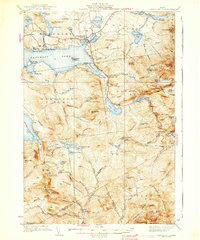 1939 Rangeley1939 Print · USGSRangeley and the surrounding Maine high country are shown here in the years before the Second World War. Researchers can trace the original path of the Appalachian Trail past Saddleback Mtn and locate old rural landmarks like Lakeside Sch.5 unique versions available
 - 1940 Map of Oquossoc, 1955 Print
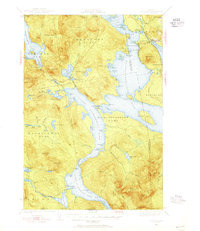 1940 Oquossoc1955 Print · USGSOxford County at the dawn of the 1940s remained a landscape of timber and water, centered on the historic settlements of the Rangeley Lakes. Genealogists and researchers can trace early lakefront communities and the vital water-control sites at Upper Dam, Aziscohos Dam, and Oquossoc.4 unique versions available
 - 1942 Map of Oquossoc
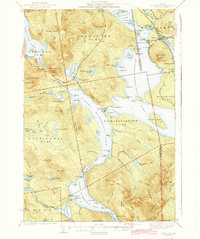 1942 Oquossoc1942 Print · USGSMaine's western lakes and timberlands are captured here in the early 1940s, showing a landscape defined by water and woods. You can trace the Appalachian Trail through the high country or locate remote sporting sites like the Oquossoc Angling Assn and Middle Dam.3 unique versions available
 - 1949 Map of Jackman
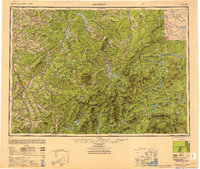 1949 Jackman1949 Print · USGSThe Quebec and Maine borderlands are shown in great detail during the late 1940s, highlighting the industrial and natural geography of the region. Trace old rail lines like the Canadian Pacific and locate settlements from Sherbrooke to Scotstown.2 unique versions available
 - 1949 Map of Rangeley, 1955 Print
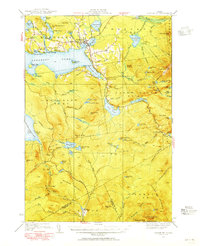 1949 Rangeley1955 Print · USGSThe western Maine highlands come into focus in the late 1940s, showcasing the region's transition into a premier recreation destination. Track the Appalachian Trail as it crosses peaks like Saddleback Mtn and Bemis Mtn, or locate the Airport and landmarks around Rangeley Lake.4 unique versions available
 - 1950 Map of Cupsuptic
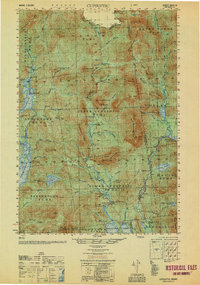 1950 Cupsuptic1950 Print · USGSThe northern Maine woods come alive in this mid-century survey of the remote townships near the Canadian border. Researchers can trace the heritage of historic logging and sporting sites like the Parmachenee Club, Moochers Home, and Riverside Camp.
 - 1950 Map of Lewiston
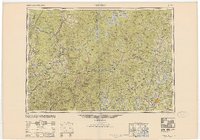 1950 Lewiston1950 Print · USGSThe Maine and New Hampshire borderlands come alive in this post-war survey of the White Mountains and Androscoggin valley. Genealogists and historians can trace rail lines like the Maine Central Railroad and find high-altitude landmarks from Mount Washington to Bretton Woods.2 unique versions available
 - 1956 Map of Lewiston, 1975 Print
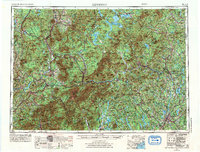 1956 Lewiston1975 Print · USGSThe Northern New England interior is documented here in the mid-fifties, from the industrial Androscoggin River to the high peaks of the White Mountains. Trace the Grand Trunk Railway through mountain passes or locate family landmarks near Sabbathday Lake and Bretton Woods.
 - 1961 Map of Lewiston
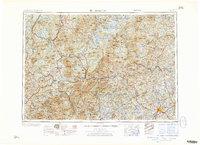 1961 Lewiston1961 Print · USGSWestern Maine and the White Mountains appear here during the early sixties, showing the industrial river towns and vast timberlands before the modern interstate era. Genealogists and historians can trace the Grand Trunk RR through Berlin or locate landmarks like Old Speck Mountain and Elephant Mountain.
 - 1962 Map of Lewiston
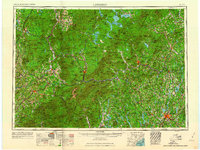 1962 Lewiston1962 Print · USGSThe industrial river valleys and high peaks of Maine and New Hampshire define the region in the early sixties. Trace the rail-and-river network from Lewiston to the White Mountains, passing through mill towns like Berlin and Rumford.
 - 1963 Map of Jackman
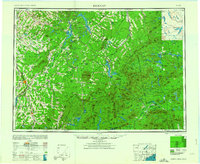 1963 Jackman1963 Print · USGSThe international borderlands of Maine and Quebec come alive in the mid-twentieth century, showing a landscape of timber towns and rail connections. Genealogists and historians can trace the paths of the Canadian Pacific Railway through Jackman or locate families in Sherbrooke and Megantic.
 - 1966 Map of Sherbrooke
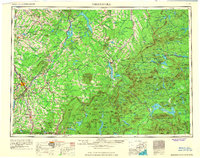 1966 Sherbrooke1966 Print · USGSThe borderlands of Quebec and Maine come alive in the mid-1960s, documenting the industrial towns and deep woods of the Northeast. Genealogists can trace family lines through Sherbrooke and Coaticook, or locate remote logging outposts along the Moose River and Flagstaff Lake.
 - 1969 Map of Lewiston
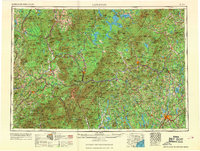 1969 Lewiston1969 Print · USGSThe northern New England highlands come into focus during the mid-fifties, showing the vital rail and river networks connecting industrial centers to the deep woods. Researchers can trace the path of the Grand Trunk RR or locate landmarks like Mt Washington and Rangeley Lake.
 - 1970 Map of Kennebago Lake, 1973 Print
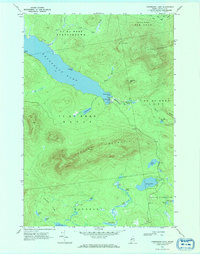 1970 Kennebago Lake1973 Print · USGSNorthwestern Maine at the start of the 1970s remained a landscape of sporting camps and timber townships. Genealogists and researchers can trace the remote outposts of Grants Camps and Kennebago Lake Camps among the peaks of East Kennebago Mtn.
 - 1976 Map of Sherbrooke
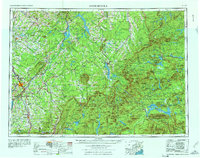 1976 Sherbrooke1976 Print · USGSThe northern Maine woods and Quebec’s Eastern Townships meet in this mid-century survey of the rugged international borderlands. Genealogists and historians can trace rail-and-river connections through Thetford Mines, follow the Dead River to Flagstaff Lake, or locate small border crossings at Stanhope and Beecher Falls.2 unique versions available
 - 1977 Map of Kennebago Lake, 1983 Print
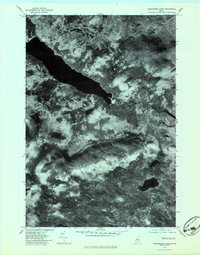 1977 Kennebago Lake1983 Print · USGSThe Maine wilderness of the late seventies is captured in this orthophoto, showing the unpopulated mountain landscapes near Loon Lake. Researchers can trace the drainages of Big Sag Brook and the high ridges of Spotted Mountain.
 - 1977 Map of Kennebago, 1983 Print
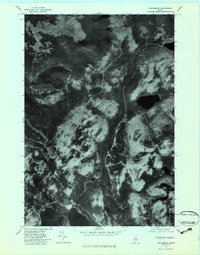 1977 Kennebago1983 Print · USGSOxford County's timberlands and river systems are shown with photographic precision in the late seventies. Researchers can trace the winding Kennebago River and the shoreline of Cupsuptic Lake as they appeared during this era of forest management.
 - 1977 Map of Oquossoc, 1983 Print
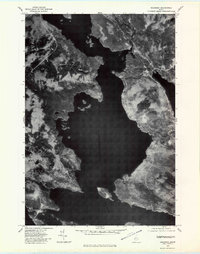 1977 Oquossoc1983 Print · USGSOxford County's lake country is captured in the late 1970s, showcasing the intricate shoreline of the Rangeley Lakes region. Trace the footprints of Oquossoc and South Rangeley or locate the infrastructure at Upper Dam and Bald Mountain.
Showing maps 1-25 of 57
Top cities near Rangeley
- Eustis historical maps
- Weld historical maps
- Dallas Plantation historical maps
- Rangeley Plantation historical maps
- Madrid Township historical maps
- Coplin Plantation historical maps
See more
Top neighborhoods of Rangeley
- Bald Mountain historical maps
- Mountainview historical maps
- Oquossoc historical maps
- Mingo Springs historical maps
- Macy historical maps
Frequently asked questions
- What are the different types of historical maps available for Rangeley?
- What is the oldest map of Rangeley?
- Where can I purchase historical maps of Rangeley for my home or office?
- Where can I download high-res historical maps of Rangeley?
- Are there historical topographic maps available for Rangeley?
- Is there historical aerial imagery available for Rangeley?
- Where are historical maps of Rangeley sourced from?