Old Maps of Osborn, Maine for Hiking & Exploration
Hike through history with 44 historic maps of Osborn. Explore old trails, ghost towns, and forgotten backroads — perfect for outdoor adventurers and local explorers.
- Rediscover forgotten places: Map out old mining camps, roads, and footpaths that no longer exist on modern maps.
- Layer with modern tools: Combine with LiDAR or satellite views to plan hikes through historical terrain.
- Made for exploration: Popular among hikers, overlanders, and local history lovers.
Use these maps to find adventure and explore the hidden past of Osborn.
Osborn, ME maps
(44)- 1911 Map of Ellsworth
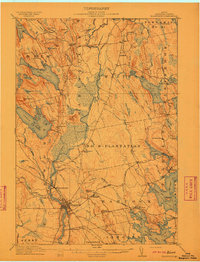 1911 Ellsworth1911 Print · USGSCoastal Hancock County at the turn of the century shows a landscape of busy rail junctions and remote plantation schools. Genealogists can trace family names at Washington Junction or locate the old Beechland School and Morrison School.5 unique versions available
 - 1929 Map of Great Pond
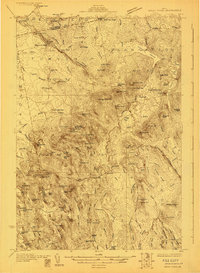 1929 Great Pond1929 Print · USGSThe rural interior of Hancock County is captured here in the late twenties during a period of remote timber camps and small mountain schools. Researchers can locate long-standing landmarks such as Archer's Corners, Rebel Hill Sch, and the isolated Rackliff Camp.
 - 1929 Map of Lead Mountain
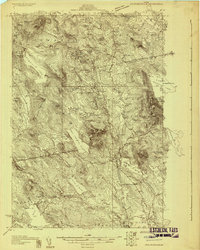 1929 Lead Mountain1929 Print · USGSThe Maine backcountry near the Hancock and Washington County line is shown here in the late twenties, dominated by timberlands and glacial lakes. Genealogists and historians can locate remote outposts like Jacobs Camp, the Howe Farm, and the trails surrounding Lead Mountain.
 - 1930 Map of Tunk Lake
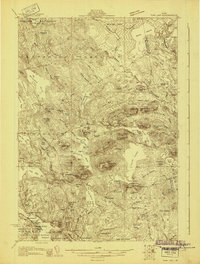 1930 Tunk Lake1930 Print · USGSHancock County was a landscape of timber and tide in the early 1930s, where the Maine Central rail line linked small coastal villages to the deep woods. Genealogists and historians can trace old homesteads in Donnells, rural education at Tunk Lake Sch, and the locations of sporting retreats like the Wichyup Club.
 - 1932 Map of Tunk Lake
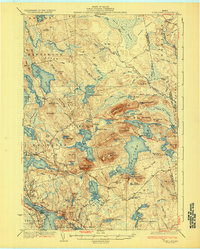 1932 Tunk Lake1932 Print · USGSThe coastal inlets and glacial highlands of Hancock County are meticulously detailed in the early 1930s. Researchers can trace the Maine Central rail line through Sullivan and locate vanished local landmarks like the Think Lake Sch and Wickypup Club.4 unique versions available
 - 1932 Map of Lead Mountain
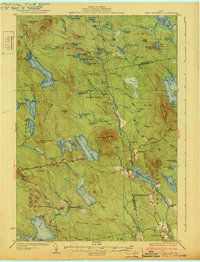 1932 Lead Mountain1932 Print · USGSThe Maine timberlands and the historic Air Line Road are captured here in the early thirties, showcasing a landscape of isolated logging camps and remote lakes. Researchers can locate family-named sites like Howe Farm Camp, the settlements of Deblois and Beddington, and the Fire Tower atop Lead Mountain.5 unique versions available
 - 1932 Map of Great Pond
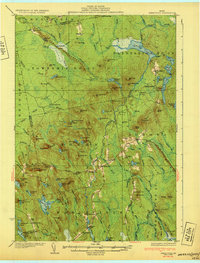 1932 Great Pond1932 Print · USGSHancock and Penobscot Counties are captured here in the early thirties, showcasing the timberlands and small settlements along the Airline Road. Local historians can trace family roots through sites like the Goodwin School, Archers Corners, and North Mariaville.4 unique versions available
 - 1940 Map of Ellsworth, 1957 Print
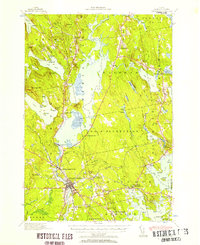 1940 Ellsworth1957 Print · USGSHancock County at the start of the 1940s reveals a landscape of tidal bays and timbered ridges surrounding the hub of Ellsworth. Genealogists and local historians can trace rail lines at Washington Junction, find rural schoolhouses like Beechland Sch, and locate the old Franklin Road North Hancock Post Office.
 - 1942 Map of Ellsworth
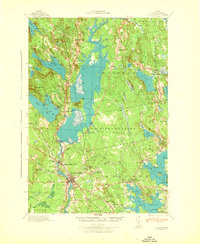 1942 Ellsworth1942 Print · USGSHancock County enters the early years of the war with its rail and river networks fully matured. Genealogists and historians can trace the foundations of local life through rural landmarks like the No 8 Plantation Sch, the rail hub at Washington Junction, and the post office at North Hancock P O.
 - 1942 Map of Tunk Lake
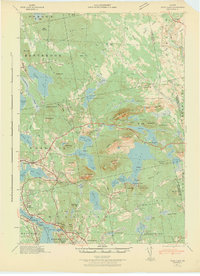 1942 Tunk Lake1942 Print · USGSHancock County’s inland peaks and coastal villages are captured here during the early 1940s, just as aerial photography began to modernize regional mapping. Researchers can locate the Tunk Lake Sch, coastal rail stops at Waukeag, and the prominent Fire Tower on Schoodic Mtn.
 - 1948 Map of Bangor
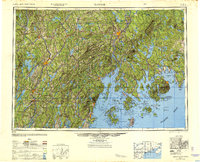 1948 Bangor1948 Print · USGSThe Maine coast and its industrial river valleys are captured here shortly after the war, showing the vital shipping and rail hubs of the late 1940s. Genealogists and historians can trace the tracks of the Maine Central RR connecting Bangor, Augusta, and Old Town.
 - 1956 Map of Bangor, 1966 Print
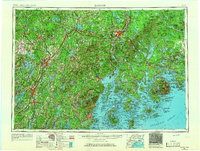 1956 Bangor1966 Print · USGSMid-century Maine comes alive in this survey of the rugged coast and river valleys during the 1950s. Genealogists and historians can trace the vital rail corridors of the Maine Central RR connecting timber towns like Old Town to the coast at Bar Harbor.3 unique versions available
 - 1957 Map of Tunk Lake, 1959 Print
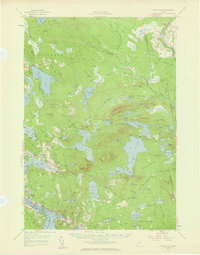 1957 Tunk Lake1959 Print · USGSCoastal Maine in the late 1950s shows a landscape defined by the Maine Central RR and tidal waters like Hog Bay. Local historians can trace family locations near Bayview Cem, the Union Ch, and settlements from Deblois to East Sullivan.4 unique versions available
 - 1957 Map of Ellsworth, 1959 Print
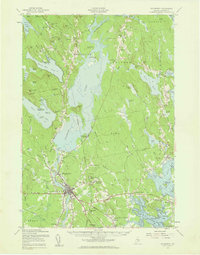 1957 Ellsworth1959 Print · USGSHancock County at the end of the fifties shows the critical transition from rail-dependent industry to the modern highway era. Researchers can trace historic family burial sites and rural schoolhouses, including Hillside Cem, Stetson Sch, and the junctions of the Maine Central Railroad.3 unique versions available
 - 1957 Map of Great Pond, 1959 Print
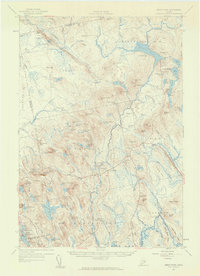 1957 Great Pond1959 Print · USGSHancock County's interior townships are shown here in the late fifties as military recreation and training sites integrated with traditional rural settlements. Researchers can locate the Hadley Cem and several community schools like Monticello Sch and Caruso Sch.4 unique versions available
 - 1957 Map of Lead Mountain, 1959 Print
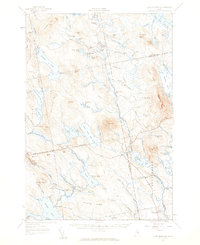 1957 Lead Mountain1959 Print · USGSThe wild lake country of Down East Maine is shown here in the late fifties, featuring the scattered outposts and high ridges of Washington and Hancock Counties. Genealogists and researchers can trace local landmarks like Beddington, Dog Corners, and the prominent Lookout Tower atop Lead Mtn.3 unique versions available
 - 1960 Map of Bangor
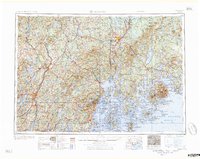 1960 Bangor1960 Print · USGSCentral Maine in the sixties reveals a landscape of river-powered industry and sprawling coastal island chains. Researchers can trace the rail corridors of the Maine Central or locate mid-century aviation landmarks like Dow Air Force Base.
 - 1961 Map of Bangor
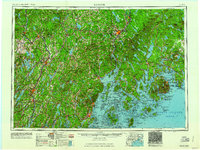 1961 Bangor1961 Print · USGSMid-century Maine comes alive through its busy river ports and rocky archipelagoes during a period of steady maritime and rail commerce. Researchers can trace the path of the Maine Central railroad and locate coastal landmarks from Acadia National Park to Vinalhaven Island.
 - 1981 Map of Eastbrook, 1982 Print
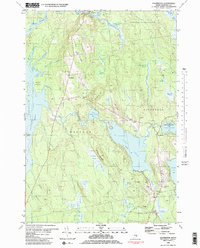 1981 Eastbrook1982 Print · USGSHancock County’s inland ridges and heaths are meticulously documented in this late-twentieth-century study of the Eastbrook and Waltham vicinity. Researchers can locate family burial sites at Sunnyside Cem, the old Cave Hill Sch, and landmarks along Waltham Ridge.2 unique versions available
 - 1982 Map of Molasses Pond, 1983 Print
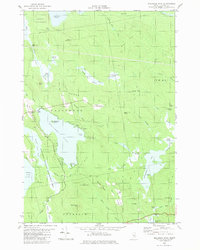 1982 Molasses Pond1983 Print · USGSHancock County’s intricate interior wetlands and ridges are captured here during the early eighties. Researchers can trace land use through the Lyle Frost Wildlife Management Area and locate family landmarks like Crimmins Cem or Macomber Mill Str.
 - 1985 Map of Bangor
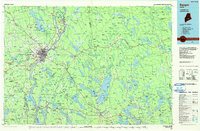 1985 Bangor1985 Print · USGSMid-Maine during the mid-eighties centers on the industrial pulse of the Penobscot River and its critical rail connections. Genealogists and historians can trace the development of river towns from Old Town to Ellsworth and locate regional landmarks like Fort Knox State Park.
 - 1987 Map of Rocky Pond, 1988 Print
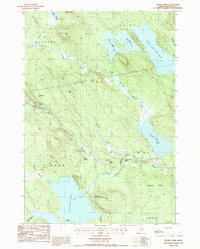 1987 Rocky Pond1988 Print · USGSHancock County's interior ponds and river branches are captured here in the late eighties, showing a landscape shaped by water and timber. Researchers can trace landforms and landmarks like Dog Corners, the Sevenmile Brook Bluff, and the landings along the Union River.
 - 1988 Map of Amherst
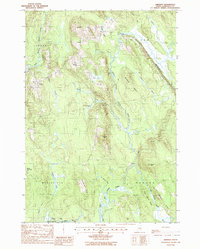 1988 Amherst1988 Print · USGSHancock County’s river-carved interior is documented here in the late eighties, featuring the convergence of the Union River branches. Researchers can trace the unique glacial geology of The Whalesback and the small rural crossroads of Amherst, Aurora, and North Mariaville.
 - 1994 Map of Bangor
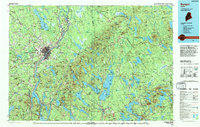 1994 Bangor1994 Print · USGSThe Penobscot River valley and the coastal highlands of eastern Maine are captured here in the mid-1990s. Researchers can trace the industrial rail corridors of the Maine Central Railroad or explore the landscape around Old Town, Bucksport, and Graham Lake.
 - 2011 Map of Eastbrook, 2011 Print
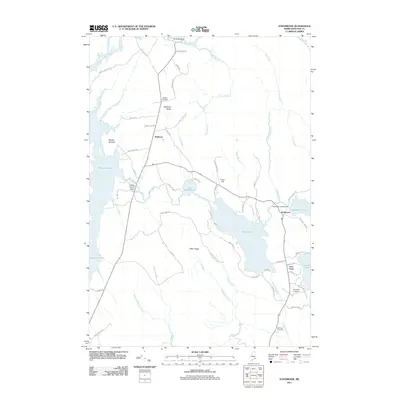 2011 Eastbrook2011 Print · USGSWaltham and Eastbrook are shown at the start of the 2010s, nestled between the waters of Graham Lake and Webb Pond. Genealogists and local historians can locate family burial sites at Hillside Cemetery and Sunnyside Cemetery or trace the drainage of Egypt Stream.
Showing maps 1-25 of 44
Top cities near Osborn
- Ellsworth historical maps
- Hancock historical maps
- Franklin historical maps
- Bradley historical maps
- Sullivan historical maps
- Clifton historical maps
See more
Top neighborhoods of Osborn
Frequently asked questions
- What are the different types of historical maps available for Osborn?
- What is the oldest map of Osborn?
- Where can I purchase historical maps of Osborn for my home or office?
- Where can I download high-res historical maps of Osborn?
- Are there historical topographic maps available for Osborn?
- Is there historical aerial imagery available for Osborn?
- Where are historical maps of Osborn sourced from?