Old Maps of Walkersville, Maryland for Academic Research
Study the evolution of Walkersville with 37 high-resolution historic maps. Whether you're teaching, researching, or modeling changes in land use, these maps provide essential visual documentation of urban, environmental, and geographic change.
- Analyze long-term change: Track patterns in development, transportation, and natural features.
- Ideal for environmental or urban studies: Support academic projects with primary historical map data.
- Use in the classroom or lab: Educators and researchers rely on these maps to bring historical context to life.
These maps are a powerful tool for teaching, research, and visualizing how Walkersville has changed over the decades.
Walkersville, MD maps
(37)- 1893 Map of Frederick
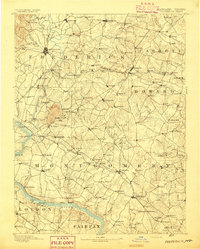 1893 Frederick1893 Print · USGSMaryland's Piedmont region at the end of the nineteenth century reveals a landscape defined by the Potomac River and the rise of rail transit. Researchers can trace the path of the Chesapeake and Ohio Canal or locate local hubs like Poolesville and Buckeystown.
 - 1894 Map of Frederick
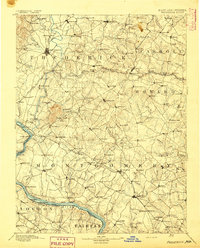 1894 Frederick1894 Print · USGSMaryland's Piedmont region in the late nineteenth century was a complex network of river crossings and railway junctions. Researchers can trace the path of the Baltimore & Ohio R. R. past Sugar Loaf Mtn. and locate historic river sites like Nolands Ferry.5 unique versions available
 - 1908 Map of Ijamsville, 1921 Print
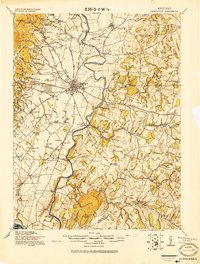 1908 Ijamsville1921 Print · USGSFrederick and its surrounding valley are captured here just after the turn of the century, showing a landscape defined by historic turnpikes and the winding Monocacy River. Genealogists and historians can trace defunct schoolhouses, early turnpike toll gates like Fountain Rock T.G., and family landmarks near Sugarloaf Mtn.
 - 1909 Map of Ijamsville
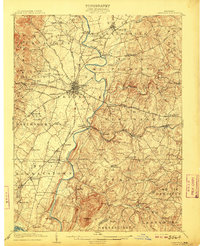 1909 Ijamsville1909 Print · USGSFrederick County and parts of Montgomery County are documented here during an era of significant rail and turnpike expansion. Genealogists and historians can locate early post offices and stations such as Araby P O, Ijamsville, and the Almshouse near Frederick.9 unique versions available
 - 1911 Map of Emmitsburg
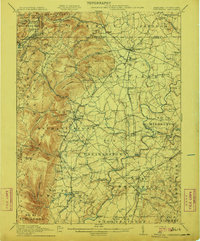 1911 Emmitsburg1911 Print · USGSMaryland's northern borderlands and the Catoctin mountains thrived in the early twentieth century as a hub for institutions, railroads, and milling. Genealogists and historians can locate family homes and old crossroads near St Josephs Academy, Sabillasville, and the Western Maryland RR.6 unique versions available
 - 1942 Map of Frederick
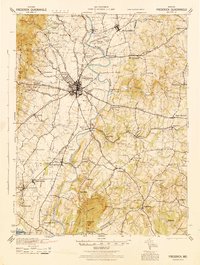 1942 Frederick1942 Print · USGSMid-century Maryland's central corridor is centered on Frederick as it appeared before the modern interstate system. Researchers can trace the routes of the B & O Canal, locate the Montevue Almshouse, and see the intersection of the Northern Central RR with early turnpikes.
 - 1942 Map of Gettysburg, 1944 Print
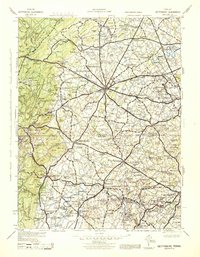 1942 Gettysburg1944 Print · USGSGettysburg and its surrounding borderlands are shown in great detail during the early 1940s, capturing the region's dense network of rural schools and mills. Genealogists can trace family-named landmarks such as Galt Kump PO, Hafers Mill, and Philips Delight Sch.
 - 1943 Map of Emmitsburg
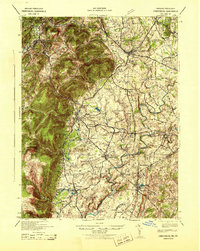 1943 Emmitsburg1943 Print · USGSMaryland's northern border and the Frederick Valley appear during the early 1940s, where the Catoctin range meets the Monocacy plain. Genealogists can trace family names at Hoovers Mill, locate historic institutions like Mount St Marys College, or follow the Western Maryland RR.4 unique versions available
 - 1944 Map of Walkersville
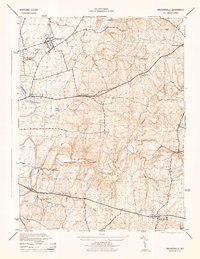 1944 Walkersville1944 Print · USGSFrederick County at the height of the Second World War shows a rural landscape of limestone quarries, rail corridors, and small crossroads hamlets. Genealogists can trace family footprints through Walkersville, Libertytown, and New Market, or locate industrial sites like the Lime Kiln and Old Quarry.2 unique versions available
 - 1944 Map of Frederick
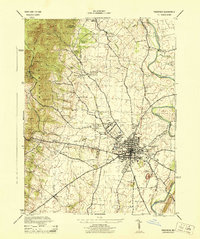 1944 Frederick1944 Print · USGSMaryland's Piedmont region during the 1940s reveals a landscape of industrial growth and mountain recreation. Researchers can trace historic transport lines through Montevue Sta, the Frederick Airport, and the large Mt Olivet Cemetery.
 - 1944 Map of Woodsboro
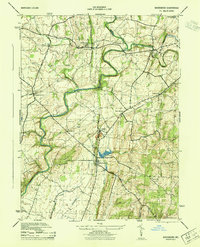 1944 Woodsboro1944 Print · USGSMaryland's agricultural heartland is documented during the war years, showing the vital rail and river networks of Frederick County. Genealogists can trace family heritage at the Terra Rubra Key Farm or locate old crossings like Stulls Ford and Wiley Mill.2 unique versions available
 - 1948 Map of Baltimore
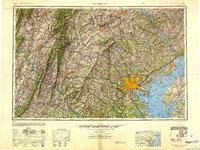 1948 Baltimore1948 Print · USGSMaryland and Pennsylvania crossroads are captured in the late 1940s, showing a landscape defined by historic rail lines and major military installations. Genealogists can trace family connections in Gettysburg, Westminster, and near the U.S. Naval Academy in Annapolis.2 unique versions available
 - 1953 Map of Walkersville
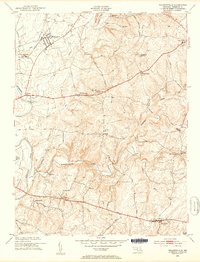 1953 Walkersville1953 Print · USGSMid-century Frederick County comes to life in this survey of the agrarian lands around the Monocacy River and the growing town of Walkersville. Genealogists can trace family footprints at Glade Cem, Silver Hill Ch, and old crossroads like McKaig or Daysville.8 unique versions available
 - 1953 Map of Frederick, 1954 Print
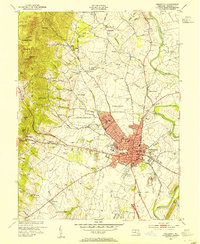 1953 Frederick1954 Print · USGSMaryland's interior growth is on full display here during the early fifties as the city of Frederick pushes toward Catoctin Mountain. Researchers can trace the layout of the U S Military Reservation at Camp Detrick and locate local landmarks like Hood College and Mt Olivet Cemetery.8 unique versions available
 - 1953 Map of Woodsboro, 1955 Print
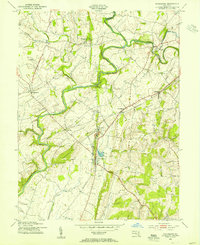 1953 Woodsboro1955 Print · USGSMid-century Frederick County, Maryland, is captured here during a time of active rail transport and river-valley farming. Genealogists and researchers can locate family landmarks like Rocky Hill Ch, the Fish Hatchery, and the old rail stop at Rocky Ridge.6 unique versions available
 - 1954 Map of Baltimore
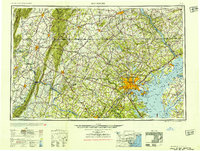 1954 Baltimore1954 Print · USGSThe Mid-Atlantic region in the early fifties shows a landscape of growing suburban centers and heavy rail corridors. Trace mid-century transit networks and military landmarks from the Aberdeen Proving Ground to the Gettysburg National Military Park.
 - 1956 Map of Baltimore
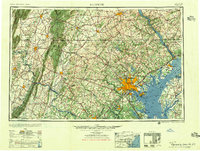 1956 Baltimore1956 Print · USGSMid-century Maryland and Pennsylvania are captured here during a period of massive suburban and military growth across the Chesapeake region. Genealogists and historians can trace the rail corridors of the Baltimore & Ohio RR and locate landmarks like Fort McHenry or the Aberdeen Proving Ground.
 - 1957 Map of Baltimore, 1964 Print
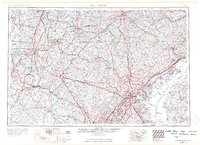 1957 Baltimore1964 Print · USGSMaryland and Southern Pennsylvania are shown during the mid-century expansion of the Baltimore-Washington corridor. Researchers can trace the extensive rail lines of the Baltimore & Ohio RR and locate sites like Fort Detrick and Gettysburg National Military Park.5 unique versions available
 - 1961 Map of Baltimore
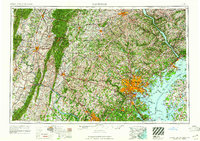 1961 Baltimore1961 Print · USGSMaryland and Pennsylvania are captured at a mid-century peak of industrial and military expansion. Genealogists and historians can trace rail corridors like the Western Maryland Ry or locate regional landmarks such as Camp Detrick and Kent Island.
 - 1983 Map of Hagerstown, 1984 Print
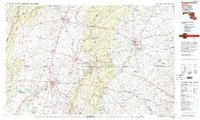 1983 Hagerstown1984 Print · USGSThe tri-state borderlands of Maryland, Pennsylvania, and West Virginia are shown in the early eighties as a hub of military installations and valley towns. Genealogists and historians can trace the landscape from Gettysburg National Military Park to the banks of the Potomac River.2 unique versions available
 - 1984 Map of Frederick, 1985 Print
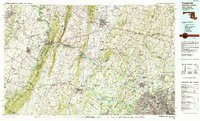 1984 Frederick1985 Print · USGSMaryland's Piedmont and the Potomac River valley are shown here in the mid-eighties as suburban growth began to meet historic rural landscapes. Genealogists and historians can trace the paths of the Baltimore and Ohio RR or locate the boundaries of Antietam National Battlefield and Fort Detrick.
 - 1989 Map of Baltimore
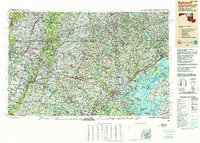 1989 Baltimore1989 Print · USGSThe Mid-Atlantic corridor in the late eighties is captured here, from the Baltimore harbor to the Blue Ridge foothills. Researchers can trace the sprawling footprints of Aberdeen Proving Ground, the historic grounds of Gettysburg National Military Park, and the winding Susquehanna River.
 - 2011 Map of Walkersville, 2011 Print
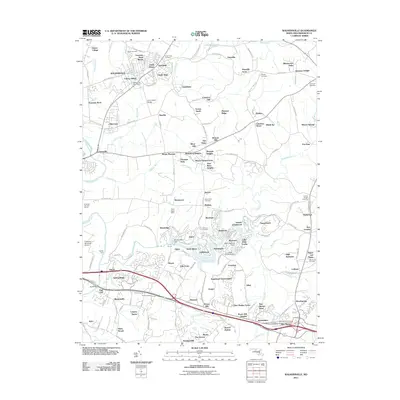 2011 Walkersville2011 Print · USGSMaryland's Monocacy River valley comes into focus during the early twenty-first century, showing the evolving landscape of Frederick County. Researchers can trace family history at the Trinity Cemetery or locate landmarks like Fountain Rock Manor and the Walkersville Post Office.
 - 2011 Map of Frederick, 2011 Print
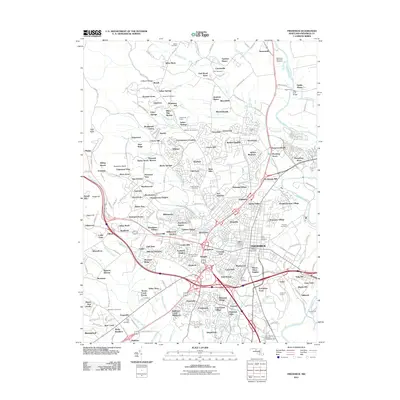 2011 Frederick2011 Print · USGSModern Maryland development meets deep-rooted history in this early 21st-century survey of the Monocacy River valley. Genealogists and researchers can trace historic river crossings at Biggs Ford and Crums Ford or locate family plots at Mount Olivet Cemetery and Fairview Cemetery.
 - 2011 Map of Woodsboro, 2011 Print
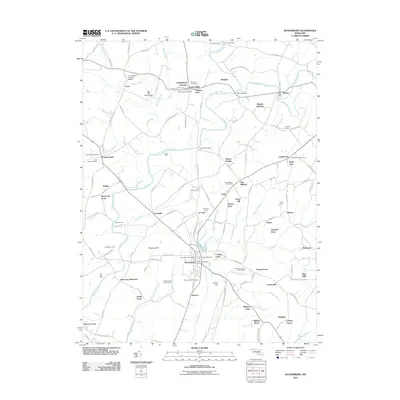 2011 Woodsboro2011 Print · USGSMaryland's Monocacy River valley comes into focus during this early 21st-century survey of rural Frederick County. Researchers can trace the legacy of local families through landmarks like the Loys Station Covered Bridge, Le Gore Quarry, and Saint Johns Cemetery.
Showing maps 1-25 of 37
Top cities near Walkersville
- Frederick historical maps
- Ballenger Creek historical maps
- Damascus historical maps
- Urbana historical maps
- Linganore historical maps
- Taneytown historical maps
See more
Top neighborhoods of Walkersville
- Fountain Rock Manor historical maps
- Spring View Estates historical maps
- Sun Meadow historical maps
- Colony Village historical maps
- Glade Town historical maps
- Deerfield historical maps
Frequently asked questions
- What are the different types of historical maps available for Walkersville?
- What is the oldest map of Walkersville?
- Where can I purchase historical maps of Walkersville for my home or office?
- Where can I download high-res historical maps of Walkersville?
- Are there historical topographic maps available for Walkersville?
- Is there historical aerial imagery available for Walkersville?
- Where are historical maps of Walkersville sourced from?