1940s Maps of Talbot County, Maryland
Explore 30 historic maps of Talbot County from the 1940s. These maps offer a rare glimpse into what life looked like during the 1940s — showing old roads, neighborhoods, homes, and landmarks that have changed or disappeared over time.
Whether you're researching your family's past, planning a metal detecting trip, or studying how Talbot County's landscape evolved across the 1940s, these high-resolution maps are a powerful tool for exploring the history of this region.
- Focus on a specific era: All maps on this page are from the 1940s, giving you a focused view of this time period.
- See what’s changed: Compare century-old streets, trails, and buildings to today's modern landscape using overlays and satellite layers.
- Research with precision: Use these maps for genealogy, historical research, land use analysis, or educational projects.
- View, download, or print: Maps are fully viewable online in high resolution, and can be downloaded or printed for your own records.
Start exploring Talbot County's history through authentic maps from the 1940s. This is your window into the past.
Talbot County, MD maps
(30)- 1942 Map of Tilghman
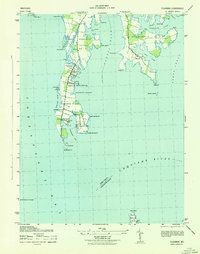 1942 Tilghman1942 Print · USGSChesapeake maritime life is captured here during the early war years, focusing on the communities of the Talbot County peninsula. Genealogists can trace family footprints through the Tilghman and Fairbank settlements, Peoples Chapel, and the Tilghman Island Landing.3 unique versions available
 - 1942 Map of Oxford
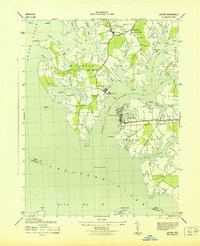 1942 Oxford1942 Print · USGSThe Tred Avon and Choptank rivers dominate this coastal Maryland landscape during the early 1940s. Genealogists can trace family roots through the St Paul Church, John Wesley Church, and the Choptank River Lighthouse that guided local mariners.3 unique versions available
 - 1942 Map of Church Creek, 1958 Print
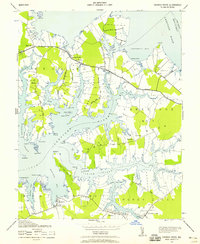 1942 Church Creek1958 Print · USGSThe Dorchester County tidewater region during the early 1940s is shown here through its intricate shoreline and rural peninsula settlements. Genealogists and historians can trace family roots through landmarks like Mace Cemetery, Gethsemane Church, and the village of Madison.2 unique versions available
 - 1942 Map of Claiborne, 1961 Print
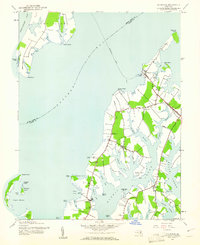 1942 Claiborne1961 Print · USGSCoastal Talbot County is captured here in the early 1940s, featuring the busy rail-to-ferry connection at Claiborne. Genealogists and historians can trace family locations near McDaniel and Bozman, or locate local landmarks like St Johns Ch and Wittman Sch.4 unique versions available
 - 1942 Map of Kent Island, 1961 Print
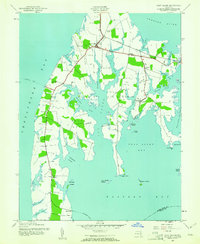 1942 Kent Island1961 Print · USGSKent Island at the onset of the 1940s remained a landscape of ferry landings and rail terminals along the Chesapeake. Genealogists and local historians can trace family locations near Batts Neck Sch, Stevensville, and the Baltimore and Eastern RR line.3 unique versions available
 - 1942 Map of Queenstown, 1961 Print
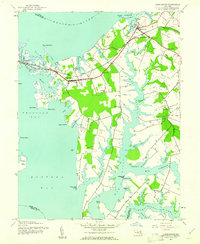 1942 Queenstown1961 Print · USGSMaryland's Eastern Shore at the start of the 1940s reveals a landscape shaped by tidal creeks and the rail-and-water economy. Genealogists can trace family footprints near St Peters Ch, Grasonville Cem, and the historic waterfront of Queenstown.3 unique versions available
 - 1942 Map of Easton, 1961 Print
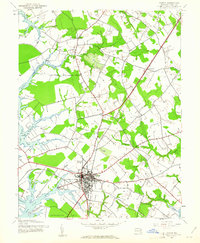 1942 Easton1961 Print · USGSMaryland's Eastern Shore center at Easton is captured here during the early war years, showing a town integrated with its rail and river networks. Local historians can trace family locations at St Aubins Heights, Spring Hill Cem, and the historic waterfront at Easton Point.3 unique versions available
 - 1942 Map of Wye Mills, 1961 Print
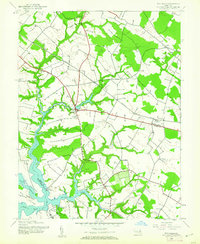 1942 Wye Mills1961 Print · USGSThe Eastern Shore comes alive in the 1940s as the Baltimore and Eastern railroad threads through a landscape of tidal creeks and colonial-era parishes. Genealogists can trace family footprints at Old Wye Ch, the crossroads of Skipton, and the small fishing outpost at Wye Landing.2 unique versions available
 - 1942 Map of Sharps Island, 1961 Print
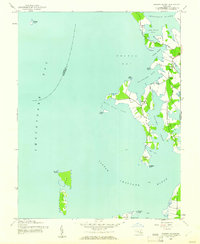 1942 Sharps Island1961 Print · USGSThe Dorchester County coast and its isolated island landmasses are detailed in this wartime survey of the Chesapeake. Genealogists and historians can trace old homesteads around Thomas, the Hudson Sch, and the shifting shorelines of James Island.
 - 1942 Map of St. Michaels, 1961 Print
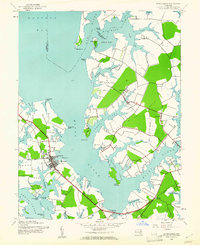 1942 St. Michaels1961 Print · USGSMid-century Talbot County is defined by its winding Chesapeake tributaries and the established harbor at St Michaels. Genealogists and historians can trace the rail-and-water corridors of the Baltimore and Eastern through settlements like Tunis Mills and Newcomb.3 unique versions available
 - 1942 Map of Trappe, 1962 Print
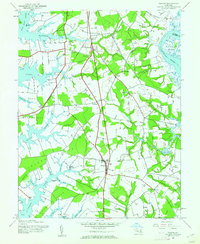 1942 Trappe1962 Print · USGSMaryland's Eastern Shore appears here in the early 1940s, showing a landscape defined by tidal necks and the Pennsylvania railroad. Genealogists and local historians can trace small settlements like Stumptown, rural sites such as Union Ch, and several family burial grounds including Merrick Cem.3 unique versions available
 - 1943 Map of Claiborne
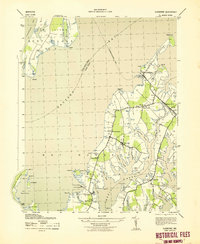 1943 Claiborne1943 Print · USGSTalbot County’s waterfront communities are captured in the early 1940s, showing a landscape shaped by the Chesapeake Bay and local rail lines. Genealogists and historians can trace the foundations of Claiborne and Sherwood, or locate landmarks like Wesley Church and the McDaniel RR Sta.
 - 1943 Map of Sharps Island
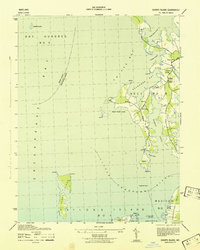 1943 Sharps Island1943 Print · USGSCoastal Dorchester County is captured during the early 1940s, showing a landscape of neck lands and island settlements. Genealogists and local historians can trace family locations near Hubbards Church, the Hudson School, and the remote James Island.
 - 1943 Map of Wye Mills
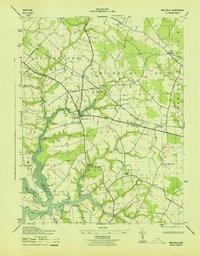 1943 Wye Mills1943 Print · USGSMaryland's Eastern Shore during the mid-1940s reveals a landscape of tidal creeks and quiet parish life. Genealogists and historians can locate Old Wye Church, the rural Newton School, and the Wye Mills RR Sta along the Baltimore and Eastern line.
 - 1943 Map of Church Creek
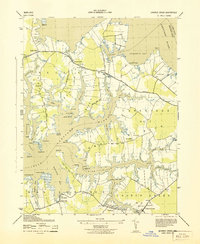 1943 Church Creek1943 Print · USGSDorchester County's intricate tidal landscape is captured here during the early 1940s, showing a world of peninsulas and creek-side settlements. Genealogists can locate family names at Trinity Cemetery and trace historical footprints in Madison, Woolford, and Dailsville.
 - 1943 Map of Queenstown
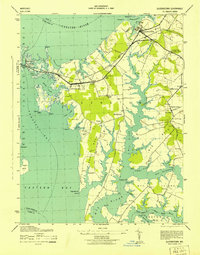 1943 Queenstown1943 Print · USGSThe Eastern Shore comes into focus during the early war years, showing a maritime landscape of tidal rivers and rail lines. Genealogists can trace family connections at St Peters Cem and locate vanished landmarks like the Landing Field or Garnett Church.
 - 1943 Map of Kent Island
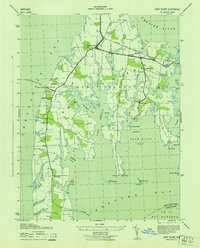 1943 Kent Island1943 Print · USGSKent Island was a vital Chesapeake transit hub during the 1940s, serving as the eastern terminus for the Annapolis-Matapeake Ferry. Trace old rail lines like the Baltimore and Eastern and find community landmarks like Wesley Church and Batts Neck School.
 - 1943 Map of St. Michaels
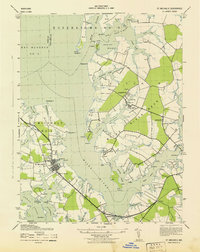 1943 St. Michaels1943 Print · USGSMaryland's Eastern Shore appears in the early 1940s as a landscape defined by its intricate waterways and rail-connected hamlets. Genealogists and historians can trace the foundations of local life through labels for St Michaels, Tunis Mills, and St Stevens Church.
 - 1943 Map of Easton
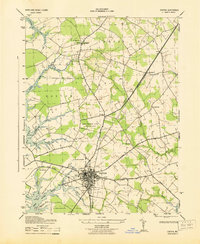 1943 Easton1943 Print · USGSEaston and the surrounding Talbot County countryside are shown here during the early 1940s as the regional airport was first being built. Genealogists and local historians can trace the paths of the Pennsylvania Railroad and locate landmarks like All Saints Church, Chapel Cem, and Bloomfield.
 - 1943 Map of Trappe
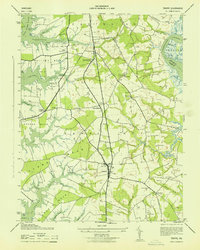 1943 Trappe1943 Print · USGSCoastal Talbot County in the early 1940s is mapped here in detail, showing a landscape of fertile necks and winding tidal creeks. Researchers can trace family roots at Union Church or Merrick Cemetery and locate rail history at Trappe Station.
 - 1943 Map of Cambridge, 1962 Print
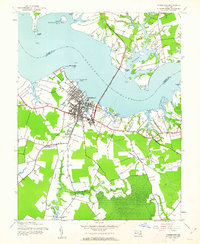 1943 Cambridge1962 Print · USGSThe Dorchester County seat in the early 1940s shows a bustling maritime and agricultural hub along the Choptank River. Researchers can trace old neighborhood boundaries near the State Hospital or locate rural landmarks like Christs Rock and Blackwater Sch.3 unique versions available
 - 1944 Map of Cambridge
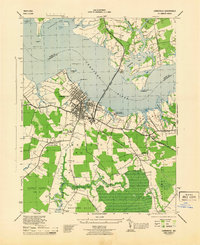 1944 Cambridge1944 Print · USGSDorchester County's waterfront and rural districts are captured here in the mid-1940s, from the busy docks of Cambridge to the marshes of the Blackwater River. Researchers can trace the layout of the Cambridge Branch railroad and find local landmarks like Christs Rock and the Blackwater School.
 - 1944 Map of Preston
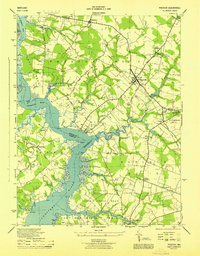 1944 Preston1944 Print · USGSMaryland's Eastern Shore transitions from river commerce to rail-driven agriculture during the mid-forties. Genealogists can trace family roots through numerous local landmarks, from Wright Wharf to country churches like Coppins Chapel and Bethesda Ch.3 unique versions available
 - 1944 Map of Ridgely
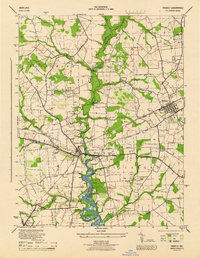 1944 Ridgely1944 Print · USGSThe Eastern Shore counties of Caroline, Queen Anne's, and Talbot meet along the Tuckahoe Creek during the final years of the war. Researchers can trace the rail corridor of the Baltimore and Eastern and find local landmarks like Adolph Landing and Allan Church.4 unique versions available
 - 1944 Map of East New Market
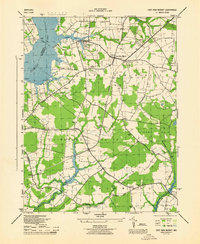 1944 East New Market1944 Print · USGSDorchester County during the mid-1940s is defined by its intricate waterways and the Pennsylvania Railroad. Genealogists and local historians can trace family roots through markers like St Stephens Church, the Hicksburg School, and the East New Market Cemetery.3 unique versions available
Showing maps 1-25 of 30
Top cities of Talbot County
Frequently asked questions
- What are the different types of historical maps available for Talbot County?
- What is the oldest map of Talbot County?
- Where can I purchase historical maps of Talbot County for my home or office?
- Where can I download high-res historical maps of Talbot County?
- Are there historical topographic maps available for Talbot County?
- Is there historical aerial imagery available for Talbot County?
- Where are historical maps of Talbot County sourced from?