1950s Maps of Crow Wing County, Minnesota
Explore 15 historic maps of Crow Wing County from the 1950s. These maps offer a rare glimpse into what life looked like during the 1950s — showing old roads, neighborhoods, homes, and landmarks that have changed or disappeared over time.
Whether you're researching your family's past, planning a metal detecting trip, or studying how Crow Wing County's landscape evolved across the 1950s, these high-resolution maps are a powerful tool for exploring the history of this region.
- Focus on a specific era: All maps on this page are from the 1950s, giving you a focused view of this time period.
- See what’s changed: Compare century-old streets, trails, and buildings to today's modern landscape using overlays and satellite layers.
- Research with precision: Use these maps for genealogy, historical research, land use analysis, or educational projects.
- View, download, or print: Maps are fully viewable online in high resolution, and can be downloaded or printed for your own records.
Start exploring Crow Wing County's history through authentic maps from the 1950s. This is your window into the past.
Crow Wing County, MN maps
(15)- 1950 Map of Lastrup
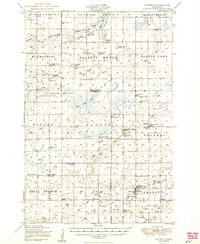 1950 Lastrup1950 Print · USGSIn the late 1940s, the rural townships of eastern Morrison County were organized around a dense network of local school districts and small parish towns. Researchers can trace family roots at Riverside Cemetery or locate the sites of numerous vanished rural schools like District No 19 School and District No 84 School.2 unique versions available
 - 1950 Map of Belle Prairie
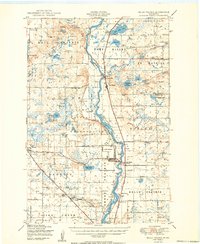 1950 Belle Prairie1950 Print · USGSMorrison and Crow Wing counties are captured here in the late 1940s, showing a landscape defined by the winding Mississippi and sprawling military grounds. Researchers can trace rural lineages through local landmarks like St Mathias Church, Darling Switch, and Rail Prairie Town Hall.2 unique versions available
 - 1953 Map of Duluth, 1964 Print
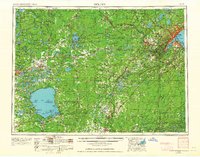 1953 Duluth1964 Print · USGSNortheastern Minnesota and northwestern Wisconsin are shown here during a period of industrial maturity and expanding conservation. Genealogists and historians can trace rail-connected towns like McGrath and Wahkon, or locate heritage sites within the Fond du Lac Indian Reservation.2 unique versions available
 - 1953 Map of Brainerd, 1966 Print
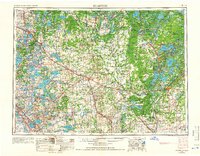 1953 Brainerd1966 Print · USGSCentral Minnesota's lake country and iron ranges are detailed in the mid-fifties, showing the intersection of industry and wilderness. Researchers can locate specific local landmarks like the Crow Wing County Courthouse or trace the early paths of the Soo Line Railroad and the Cuyuna Range Iron Mines.3 unique versions available
 - 1954 Map of Baxter, 1955 Print
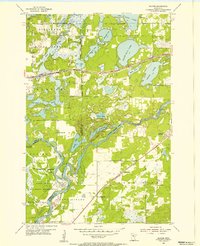 1954 Baxter1955 Print · USGSBaxter and the lake-country of central Minnesota are captured here in the mid-1950s as a burgeoning transportation and recreation hub. Genealogists and local historians can trace family-named sites like Oak Land Cem, the Plumly Sch (Abandoned), and the rail-side community of Barrows.5 unique versions available
 - 1956 Map of Belle Prairie NW, 1958 Print
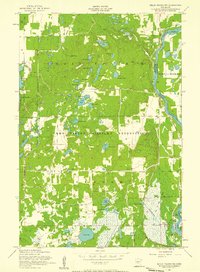 1956 Belle Prairie NW1958 Print · USGSThe mid-Minnesota lake country and military grounds come into focus in the mid-fifties, just south of the Brainerd area. Researchers can trace rural landmarks and military infrastructure across the Camp Ripley Military Reservation, locating School No 47, the historic Fort Ripley, and the winding Mississippi River.4 unique versions available
 - 1956 Map of Fort Ripley, 1958 Print
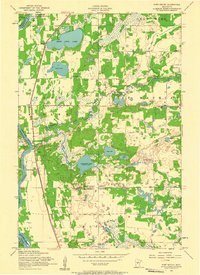 1956 Fort Ripley1958 Print · USGSCentral Minnesota's riverfront and military landscapes are captured here in the mid-1950s. Researchers can trace family history through several rural landmarks, including St Mathias Church, School No 16, and the Ft Ripley Cemetery.2 unique versions available
 - 1957 Map of Brainerd
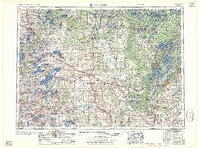 1957 Brainerd1957 Print · USGSNorth-central Minnesota's lake-rich landscape is captured in the mid-1950s as a crossroads of rail, river, and forest. Genealogists and historians can trace the paths of the Great Northern and Soo Line railroads through hubs like Brainerd, Wadena, and Detroit Lakes.
 - 1958 Map of Brainerd
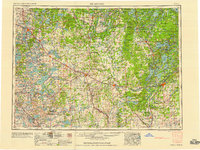 1958 Brainerd1958 Print · USGSCentral Minnesota in the late fifties is a landscape of dense lake chains, rail hubs, and sprawling state forests. Genealogists and local historians can trace old property alignments near the Mississippi River or locate family sites in Brainerd, Little Falls, and Detroit Lakes.
 - 1958 Map of Duluth
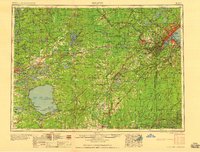 1958 Duluth1958 Print · USGSNortheastern Minnesota and the Wisconsin borderlands are shown in detail during the late 1950s, centered on the bustling rail yards and ports of Duluth. You can trace the historic routes of the Soo Line and Duluth Missabe & Iron Range through small towns like McGrath, Bruno, and Wrenshall.
 - 1959 Map of Trommald, 1960 Print
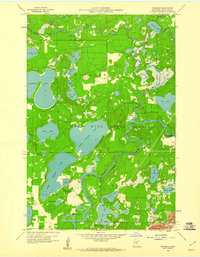 1959 Trommald1960 Print · USGSThe Cuyuna Range comes alive in the late fifties as the iron mining industry shapes the landscape around the Mississippi River. Genealogists and historians can trace the foundations of Trommald and Manganese or locate the Musser Mine and Silver Lake Sch.3 unique versions available
 - 1959 Map of Pelican Lake, 1960 Print
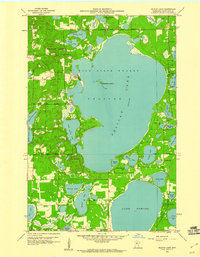 1959 Pelican Lake1960 Print · USGSThe Crow Wing County lake country is captured here during the late fifties, showcasing the expansive timberlands of the Crow Wing State Forest. Genealogists and local historians can locate the Ossipee Sch, the local Town Hall, and the winding Pelican Lakes Village Bdy.5 unique versions available
 - 1959 Map of Nisswa, 1960 Print
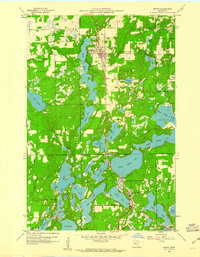 1959 Nisswa1960 Print · USGSNisswa and the Brainerd Lakes region are captured in the late fifties, showcasing a landscape of dense state forests and interconnected waterways. Genealogists and local historians can locate the Portview Sch, the Nisswa Cem, and the historic Northern Pacific rail line.4 unique versions available
 - 1959 Map of Lower Whitefish Lake, 1960 Print
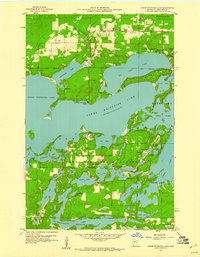 1959 Lower Whitefish Lake1960 Print · USGSCrow Wing County's lake country is captured here in the late fifties, showing the early growth of lakeside communities before modern development. Genealogists and local historians can trace family roots around Swanburg, Cross Lake Village, and the Swanburg Cem.3 unique versions available
 - 1959 Map of Jenkins, 1960 Print
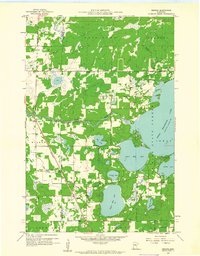 1959 Jenkins1960 Print · USGSThe village of Jenkins and its surrounding lake country are documented here in the late fifties, showcasing the area's transition into a premier recreational and timber region. Genealogists and local historians can locate the Clover Hill School, Jenkins Cemetery, and the route of the Northern Pacific railroad.4 unique versions available
End of results
Showing maps 1-15 of 15
Top cities of Crow Wing County
- Brainerd historical maps
- Baxter historical maps
- Crosby historical maps
- Nisswa historical maps
- Pequot Lakes historical maps
- Breezy Point historical maps
See more
Frequently asked questions
- What are the different types of historical maps available for Crow Wing County?
- What is the oldest map of Crow Wing County?
- Where can I purchase historical maps of Crow Wing County for my home or office?
- Where can I download high-res historical maps of Crow Wing County?
- Are there historical topographic maps available for Crow Wing County?
- Is there historical aerial imagery available for Crow Wing County?
- Where are historical maps of Crow Wing County sourced from?