1950s Maps of Camden County, Missouri
Explore 23 historic maps of Camden County from the 1950s. These maps offer a rare glimpse into what life looked like during the 1950s — showing old roads, neighborhoods, homes, and landmarks that have changed or disappeared over time.
Whether you're researching your family's past, planning a metal detecting trip, or studying how Camden County's landscape evolved across the 1950s, these high-resolution maps are a powerful tool for exploring the history of this region.
- Focus on a specific era: All maps on this page are from the 1950s, giving you a focused view of this time period.
- See what’s changed: Compare century-old streets, trails, and buildings to today's modern landscape using overlays and satellite layers.
- Research with precision: Use these maps for genealogy, historical research, land use analysis, or educational projects.
- View, download, or print: Maps are fully viewable online in high resolution, and can be downloaded or printed for your own records.
Start exploring Camden County's history through authentic maps from the 1950s. This is your window into the past.
Camden County, MO maps
(23)- 1954 Map of Jefferson City
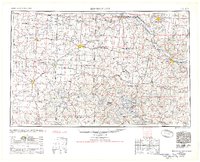 1954 Jefferson City1954 Print · USGSCentral Missouri in the early postwar years showcases a landscape defined by the winding Lake of the Ozarks and the state capital at Jefferson City. Researchers can trace the mid-century rail networks of the Missouri Pacific RR and locate rural communities like Tuscumbia, St Elizabeth, and St Anthony.2 unique versions available
 - 1954 Map of Springfield
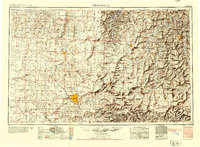 1954 Springfield1954 Print · USGSThe Missouri Ozarks are captured here during the post-war era, showing the expansion of Springfield and the surrounding river valleys. Genealogists and historians can trace local landmarks like Mount Comfort Cemetery and the Fort Leonard Wood military grounds.6 unique versions available
 - 1954 Map of Richland, 1958 Print
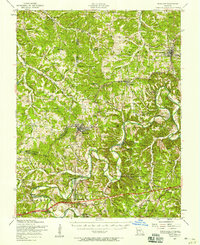 1954 Richland1958 Print · USGSThe Gasconade River valley and the St. Louis-San Francisco rail line define this mid-Missouri landscape during the mid-fifties. Genealogists can trace family names through dozens of rural sites, including Thornsberry Cemetery, Makarie Bridge, and several early schoolhouses.2 unique versions available
 - 1954 Map of Richland, 1959 Print
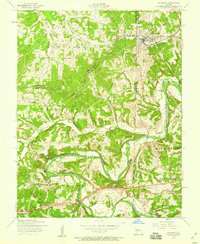 1954 Richland1959 Print · USGSRichland sits at a tri-county junction during the mid-fifties, where the railroad and the Gasconade River shaped local life. Genealogists can locate family landmarks like Manes Cemetery and Independence Church, or trace the legacy of rural education at Wait School (Aban'd).2 unique versions available
 - 1954 Map of Conns Creek, 1959 Print
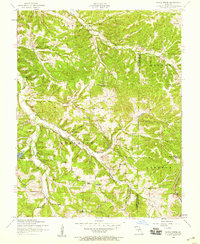 1954 Conns Creek1959 Print · USGSCamden and Pulaski counties are shown here in the mid-fifties, just as rural school consolidation was leaving several buildings idle. Local researchers can trace family landmarks like Miles Cemetery, Sellars, and the Fairview School (abandoned).2 unique versions available
 - 1955 Map of Jefferson City, 1967 Print
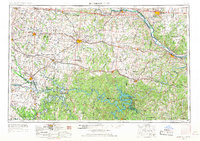 1955 Jefferson City1967 Print · USGSCentral Missouri in the mid-fifties is defined by the winding Missouri River and the expanding reach of Lake of the Ozarks. Researchers can trace the rail corridors of the Missouri Pacific or locate the early footprint of Whiteman AFB and Jefferson City.4 unique versions available
 - 1957 Map of Bagnell
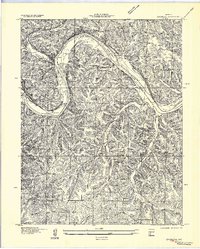 1957 Bagnell1957 Print · USGSMiller County was undergoing a massive transformation in the early 1930s following the construction of the Bagnell Dam. Researchers can trace the original river course around Wilcox Bend and locate family landmarks like Fitzgerald Cem and Fletcher Ch.
 - 1957 Map of Barnumton
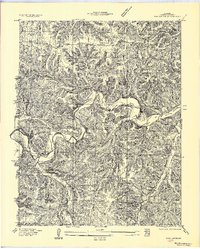 1957 Barnumton1957 Print · USGSThe Niangua River valley was undergoing a massive transformation in the 1930s as the new reservoir reached into the Ozark hills. Genealogists and historians can trace the early shoreline and find landmarks like Nonsuch Ferry, Barnumton, and Eadsons Spring.
 - 1957 Map of Boylers Mill
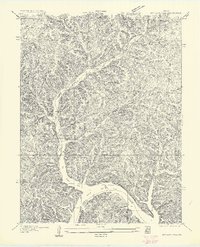 1957 Boylers Mill1957 Print · USGSIn the mid-thirties, this part of the Missouri Ozarks centered on the waters of the newly formed lake and the valleys of Boylers Mill. Genealogists can locate family landmarks like Big Buffalo School, Shiloh Church, and the site of Zachada Ferry.
 - 1958 Map of Jefferson City
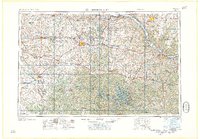 1958 Jefferson City1958 Print · USGSCentral Missouri in the late fifties shows a region transforming through the growth of Whiteman Air Force Base and the Lake of the Ozarks. Researchers can trace rail lines like the Missouri Pacific or find family roots at Enloe Cemetery and Mount Pleasant Cem.
 - 1958 Map of Springfield
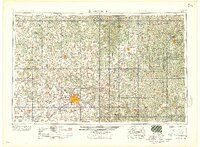 1958 Springfield1958 Print · USGSThe Missouri Ozarks are captured during the mid-century era of growth, centered on the bustling hub of Springfield. Genealogists and historians can trace family roots through numerous landmarks like Ebenezer Church, Stockton Cem, and the various county courthouses.
 - 1959 Map of Jefferson City
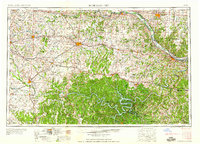 1959 Jefferson City1959 Print · USGSCentral Missouri is captured during the mid-fifties as the river economy and rail networks like the Missouri Pacific met the rise of the automobile. Local researchers can trace family landmarks and rural infrastructure from the Lake of the Ozarks up to Providence Cemetery and Knob Noster State Park.
 - 1959 Map of Springfield
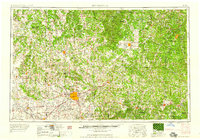 1959 Springfield1959 Print · USGSThe Missouri Ozarks are captured here during a decade of postwar growth and increasing highway connectivity. Researchers can trace the legacy of the St Louis-San Francisco RR and locate early sites in Springfield, Lebanon, and Mountain Grove.
 - 1959 Map of Boylers Mill, 1960 Print
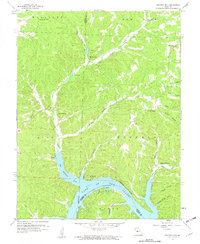 1959 Boylers Mill1960 Print · USGSThe Morgan and Benton County line in the late fifties shows the intersection of traditional Ozark creek valleys and the expanding Lake of the Ozarks. Genealogists and local historians can trace rural landmarks like Boylers Mill, Big Buffalo Sch, and Mt Calvary Ch.2 unique versions available
 - 1959 Map of Camdenton, 1960 Print
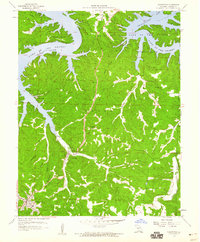 1959 Camdenton1960 Print · USGSCamden County's transition to a reservoir-based economy is clear in the late fifties as Lake of the Ozarks reshapes the landscape. Researchers can trace the migration of local centers through sites like Old Linn Creek, Linn Creek Ch, and Hunter Mine.3 unique versions available
 - 1959 Map of Barnumton, 1960 Print
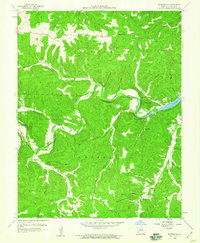 1959 Barnumton1960 Print · USGSCamden County in the late fifties shows a rural landscape dominated by the winding Niangua River and its many hollows. Researchers can locate historic landmarks like the Bannister Ford crossing and family-named sites such as Whitaker Cem and Eadsons Spring.2 unique versions available
 - 1959 Map of Bagnell, 1960 Print
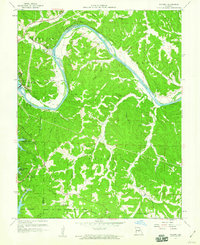 1959 Bagnell1960 Print · USGSThe Lake of the Ozarks region is captured here in the late fifties, showing the engineering of Bagnell Dam and the early growth of Osage Beach. Researchers can trace local genealogy through Brockman Cem and Harmony Ch or explore the river terrain around Brockmans Island.3 unique versions available
 - 1959 Map of Green Bay Terrace, 1960 Print
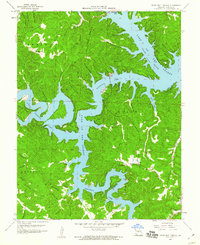 1959 Green Bay Terrace1960 Print · USGSCamden County and the branching waters of the Lake of the Ozarks are shown here in the late fifties, just as the region’s modern recreational identity was taking shape. Genealogists and researchers can locate landmarks like Tick Ridge Cem, Mt Taber Ch, and the well-known Bridal Cave.3 unique versions available
 - 1959 Map of Knobby, 1960 Print
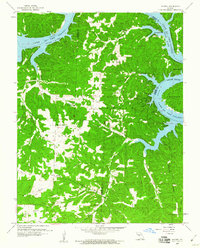 1959 Knobby1960 Print · USGSCamden County and the surrounding Ozarks are captured here in the late fifties, showing the intricate shoreline and rural communities of the region. Researchers can trace family roots at Lick Creek Church, the Dandy Cemetery, and small crossroads like Sagrada.2 unique versions available
 - 1959 Map of Sunrise Beach, 1960 Print
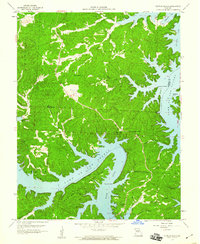 1959 Sunrise Beach1960 Print · USGSThe Lake of the Ozarks shoreline in the late fifties shows a landscape of growing lakeside communities and deep-rooted rural landmarks. Researchers can trace family history at St Patricks Ch or locate the Hurricane Deck Lookout Tower and Stevens Cem.3 unique versions available
 - 1959 Map of Toronto, 1960 Print
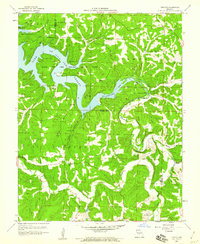 1959 Toronto1960 Print · USGSMid-century Camden County is seen here along the branching waters of the Grandglaize Arm during the expansion of the state park system. Researchers can pinpoint long-standing community centers like Toronto, Freedom Sch, and the Kaiser Lookout Tower.3 unique versions available
 - 1959 Map of Bollinger Creek, 1960 Print
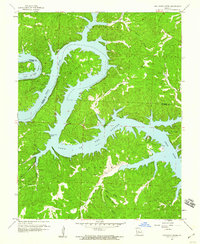 1959 Bollinger Creek1960 Print · USGSThe Lake of the Ozarks shoreline in the late fifties shows the dramatic transformation of the Osage River valley into a major reservoir system. Genealogists and local historians can trace family locations through Parish Cem, Wilson Cem, and landmarks like Thornsberry Point.3 unique versions available
 - 1959 Map of Lake Ozark, 1960 Print
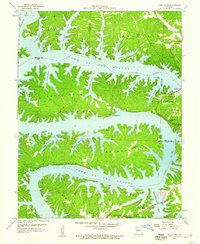 1959 Lake Ozark1960 Print · USGSThe Lake of the Ozarks shoreline is captured here in the late fifties, showing the growth of Lake Ozark near the Bagnell Dam. Researchers can locate family landmarks such as Stevens Banner Cem, Harpers Chapel, and the School of the Osage.3 unique versions available
End of results
Showing maps 1-23 of 23
Top cities of Camden County
- Osage Beach historical maps
- Camdenton historical maps
- Four Seasons historical maps
- Sunrise Beach historical maps
- Linn Creek historical maps
- Macks Creek historical maps
See more
Frequently asked questions
- What are the different types of historical maps available for Camden County?
- What is the oldest map of Camden County?
- Where can I purchase historical maps of Camden County for my home or office?
- Where can I download high-res historical maps of Camden County?
- Are there historical topographic maps available for Camden County?
- Is there historical aerial imagery available for Camden County?
- Where are historical maps of Camden County sourced from?