Old Maps of Camden County, Missouri
Explore 155 old maps of Camden County, spanning from 1884 to today. These high-resolution historic maps reveal how streets, neighborhoods, landmarks, and natural features evolved over time — perfect for genealogy, metal detecting, research, and local history exploration.
What you can do with these maps:
- See how Camden County changed over time: Compare historical maps to modern-day views to trace roads, homesites, rail lines & more.
- View detailed metadata: Each map includes creators, publishers, year, scale, and archive source.
- Overlay maps with satellite & LiDAR: Visualize the past alongside modern tools to explore terrain & human change.
- Trusted historical sources: Maps sourced from the USGS, Library of Congress, and other archives.
- Access maps your way: View online, download high-res files, or order prints for personal or research use.
Start exploring old maps of Camden County to uncover forgotten places, hidden landmarks, and the deep history beneath your feet.
Camden County, MO maps
(155)- 1884 Map of Bolivar
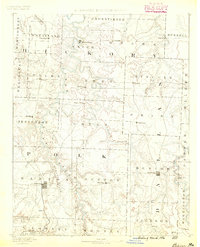 1884 Bolivar1884 Print · USGSSouthwestern Missouri in the mid-1880s is documented here at a time when river drainage and ridge-top travel dictated the growth of local townships. Researchers can trace early rural post offices and communities like Hermitage, Half Way, and Parks Mill.
 - 1887 Map of Warsaw
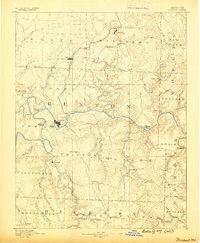 1887 Warsaw1887 Print · USGSBenton County was a land of river junctions and railheads in the late 1880s. Local historians can trace the early footprints of Warsaw, the winding Missouri Pacific Railroad, and riverside settlements like Fairfield and Duroc.
 - 1888 Map of Versailles
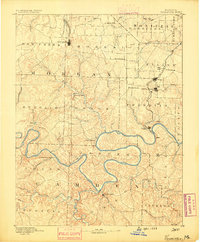 1888 Versailles1888 Print · USGSCentral Missouri in the late 1880s shows the winding Osage River valley long before the creation of the Lake of the Ozarks. Researchers can trace the original locations of Linn Creek, find the Osage Iron Works, and follow the Missouri Pacific Railroad to its end in Versailles.
 - 1888 Map of Tuscumbia
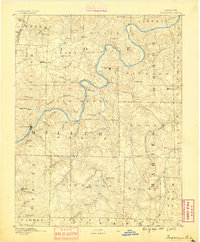 1888 Tuscumbia1888 Print · USGSThe Osage River valley comes to life in the 1880s, showcasing the intricate river bends and rugged hills of central Missouri. Genealogists and researchers can trace the original locations of early settlements like Tuscumbia, St. Elizabeth, and Iberia.
 - 1892 Map of Bolivar, 1898 Print
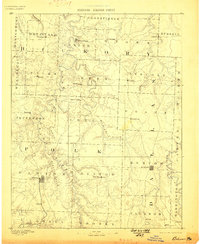 1892 Bolivar1898 Print · USGSMissouri's central Ozarks borderlands are captured here in the 1880s, showcasing the early layout of Polk and Hickory counties. Genealogists can trace family roots through localized sites like Parks Mill, the early street grids of Bolivar and Buffalo, and the settlement at Hermitage.5 unique versions available
 - 1893 Map of Versailles
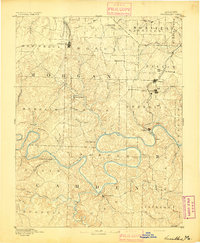 1893 Versailles1893 Print · USGSCentral Missouri's river-and-rail landscape is captured here in the late nineteenth century, decades before the valley was transformed by dams. Genealogists can trace family roots in early settlements like Versailles, Bagnell, and the original site of Linn Creek.4 unique versions available
 - 1894 Map of Warsaw
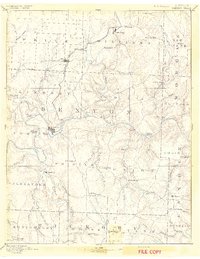 1894 Warsaw1894 Print · USGSBenton County and its neighbors are shown here in the mid-1880s, centered on the river junctions that shaped early Missouri commerce. Genealogists can trace family roots through old rural centers like Fairfield, Boylers Mills, and Cross Timbers before the river valleys were transformed.4 unique versions available
 - 1894 Map of Tuscumbia
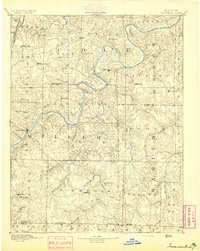 1894 Tuscumbia1894 Print · USGSCentral Missouri's river-and-rail landscape is captured here in the 1890s as the Osage River served as the region's main artery. Genealogists and historians can trace the early boundaries of communities like Tuscumbia, St. Elizabeth, and Iberia.3 unique versions available
 - 1932 Map of Versailles No 4
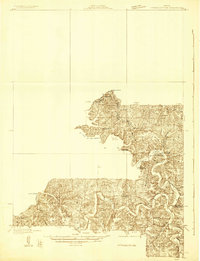 1932 Versailles No 41932 Print · USGSThe Missouri Ozarks are captured here in the early 1930s, showing the early transformation of the landscape following the creation of Lake of the Ozarks. Researchers can trace the roots of Osage Beach or locate rural landmarks like Popplewell Cem and Watson Sch.
 - 1933 Map of Stoutland, 1962 Print
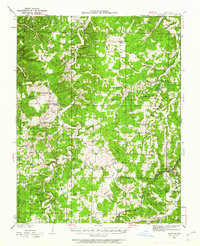 1933 Stoutland1962 Print · USGSThe Missouri Ozarks during the 1930s are captured here as a landscape of isolated hollows and rail-connected towns. Researchers can trace the St Louis San Francisco railroad line through Stoutland or locate family sites like Bradshaw Cem and Merchant Sch.2 unique versions available
 - 1933 Map of Iberia, 1963 Print
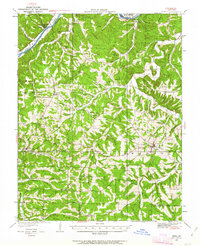 1933 Iberia1963 Print · USGSThe Osage River hills during the early 1930s reveal a landscape of isolated farmsteads and rural schoolhouses. Genealogists can trace family roots through numerous sites like Ramsey Cem, Gott Ch, and vanished school districts like Stumpf Sch.2 unique versions available
 - 1934 Map of Macks Creek
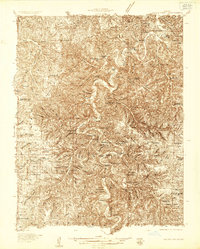 1934 Macks Creek1934 Print · USGSIn the central Ozarks during the 1930s, the rugged river valleys supported a landscape of isolated homesteads and country schoolhouses. Genealogists can locate family landmarks like Laughlin Cem, Johnston Castle, and the Tunnel Dam along the Niangua River.4 unique versions available
 - 1934 Map of Camdenton
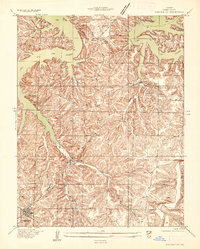 1934 Camdenton1934 Print · USGSCamden County was undergoing a dramatic transformation in the 1930s as the newly formed lake reshaped the Ozark hills. Genealogists and local historians can trace the early streets of Camdenton and locate rural landmarks like Old Linn Creek Cem and the Anderson Hollow School.
 - 1934 Map of Purvis
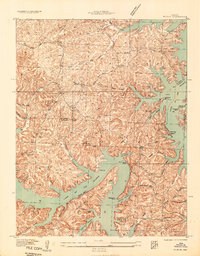 1934 Purvis1934 Print · USGSThe Lake of the Ozarks shoreline was still finding its shape in the mid-1930s as tourism began to reshape the Missouri hills. Researchers can locate early recreational spots like Lakewood Club alongside rural landmarks like Stevens Cem and St Patricks Ch.2 unique versions available
 - 1934 Map of Toronto
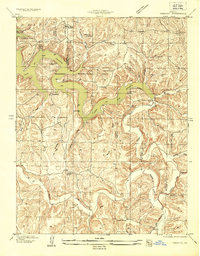 1934 Toronto1934 Print · USGSMissouri's lake country was in its early years of transformation during the 1930s as new shorelines met established rural communities. Genealogists can locate family landmarks like Auglaize Cem or trace rural education at Snider School and Jefferies School.
 - 1934 Map of Irontown Ferry
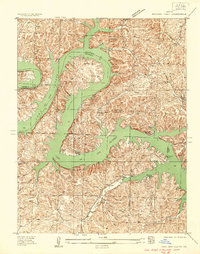 1934 Irontown Ferry1934 Print · USGSThe Lake of the Ozarks had only recently reached its full capacity when this 1930s survey was conducted along the Camden County line. Genealogists and researchers can trace the locations of the Irontown Ferry, the Old Iron Smelter, and early schools like Clark Sch.2 unique versions available
 - 1934 Map of Lake Ozark
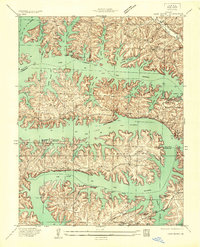 1934 Lake Ozark1934 Print · USGSThe new reservoir era in Central Missouri comes to life in this survey, showing the shoreline just after the completion of Bagnell Dam. Researchers can trace the early developments at Lakeview Beach and locate rural landmarks like Harpers Chapel and Zebra PO.3 unique versions available
 - 1934 Map of Bagnell
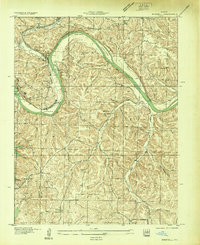 1934 Bagnell1934 Print · USGSThe Lake of the Ozarks region is captured here during the transformative mid-1930s, just after the completion of the massive Bagnell Dam. Researchers can trace rural life through the locations of the Fitzgerald Cem, Bennett Ch, and early river crossings like the Ferry near Wilcox Bend.
 - 1934 Map of Green Bay Terrace
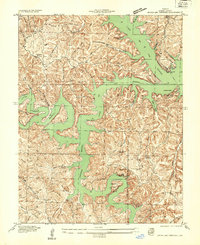 1934 Green Bay Terrace1934 Print · USGSCamden County's winding shoreline comes into focus during the mid-1930s as the new reservoir fills the deep hollows of the Ozarks. Genealogists can trace family landmarks like Farmer Cem and Mt Tabor Sch or early riverside retreats like Niangua Colony.2 unique versions available
 - 1935 Map of Barnumton
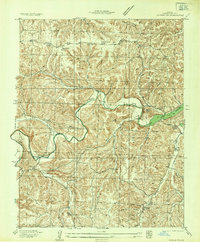 1935 Barnumton1935 Print · USGSCamden County life in the mid-1930s is captured here during the early years of the Lake of the Ozarks. Genealogists and local historians can locate vanished river crossings like Bannister Ford and numerous rural schoolhouses such as Barnumton Sch.
 - 1935 Map of Boylers Mill
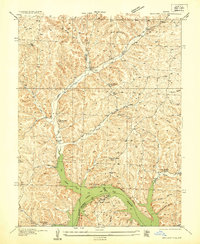 1935 Boylers Mill1935 Print · USGSThe Morgan and Benton county lines meet here in the 1930s, showing the early impact of the newly formed Lake of the Ozarks. Genealogists can trace family landmarks like the Shiloh Church, Boylers Mill, and several rural one-room schoolhouses.
 - 1935 Map of Knobby Creek
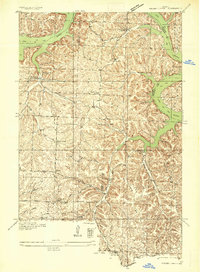 1935 Knobby Creek1935 Print · USGSThe northern Lake of the Ozarks shoreline and its surrounding uplands appear here in the mid-1930s as the reservoir era began. Genealogists can trace rural school districts like Olive Branch School and Nickel Hill School or locate family sites near Dority Cem and Sagrada.2 unique versions available
 - 1937 Map of Iberia
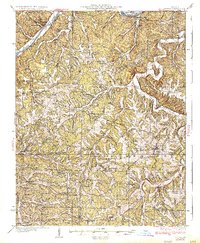 1937 Iberia1937 Print · USGSIberia and the surrounding Miller County hills are captured here in the mid-1930s, showing a landscape of small farms and crossroads communities. Genealogists can trace family footprints at Ramsey Cem, Twelve Corners Ch, and dozens of rural school sites like Barton Sch.2 unique versions available
 - 1938 Map of Stoutland
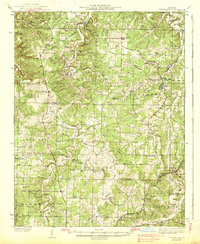 1938 Stoutland1938 Print · USGSThe Missouri Ozarks are captured here during the 1930s, showing a landscape of ridge-top farms and creek-bottom settlements. Researchers can trace the heritage of Camden and Laclede counties through sites like Ozark Fisheries, Darrow Cem, and Stoutland.
 - 1939 Map of Macks Creek
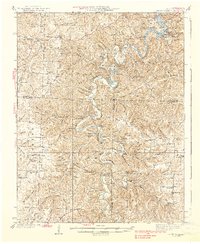 1939 Macks Creek1939 Print · USGSThe Niangua River valley in the late 1930s reveals a landscape of river crossings and early Ozark tourism. Researchers can trace ancestral locations through numerous rural school sites like Barkley Sch or find landmarks like Hahatonka Castle and Tunnel Dam.2 unique versions available
Showing maps 1-25 of 155
Top cities of Camden County
- Osage Beach historical maps
- Camdenton historical maps
- Four Seasons historical maps
- Sunrise Beach historical maps
- Linn Creek historical maps
- Macks Creek historical maps
See more
Frequently asked questions
- What are the different types of historical maps available for Camden County?
- What is the oldest map of Camden County?
- Where can I purchase historical maps of Camden County for my home or office?
- Where can I download high-res historical maps of Camden County?
- Are there historical topographic maps available for Camden County?
- Is there historical aerial imagery available for Camden County?
- Where are historical maps of Camden County sourced from?