1900s (20th Century) Maps of Marion County, Missouri
Explore 32 historic maps of Marion County from the 1900s (20th Century). These maps offer a rare glimpse into what life looked like during the 1900s — showing old roads, neighborhoods, homes, and landmarks that have changed or disappeared over time.
Whether you're researching your family's past, planning a metal detecting trip, or studying how Marion County's landscape evolved across the 1900s, these high-resolution maps are a powerful tool for exploring the history of this region.
- Focus on a specific era: All maps on this page are from the 1900s, giving you a focused view of this time period.
- See what’s changed: Compare century-old streets, trails, and buildings to today's modern landscape using overlays and satellite layers.
- Research with precision: Use these maps for genealogy, historical research, land use analysis, or educational projects.
- View, download, or print: Maps are fully viewable online in high resolution, and can be downloaded or printed for your own records.
Start exploring Marion County's history through authentic maps from the 1900s. This is your window into the past.
Marion County, MO maps
(32)- 1903 Map of Palmyra
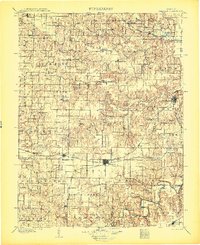 1903 Palmyra1903 Print · USGSNortheast Missouri at the start of the twentieth century was a landscape of river-valley farming and critical rail junctions. Researchers can trace early rural life through features like Sharp Mills, St. Pauls Ch., and the crossing of the Hannibal and St. Joseph R. R.2 unique versions available
 - 1925 Map of Quincy
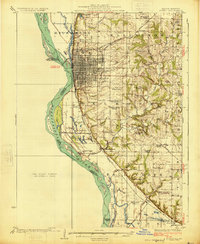 1925 Quincy1925 Print · USGSQuincy and its Mississippi River hinterlands are captured in the mid-1920s, showing a landscape defined by river navigation and rail transport. Genealogists can locate dozens of country schools and churches, from St Ludgerus School to Zion Church and the Soldiers Home.2 unique versions available
 - 1932 Map of Hannibal
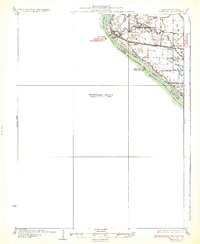 1932 Hannibal1932 Print · USGSAlong the Mississippi River in the early 1930s, this survey captures the riverfront from Hannibal across to the Illinois bottomlands. Researchers can trace the river rail crossings of the WABASH and locate rural landmarks like Bird Slough Sch and the CHENALE ECARTE CLUB.4 unique versions available
 - 1936 Map of Hannibal
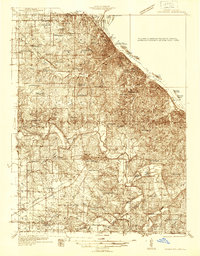 1936 Hannibal1936 Print · USGSMid-century Hannibal and New London are shown during a transitional era of river commerce and early aviation. Researchers can trace the paths of the Burlington railroad or find ancestral landmarks like Withers Mill and Mt Olivet Cem.2 unique versions available
 - 1944 Map of Quincy, 1954 Print
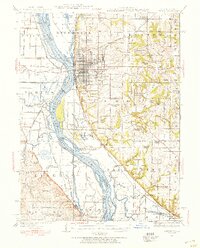 1944 Quincy1954 Print · USGSQuincy and the Mississippi River valley are captured in the 1940s, showing a landscape defined by rail lines and rural parish schools. Researchers can trace the riverfront at Marion City, the grounds of the Soldiers Home, and historic sites like Zion Church.5 unique versions available
 - 1945 Map of Hannibal
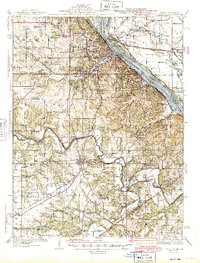 1945 Hannibal1945 Print · USGSMid-century Hannibal is captured here as a bustling Mississippi river port and railroad crossroads just after the war. Local historians can trace family roots through dozens of rural landmarks like Mt Zion Cem, Withers Mill, and Ocean Wave Sch.2 unique versions available
 - 1945 Map of Quincy
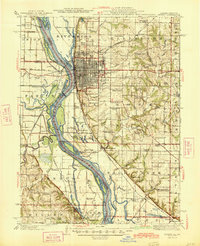 1945 Quincy1945 Print · USGSQuincy and its Mississippi River crossings are captured here in the mid-1940s during a period of transition for its riverfront and rail lines. Genealogists can trace family roots at local landmarks like the Soldiers Home, Melrose Chapel, and numerous rural schoolhouses such as Hickory Grove School.2 unique versions available
 - 1948 Map of Quincy
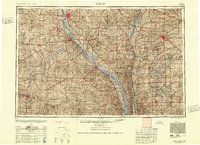 1948 Quincy1948 Print · USGSThe Mississippi and Illinois River valleys are captured at a post-war crossroads as rail and river travel met the expanding highway system. Genealogists can trace family settlements from Quincy to Hannibal and smaller towns like Vandalia and Jerseyville.2 unique versions available
 - 1949 Map of Durham, 1956 Print
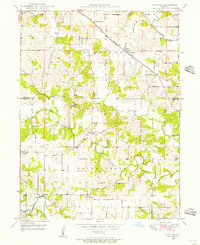 1949 Durham1956 Print · USGSMarion and Lewis counties are captured here just after the war, showing the rural rail-and-river network of northern Missouri. Researchers can trace family sites near Emerson, find the Mount Sinai Ch, and locate family plots like Wagner Cem.2 unique versions available
 - 1949 Map of Maywood, 1956 Print
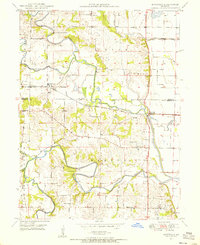 1949 Maywood1956 Print · USGSNortheast Missouri’s river-bottom lands are shown here in the late 1940s as the rail and river networks shaped local life. Researchers can locate vanished landmarks like Shannon Sch, Olivet Ch, and family-named cemeteries including Maywood Cem.2 unique versions available
 - 1949 Map of Palmyra, 1960 Print
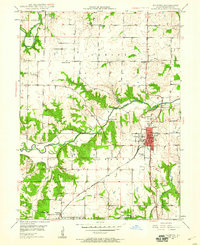 1949 Palmyra1960 Print · USGSMid-century Marion County comes alive in this survey of the river country surrounding the local county seat. Researchers can locate long-standing rural landmarks like Greenwood Cem, several schoolhouses, and the Marion County Infirmary.2 unique versions available
 - 1949 Map of Philadelphia, 1967 Print
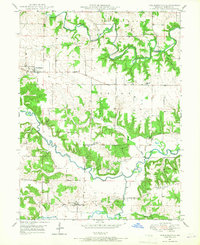 1949 Philadelphia1967 Print · USGSMarion County farming communities thrived along the river forks during the late 1940s. Genealogists can locate family landmarks and rural institutions like Pea Ridge Ch, Schmidt Sch, and the isolated Terrell Cem near the river bluffs.
 - 1950 Map of Maywood
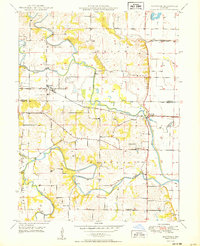 1950 Maywood1950 Print · USGSNortheast Missouri farm country comes to life in the late 1940s as the railroad and river systems shape the landscape. Genealogists can locate family landmarks like Hebron Cem and Shannon Sch, or trace the tracks of the Chicago Burlington and Quincy through Maywood.
 - 1950 Map of Durham
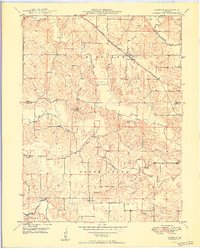 1950 Durham1950 Print · USGSMarion and Lewis County at the close of the 1940s show a landscape of rural townships and winding river bottoms. Genealogists can locate family landmarks like Wagner Cem and McPike Cem or trace the old Chicago Burlington and Quincy rail line.2 unique versions available
 - 1950 Map of Palmyra
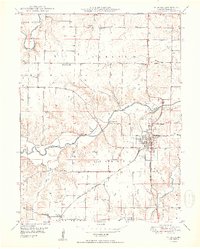 1950 Palmyra1950 Print · USGSMid-century Marion County centers on the rail hub of Palmyra during a period of thriving rural communities and small-town industry. Researchers can find precise locations for the Marion County Infirmary, Smileyville, and numerous country schools like Peddicord Sch.2 unique versions available
 - 1950 Map of Philadelphia
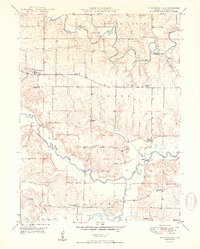 1950 Philadelphia1950 Print · USGSMarion County agriculture and education are well-documented in this mid-century survey of the Fabius River valleys. Genealogists can trace family roots through numerous rural landmarks like White Franklin Sch, Terrell Cem, and Philadelphia.2 unique versions available
 - 1956 Map of Quincy, 1967 Print
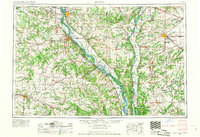 1956 Quincy1967 Print · USGSThe river and rail corridors of the Illinois-Missouri border are documented here during the mid-1950s. Researchers can trace historic river landings and regional transit hubs from Quincy and Hannibal to smaller settlements like Meredosia and Roodhouse.3 unique versions available
 - 1958 Map of Rensselaer, 1960 Print
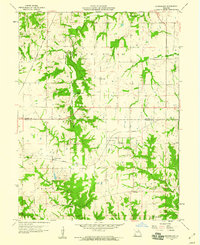 1958 Rensselaer1960 Print · USGSRensselaer and the surrounding Marion and Ralls county borderlands are shown here in the late fifties, just as the region’s agricultural and rail patterns were firmly established. Researchers can trace the dual rail lines of the Wabash and Chicago Burlington and Quincy, or locate family sites at Big Creek Cem and Finley Cem.2 unique versions available
 - 1959 Map of Monroe City, 1960 Print
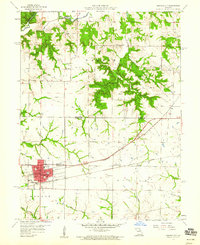 1959 Monroe City1960 Print · USGSMid-century Northeast Missouri comes into focus here at the tri-county junction of Marion, Ralls, and Monroe. Genealogists and rail historians can trace the paths of the Chicago Burlington and Quincy railroad, locate the St Judes Cem, or find rural schoolhouses like Stone Sch.2 unique versions available
 - 1959 Map of Hunnewell, 1961 Print
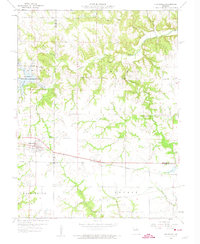 1959 Hunnewell1961 Print · USGSThe Hunnewell area at the end of the fifties reveals a landscape shaped by the Chicago Burlington and Quincy railroad and the newly established Hunnewell Lake. Genealogists can locate family landmarks like the How Cem, Union Chapel, and several local schoolhouses including Buckman Sch.2 unique versions available
 - 1964 Map of Emden, 1965 Print
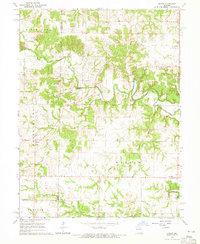 1964 Emden1965 Print · USGSMarion and Shelby counties are captured in the mid-1960s, showing a traditional Missouri landscape of river-bottom farms and quiet crossroads. Researchers can locate the Emden Sch, trace the winding North River, and find family sites near Andrew Chapel and Ebenezer Cem.2 unique versions available
 - 1964 Map of Nelsonville, 1965 Print
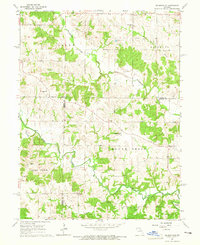 1964 Nelsonville1965 Print · USGSMarion County farming communities thrived in the mid-1960s along the winding banks of the South Fabius River. Genealogists and local historians can trace family locations near the settlement of Nelsonville and rural landmarks like Asbury Chapel or the Methodist Cem.
 - 1971 Map of Quincy SW, 1973 Print
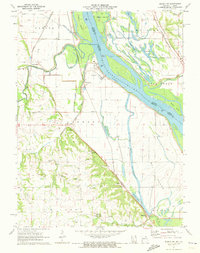 1971 Quincy SW1973 Print · USGSMarion County's riverfront landscape is captured here in the early seventies, showing a complex network of levees and sloughs along the Mississippi. Genealogists and local historians can locate numerous family burial grounds including Pennewell Cem, Kaiser Cem, and Thrasher Chapel Cem.
 - 1971 Map of Quincy West, 1973 Print
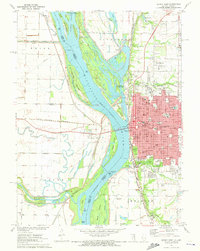 1971 Quincy West1973 Print · USGSThe riverfront city of Quincy is shown in the early seventies, at the height of its mid-century industrial and civic development. Researchers can trace local institutions and family names at Woodland Cem, Quincy College, and the Illinois Soldiers and Sailors Home.
 - 1971 Map of Hannibal West, 1973 Print
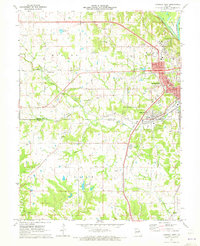 1971 Hannibal West1973 Print · USGSThe western edges of the Mississippi River bluffs in the early 1970s reveal a landscape of established seminaries and new shopping centers. Genealogists can trace family roots through Barkley Cem, Withers Mill, and Hydesburg Ch.2 unique versions available
Showing maps 1-25 of 32
Top cities of Marion County
Frequently asked questions
- What are the different types of historical maps available for Marion County?
- What is the oldest map of Marion County?
- Where can I purchase historical maps of Marion County for my home or office?
- Where can I download high-res historical maps of Marion County?
- Are there historical topographic maps available for Marion County?
- Is there historical aerial imagery available for Marion County?
- Where are historical maps of Marion County sourced from?