Old Maps of Frazer District, Montana for Genealogy
Trace your family roots with 197 historic maps of Frazer District. These high-res maps reveal old neighborhoods, homesites, landmarks, and streets — helping you uncover where your ancestors lived and how the area evolved over time.
- Explore historic neighborhoods: Identify where your relatives may have lived in the 1800s or 1900s.
- Compare maps over time: Trace the changes in streets, buildings, and landmarks for multi-generational research.
- Perfect for genealogy & ancestry research: Used by family historians and researchers to map out lineage and migration.
These maps are an incredible resource for exploring your personal connection to Frazer District's past.
Frazer District, MT maps
(197)- 1910 Map of Todd Lakes, 1975 Print
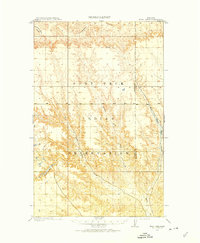 1910 Todd Lakes1975 Print · USGSNortheastern Montana before the Great War is captured here as a sprawling expanse of the Fort Peck Indian Reservation. Trace the intricate drainage of Wolf Creek and locate the natural basins of Todd Lakes in this early ranching-era landscape.2 unique versions available
 - 1914 Map of Nashua, 1965 Print
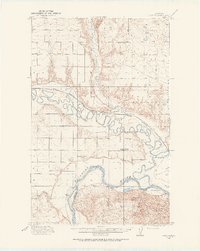 1914 Nashua1965 Print · USGSNortheastern Montana ranching and rail life are captured here in the early twentieth century. Researchers can trace rural school locations like Panton School and Galpin School or locate early family holdings such as Nichols Ranch.
 - 1915 Map of Frazer
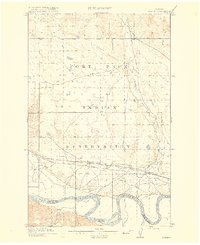 1915 Frazer1915 Print · USGSThe Missouri River valley in the years before the Great War shows a burgeoning rail corridor through the Fort Peck Indian Reservation. Trace the early tracks of the Great Northern and find the small stops at Frazer and Kintyre.3 unique versions available
 - 1915 Map of Oswego
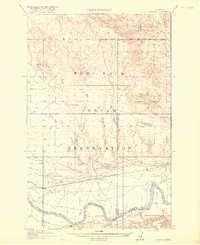 1915 Oswego1915 Print · USGSNortheast Montana at the height of the homesteading era centers on the Oswego rail stop and the wide Missouri River. Genealogists and historians can trace early land patterns across the Fort Peck Indian Reservation and locate landmarks like Three Buttes and the Great Northern rail line.2 unique versions available
 - 1915 Map of Todd Lakes
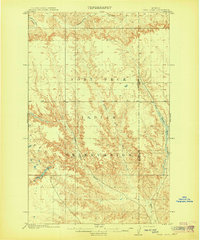 1915 Todd Lakes1915 Print · USGSNortheastern Montana lands within the Fort Peck Indian Reservation appear here during the early twentieth century. Researchers can trace the original Valley Sheridan county line and the winding courses of Wolf Creek and Little Porcupine Creek.
 - 1915 Map of Spring Creek
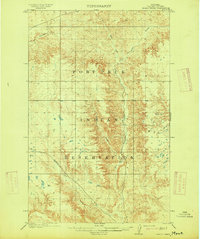 1915 Spring Creek1915 Print · USGSNortheast Montana’s high plains are captured here in the years following the turn of the century. Genealogists and local historians can trace the course of Porcupine Cr and find the location of the Tomato Can drainage within the Fort Peck Indian Reservation.2 unique versions available
 - 1916 Map of Nashua
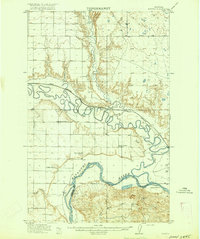 1916 Nashua1916 Print · USGSNortheastern Montana at the height of the homesteading era reveals the vital connection between the rail lines and river valleys. Genealogists and historians can locate early rural schoolhouses like Penton School and Galpin School or trace the Great Northern tracks through Nashua.3 unique versions available
 - 1918 Map of Porcupine Valley
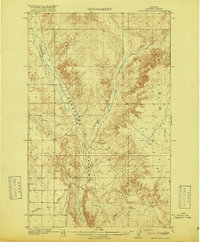 1918 Porcupine Valley1918 Print · USGSValley County at the close of the Great War reveals a landscape defined by the deep incisions of the Porcupine Valley. Genealogists and historians can trace the early section lines and land divisions around Porcupine Creek, Enright Coulee, and Sargent Creek.2 unique versions available
 - 1919 Map of Boundary
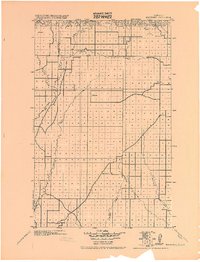 1919 Boundary1919 Print · USGSValley County, Montana, sits along the Canadian border in this post-war Army survey of the northern prairie. Researchers can trace the early layout of remote settlements like Tobison and Morgan or locate landmarks like Rabbit and Cone.
 - 1954 Map of Wolf Point, 1967 Print
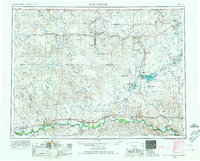 1954 Wolf Point1967 Print · USGSNortheastern Montana and the North Dakota borderlands are shown here in the mid-fifties, dominated by the Missouri River and the Fort Peck Indian Reservation. Genealogists and historians can trace the Great Northern rail line through river towns like Poplar and Culbertson or locate northern border outposts like the U S Custom Office at Raymond.2 unique versions available
 - 1954 Map of Glasgow, 1967 Print
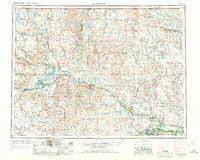 1954 Glasgow1967 Print · USGSNortheastern Montana is shown during the mid-fifties as the rail-and-river economy shaped the plains. Trace family roots and vanished landmarks from the Wendell Post Office to the Great Northern sidings at Ashfield and Hinsdale.2 unique versions available
 - 1957 Map of Glasgow
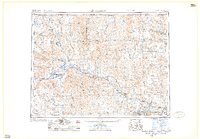 1957 Glasgow1957 Print · USGSNortheastern Montana during the late 1950s shows a landscape shaped by the Milk River and the expanding influence of the Fort Peck Lake reservoir. Genealogists and historians can trace the Great Northern rail stops from Malta to Glasgow, including old sidings like Kintyre Siding and rural centers like Opheim.
 - 1958 Map of Wolf Point
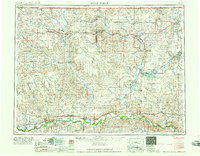 1958 Wolf Point1958 Print · USGSNortheastern Montana is shown during the mid-fifties, featuring the extensive Fort Peck Indian Reservation and the Missouri River valley. Researchers can trace the Great Northern railroad through Wolf Point or locate sites like Slab Crossing and the Coal Mine near Medicine Lake.
 - 1958 Map of Glasgow
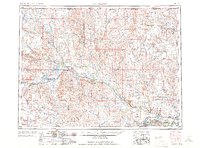 1958 Glasgow1958 Print · USGSNortheastern Montana comes to life in this mid-century survey of the Milk River valley and the Great Northern rail corridor. Researchers can trace the rise and fall of work camps like New Deal and Wheeler alongside remote landmarks like the Wendell Post Office.2 unique versions available
 - 1972 Map of Frazer, 1975 Print
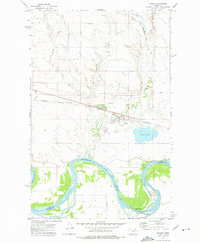 1972 Frazer1975 Print · USGSThe Missouri River valley near the Fort Peck Indian Reservation is captured here in the mid-1970s. Trace local landmarks like the St Joseph Cem, the community of Frazer, and the Burlington Northern rail line.
 - 1972 Map of Dubbe Reservoir, 1975 Print
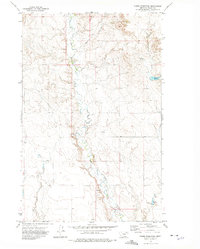 1972 Dubbe Reservoir1975 Print · USGSIn the early seventies, this portion of Valley County was a landscape of essential water management and isolated agricultural outposts. Genealogists and researchers can trace local landmarks like Dubbe Reservoir, Johnson Coulee, and the West Fork Charley Creek.
 - 1972 Map of Milk River Coulee, 1975 Print
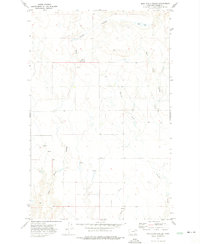 1972 Milk River Coulee1975 Print · USGSValley County ranching country is documented here in the early seventies, showing the landscape within the Fort Peck Indian Reservation. Trace the winding Milk River and essential water sources like Mud Lake and Kintyre Creek.
 - 1972 Map of Milk River Hills, 1975 Print
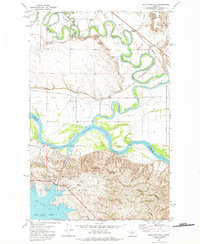 1972 Milk River Hills1975 Print · USGSThe confluence of the Missouri and Milk Rivers in Valley County comes alive in the early 1970s, showcasing a landscape shaped by ranching and rail. Researchers can trace the winding Fort Peck Indian Reservation boundary, the remote Nickels Ranch, and the Burlington Northern railroad corridor.
 - 1972 Map of Lindeke Coulee, 1975 Print
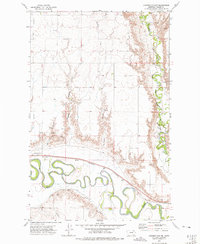 1972 Lindeke Coulee1975 Print · USGSValley County in the early seventies shows the winding Milk River valley at a time of established irrigation and rail transport. Trace the path of the Burlington Northern railroad or locate Memorial Gardens (Cem) and Lindeke Coulee.
 - 1972 Map of Oswego NW, 1975 Print
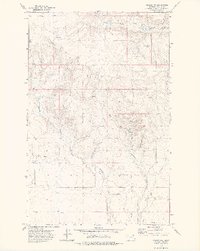 1972 Oswego NW1975 Print · USGSValley County, Montana, is shown here in the early 1970s within the boundaries of the Fort Peck Indian Reservation. Local researchers can trace family-named water sources and landmarks like Three Buttes, Badger Hole Coulee, and Oswego Creek.
 - 1972 Map of Oswego, 1976 Print
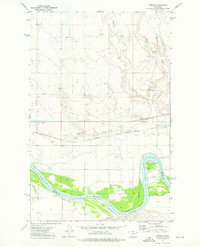 1972 Oswego1976 Print · USGSThe Missouri River valley in Northeast Montana is captured here in the early 1970s, showing a landscape of rail transit and irrigation. Researchers can trace the Burlington Northern line through Oswego, locate the Cem, and see the Main Canal system.
 - 1972 Map of Nashua, 1976 Print
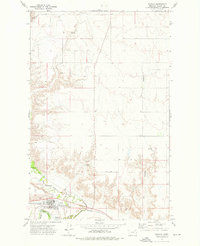 1972 Nashua1976 Print · USGSValley County in the early seventies centers on Nashua, where the railroad meets the winding Milk River. Researchers can locate the High Sch, trace the Fort Peck Indian Reservation Boundary, and identify family landmarks like Ivy Coulee.
 - 1972 Map of Kintyre, 1976 Print
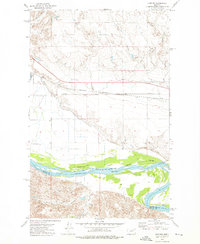 1972 Kintyre1976 Print · USGSBig Sky country meets the Missouri River in the 1970s, where the railroad and irrigation shaped the remote plains. Researchers can trace the Burlington Northern line through Wiota and Kintyre or locate the Frazer Pumping Sta along the river.
 - 1973 Map of Baylor SE, 1976 Print
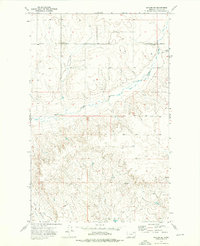 1973 Baylor SE1976 Print · USGSThe high prairie and coulees of Valley County are captured in the early 1970s, showcasing the remote landscape of the Fort Peck Indian Reservation. Trace local landmarks like the Fuhrman Community Center and topographic features such as The Pass and Snow Coulee.
 - 1973 Map of Larslan, 1976 Print
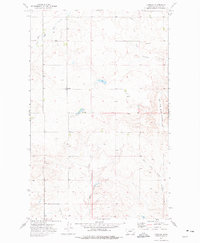 1973 Larslan1976 Print · USGSThe northern reaches of the Fort Peck Indian Reservation are mapped here in the early 1970s, centered on the small settlement of Larslan. Researchers can trace the drainage of East Fork Porcupine Creek and locate local landmarks like Hovland Dam and a rural Cem.
Showing maps 1-25 of 197
Top cities near Frazer District
Top neighborhoods of Frazer District
Frequently asked questions
- What are the different types of historical maps available for Frazer District?
- What is the oldest map of Frazer District?
- Where can I purchase historical maps of Frazer District for my home or office?
- Where can I download high-res historical maps of Frazer District?
- Are there historical topographic maps available for Frazer District?
- Is there historical aerial imagery available for Frazer District?
- Where are historical maps of Frazer District sourced from?