1900s (20th Century) Maps of Churchill County, Nevada
Explore 158 historic maps of Churchill County from the 1900s (20th Century). These maps offer a rare glimpse into what life looked like during the 1900s — showing old roads, neighborhoods, homes, and landmarks that have changed or disappeared over time.
Whether you're researching your family's past, planning a metal detecting trip, or studying how Churchill County's landscape evolved across the 1900s, these high-resolution maps are a powerful tool for exploring the history of this region.
- Focus on a specific era: All maps on this page are from the 1900s, giving you a focused view of this time period.
- See what’s changed: Compare century-old streets, trails, and buildings to today's modern landscape using overlays and satellite layers.
- Research with precision: Use these maps for genealogy, historical research, land use analysis, or educational projects.
- View, download, or print: Maps are fully viewable online in high resolution, and can be downloaded or printed for your own records.
Start exploring Churchill County's history through authentic maps from the 1900s. This is your window into the past.
Churchill County, NV maps
(158)- 1908 Map of Carson Sink, 1954 Print
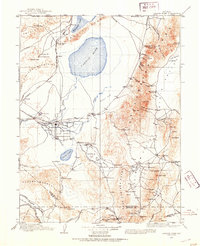 1908 Carson Sink1954 Print · USGSChurchill County at the opening of the century reveals a landscape of desert mining camps and nascent river irrigation. Genealogists and historians can trace the early streets of Fallon, the remote Nevada Hills Mine, and the location of Dixie.3 unique versions available
 - 1910 Map of Carson Sink
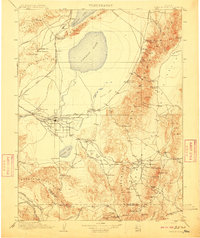 1910 Carson Sink1910 Print · USGSWestern Nevada at the end of the first decade of the century shows a landscape defined by desert mining camps and the burgeoning Carson-Truckee irrigation projects. Genealogists and historians can trace the early streets of Fallon or locate remote camps like Rawhide and the Nevada Wonder Mine.5 unique versions available
 - 1931 Map of Lovelock, 1955 Print
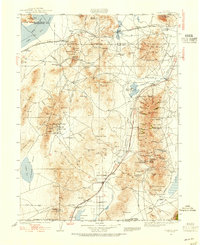 1931 Lovelock1955 Print · USGSPershing County's high-desert mining landscape is frozen in time during the early 1930s, as gold and tungsten districts drove the local economy. Genealogists and historians can trace the foundations of Unionville, the industrial footprint of the Nevada Massachusetts Tungsten Mine, and the route of the Victory Highway.
 - 1932 Map of Sonoma Range, 1955 Print
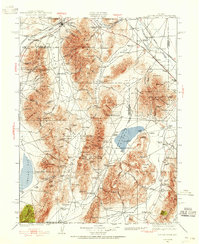 1932 Sonoma Range1955 Print · USGSNorthern Nevada in the early thirties is captured here along the Humboldt River and its flanking desert ranges. Genealogists and historians can trace numerous family-named landmarks like Prida Ranch and Childress Ranch, or locate the Site of Old Indian Fort and Barber Sch.5 unique versions available
 - 1935 Map of Lovelock
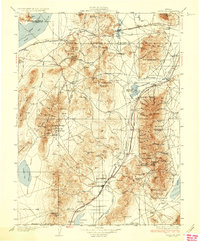 1935 Lovelock1935 Print · USGSPershing County in the mid-1930s is a landscape of high-desert mining camps and essential rail hubs along the Humboldt. Researchers can trace the legacy of the silver and tungsten booms at Rochester, the Sulphur Mine, and the now-quiet streets of Unionville or Mazuma.3 unique versions available
 - 1939 Map of Sonoma Range
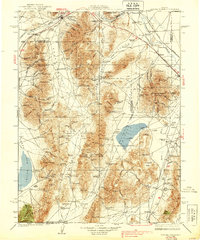 1939 Sonoma Range1939 Print · USGSHigh-desert ranching and deep-earth mining define this Nevada landscape during the late thirties. Researchers can trace historical family holdings like Seven Devils Ranch, early educational sites such as Pearce Sch, and industrial landmarks including the Copper Canyon Mine.5 unique versions available
 - 1950 Map of Stillwater, 1952 Print
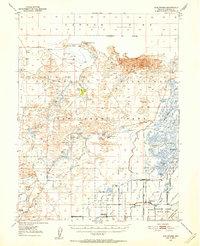 1950 Stillwater1952 Print · USGSMid-century Churchill County is defined here by the intricate irrigation of the Fallon Indian Reservation and the sprawling wetlands of the Stillwater Wildlife Management Area. You can trace rural life at Leter Ranch or the Stillwater School while locating lost landmarks like Wolf Dam and the Canvasback Gun Club.4 unique versions available
 - 1951 Map of Carson Lake, 1953 Print
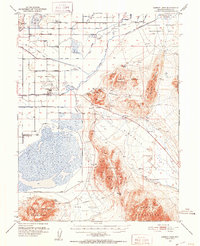 1951 Carson Lake1953 Print · USGSChurchill County in the early fifties shows a transition from high-desert flats to complex irrigation projects and military installations. Genealogists and historians can trace the Harmon School, Fallen Cem, and several named archaeological sites like Hidden Cave.3 unique versions available
 - 1951 Map of Allen Springs, 1953 Print
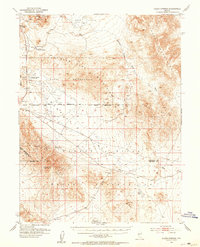 1951 Allen Springs1953 Print · USGSChurchill and Mineral counties at the start of the 1950s reveal a landscape of mining claims and remote outposts. Researchers can trace early mineral works at Pyramid Mine and locate ephemeral desert water at Allen Springs or Lee Hot Springs.3 unique versions available
 - 1951 Map of Soda Lake, 1953 Print
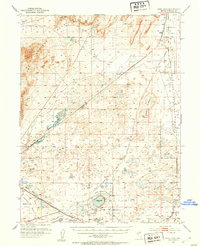 1951 Soda Lake1953 Print · USGSThe Nevada desert in the early fifties reveals a critical junction of pioneer trails and mid-century rail infrastructure near the Carson Sink. Researchers can trace the Old California Trail past the Ragtown (Site) and through the volcanic craters of Soda Lake.3 unique versions available
 - 1951 Map of Weber Reservoir, 1953 Print
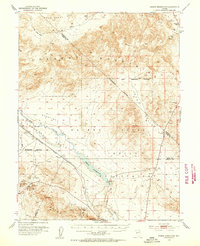 1951 Weber Reservoir1953 Print · USGSLyon and Churchill Counties appear in the early fifties as a landscape of essential water management and mountain transit. Researchers can trace the Southern Pacific rail line, mining prospects in the Terrill Mts, and the construction of the Weber Dam.5 unique versions available
 - 1951 Map of Carson Sink, 1953 Print
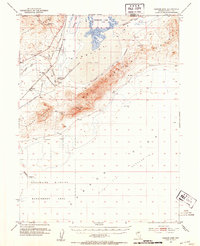 1951 Carson Sink1953 Print · USGSThe high desert of Churchill County is captured here in the early fifties, documenting a landscape of ancient caves and historic migration routes. Trace the paths of the Old California Trail Road and the St Anthony Mine near the vast Humboldt Lake.4 unique versions available
 - 1951 Map of Desert Peak, 1953 Print
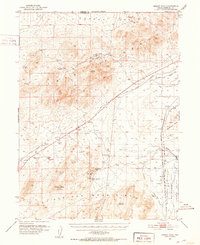 1951 Desert Peak1953 Print · USGSThe Nevada desert in the early fifties reveals a landscape shaped by both pioneer migration and the search for minerals. Researchers can trace the Old California Trail and locate several active workings like the Mule Train Mines and Jessup.3 unique versions available
 - 1951 Map of Fallon, 1953 Print
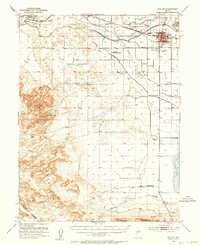 1951 Fallon1953 Print · USGSFallon and the surrounding Lahontan Valley are captured here in the early fifties as irrigation and ranching redefined the high desert. Researchers can trace historic rural education and transport, from the Oats Park Sch to the legendary Pony Express Route and Smith Ranch.3 unique versions available
 - 1954 Map of Buffalo Mtn, 1956 Print
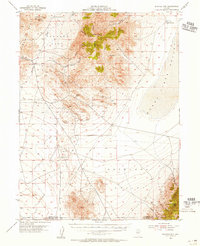 1954 Buffalo Mtn1956 Print · USGSNevada's high-desert mining landscape is captured here during the mid-fifties, showing a terrain defined by mercury extraction and historic trails. Trace the path of the Old Emigrant Jeep Trail or locate the Nevada Quicksilver Mine and Green Gold Mine.3 unique versions available
 - 1955 Map of Millett, 1963 Print
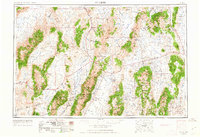 1955 Millett1963 Print · USGSCentral Nevada in the mid-fifties is a landscape of high-desert basins and remote outposts. Researchers can trace historic ranching sites like Petersons Mill and Grass Valley Ranch or locate the McCoy Mining Camp.4 unique versions available
 - 1955 Map of Lovelock, 1963 Print
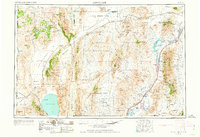 1955 Lovelock1963 Print · USGSNorthwestern Nevada’s vast desert basins and military ranges are captured here in the mid-fifties, showing a landscape defined by the Humboldt River and the great Pyramid Lake. Genealogists and historians can trace isolated rail stops like Gerlach and Empire, or locate historic workings such as the Golden Eagle Mine and Pershing Mine.5 unique versions available
 - 1955 Map of Winnemucca, 1968 Print
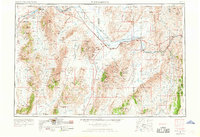 1955 Winnemucca1968 Print · USGSNorthern Nevada's high desert corridor is captured here in the mid-fifties, centered on the river-and-rail hub of Winnemucca. Researchers can trace the dual tracks of the Southern Pacific and Western Pacific railroads through towns like Golconda and Valmy.3 unique versions available
 - 1956 Map of South Shoshone Peak, 1957 Print
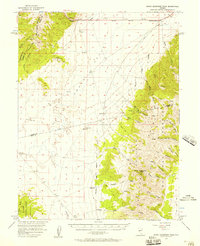 1956 South Shoshone Peak1957 Print · USGSThe central Nevada high desert comes into focus during the mid-fifties as ranchers and miners navigated the great basins between the Paradise Range and the Desatoya Mountains. Researchers can locate remote outposts like Peterson Station and Idlewild or trace water sources through Lebeau Creek and Midas Spr.3 unique versions available
 - 1956 Map of Lovelock, 1958 Print
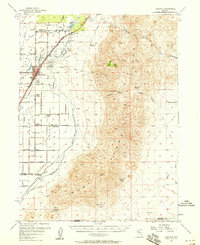 1956 Lovelock1958 Print · USGSIn the mid-1950s, the irrigation and mining infrastructure of Pershing County reached a peak of development along the Humboldt River. Trace ancestral homesteads at the Circle L Ranch, locate early mining claims like the Muttlebury Mine, or follow the historic path of the Old Emigrant Road.3 unique versions available
 - 1957 Map of Fireball Ridge, 1959 Print
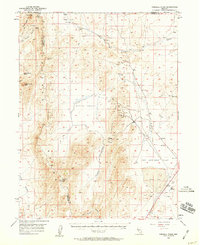 1957 Fireball Ridge1959 Print · USGSThe high desert of Churchill County comes into sharp focus during the late fifties, showing a landscape defined by mining prospects and critical water sources. Researchers can trace remote industrial activity at the Jay Bird Mine or locate vital springs like Black Warrior Spring and Coyote Spring.2 unique versions available
 - 1957 Map of Two Tips, 1959 Print
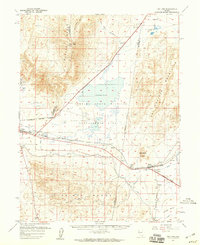 1957 Two Tips1959 Print · USGSThe high-desert terrain of central Nevada is captured here during the late 1950s, showing a landscape shaped by rail and irrigation. Genealogists and historians can trace the Southern Pacific corridor through Hazen and Argo, or locate the abandoned salt evaporators and early prospects.2 unique versions available
 - 1957 Map of Silver Springs, 1959 Print
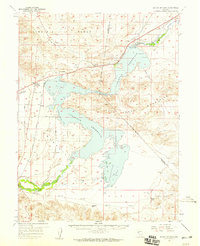 1957 Silver Springs1959 Print · USGSSilver Springs and the surrounding basin are shown during a period of mid-century growth following the establishment of the Lahontan Reservoir. Researchers can trace early street layouts in Silver Springs, find old water sources like Hooten Well, and locate the Lahontan Dam and Churchill Landing Strip.3 unique versions available
 - 1957 Map of Reno, 1963 Print
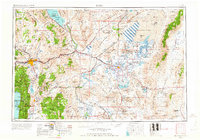 1957 Reno1963 Print · USGSWestern Nevada in the early sixties is a land of sprawling desert sinks and rising mountain ranges. Genealogists and historians can trace the rail-and-river network connecting Reno, the mining legacy of Rawhide Mine, and the boundaries of the Pyramid Lake Indian Reservation.5 unique versions available
 - 1958 Map of Winnemucca
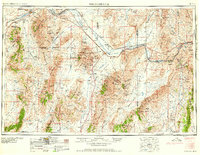 1958 Winnemucca1958 Print · USGSNorthern Nevada in the late fifties was defined by the parallel rhythms of the great transcontinental railroads and a resilient mining industry. Genealogists and historians can trace old mining camps and remote rail sidings from Gold Acres and Palisade to the Adelaide district.2 unique versions available
Showing maps 1-25 of 158
Top cities of Churchill County
Frequently asked questions
- What are the different types of historical maps available for Churchill County?
- What is the oldest map of Churchill County?
- Where can I purchase historical maps of Churchill County for my home or office?
- Where can I download high-res historical maps of Churchill County?
- Are there historical topographic maps available for Churchill County?
- Is there historical aerial imagery available for Churchill County?
- Where are historical maps of Churchill County sourced from?