1900s (20th Century) Maps of Eastern Navajo Agency, New Mexico
Explore 197 historic maps of Eastern Navajo Agency from the 1900s (20th Century). These maps offer a rare glimpse into what life looked like during the 1900s — showing old roads, neighborhoods, homes, and landmarks that have changed or disappeared over time.
Whether you're researching your family's past, planning a metal detecting trip, or studying how Eastern Navajo Agency's landscape evolved across the 1900s, these high-resolution maps are a powerful tool for exploring the history of this region.
- Focus on a specific era: All maps on this page are from the 1900s, giving you a focused view of this time period.
- See what’s changed: Compare century-old streets, trails, and buildings to today's modern landscape using overlays and satellite layers.
- Research with precision: Use these maps for genealogy, historical research, land use analysis, or educational projects.
- View, download, or print: Maps are fully viewable online in high resolution, and can be downloaded or printed for your own records.
Start exploring Eastern Navajo Agency's history through authentic maps from the 1900s. This is your window into the past.
Eastern Navajo Agency, NM maps
(197)- 1917 Map of Cerro Verde
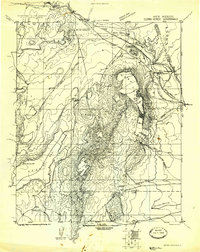 1917 Cerro Verde1917 Print · USGSNorthwestern New Mexico’s high desert landscape is captured here during the First World War era, showing a mix of ancient land grants and rail-side outposts. Genealogists and historians can trace family-named sites like Vigil, Baca, and the Correo Post Office along the Atchison Topeka and Santa Fe line.
 - 1917 Map of Broom Mountain
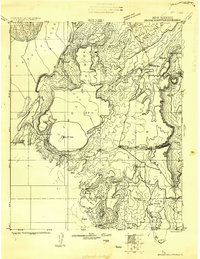 1917 Broom Mountain1917 Print · USGSValencia County at the close of the First World War shows a landscape of high mesas and scattered homesteads. Genealogists and historians can trace early ranching outposts like Bodenheimer and Th Garcia or locate the former Miller Post Office.
 - 1927 Map of Sulphur Spring
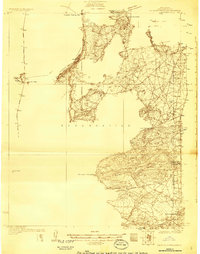 1927 Sulphur Spring1927 Print · USGSSan Juan County was a region of remote outposts and river crossings during the late 1920s. Researchers can trace the early desert road network including the Shiprock Gallup Highway and locate historic hubs like Wheeler Trading Post and Bisti Trading Post.
 - 1928 Map of Kirtland, 1955 Print
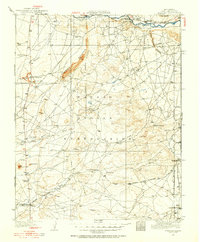 1928 Kirtland1955 Print · USGSSan Juan County at the close of the 1920s shows a landscape of riverfront farming and remote desert commerce. Genealogists and historians can trace the network of isolated hubs like Wheeler Trading Post, Nava PO, and the early workings of a Coal Mine.
 - 1932 Map of Kirtland
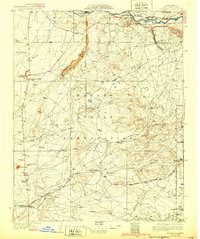 1932 Kirtland1932 Print · USGSThe Navajo Nation's high desert landscape and the San Juan River valley are documented here in the early thirties. Genealogists and historians can trace essential early hubs like the Wheeler Trading Post, the Oil Pumping Sta near Barber Peak, and the community at Fruitland.
 - 1954 Map of Shiprock
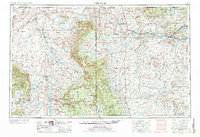 1954 Shiprock1954 Print · USGSThe Four Corners region in the mid-fifties reveals a vast landscape of tribal lands and desert landmarks. Researchers can trace the mid-century footprints of the Navajo Indian Reservation, identifying remote Trading Posts, the early growth of Farmington, and the iconic spire of Ship Rock.5 unique versions available
 - 1954 Map of Herrera, 1955 Print
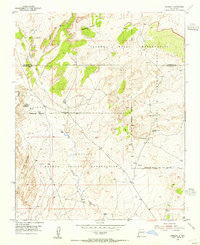 1954 Herrera1955 Print · USGSTribal lands and early ranching infrastructure converge in this mid-fifties New Mexico survey of Bernalillo and Sandoval counties. Genealogists and historians can locate the Herrera settlement, the Capilla de San Ignacio, and the now-vacant CCC Camp (Aban'd).3 unique versions available
 - 1954 Map of Canoncito School, 1955 Print
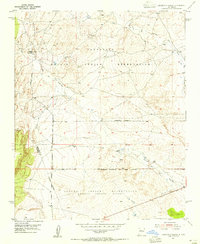 1954 Canoncito School1955 Print · USGSBernalillo and Valencia counties meet in the high desert during the mid-1950s, a landscape defined by Indigenous lands and mineral exploration. Researchers can trace historic locations such as the Canoncito Navajo Day School, Pueblo Ruins, and the Fern Mine.3 unique versions available
 - 1954 Map of La Mesita Negra, 1955 Print
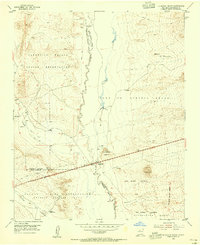 1954 La Mesita Negra1955 Print · USGSIn the mid-1950s, this area of Bernalillo County was defined by the intersection of tribal lands and the historic path of Mother Road travelers. You can trace the path of U.S. Route 66 past the Rio Puerco Trading Post and into the Town of Atrisco Grant.4 unique versions available
 - 1954 Map of Benavidez Ranch, 1955 Print
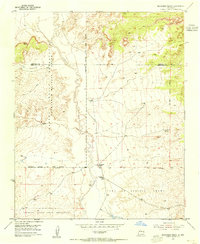 1954 Benavidez Ranch1955 Print · USGSThe Rio Puerco Valley in the mid-1950s was a landscape defined by expansive land grants and remote ranching outposts. Genealogists and researchers can trace the footprint of family holdings like Benavidez Ranch and Rio Puerco Ranch or locate the State Game and Fish Commission Bird Shelter.2 unique versions available
 - 1954 Map of Saint Johns, 1968 Print
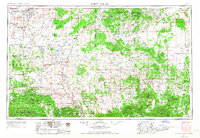 1954 Saint Johns1968 Print · USGSThe high plateau of the Arizona-New Mexico border is captured here in the mid-1950s, showing the intersection of tribal lands and national forests. Researchers can trace the cattle country and mountain outposts from Saint Johns to Pie Town and McNary.3 unique versions available
 - 1954 Map of Socorro, 1972 Print
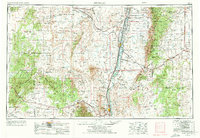 1954 Socorro1972 Print · USGSMid-century New Mexico comes into focus as the Rio Grande valley and the surrounding high desert undergo post-war growth. Genealogists and historians can trace old mountain settlements like Tajique and Punta de Agua or locate remote sites like the Torrance Mine.2 unique versions available
 - 1954 Map of Gallup, 1973 Print
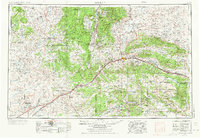 1954 Gallup1973 Print · USGSNative American tribal lands and the railroad corridor of the Southwest appear here at the midpoint of the century. Trace historic sites and remote settlements from Window Rock to the Fort Wingate Army Depot and Bibo.2 unique versions available
 - 1954 Map of Aztec, 1975 Print
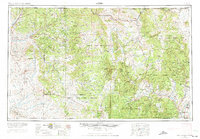 1954 Aztec1975 Print · USGSNorthern New Mexico and southern Colorado come alive in the mid-1950s, showing the high-country settlements and tribal lands of the San Juan Basin. Genealogists and historians can trace the path of the Denver & Rio Grande Western RR and locate communities like Abiquiu, Park View, and Lumberton.4 unique versions available
 - 1955 Map of Zith-Tusayan Butte 4 NE, 1957 Print
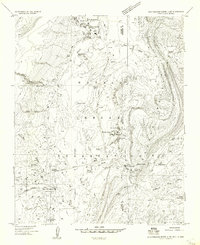 1955 Zith-Tusayan Butte 4 NE1957 Print · USGSThe Navajo capital at Window Rock and the historic settlement of Fort Defiance are captured here during the mid-fifties. Genealogists and historians can locate numerous local landmarks including the Good Shepherd Mission, the Tribal Fairgrounds, and the Karrigan Trading Post.
 - 1957 Map of Saint Johns
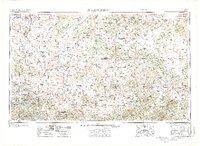 1957 Saint Johns1957 Print · USGSThe Arizona-New Mexico borderlands are captured here in the mid-fifties, showing the high-country settlements and federal lands before modern development. Genealogists and historians can trace old homesteads and landmarks like the Red Hill Post Office, Lyman Reservoir, and the mountain communities of Eagar and Springerville.
 - 1957 Map of Mesa Gigante, 1959 Print
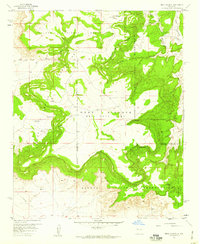 1957 Mesa Gigante1959 Print · USGSCibola County lands in the late 1950s reveal a detailed intersection of tribal territories and historic land grants. Researchers can trace the boundaries of the Laguna Indian Reservation and locate landmarks like the Harrington Windmill and Alamos Spring.3 unique versions available
 - 1957 Map of Goat Mountain, 1959 Print
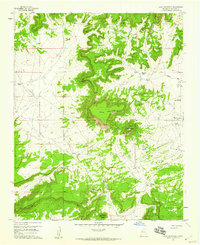 1957 Goat Mountain1959 Print · USGSMcKinley County mining and ranching are captured here in the late fifties, during a period of significant uranium exploration. Trace family landholdings and industrial history at the Berryhill Ranch, Homestake-Sapin Mine No 15, and Navarre Ranch.3 unique versions available
 - 1957 Map of Arch Mesa, 1959 Print
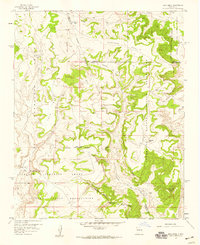 1957 Arch Mesa1959 Print · USGSThe intersection of the Canoncito Navajo Indian Reservation and Laguna Indian Reservation is recorded here in the late 1950s. You can trace isolated Ruins, remote livestock water sources like Meyer Windmill, and prominent landmarks such as Standing Rock.3 unique versions available
 - 1958 Map of Socorro
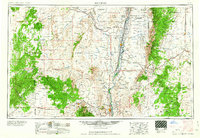 1958 Socorro1958 Print · USGSNew Mexico's high desert during the late fifties reveals a landscape of massive land grants and remote mining outposts. Researchers can trace the path of the Atchison Topeka and Santa Fe railroad as it connects Socorro and Belen to industrial sites like the Manganese Mill.
 - 1958 Map of Gallup
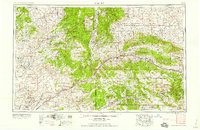 1958 Gallup1958 Print · USGSThe high desert of Western New Mexico and Eastern Arizona is captured here in the late fifties, dominated by the Navajo and Zuni homelands. Researchers can trace the path of US 66 through Gallup or locate historic industry at the Navajo Coal Mine and Gibson Coal Mine.
 - 1958 Map of Shiprock
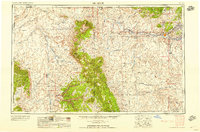 1958 Shiprock1958 Print · USGSThe Four Corners region in the mid-fifties shows a vast network of remote outposts and river settlements. You can locate numerous historic sites like the Emmanuel Mission and several commercial hubs such as Burnham Trading Post and Bisti Trading Post.
 - 1958 Map of Aztec
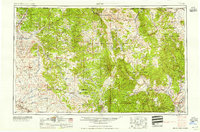 1958 Aztec1958 Print · USGSNorthern New Mexico and the southern Colorado border are captured here during the mid-fifties, showing the rugged intersection of national forests and tribal lands. Researchers can trace the Denver and Rio Grande Western rail line and locate remote outposts like Blanco Trading Post or Sargent Ranch.
 - 1958 Map of Albuquerque
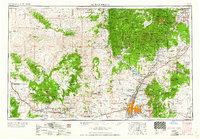 1958 Albuquerque1958 Print · USGSAlbuquerque and the surrounding high desert are captured here during a period of massive federal expansion and postwar growth. Researchers can trace the development of Kirtland Air Force Base, find ancestral homes in Pueblo de Santa Ana, or locate industrial sites like the Jackpile Mine.
 - 1958 Map of Saint Johns
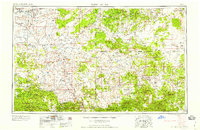 1958 Saint Johns1958 Print · USGSEastern Arizona and western New Mexico appear here in the late fifties, showcasing the high plateau and forest landscapes along the Continental Divide. Researchers can trace early ranching routes and water systems like Lyman Reservoir or locate remote settlements such as Fence Lake and Atarque.2 unique versions available
Showing maps 1-25 of 197
Top cities near Eastern Navajo Agency
Top neighborhoods of Eastern Navajo Agency
- Bisti historical maps
- Nahodishgish historical maps
- Tinaja historical maps
- El Morro historical maps
- El Morro historical maps
- Ramah historical maps
See more
Frequently asked questions
- What are the different types of historical maps available for Eastern Navajo Agency?
- What is the oldest map of Eastern Navajo Agency?
- Where can I purchase historical maps of Eastern Navajo Agency for my home or office?
- Where can I download high-res historical maps of Eastern Navajo Agency?
- Are there historical topographic maps available for Eastern Navajo Agency?
- Is there historical aerial imagery available for Eastern Navajo Agency?
- Where are historical maps of Eastern Navajo Agency sourced from?