1950s Maps of Chenango County, New York
Explore 11 historic maps of Chenango County from the 1950s. These maps offer a rare glimpse into what life looked like during the 1950s — showing old roads, neighborhoods, homes, and landmarks that have changed or disappeared over time.
Whether you're researching your family's past, planning a metal detecting trip, or studying how Chenango County's landscape evolved across the 1950s, these high-resolution maps are a powerful tool for exploring the history of this region.
- Focus on a specific era: All maps on this page are from the 1950s, giving you a focused view of this time period.
- See what’s changed: Compare century-old streets, trails, and buildings to today's modern landscape using overlays and satellite layers.
- Research with precision: Use these maps for genealogy, historical research, land use analysis, or educational projects.
- View, download, or print: Maps are fully viewable online in high resolution, and can be downloaded or printed for your own records.
Start exploring Chenango County's history through authentic maps from the 1950s. This is your window into the past.
Chenango County, NY maps
(11)- 1950 Map of Greene
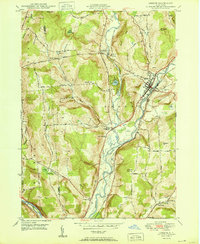 1950 Greene1950 Print · USGSThe Chenango River valley in the years after the war shows a landscape of rail-connected villages and historic turnpikes. Genealogists can locate family burial sites at Sylvan Lawn Cem and Horton Cem or trace the path of the Catskill Turnpike.
 - 1950 Map of Binghamton
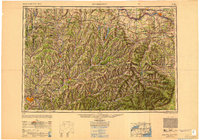 1950 Binghamton1950 Print · USGSBinghamton and the surrounding Southern Tier are shown in the mid-century era, highlighting the intricate rail and river networks that drove local industry. Researchers can trace the path of the Erie Railroad and locate landmarks from Otsego Lake to Sidney Mountain.2 unique versions available
 - 1950 Map of Smithville Flats
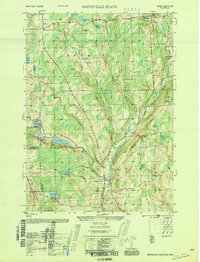 1950 Smithville Flats1950 Print · USGSMid-century Chenango County remains a landscape of dairy farms and small hamlets before modern development altered the rural character. Trace ancestral roots at Westview Cem, locate vanished schoolhouses like School No 1, and explore the banks of Genegantslet Creek.
 - 1950 Map of Chenango Forks, 1951 Print
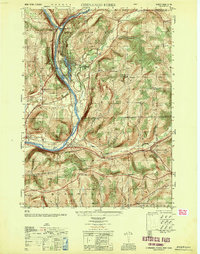 1950 Chenango Forks1951 Print · USGSThe river valleys and rail lines north of Binghamton converge here at the start of the 1950s. Genealogists and local historians can trace the rural school system from School No 29 to School No 5, or follow the rail-era growth of Port Crane and Sanitaria Springs.
 - 1951 Map of Brisben
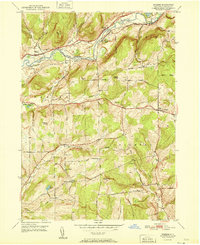 1951 Brisben1951 Print · USGSChenango County's river-and-rail corridor is captured here at mid-century, following the valley through the town of Oxford. Researchers can locate vanished landmarks like the Abandoned Canal, Old Chapel Ch, and rural schoolhouses including School No 24.
 - 1951 Map of Tyner
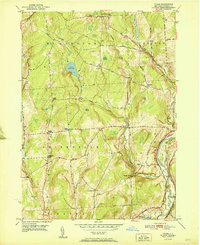 1951 Tyner1951 Print · USGSThe Chenango River valley in the early fifties shows a landscape of rural hamlets and deep-rooted family history. You can trace the path of the Abandoned Canal and find numerous family-named burial sites like Moore Cem and Bowles Cem.
 - 1951 Map of West Bainbridge
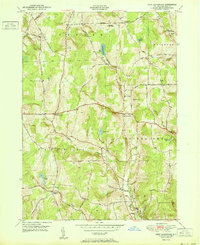 1951 West Bainbridge1951 Print · USGSChenango County hills and rural hamlets are captured here at the mid-century, before the modern highway era. Genealogists and local historians can trace family-named sites such as Blakesley Corner, North Afton, and the West Bainbridge Cemetery.
 - 1951 Map of Oxford
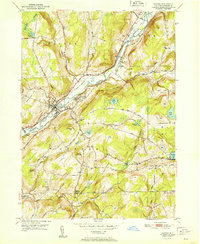 1951 Oxford1951 Print · USGSMid-century Chenango County remains defined by its river valley and the maturing transportation networks of Oxford and its surrounding townships. Researchers can trace rural schoolhouses like School No 13 and old family cemeteries including Mason-Packer Cem.
 - 1957 Map of Belden, 1959 Print
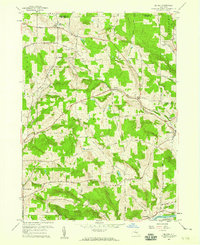 1957 Belden1959 Print · USGSBroome County’s rural landscapes are captured here during the late fifties, showing a region shaped by the Delaware and Hudson railroad. Researchers can locate several family-history landmarks, including New Ohio Cem, Pratts Cem, and the village of Harpursville near the Susquehanna River.
 - 1957 Map of Afton, 1959 Print
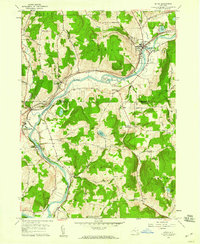 1957 Afton1959 Print · USGSThe Susquehanna River valley in the late fifties was a busy corridor of rail traffic and river towns. You can trace the Delaware and Hudson railroad through Nineveh Junction, locate old family plots at The Plains Cem, or find the secluded Vallonia Springs.4 unique versions available
 - 1958 Map of Binghamton
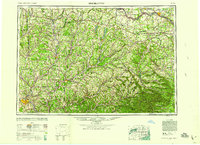 1958 Binghamton1958 Print · USGSCentral New York in the late fifties was a network of manufacturing cities and river valleys connected by vital rail lines. Genealogists and historians can trace family roots in Oneonta, Norwich, and Cooperstown or locate long-standing farms along Schoharie Creek.
End of results
Showing maps 1-11 of 11
Top cities of Chenango County
- Norwich historical maps
- Greene historical maps
- Sherburne historical maps
- Oxford historical maps
- Norwich historical maps
- Bainbridge historical maps
See more
Frequently asked questions
- What are the different types of historical maps available for Chenango County?
- What is the oldest map of Chenango County?
- Where can I purchase historical maps of Chenango County for my home or office?
- Where can I download high-res historical maps of Chenango County?
- Are there historical topographic maps available for Chenango County?
- Is there historical aerial imagery available for Chenango County?
- Where are historical maps of Chenango County sourced from?