Old Maps of Malone, New York for Academic Research
Study the evolution of Malone with 52 high-resolution historic maps. Whether you're teaching, researching, or modeling changes in land use, these maps provide essential visual documentation of urban, environmental, and geographic change.
- Analyze long-term change: Track patterns in development, transportation, and natural features.
- Ideal for environmental or urban studies: Support academic projects with primary historical map data.
- Use in the classroom or lab: Educators and researchers rely on these maps to bring historical context to life.
These maps are a powerful tool for teaching, research, and visualizing how Malone has changed over the decades.
Malone, NY maps
(52)- 1906 Map of Loon Lake, 1958 Print
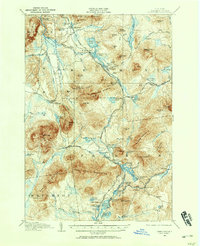 1906 Loon Lake1958 Print · USGSThe northern Adirondacks at the turn of the century are shown here as a landscape of remote mountain outposts and expanding rail lines. Researchers can trace early family-named sites like Hunter Home, local industries at Upper Kilns, and the junction of the Delaware and Hudson railroad.2 unique versions available
 - 1908 Map of Loon Lake
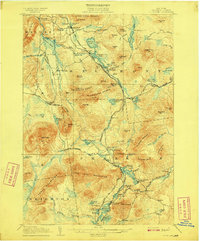 1908 Loon Lake1908 Print · USGSFranklin County's mountain wilderness is captured here in the early twentieth century, showing a landscape defined by timber kilns and nascent rail travel. Genealogists and historians can trace old homesteads and landmarks like Inman PO, Bryants Mill, and the historic Port Kent and Hopkinton Turnpike.6 unique versions available
 - 1915 Map of Chateaugay
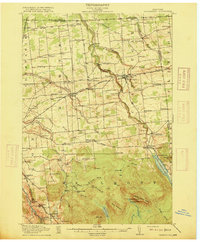 1915 Chateaugay1915 Print · USGSNorthern Franklin County appears here during the height of its rail-and-mill era, bordering the international boundary with Canada. Genealogists can trace family footprints through dozens of numbered schoolhouses, the White Church, and industrial sites like Cooks Mill or The Forge.4 unique versions available
 - 1915 Map of Malone, 1957 Print
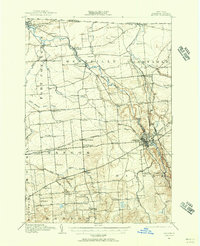 1915 Malone1957 Print · USGSFranklin County at the onset of the Great War reveals a landscape defined by industrial rail junctions and a dense network of district schools. Genealogists can trace family roots through numerous rural school sites and landmarks like the County Almshouse, Malone Junction, and Fort Covington.2 unique versions available
 - 1917 Map of Malone
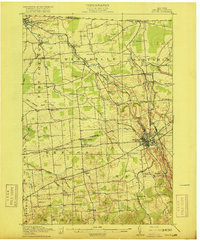 1917 Malone1917 Print · USGSNorthern New York's borderlands are captured here during the height of the steam-rail era, centered on the busy junction at Malone. Genealogists and local historians can trace family locations near dozens of rural schoolhouses or along the Rutland RR and Salmon River.5 unique versions available
 - 1921 Map of Santa Clara, 1960 Print
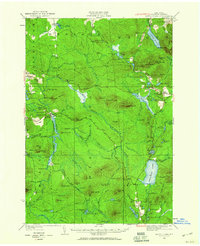 1921 Santa Clara1960 Print · USGSFranklin County's deep woods and timber-driven rail lines are captured here in the early 1920s. Genealogists and historians can locate rural schoolhouses like School No 7 and vanished logging stops along the Brooklyn Cooperage RR or near Santa Clara.2 unique versions available
 - 1923 Map of Santa Clara
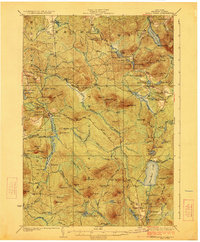 1923 Santa Clara1923 Print · USGSFranklin County's North Country is captured here in the early twenties, showing a landscape of timber-driven rail lines and mountain hamlets. Researchers can trace the New York Central Railroad through Santa Clara or locate the old McCollom School and Everton settlement.5 unique versions available
 - 1943 Map of Chateaugay
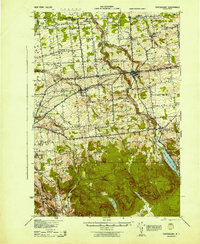 1943 Chateaugay1943 Print · USGSFranklin County sits at the international border during the early years of the war, showing a landscape of small dairy farms and rail-dependent hamlets. Researchers can trace the path of the Rutland Railroad through Chateaugay and find local landmarks like Cooks Mill and Brainardsville.
 - 1948 Map of Ogdensburg, 1973 Print
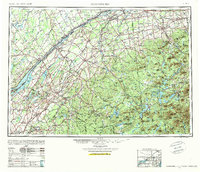 1948 Ogdensburg1973 Print · USGSThe international border along the St Lawrence River comes to life in the late 1940s, showing the vital rail and water connections between New York and Ontario. Researchers can trace the grounds of St Lawrence University, the massive Camp Drum military reservation, and the historic Rideau River and Canal.2 unique versions available
 - 1951 Map of Ogdensburg
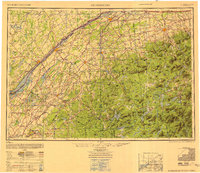 1951 Ogdensburg1951 Print · USGSThe St. Lawrence frontier and the North Country are captured here during the post-war era, from the river ports to the high Adirondacks. Genealogists and historians can trace the rail-and-river economy through Ogdensburg, the Rutland rail lines, and Potsdam.
 - 1953 Map of Ogdensburg
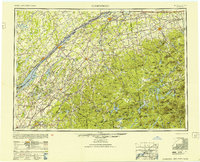 1953 Ogdensburg1953 Print · USGSThe North Country and St. Lawrence Valley are shown here in the early fifties, just as the region’s rail-and-river economy remained in full swing. Genealogists and historians can trace family-named corners and rural hubs along the Rutland railroad or locate heritage sites near Ogdensburg, Potsdam, and the St Regis Indian Reservation.
 - 1961 Map of Ogdensburg
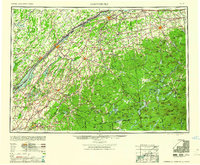 1961 Ogdensburg1961 Print · USGSThe St. Lawrence valley and the Adirondack high country meet in this early sixties survey during a peak era for rail and river commerce. Genealogists and historians can trace the paths of the New York Central railroad through remote settlements like Wanakena, Conifer, and Piercefield.
 - 1964 Map of Burke, 1965 Print
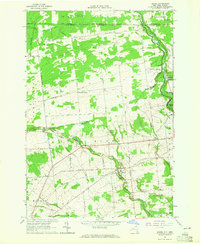 1964 Burke1965 Print · USGSNorthern Franklin County meets the Canadian border in the mid-1960s, showing a landscape of riverside villages and highland farms. Genealogists can trace family names across Burke Center, St George Ch, and cemeteries like Mitchell Cem.
 - 1964 Map of Constable, 1966 Print
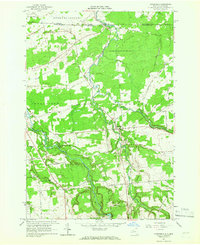 1964 Constable1966 Print · USGSFranklin County's international borderlands are captured here in the mid-1960s, showing the rural landscape around the US Customs Port of Entry. Genealogists can trace local roots at Pine Grove Cem and the St Francis of Assisi Cem near the village of Constable.2 unique versions available
 - 1964 Map of Lake Titus, 1966 Print
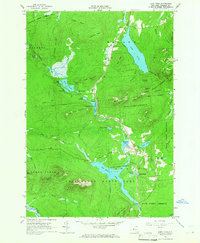 1964 Lake Titus1966 Print · USGSThe northern Adirondacks are captured here in the mid-1960s, showing a landscape defined by state forest preserves and isolated mountain hamlets. Genealogists and hikers can trace old roads to Duane Center, St Marys Ch, and the Ladd Cem near the shores of Lake Duane.2 unique versions available
 - 1964 Map of Malone, 1966 Print
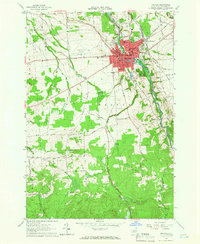 1964 Malone1966 Print · USGSMalone and the Salmon River valley are captured in the mid-1960s during a period of steady growth in Franklin County. Genealogists and local historians can trace family locations along Wheeler Road, visit the Dimmick Cem, or locate the St Josephs Ursuline Academy.4 unique versions available
 - 1964 Map of Chasm Falls, 1966 Print
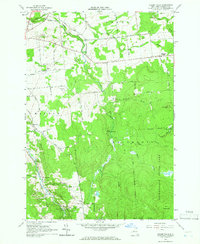 1964 Chasm Falls1966 Print · USGSFranklin County in the mid-sixties reveals a landscape of working river valleys and the rising peaks of the northern Adirondacks. Researchers can trace the Old Railroad Grade near Teboville or locate local landmarks like the White Ch and River Street Sch.2 unique versions available
 - 1968 Map of Owls Head, 1970 Print
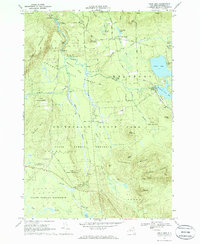 1968 Owls Head1970 Print · USGSThe Adirondack highlands near Duane and Mountain View are captured in the late sixties, showcasing a landscape of high-country lakes and timber-industry remnants. Researchers can locate the Hoose Cem, St Josephs Ch, and old logging routes like Benoit Road.3 unique versions available
 - 1985 Map of Massena
 1985 Massena1985 Print · USGSNorthern New York at the mid-eighties shows a landscape of river-driven industry and high mountain wilderness along the Canadian border. Researchers can trace the legacy of iron working and milling in Brasher Iron Works or follow the Raquette River through Massena and Potsdam.
 - 1993 Map of Burke, 1995 Print
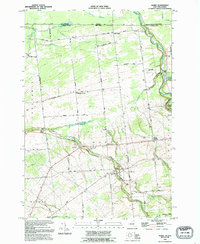 1993 Burke1995 Print · USGSIn the 1990s, the rural borderlands of northern New York maintained a quiet network of family farms and small hamlets along the Canadian line. Genealogists can trace family names through numerous burial grounds like St George Cem, Mitchell Cem, and Pike Cem.
 - 1993 Map of Constable, 1995 Print
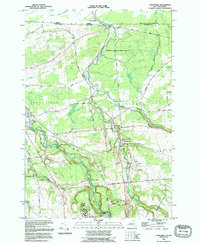 1993 Constable1995 Print · USGSThe northern border of Franklin County meets Quebec in the 1990s, centered on the cross-border community of Trout River. Genealogists and local historians can trace family locations along Taylor Road and visit documented sites like Pine Grove Cem and St Francis Of Assisi Cem.
 - 1994 Map of Massena
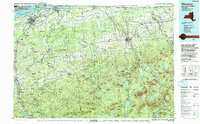 1994 Massena1994 Print · USGSThe St. Lawrence River valley and northern Adirondacks meet in the mid-1990s, revealing a landscape of international shipping, rail corridors, and dense state forests. Genealogists and historians can trace the foundations of Massena, the St Regis Indian Reservation, and small hamlets like Brasher Iron Works.
 - 2010 Map of Malone, 2010 Print
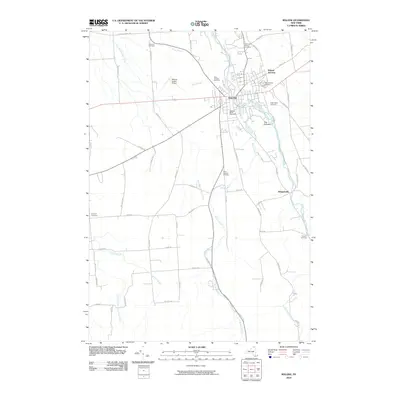 2010 Malone2010 Print · USGSMalone and the surrounding Franklin County countryside appear in this modern survey of northern New York's river valleys. Genealogists can locate several local burial sites like Morningside and Sand Hill Cemetery, or trace the rural routes connecting Malone Junction and Whippleville.
 - 2010 Map of Chasm Falls, 2010 Print
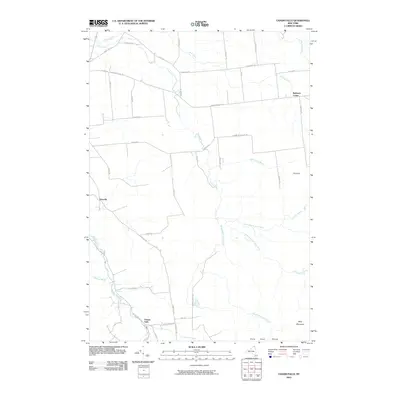 2010 Chasm Falls2010 Print · USGSThe foothills of the Adirondacks meet the Franklin County plains in the early twenty-first century. Researchers can trace family homesteads near Bellmont Center or follow the waters of the Salmon River and Trout River.
 - 2010 Map of Lake Titus, 2010 Print
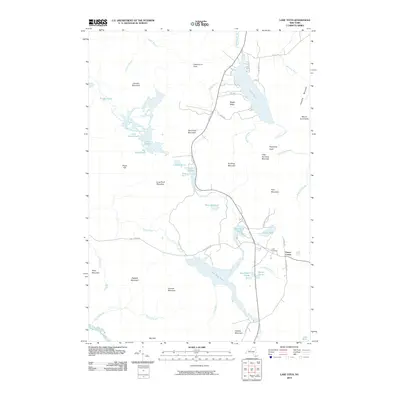 2010 Lake Titus2010 Print · USGSThe Adirondack highlands near Malone come into focus during the early twenty-first century, showing the intricate waterways of the northern forest. Researchers can trace local heritage at Ladd Cemetery or explore the early mining history implied by Furnace Mountain and Orebed Mountain.
Showing maps 1-25 of 52
Top cities near Malone
- Malone historical maps
- Moira historical maps
- Bangor historical maps
- Westville historical maps
- Chateaugay historical maps
- Fort Covington historical maps
See more
Top neighborhoods of Malone
- Chasm Falls historical maps
- Teboville historical maps
- Fay historical maps
- Whippleville historical maps
- Malone historical maps
Frequently asked questions
- What are the different types of historical maps available for Malone?
- What is the oldest map of Malone?
- Where can I purchase historical maps of Malone for my home or office?
- Where can I download high-res historical maps of Malone?
- Are there historical topographic maps available for Malone?
- Is there historical aerial imagery available for Malone?
- Where are historical maps of Malone sourced from?