1900s (20th Century) Maps of Fowler, New York
Explore 23 historic maps of Fowler from the 1900s (20th Century). These maps offer a rare glimpse into what life looked like during the 1900s — showing old roads, neighborhoods, homes, and landmarks that have changed or disappeared over time.
Whether you're researching your family's past, planning a metal detecting trip, or studying how Fowler's landscape evolved across the 1900s, these high-resolution maps are a powerful tool for exploring the history of this region.
- Focus on a specific era: All maps on this page are from the 1900s, giving you a focused view of this time period.
- See what’s changed: Compare century-old streets, trails, and buildings to today's modern landscape using overlays and satellite layers.
- Research with precision: Use these maps for genealogy, historical research, land use analysis, or educational projects.
- View, download, or print: Maps are fully viewable online in high resolution, and can be downloaded or printed for your own records.
Start exploring Fowler's history through authentic maps from the 1900s. This is your window into the past.
Fowler, NY maps
(23)- 1911 Map of Antwerp
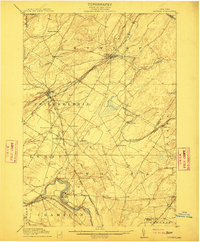 1911 Antwerp1911 Print · USGSJefferson County was a landscape of bustling river towns and intersecting rail lines just after the turn of the century. Trace the early footprints of Antwerp and Sterlingville, or locate family landmarks like Bishops Corners and Woods Mill.6 unique versions available
 - 1912 Map of Hammond
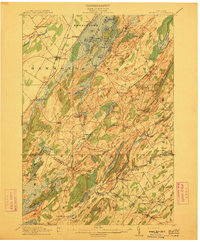 1912 Hammond1912 Print · USGSThe rural borderlands of St. Lawrence and Jefferson counties are captured here in the early twentieth century. Genealogists and historians can trace defunct district schools like California School and Stark School, or locate the Old Iron Works and rail stops at South Hammond Oakvale Sta.4 unique versions available
 - 1913 Map of Lake Bonaparte, 1956 Print
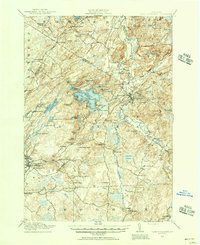 1913 Lake Bonaparte1956 Print · USGSThe Lewis and Jefferson County borderlands come to life in this pre-World War I survey of the Lake Bonaparte region. Researchers can trace the old New York Central rail line past historic landmarks like Kimball Mill and the French Settlement School.
 - 1915 Map of Gouverneur
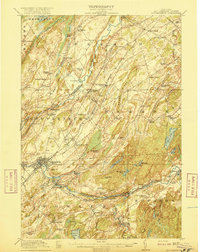 1915 Gouverneur1915 Print · USGSSt. Lawrence County comes to life in this early twentieth-century survey of the Oswegatchie River and its surrounding rail-fed towns. Researchers can trace the legacy of rural education and industry through sites like the Fullerville Ironworks, Scotch Settlement, and Ore Bed School.4 unique versions available
 - 1916 Map of Lake Bonaparte
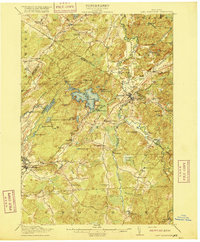 1916 Lake Bonaparte1916 Print · USGSUpper New York State at the dawn of the twentieth century shows a landscape defined by isolated settlements and a budding rail network. Researchers can trace the legacy of early families and industry through sites like Kimball Mill, Natural Bridge, and the French Settlement School.5 unique versions available
 - 1937 Map of Gouverneur
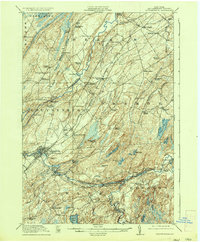 1937 Gouverneur1937 Print · USGSSt. Lawrence County in the early twentieth century shows a landscape defined by the winding Oswegatchie River and a dense network of local school districts. Genealogists can locate family-named landmarks like Hailes Hopyard or rural hubs such as Fullerville Ironworks and Staplin Corners.
 - 1944 Map of Hammond
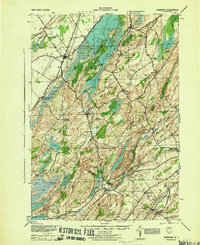 1944 Hammond1944 Print · USGSSt. Lawrence County in the mid-1940s is a landscape of complex waterways and small rural school districts. Genealogists can trace family footprints through numerous local landmarks like Scotch Settlement Sch, the Old Iron Works, and Pope Mills.
 - 1948 Map of Ogdensburg, 1973 Print
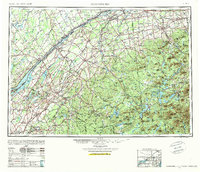 1948 Ogdensburg1973 Print · USGSThe international border along the St Lawrence River comes to life in the late 1940s, showing the vital rail and water connections between New York and Ontario. Researchers can trace the grounds of St Lawrence University, the massive Camp Drum military reservation, and the historic Rideau River and Canal.2 unique versions available
 - 1949 Map of Hammond, 1953 Print
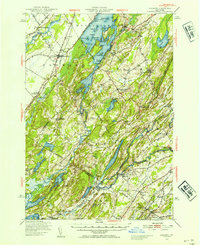 1949 Hammond1953 Print · USGSSt. Lawrence County in the late 1940s reveals a landscape of interconnected waterways and rural school districts. Genealogists can trace family names through the Scotch Settlement Sch, Black Lake Cemetery, and the Oakvale Station rail stop.3 unique versions available
 - 1949 Map of Antwerp, 1953 Print
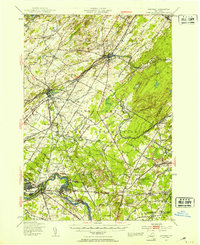 1949 Antwerp1953 Print · USGSNorthern Jefferson County during the late 1940s is defined here by the massive footprint of the Pine Camp Military Reservation. You can trace rural life and ancestry through dozens of schoolhouses and family landmarks like Bishops Corners and Woods Mill.2 unique versions available
 - 1949 Map of Antwerp, 1974 Print
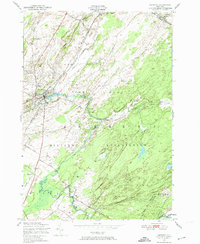 1949 Antwerp1974 Print · USGSAntwerp and the surrounding North Country were undergoing a major military expansion in the late 1940s. Genealogists and historians can trace the intersection of village life and the Pine Camp Military Reservation, locating Hillside Cem and School No 15.2 unique versions available
 - 1951 Map of Antwerp
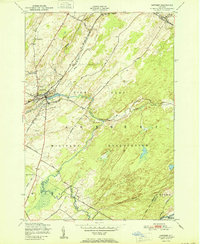 1951 Antwerp1951 Print · USGSAntwerp and its surroundings in the early fifties were shaped by the intersection of the New York Central Railroad and the expansive Pine Camp Military Reservation. Researchers can trace old district boundaries and local landmarks like Hillside Cem, School No 15, and the course of the Indian River.
 - 1951 Map of Ogdensburg
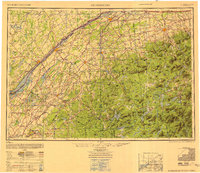 1951 Ogdensburg1951 Print · USGSThe St. Lawrence frontier and the North Country are captured here during the post-war era, from the river ports to the high Adirondacks. Genealogists and historians can trace the rail-and-river economy through Ogdensburg, the Rutland rail lines, and Potsdam.
 - 1951 Map of Natural Dam
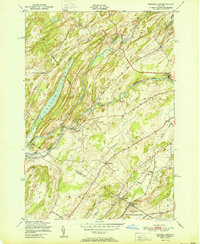 1951 Natural Dam1951 Print · USGSThe St. Lawrence River Valley's winding waterways and rural settlements are shown here just after the war, before modern development shifted the local landscape. Genealogists can locate family landmarks like the Scotch Settlement School, Laidlow School, and the early communities of Oxbow and Wegatchie.
 - 1951 Map of Lake Bonaparte, 1952 Print
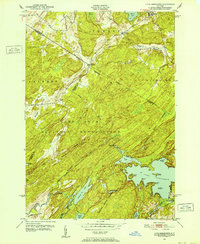 1951 Lake Bonaparte1952 Print · USGSIn the North Country during the early fifties, this area was defined by the intersection of civilian life and the growing Camp Drum Military Reservation. Genealogists and historians can trace old homesteads near Kellogg Corners, quiet lakeside landings at Lake Bonaparte, and the rural crossroads of Alpina.5 unique versions available
 - 1951 Map of Harrisville, 1952 Print
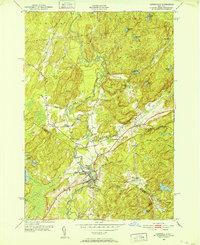 1951 Harrisville1952 Print · USGSThe Adirondack foothills of St. Lawrence County come into focus in the early fifties, documenting a world of riverside rail and remote pond systems. Genealogists and historians can trace the New York Central corridor through Harrisville and locate the Garrison Cem near the West Branch Oswegatchie River.4 unique versions available
 - 1953 Map of Ogdensburg
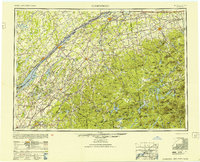 1953 Ogdensburg1953 Print · USGSThe North Country and St. Lawrence Valley are shown here in the early fifties, just as the region’s rail-and-river economy remained in full swing. Genealogists and historians can trace family-named corners and rural hubs along the Rutland railroad or locate heritage sites near Ogdensburg, Potsdam, and the St Regis Indian Reservation.
 - 1956 Map of Gouverneur, 1958 Print
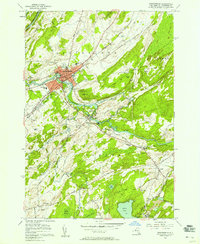 1956 Gouverneur1958 Print · USGSThe industrial and civic heart of St. Lawrence County comes to life in the mid-1950s as the railroad and river drive local growth. Researchers can trace family roots through sites like Riverside Cemetery, explore the mining operations at No 3 Shaft, or locate the old Fowler Sch.2 unique versions available
 - 1956 Map of Edwards, 1958 Print
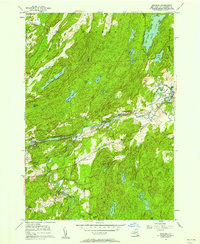 1956 Edwards1958 Print · USGSSt. Lawrence County industry and village life intersect in the mid-1950s along the winding Oswegatchie River. Researchers can trace the layout of Edwards and Fullerville, finding specific locations for Fairview Cem, the Powerplant, and the local High Sch.2 unique versions available
 - 1961 Map of Ogdensburg
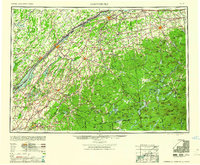 1961 Ogdensburg1961 Print · USGSThe St. Lawrence valley and the Adirondack high country meet in this early sixties survey during a peak era for rail and river commerce. Genealogists and historians can trace the paths of the New York Central railroad through remote settlements like Wanakena, Conifer, and Piercefield.
 - 1961 Map of Natural Dam, 1964 Print
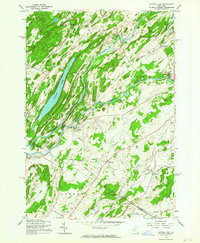 1961 Natural Dam1964 Print · USGSSt. Lawrence County in the early 1960s is defined by the winding Oswegatchie River and its riverside hamlets. Genealogists and local historians can trace family-named roads and remote settlements like Wegatchie, Little Bow, and the rail-stop at Spragueville.3 unique versions available
 - 1982 Map of Gouverneur, 1983 Print
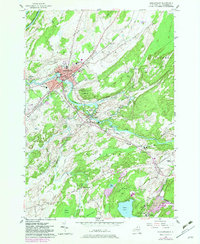 1982 Gouverneur1983 Print · USGSSt. Lawrence County in the early eighties shows a landscape of river-driven industry and deep-rooted community infrastructure. Genealogists and local historians can trace family plots at Riverside Cem or locate industrial sites like No 3 Shaft and Natural Dam.
 - 1985 Map of Gouverneur
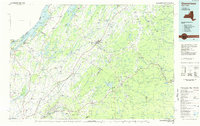 1985 Gouverneur1985 Print · USGSSt. Lawrence and Jefferson Counties are shown in the mid-eighties as a landscape of river-driven industry and expanding military grounds. Genealogists and historians can trace rail lines through Carthage, find local landmarks like Noble Hospital, and locate the boundaries of the Fort Drum Military Reservation.2 unique versions available
End of results
Showing maps 1-23 of 23
Top cities near Fowler
- Canton historical maps
- Gouverneur historical maps
- Wilna historical maps
- Champion historical maps
- Gouverneur historical maps
- Croghan historical maps
See more
Top neighborhoods of Fowler
- Emeryville historical maps
- Fullerville historical maps
- Balmat historical maps
- West Fowler historical maps
- Hailesboro historical maps
Frequently asked questions
- What are the different types of historical maps available for Fowler?
- What is the oldest map of Fowler?
- Where can I purchase historical maps of Fowler for my home or office?
- Where can I download high-res historical maps of Fowler?
- Are there historical topographic maps available for Fowler?
- Is there historical aerial imagery available for Fowler?
- Where are historical maps of Fowler sourced from?