Old Maps of Alexander County, North Carolina for Metal Detecting
Plan your next treasure hunt with 70 historic maps of Alexander County. Find old homesites, ghost towns, trails, and gathering spots that may be lost to time — perfect for identifying promising metal detecting locations.
- Locate forgotten sites: Uncover places like long-lost settlements, abandoned rail lines, or gathering spots.
- Plan better hunts: Use map overlays combined with LiDAR or satellite views to narrow in on historically rich areas.
- Made for detectorists: Thousands of hobbyists use these maps to discover relics, coins, and hidden history.
Use these historic maps to boost your research and find new opportunities beneath the surface of Alexander County.
Alexander County, NC maps
(70)- 1889 Map of Wilkesboro, 1960 Print
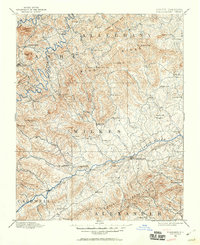 1889 Wilkesboro1960 Print · USGSWilkes and Ashe counties are shown here in the late 1880s as the region's mountain economy relied on river fords and valley mills. Researchers can trace ancestral locations from Jefferson to Wilkesboro, including landmarks like Lomax Store and Dunkirk Ch.
 - 1891 Map of Wilkesboro, 1940 Print
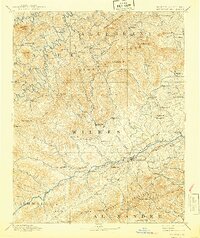 1891 Wilkesboro1940 Print · USGSThe foothills and high ridges of Northwest North Carolina are seen here in the late nineteenth century before modern highway development. Local historians can locate early post offices at Brown P.O., the mining area of Ore Knob, and ancestral landmarks like Dunkirk Ch. and Hall Mills.
 - 1895 Map of Hickory
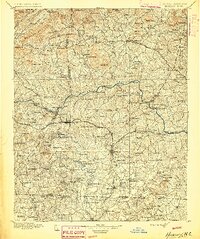 1895 Hickory1895 Print · USGSThe North Carolina foothills come alive in the late nineteenth century as the rail lines reached Hickory and Newton. Genealogists can trace family roots through numerous country landmarks like Tuttle's Store, Emmanuel Church, and Cloninger's Mill.5 unique versions available
 - 1953 Map of Charlotte, 1968 Print
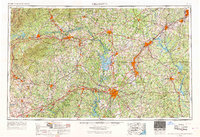 1953 Charlotte1968 Print · USGSThe North Carolina Piedmont and South Carolina borderlands are shown in detail during a period of significant growth and reservoir development. Trace the rail corridors of the Southern Railway or find family roots in towns like China Grove, Misenheimer, and Lincolnton.3 unique versions available
 - 1953 Map of Winston-Salem, 1974 Print
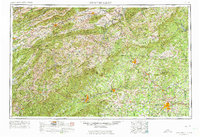 1953 Winston-Salem1974 Print · USGSThe North Carolina Piedmont and Virginia highlands meet in the mid-1950s, a landscape defined by the tobacco and textile hubs of the Blue Ridge foothills. Researchers can trace the rail-and-river geography connecting Winston-Salem to mountain towns like Mount Airy and Galax.2 unique versions available
 - 1954 Map of Charlotte
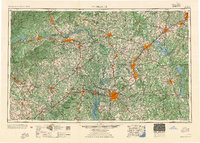 1954 Charlotte1954 Print · USGSThe North Carolina Piedmont in the mid-1950s shows a region of rapid growth and industrial expansion centered around Charlotte. Trace the era's infrastructure through the Southern railroad lines and locate significant landmarks like the Charlotte Naval Ammunition Depot and Lake Norman.2 unique versions available
 - 1955 Map of Winston-Salem
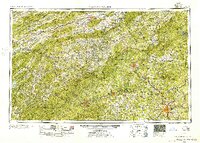 1955 Winston-Salem1955 Print · USGSThe Central Blue Ridge and Piedmont transition are captured here in the mid-fifties, from the industrial hub of Winston-Salem to the high peaks of Southwest Virginia. Genealogists can trace family landmarks like Richmond Hill Ch, Siloam Ch, and the old rail stops along the Southern Railway.
 - 1960 Map of Charlotte
 1960 Charlotte1960 Print · USGSMid-century North Carolina and South Carolina meet in this 1960 survey of the Piedmont's industrial and textile heartland. Trace the growth of Charlotte alongside historic landmarks like Kings Mountain National Military Park and the Charlotte Naval Ammunition Depot.2 unique versions available
 - 1962 Map of Winston-Salem
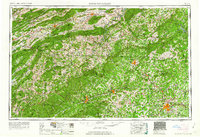 1962 Winston-Salem1962 Print · USGSThe North Carolina Piedmont meets the Virginia highlands in the early sixties, showing the rail corridors and mountain gaps of the southern Appalachians. Researchers can trace the Blue Ridge Parkway or locate family sites near Winston-Salem, Mount Airy, and Hanging Rock Mountain.
 - 1962 Map of Charlotte
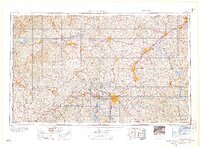 1962 Charlotte1962 Print · USGSThe North Carolina Piedmont in the early sixties showcases a landscape transformed by massive reservoirs and industrial growth. Researchers can trace the development of Lake Norman, locate the Charlotte Naval Ammunition Depot, or find family landmarks like Wesley Chapel and Brown & Norcott Mills.
 - 1966 Map of Gilreath, 1968 Print
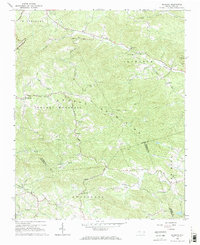 1966 Gilreath1968 Print · USGSThe foothills of the Blue Ridge come alive in this mid-century portrait of Wilkes and Alexander Counties. Genealogists and historians can trace family roots through numerous country landmarks like New Hope Ch, Old Gilreath, and Hunting Creek Cem.2 unique versions available
 - 1966 Map of Boomer, 1968 Print
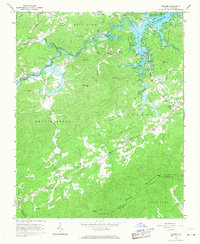 1966 Boomer1968 Print · USGSWilkes County life in the mid-sixties centered on the newly formed W Kerr Scott Reservoir and the surrounding peaks. Researchers can trace family roots at Ferguson and Boomer, or locate landmarks like the Boomer-Ferguson Sch and Zion Hill Ch.
 - 1966 Map of Moravian Falls, 1968 Print
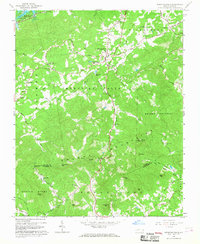 1966 Moravian Falls1968 Print · USGSThe foothills of Wilkes and Alexander counties are captured in the mid-1960s, just as the W Kerr Scott Reservoir was reshaping the local landscape. Genealogists and historians can trace community roots through numerous landmarks like Walnut Grove Ch, Pores Knob Lookout Tower, and the settlement of Boomer.
 - 1970 Map of Hiddenite, 1972 Print
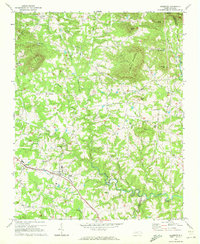 1970 Hiddenite1972 Print · USGSAlexander County’s rolling hills and river valleys are captured here in the early 1970s, centered on the community of Hiddenite. Researchers can locate numerous rural landmarks including Linneys Grove Ch, the Quarry at Rocky Face, and the Zion Chapel Cem.
 - 1970 Map of Bethlehem, 1973 Print
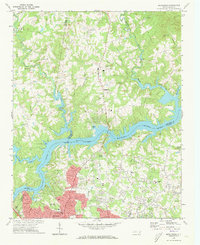 1970 Bethlehem1973 Print · USGSThe northern edge of Hickory and the waters of Lake Hickory come into sharp focus during this period of 1970s growth. Researchers can trace the development of lakeside communities like Bethlehem or locate family landmarks such as Isaac Creek Ch and Bentley Cem.
 - 1970 Map of Ellendale, 1973 Print
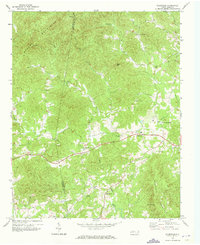 1970 Ellendale1973 Print · USGSAlexander County is captured in the early 1970s, showcasing the traditional landscape of the Brushy Mountains before modern development. Genealogists and local historians can trace family locations near All Healing Springs, Oxford Memorial Ch, and Never Mtn.
 - 1970 Map of Stony Point, 1973 Print
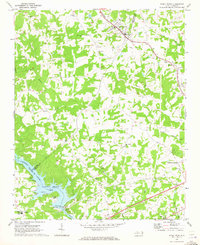 1970 Stony Point1973 Print · USGSThe Alexander and Iredell County line comes alive in the early 1970s as the Alexander RR services rural rail stops. Local historians can trace the development of Lookout Shoals Lake and locate community hubs like Stony Point and Bunker Hill High Sch.2 unique versions available
 - 1970 Map of Millersville, 1973 Print
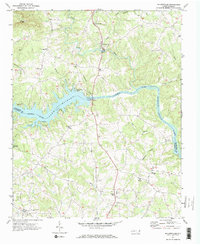 1970 Millersville1973 Print · USGSIn the early 1970s, the Catawba River valley around the Alexander and Catawba county line saw a mix of industrial utility and new recreation. Local historians can trace family church sites like Bethel Ch and Oxford Ch alongside the industrial footprint of Oxford Dam.2 unique versions available
 - 1970 Map of Taylorsville, 1973 Print
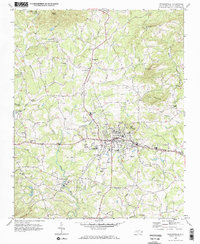 1970 Taylorsville1973 Print · USGSTaylorsville and its surrounding Alexander County foothills are captured here in the early seventies, just as the local infrastructure was modernizing. Genealogists and researchers can trace rural life through numerous landmarks like Sugarloaf School, Jolly Cemetery, and the Alexander railroad corridor.
 - 1985 Map of Boone, 1986 Print
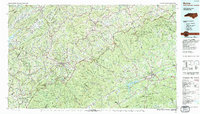 1985 Boone1986 Print · USGSThe High Country and Blue Ridge Mountains come into focus during the mid-eighties as Boone and its surrounding wilderness areas undergo modern expansion. Genealogists and historians can trace family-named ridges and landmarks near Appalachian State University, the Cranberry Mines, and Valle Crucis.2 unique versions available
 - 1986 Map of Hickory
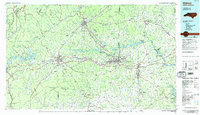 1986 Hickory1986 Print · USGSWestern North Carolina's foothills are seen here in the mid-eighties as textile and furniture towns flourished along the river. Trace the development of Hickory and Lenoir or locate local landmarks like Burke Chapel, Saw Mills, and Rhodhiss Lake.3 unique versions available
 - 1993 Map of Bethlehem, 1996 Print
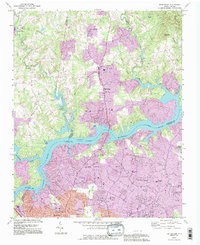 1993 Bethlehem1996 Print · USGSLake Hickory and the Catawba River divided three North Carolina counties during this period of suburban expansion. Researchers can trace family history through numerous rural landmarks like Bentley Cem, Petra Mills, and St Stephens High Sch.
 - 1997 Map of Ellendale, 2000 Print
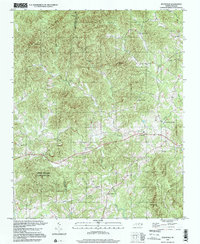 1997 Ellendale2000 Print · USGSAlexander County comes into focus in the late nineties, showing the intersection of mountain terrain and rural community life. Genealogists and historians can locate family landmarks like Oxford Memorial Ch, the mineral-named All Healing Springs, and Antioch Ch along the Middle Little River.
 - 2000 Map of Moravian Falls, 2003 Print
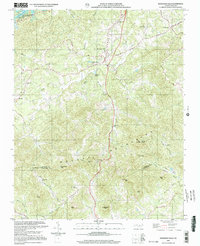 2000 Moravian Falls2003 Print · USGSWilkes and Alexander Counties are captured at the opening of the millennium, showing a landscape defined by the ridgelines of the Brushy Mountains. Genealogists and local historians can trace rural homesteads and congregations like Mt Olive Ch and Boomer Ch, or locate high points like Pores Knob.
 - 2000 Map of Gilreath, 2003 Print
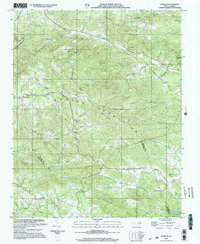 2000 Gilreath2003 Print · USGSWilkes and Alexander counties are captured at the turn of the millennium, centered on the heights of the Brushy Mountains. Genealogists can trace family roots through numerous country sanctuaries like Old Bethany Ch and Hunting Creek Cem.
Showing maps 1-25 of 70
Top cities of Alexander County
Frequently asked questions
- What are the different types of historical maps available for Alexander County?
- What is the oldest map of Alexander County?
- Where can I purchase historical maps of Alexander County for my home or office?
- Where can I download high-res historical maps of Alexander County?
- Are there historical topographic maps available for Alexander County?
- Is there historical aerial imagery available for Alexander County?
- Where are historical maps of Alexander County sourced from?