1950s Maps of Burke County, North Carolina
Explore 15 historic maps of Burke County from the 1950s. These maps offer a rare glimpse into what life looked like during the 1950s — showing old roads, neighborhoods, homes, and landmarks that have changed or disappeared over time.
Whether you're researching your family's past, planning a metal detecting trip, or studying how Burke County's landscape evolved across the 1950s, these high-resolution maps are a powerful tool for exploring the history of this region.
- Focus on a specific era: All maps on this page are from the 1950s, giving you a focused view of this time period.
- See what’s changed: Compare century-old streets, trails, and buildings to today's modern landscape using overlays and satellite layers.
- Research with precision: Use these maps for genealogy, historical research, land use analysis, or educational projects.
- View, download, or print: Maps are fully viewable online in high resolution, and can be downloaded or printed for your own records.
Start exploring Burke County's history through authentic maps from the 1950s. This is your window into the past.
Burke County, NC maps
(15)- 1953 Map of Charlotte, 1968 Print
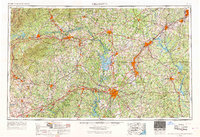 1953 Charlotte1968 Print · USGSThe North Carolina Piedmont and South Carolina borderlands are shown in detail during a period of significant growth and reservoir development. Trace the rail corridors of the Southern Railway or find family roots in towns like China Grove, Misenheimer, and Lincolnton.3 unique versions available
 - 1954 Map of Charlotte
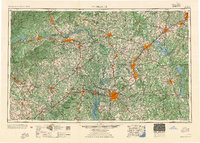 1954 Charlotte1954 Print · USGSThe North Carolina Piedmont in the mid-1950s shows a region of rapid growth and industrial expansion centered around Charlotte. Trace the era's infrastructure through the Southern railroad lines and locate significant landmarks like the Charlotte Naval Ammunition Depot and Lake Norman.2 unique versions available
 - 1956 Map of Valdese, 1958 Print
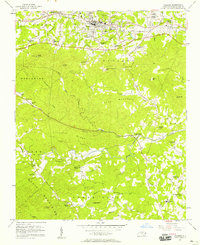 1956 Valdese1958 Print · USGSBurke County in the mid-fifties shows a landscape of busy textile and furniture towns connected by the rail corridor. Genealogists can locate family sites among numerous landmarks like Bollingers Chapel, Hildebran Sch, and Connellys Springs.2 unique versions available
 - 1956 Map of Oak Hill, 1958 Print
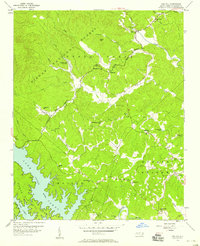 1956 Oak Hill1958 Print · USGSBurke County in the mid-fifties is characterized by the meeting of the Pisgah National Forest and the upper waters of Lake James. Genealogists and historians can trace the foundations of rural community life through sites like Tablerock State Fish Hatchery, Willow Tree Sch, and Quaker Meadow Ch.2 unique versions available
 - 1956 Map of Collettsville, 1958 Print
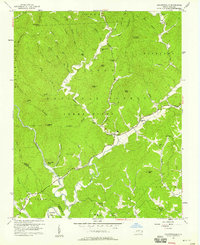 1956 Collettsville1958 Print · USGSCaldwell County’s deep river valleys and high forest ridges are captured here in the mid-fifties, centered on the community of Collettsville. Researchers can trace old family sites and rural landmarks like the Sand Mtn Lookout Tower, Adako, and Conways Chapel.3 unique versions available
 - 1956 Map of Benn Knob, 1958 Print
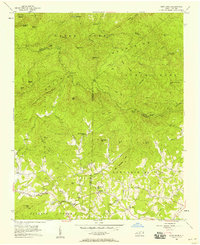 1956 Benn Knob1958 Print · USGSThe upland borders of Cleveland and Rutherford counties appear here as they were in the mid-1950s, a landscape of high peaks and secluded valleys. Genealogists can trace family footprints at Mt Moriah Ch, Corinth Ch, and the small Moriah Sch.2 unique versions available
 - 1956 Map of Morganton North, 1958 Print
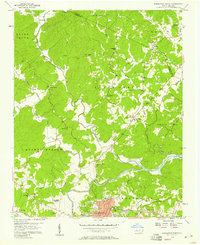 1956 Morganton North1958 Print · USGSMorganton and the river valleys of Burke County are captured in the mid-fifties, showing the rural landscapes of Quaker Meadow. Researchers can trace family sites like Arneys Store, Corpening Sch, and several mission churches along the Johns River.2 unique versions available
 - 1956 Map of Casar, 1958 Print
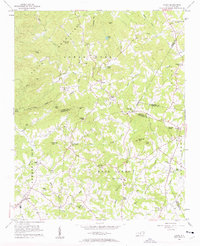 1956 Casar1958 Print · USGSThe rural foothills of the South Mountains come alive in this mid-fifties study of the Cleveland and Lincoln county line. Genealogists and local historians can trace family land around Casar, Ramsey, and Shoups Ford or locate several country churches like Carpenters Grove Ch.2 unique versions available
 - 1956 Map of Ashford, 1958 Print
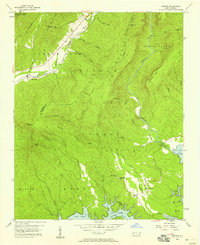 1956 Ashford1958 Print · USGSThe Linville Gorge and Pisgah National Forest meet in the mid-1950s as the river valleys transition to mountain wilderness. Trace family roots at South Mtn Institute, Brown Cem, or the old settlement of North Cove.3 unique versions available
 - 1956 Map of Linville Falls, 1958 Print
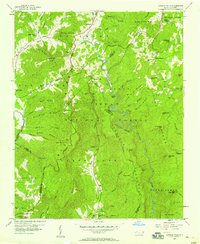 1956 Linville Falls1958 Print · USGSThe High Country of western North Carolina in the mid-fifties is captured here during the development of the Blue Ridge Parkway. Genealogists and hikers can locate Wise Cem, Walnut Grove Ch, and the subterranean depths of Linville Caverns.4 unique versions available
 - 1956 Map of Morganton South, 1958 Print
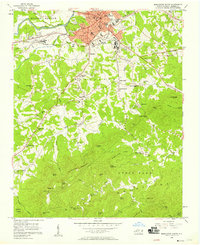 1956 Morganton South1958 Print · USGSMorganton and its mountain periphery are captured here in the mid-fifties, showing the town's expansion toward the South Mountains. Genealogists can locate family sites near Pumpkin Center, the State Sch for the Deaf, or Mull Grove Ch.2 unique versions available
 - 1956 Map of Chestnut Mtn., 1958 Print
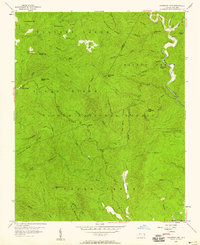 1956 Chestnut Mtn.1958 Print · USGSThe Blue Ridge wilderness of Burke and Avery counties is captured here in the mid-1950s as a landscape of isolated mountain settlements and national forest. Researchers can locate family sites and historical landmarks like Kawana Cem, the community of Mortimer, and the Lookout Tower atop Chestnut Mtn.4 unique versions available
 - 1956 Map of Drexel, 1959 Print
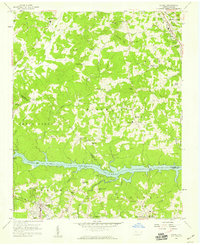 1956 Drexel1959 Print · USGSThe Catawba River valley in the mid-1950s is captured here just as the region’s industrial and transit networks were maturing. Local historians can trace the development of Drexel and Valdese along the Southern railroad or locate family-named sites like Puett Cem and Corpening Bridge.
 - 1956 Map of Linville Falls, 1962 Print
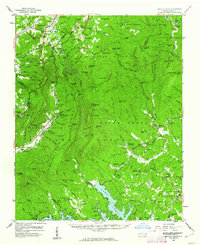 1956 Linville Falls1962 Print · USGSThe North Carolina high country is captured here during the mid-fifties, centered on the steep descent of the Linville River. Genealogists and hikers can trace old mountain communities and landmarks like the South Mtn Institute, Linville Caverns, and Wise Cem.2 unique versions available
 - 1956 Map of Lenoir, 1963 Print
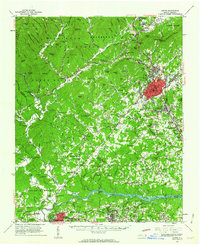 1956 Lenoir1963 Print · USGSCaldwell and Burke Counties come alive in the 1950s, showing the Foothills region as it transitioned from mountain timberlands to bustling rail towns. Trace old community hubs like Arneys Store, family-named creeks such as Elijah Bates Mill Creek, and the many churches like St Marys Mission Ch.
End of results
Showing maps 1-15 of 15
Top cities of Burke County
- Morganton historical maps
- Valdese historical maps
- Icard historical maps
- Drexel historical maps
- Connelly Springs historical maps
- Hildebran historical maps
See more
Frequently asked questions
- What are the different types of historical maps available for Burke County?
- What is the oldest map of Burke County?
- Where can I purchase historical maps of Burke County for my home or office?
- Where can I download high-res historical maps of Burke County?
- Are there historical topographic maps available for Burke County?
- Is there historical aerial imagery available for Burke County?
- Where are historical maps of Burke County sourced from?