Old Maps of Gates County, North Carolina for Academic Research
Study the evolution of Gates County with 110 high-resolution historic maps. Whether you're teaching, researching, or modeling changes in land use, these maps provide essential visual documentation of urban, environmental, and geographic change.
- Analyze long-term change: Track patterns in development, transportation, and natural features.
- Ideal for environmental or urban studies: Support academic projects with primary historical map data.
- Use in the classroom or lab: Educators and researchers rely on these maps to bring historical context to life.
These maps are a powerful tool for teaching, research, and visualizing how Gates County has changed over the decades.
Gates County, NC maps
(110)- 1906 Map of Beckford
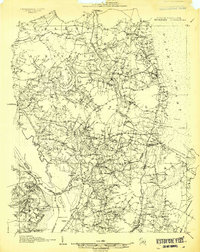 1906 Beckford1906 Print · USGSCoastal North Carolina at the turn of the century reveals a world of swamp-based industry and riverine commerce. Trace family roots and old landmarks across the landscape from the wharves at Taylor Wharf to crossroads like Wiggins Crossroads and the mills at Merchants Mill Pond.
 - 1907 Map of Beckford
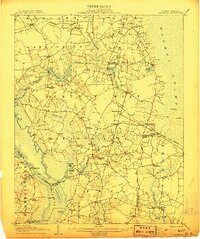 1907 Beckford1907 Print · USGSNortheastern North Carolina was a landscape of deep swamps and river commerce in the early 1900s. Genealogists can trace family landmarks at Merchants Mill, find rural congregations like Joppa Church, or follow the steam routes past Holidays Island.2 unique versions available
 - 1908 Map of Winton, 1944 Print
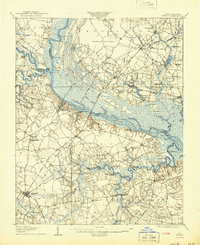 1908 Winton1944 Print · USGSHertford and Gates counties thrive along the Chowan River at the turn of the century, dominated by river landings and expanding rail lines. Genealogists can trace family roots through sites like Buckland School, Sarem Grove Church, and the isolated Greens Reduco PO.2 unique versions available
 - 1919 Map of Suffolk
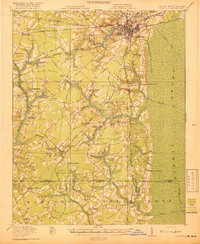 1919 Suffolk1919 Print · USGSCoastal Virginia and the North Carolina borderlands are defined by the convergence of six major railroads at Suffolk during the late teens. Genealogists can trace family landmarks like Pauls Branch Church and the Franklin Grove School along the edge of the Dismal Swamp.3 unique versions available
 - 1920 Map of Holland
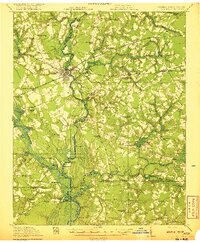 1920 Holland1920 Print · USGSCoastal plain life at the end of the Great War centers on the river-and-rail hubs of Franklin and Holland. Genealogists can trace family footprints across dozens of country schools like Holmes School and river crossings such as Joyners Bridge and Manning Ferry.2 unique versions available
 - 1940 Map of Beckford
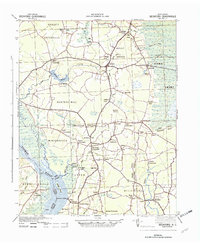 1940 Beckford1940 Print · USGSNortheastern North Carolina in the early 1940s was a land of timbered swamps and essential river crossings. Genealogists and historians can trace old homesteads and transport hubs near Cannon Ferry, Merchants Millpond, and the Beckford Junction rail crossing.2 unique versions available
 - 1940 Map of Lake Drummond, 1964 Print
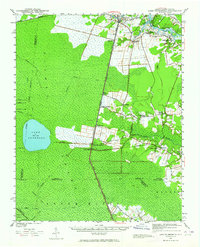 1940 Lake Drummond1964 Print · USGSThe Great Dismal Swamp and its drainage canals are captured here in the 1940s, showing a landscape defined by timber extraction and transit. Genealogists and historians can trace old schools and landings from Jacks Camp to Wallaceton Sch and the Lumber RR.
 - 1940 Map of South Mills, 1976 Print
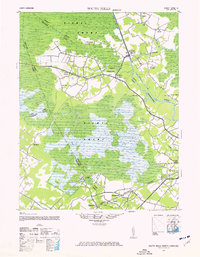 1940 South Mills1976 Print · USGSCamden and Pasquotank counties are shown in the early 1940s as communities navigated the edges of the Dismal Swamp. Genealogists can locate family-named hubs like Pierceville and Johnsons Corner or trace the Norfolk Southern Railroad line.
 - 1943 Map of Holland
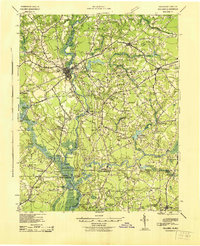 1943 Holland1943 Print · USGSThe Virginia and North Carolina borderlands come alive in this mid-century survey of the Chowan River basin. Local historians can trace a network of river landings and rural schools, from Manning Ferry to the community around Stony Branch Church.
 - 1945 Map of Lake Drummond
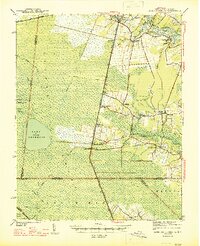 1945 Lake Drummond1945 Print · USGSThe Dismal Swamp straddles the Virginia-North Carolina line in the 1940s, revealing a landscape defined by timber extraction and historic waterways. Researchers can trace the Intracoastal Waterway, the Lumber RR, and local centers like Wallaceton and Deep Creek.
 - 1952 Map of South Mills
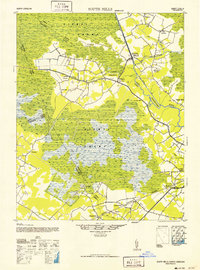 1952 South Mills1952 Print · USGSCoastal North Carolina at mid-century reveals a complex network of timber mills and canal-side hamlets bordering the great wetlands. Trace ancestral roots and early industry through family landmarks like Lynchs Corner, the Dismal Swamp Canal, and Burnt Mills.
 - 1953 Map of Norfolk, 1954 Print
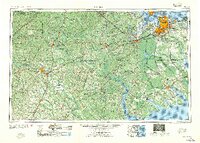 1953 Norfolk1954 Print · USGSCoastal Virginia and northeastern North Carolina appear here during the post-war industrial boom, showing the critical rail-and-sea connections of Hampton Roads. Genealogists can trace family roots through rural landmarks like Gethsemane Ch, the Caledonia State Prison Farm, and the vast interior of the Dismal Swamp.4 unique versions available
 - 1954 Map of Corapeake, 1955 Print
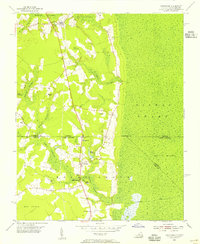 1954 Corapeake1955 Print · USGSThe Virginia and North Carolina borderlands in the mid-fifties are defined by the transition from rural settlements into the sprawling Dismal Swamp. Genealogists and local historians can trace family locations through Cypress Chapel, Corapeake, and small sites like Brickley Cem or Zion Tabernacle Ch.
 - 1954 Map of Lake Drummond, 1956 Print
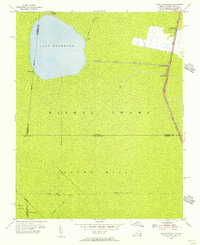 1954 Lake Drummond1956 Print · USGSThe Dismal Swamp interior and its border with North Carolina are captured here in the mid-fifties, showing the intersection of historic waterways and early settlements. Trace the vital connections between Lake Drummond, the Feeder Ditch, and the Dismal Swamp Canal near Wallaceton.2 unique versions available
 - 1954 Map of Suffolk, 1958 Print
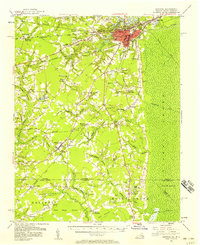 1954 Suffolk1958 Print · USGSThe rail and river hub of Suffolk met the edge of the Great Dismal Swamp in the mid-1950s. Historians and genealogists can trace the early layout of Whaleyville, the transit routes through Buckhorn, and local landmarks like Liberty Spring Ch.2 unique versions available
 - 1957 Map of Holland, 1958 Print
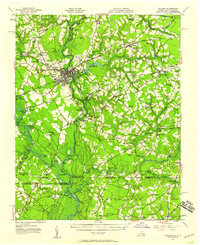 1957 Holland1958 Print · USGSThe Virginia and North Carolina borderlands come into focus in the mid-fifties, centered on the river city of Franklin and the agricultural community of Holland. Researchers can trace early river crossings like Manning Ferry (Site) and find family roots at Oberry Sch Cem or St Matthews Ch.
 - 1967 Map of Whaleyville, 1969 Print
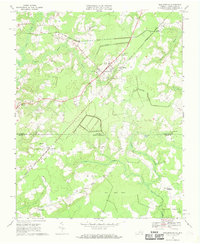 1967 Whaleyville1969 Print · USGSThe Virginia and North Carolina borderlands come into focus in the late sixties, where the railroad meets the great pocosin swamps. Genealogists can trace family roots through Whaleyville and Somerton, or locate rural landmarks like Piney Wood Chapel and Robertson Sch.3 unique versions available
 - 1967 Map of Gates, 1970 Print
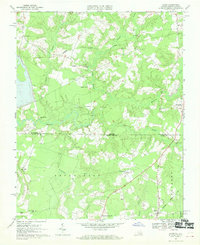 1967 Gates1970 Print · USGSThe Virginia and North Carolina borderlands come into focus during the late sixties, showcasing a landscape of dispersed hamlets and dense cypress swamps. Trace family roots and local history through community landmarks like Pittmantown, Olive Branch Ch, and the rail junction at Gates.2 unique versions available
 - 1967 Map of Riverdale, 1970 Print
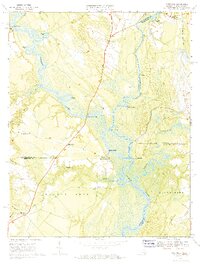 1967 Riverdale1970 Print · USGSThe convergence of the Blackwater and Nottoway Rivers at the Virginia-North Carolina border defines this late-1960s landscape. Researchers can trace the legacy of river commerce and local genealogy through numerous sites like Cobbs Wharf, Riddicksville, and Diamond Grove Ch.3 unique versions available
 - 1977 Map of Corapeake, 1978 Print
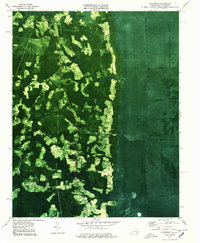 1977 Corapeake1978 Print · USGSThe Virginia and North Carolina borderlands come into focus in the 1970s, where the vast wetlands meet rural farmsteads. Trace family history through Winslow Cem and Riddick Cem, or follow the rigid waterlines of Corapeake Ditch into the Great Dismal Swamp.2 unique versions available
 - 1977 Map of Lake Drummond, 1978 Print
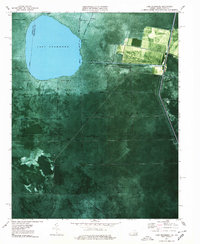 1977 Lake Drummond1978 Print · USGSThe Great Dismal Swamp and Lake Drummond are captured here in the late seventies, showing the complex boundary between Virginia and North Carolina. Genealogists and researchers can trace the old settlements of Wallaceton and Arbuckle Landing along the George Washington Highway.2 unique versions available
 - 1981 Map of Merchants Millpond
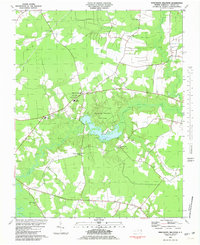 1981 Merchants Millpond1981 Print · USGSCoastal North Carolina wetlands and rural crossroads define this Gates County landscape in the early eighties. Researchers can trace family sites and community hubs from Gatesville to Easons Crossroads, including local landmarks like Sycamore Hill Ch and the County High Sch.
 - 1981 Map of Gatesville
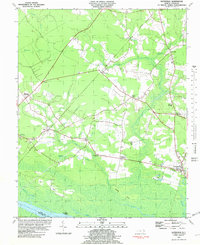 1981 Gatesville1981 Print · USGSGates County was a landscape of intricate swamplands and rural crossroads in the late seventies. Researchers can trace ancestral roots through community landmarks like Kittrells Ch, Eleanors Crossroads, and the riverfront at Rays Beach.2 unique versions available
 - 1981 Map of Sunbury, 1982 Print
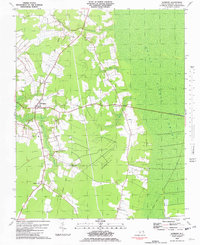 1981 Sunbury1982 Print · USGSCoastal North Carolina's lowlands are captured here in the early eighties, showing the agricultural settlements on the edge of the great marsh. Trace family history and local landmarks like Sunbury, Oak Grove Ch, and the timber history found along the Old Railroad Grade.
 - 1982 Map of Winton
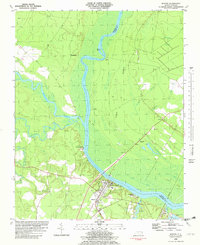 1982 Winton1982 Print · USGSHertford and Gates Counties are mapped here in the early eighties as the riverfront communities along the Chowan River evolved. Genealogists and local historians can trace family-named sites like Askew Cem, Mt Moriah Ch, and the Brown Sch.
Showing maps 1-25 of 110
Top cities of Gates County
Frequently asked questions
- What are the different types of historical maps available for Gates County?
- What is the oldest map of Gates County?
- Where can I purchase historical maps of Gates County for my home or office?
- Where can I download high-res historical maps of Gates County?
- Are there historical topographic maps available for Gates County?
- Is there historical aerial imagery available for Gates County?
- Where are historical maps of Gates County sourced from?