Old Maps of Bowbells, North Dakota
Explore 18 old maps of Bowbells, spanning from 1947 to today. These high-resolution historic maps reveal how streets, neighborhoods, landmarks, and natural features evolved over time — perfect for genealogy, metal detecting, research, and local history exploration.
What you can do with these maps:
- See how Bowbells changed over time: Compare historical maps to modern-day views to trace roads, homesites, rail lines & more.
- View detailed metadata: Each map includes creators, publishers, year, scale, and archive source.
- Overlay maps with satellite & LiDAR: Visualize the past alongside modern tools to explore terrain & human change.
- Trusted historical sources: Maps sourced from the USGS, Library of Congress, and other archives.
- Access maps your way: View online, download high-res files, or order prints for personal or research use.
Start exploring old maps of Bowbells to uncover forgotten places, hidden landmarks, and the deep history beneath your feet.
Bowbells, ND maps
(18)- 1947 Map of Bowbells, 1966 Print
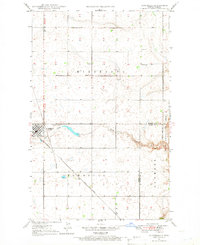 1947 Bowbells1966 Print · USGSBowbells sits at the busy junction of two major rail lines just after the war, anchoring a landscape of scattered prairie townships. Genealogists and local historians can locate Bowbells Cem, early country schools like School No 4, and the CCC Dam along Stony Creek.
 - 1948 Map of Coteau
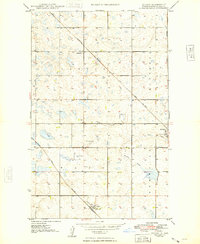 1948 Coteau1948 Print · USGSThe Burke County prairie in the late 1940s centers on the rail junction at Coteau during a period of steady rural growth. Researchers can trace local landmarks like School No 1, the Danish Cem, and a small Strip Mine near Stony Creek.
 - 1949 Map of Bowbells
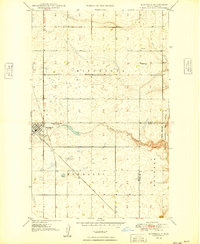 1949 Bowbells1949 Print · USGSBowbells and its surrounding townships thrive as a vital rail hub in the late 1940s. Genealogists can locate family landmarks like St Joseph Cem, School No 2, and the local Golf Course along the banks of Stony Creek.
 - 1950 Map of Bowbells
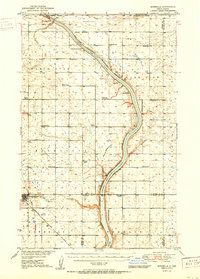 1950 Bowbells1950 Print · USGSThe Burke County prairie meets the international border in the mid-twentieth century, centered on the vital rail junction at Bowbells. Genealogists and historians can trace rural school districts like Masek Sch and explore the early water management of the CCC Dam.2 unique versions available
 - 1950 Map of Flaxton
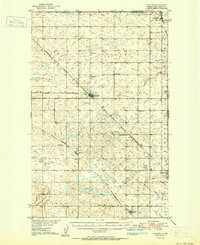 1950 Flaxton1950 Print · USGSThe North Dakota borderlands near Northgate are captured here during a period of robust rural organization and rail activity. Researchers can trace early school districts and pioneer church sites like Danish Ch, along with the Woburn settlement and a local Landing Field.
 - 1953 Map of Williston, 1968 Print
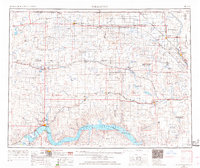 1953 Williston1968 Print · USGSThe North Dakota high plains meet the waters of Sakakawea Lake in this mid-century survey of the northern borderlands. Trace the rail-and-ranch economy through sites like Anderson Sky Ranch, Sevenmile Corner, and the strip mines near Columbus.2 unique versions available
 - 1957 Map of Williston
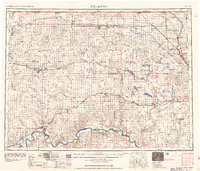 1957 Williston1957 Print · USGSNorthwestern North Dakota is shown here during the mid-fifties, dominated by the sweeping plains and the Missouri River valley. Genealogists and local historians can trace the paths of the Great Northern railroad through Williston, Tioga, and Ray, or locate early industry like the coal strip mines near Lignite.
 - 1982 Map of Kenmare
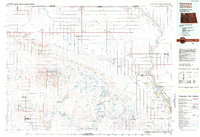 1982 Kenmare1982 Print · USGSThe high plains of northwestern North Dakota meet the Canadian border in the early 1980s, an era defined by energy production and prairie conservation. Genealogists and historians can trace the rail corridors of the Soo Line through towns like Bowbells, Flaxton, and the border crossing at Portal.
 - 2011 Map of Bowbells, 2011 Print
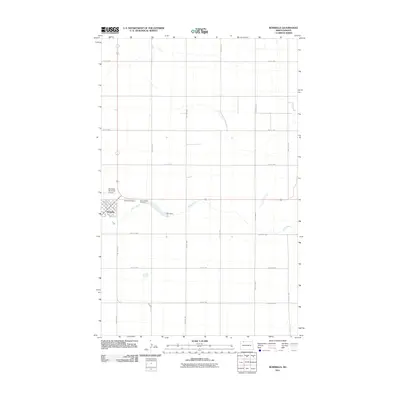 2011 Bowbells2011 Print · USGSBowbells stands at the center of this early twenty-first-century Burke County landscape, where the town's grid meets the agricultural prairie. Genealogists and local historians can locate Bowbells Cemetery, Saint Joseph Cemetery, and the CCC Dam along Stony Creek.
 - 2011 Map of Coteau, 2011 Print
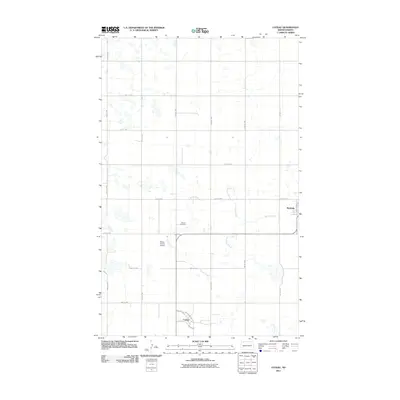 2011 Coteau2011 Print · USGSThe Burke County prairie is mapped here in the early 21st century as a landscape of rural roads and quiet settlements. Researchers can trace the layout of Coteau, find the Danish Cemetery, or follow the winding course of Stony Creek and Shockley Slough.
 - 2014 Map of Bowbells, 2014 Print
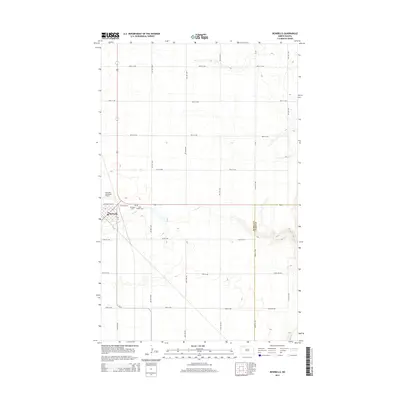 2014 Bowbells2014 Print · USGSThe Burke County seat of Bowbells is shown in detail during the early twenty-first century, surrounded by its expansive agricultural grid. Researchers can locate family sites at Bowbells Cem and Saint Joseph Cem or trace the course of Stony Cr.
 - 2014 Map of Coteau, 2014 Print
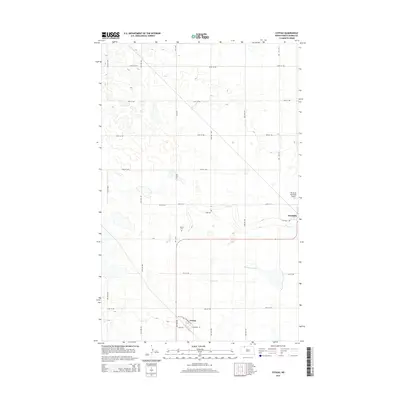 2014 Coteau2014 Print · USGSThe northern prairie of Burke County is captured here in the early twenty-first century, showing the enduring agricultural grid. Family historians can trace the area around Coteau and Bowbells, finding landmarks like the Danish Cem and Shockley Slough.
 - 2017 Map of Coteau, 2017 Print
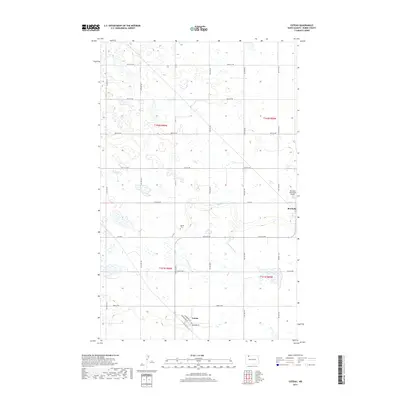 2017 Coteau2017 Print · USGSBurke County prairie life is centered on the small settlement of Coteau and the western outskirts of Bowbells during the early twenty-first century. Genealogists and local historians can trace family ties at the Danish Cem or follow the paths of Stony Cr and Shockley Slough.
 - 2017 Map of Bowbells, 2017 Print
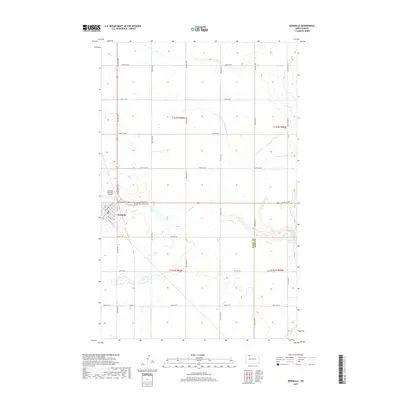 2017 Bowbells2017 Print · USGSThe Burke County seat of Bowbells is shown in detail during the late twenty-tens, surrounded by a high-plains grid of section-line roads. Genealogists can locate family sites near Bowbells Cemetery and Saint Joseph Cemetery or trace the path of Stony Creek.
 - 2020 Map of Coteau, 2020 Print
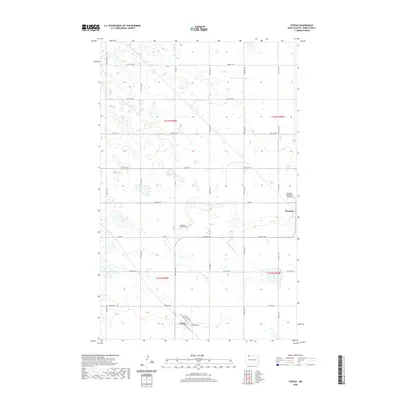 2020 Coteau2020 Print · USGSBurke County at the start of the 2020s shows a landscape of prairie potholes and organized township grids. Researchers can trace local landmarks like Bethlehem Lutheran Cem and the small settlement of Coteau with its historic streets.
 - 2020 Map of Bowbells, 2020 Print
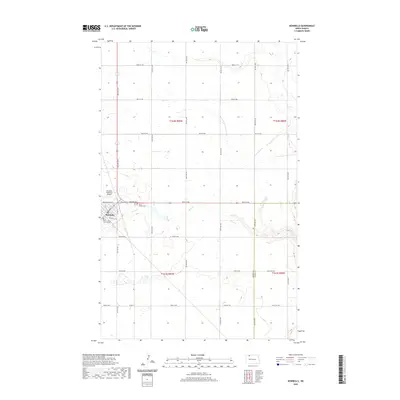 2020 Bowbells2020 Print · USGSBowbells and the surrounding Burke County plains are captured here in the early twenty-first century, showing the intersection of local government and agriculture. Genealogists and researchers can locate the Burke County Court House, Bowbells Cem, and the path of Stony Creek.
 - 2024 Map of Bowbells, 2024 Print
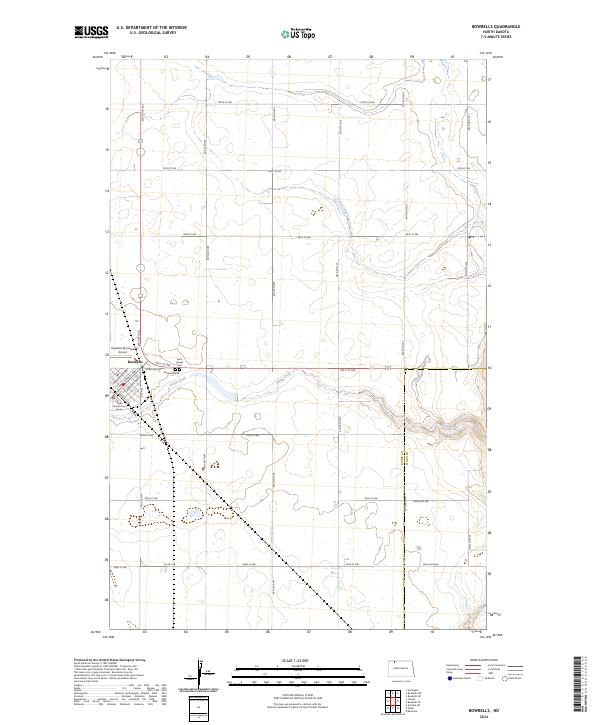 2024 Bowbells2024 Print · USGSBowbells and the surrounding Burke County plains are captured here in the early twenty-first century. Genealogists and local historians can trace the town’s street grid and landmarks like the Burke County Court House and Saint Joseph Cem.
 - 2024 Map of Coteau, 2024 Print
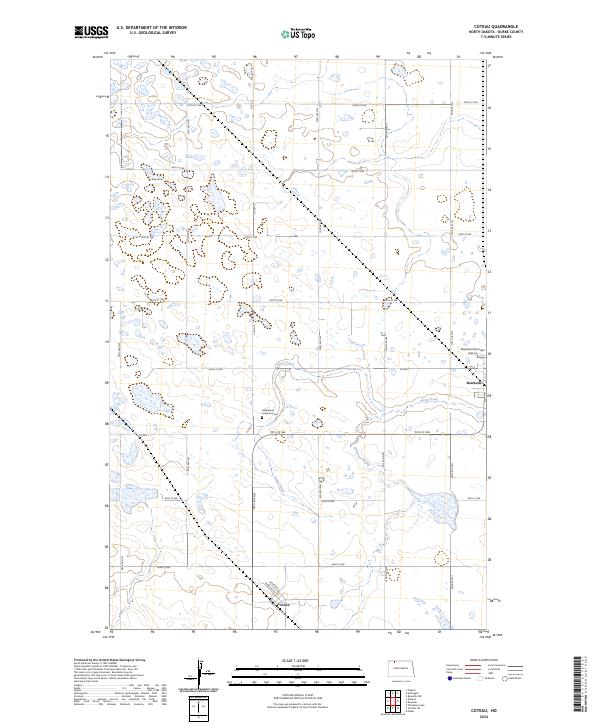 2024 Coteau2024 Print · USGSNorthwestern North Dakota's prairie landscape is documented here in recent years, showing the intersection of rural townships and waterfowl conservation. Researchers can locate the Bethlehem Lutheran Cem and trace the paths of Stony Creek and Shockley Slough near Coteau.
End of results
Showing maps 1-18 of 18
Top cities near Bowbells
Frequently asked questions
- What are the different types of historical maps available for Bowbells?
- What is the oldest map of Bowbells?
- Where can I purchase historical maps of Bowbells for my home or office?
- Where can I download high-res historical maps of Bowbells?
- Are there historical topographic maps available for Bowbells?
- Is there historical aerial imagery available for Bowbells?
- Where are historical maps of Bowbells sourced from?