1950s Maps of Oregon, Ohio
Explore 6 historic maps of Oregon from the 1950s. These maps offer a rare glimpse into what life looked like during the 1950s — showing old roads, neighborhoods, homes, and landmarks that have changed or disappeared over time.
Whether you're researching your family's past, planning a metal detecting trip, or studying how Oregon's landscape evolved across the 1950s, these high-resolution maps are a powerful tool for exploring the history of this region.
- Focus on a specific era: All maps on this page are from the 1950s, giving you a focused view of this time period.
- See what’s changed: Compare century-old streets, trails, and buildings to today's modern landscape using overlays and satellite layers.
- Research with precision: Use these maps for genealogy, historical research, land use analysis, or educational projects.
- View, download, or print: Maps are fully viewable online in high resolution, and can be downloaded or printed for your own records.
Start exploring Oregon's history through authentic maps from the 1950s. This is your window into the past.
Oregon, OH maps
(6)- 1951 Map of Rossford, 1953 Print
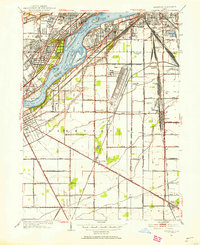 1951 Rossford1953 Print · USGSWood County’s industrial and rail infrastructure dominates the Maumee River landscape during the early 1950s. Genealogists and local historians can trace the development of Lime City and Moline or locate landmarks like the Rossford Ordnance Depot and Sunshine Cem.
 - 1952 Map of Reno Beach, 1953 Print
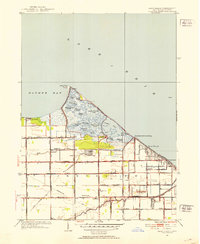 1952 Reno Beach1953 Print · USGSThe Lucas County shoreline and its intricate network of marshes and canals are captured here in the early fifties. Local historians can trace the development of waterfront communities like Reno Beach and Bono alongside landmarks like St Lukes Ch and the Cedar Point Club.
 - 1952 Map of Walbridge, 1953 Print
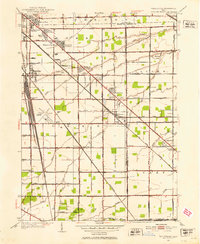 1952 Walbridge1953 Print · USGSThe rural landscapes and rail hubs south of Toledo are captured here in the early fifties, showing the area's transition into a modern industrial corridor. Genealogists and historians can trace family roots at Lake Cem, Mound View, and the long-standing Black Swamp Ch.
 - 1952 Map of Toledo, 1954 Print
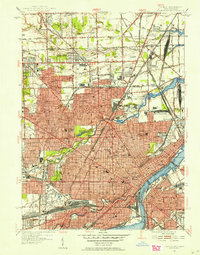 1952 Toledo1954 Print · USGSToledo at the height of its mid-century industrial era shows a landscape defined by massive rail yards and riverfront commerce. Genealogists can trace family neighborhoods near Woodlawn Cemetery, St Vincent Hospital, and the many tracks of the New York Central.2 unique versions available
 - 1952 Map of Point Place, 1954 Print
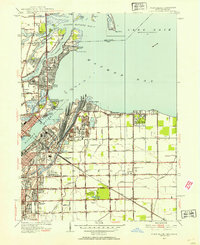 1952 Point Place1954 Print · USGSThe Lake Erie shoreline near Toledo comes alive in this early fifties survey of the Maumee River mouth and its surrounding industrial rail yards. Genealogists and local historians can locate long-standing landmarks like St Ignatius Ch, Pearson State Park, and the old Drive-in Theater.
 - 1956 Map of Toledo, 1968 Print
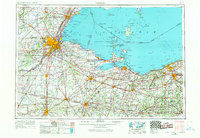 1956 Toledo1968 Print · USGSNorthwest Ohio and the Lake Erie shoreline are shown in detail during the late fifties, showcasing a landscape of heavy industry, railroads, and island communities. Genealogists and historians can trace rail networks like the Chesapeake & Ohio RR or locate landmarks such as the Erie Proving Ground and Kelleys Island.4 unique versions available
End of results
Showing maps 1-6 of 6
Top cities near Oregon
- Toledo historical maps
- Bedford Township historical maps
- Perrysburg historical maps
- Monroe historical maps
- Monroe Charter Township historical maps
- Maumee historical maps
See more
Top neighborhoods of Oregon
- Yorktown Village historical maps
- Delta Addition historical maps
- East Meadow historical maps
- Foxgate historical maps
- Hallschild historical maps
- Heritage Estates historical maps
See more
Frequently asked questions
- What are the different types of historical maps available for Oregon?
- What is the oldest map of Oregon?
- Where can I purchase historical maps of Oregon for my home or office?
- Where can I download high-res historical maps of Oregon?
- Are there historical topographic maps available for Oregon?
- Is there historical aerial imagery available for Oregon?
- Where are historical maps of Oregon sourced from?