Old Maps of Plants, Ohio for Genealogy
Trace your family roots with 16 historic maps of Plants. These high-res maps reveal old neighborhoods, homesites, landmarks, and streets — helping you uncover where your ancestors lived and how the area evolved over time.
- Explore historic neighborhoods: Identify where your relatives may have lived in the 1800s or 1900s.
- Compare maps over time: Trace the changes in streets, buildings, and landmarks for multi-generational research.
- Perfect for genealogy & ancestry research: Used by family historians and researchers to map out lineage and migration.
These maps are an incredible resource for exploring your personal connection to Plants's past.
Plants, OH maps
(16)- 1908 Map of Ravenswood
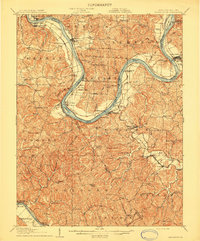 1908 Ravenswood1908 Print · USGSEarly 1900s life along the Ohio River comes alive in this survey of the West Virginia and Ohio borderlands. Genealogists and historians can trace family locations near landmarks like Antioch Church, Letart Falls, and the old K and M RR line.2 unique versions available
 - 1926 Map of Ravenswood
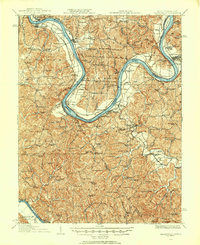 1926 Ravenswood1926 Print · USGSThe Ohio River valley in the mid-1920s reveals a landscape of tight river bends and bustling waterfront towns like Ravenswood and Hartford. Researchers can trace the early rail network of the Baltimore and Ohio and locate numerous rural landmarks such as Jackson Chapel and the Mountain Flower School.
 - 1928 Map of Ravenswood
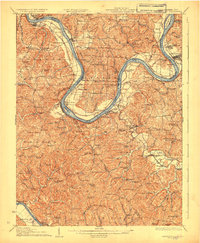 1928 Ravenswood1928 Print · USGSThe Ohio River's great winding oxbows dominate the landscape in the late twenties, anchoring a world of river-town commerce and hilltop farming. Genealogists can trace hundreds of family-named landmarks, from the Mountain Flower School to the Antioch Church and the rails of the Baltimore & Ohio RR.3 unique versions available
 - 1954 Map of Charleston
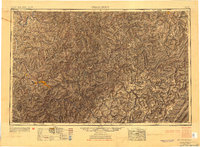 1954 Charleston1954 Print · USGSWest Virginia’s industrial heart and mountain highlands are captured here during the mid-fifties, centered on the capital city. Researchers can trace historic river-and-rail corridors along the Kanawha River and locate remote peaks within the Monongahela National Forest.
 - 1957 Map of Charleston, 1966 Print
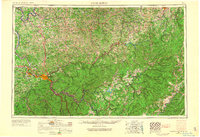 1957 Charleston1966 Print · USGSMid-century West Virginia unfolds along the industrial Kanawha River valley and into the high Allegheny Mountains. Genealogists and historians can trace the vital rail lines of the Chesapeake and Ohio and locate riverside settlements from Saint Albans to Buckhannon.3 unique versions available
 - 1958 Map of Charleston
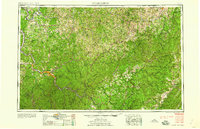 1958 Charleston1958 Print · USGSMid-century West Virginia is defined here by the industrial corridor of the Kanawha River and the high ridges of the Allegheny Mountains. Researchers can trace the rail networks of the New York Central or locate remote highland communities like Pickens and Hillsboro.
 - 1958 Map of New Haven, 1960 Print
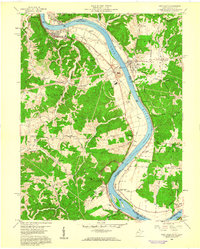 1958 New Haven1960 Print · USGSThe Ohio River bend south of Pomeroy was a bustling corridor of industry and tradition in the late fifties. Genealogists can locate family landmarks like Bachtel Ch and the Bumgarner Cem, while tracing the Baltimore and Ohio rail line.
 - 1961 Map of Charleston
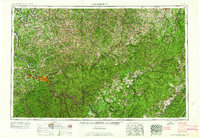 1961 Charleston1961 Print · USGSWest Virginia's capital region and the highlands to the east are shown in detail during the early sixties. Genealogists and historians can trace rail networks like the Baltimore and Ohio RR and find early state parks such as Watoga State Park.
 - 1968 Map of New Haven, 1969 Print
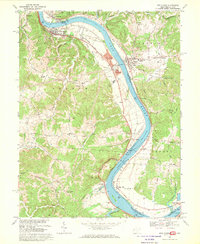 1968 New Haven1969 Print · USGSThe Ohio River corridor comes alive in the late sixties as industrial hubs like New Haven and Graham Station sit alongside ancient landmarks. Genealogists and historians can trace family burial sites at Evergreen Cem or locate the Indian Mound and the Racine Locks and Dam.3 unique versions available
 - 1984 Map of Ripley
 1984 Ripley1984 Print · USGSThe West Virginia riverfront and interior highlands are captured here in the mid-eighties as energy production reshaped the landscape. Researchers can trace the Ohio River industrial corridor through Ravenswood or locate smaller inland communities like Gandeeville and Reedy.
 - 1994 Map of New Haven, 1998 Print
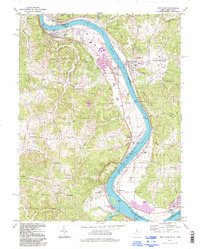 1994 New Haven1998 Print · USGSThe Ohio River corridor comes alive in the 1990s, showcasing the industrial and maritime infrastructure of Mason and Meigs counties. Genealogists and local historians can trace family-named sites like Evergreen Cem and Hoffman Cem alongside the massive Racine Locks and Dam.
 - 2011 Map of New Haven, 2011 Print
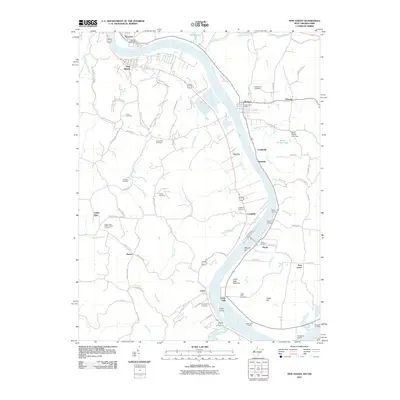 2011 New Haven2011 Print · USGSLife along the riverfront in Mason County comes into focus in this modern survey of the river-bend valley. Researchers can trace family history through numerous burial grounds like Union Cemetery and Yonker Cemetery or locate historic river access points such as Widow Parr Landing.
 - 2014 Map of New Haven, 2014 Print
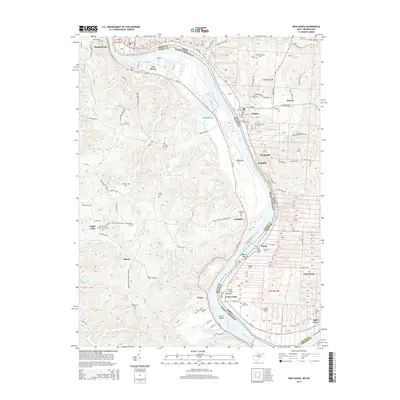 2014 New Haven2014 Print · USGSThe riverfront communities of Mason County and Meigs County are shown here as they appeared in the early 21st century. Genealogists and local historians can trace rural family landmarks like the Upper Flats White Church, Hoffman Cem, and the settlement at Letart Falls.
 - 2016 Map of New Haven, 2016 Print
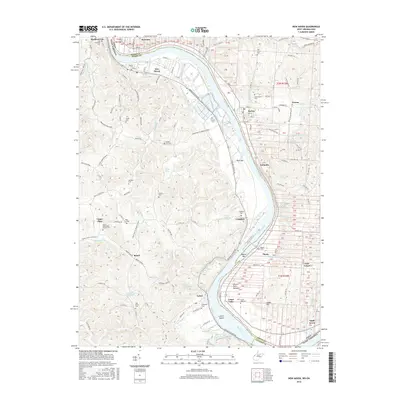 2016 New Haven2016 Print · USGSThe Ohio River valley along the Mason County border is captured here in detail, showing a landscape defined by historic river towns and family cemeteries. Genealogists and researchers can trace local roots at the Old Hartford Cem, Letart Falls Cem, and the rural settlement of Antiquity.
 - 2019 Map of New Haven, 2019 Print
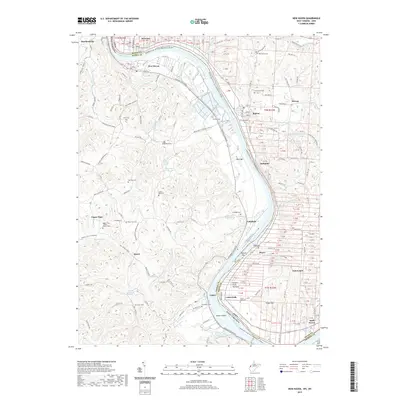 2019 New Haven2019 Print · USGSThe Ohio River corridor comes into sharp focus during this recent survey of the borderlands between West Virginia and Ohio. Researchers can locate numerous family burial grounds and small settlements like Antiquity, Letart Falls, and the Upper Flats White Church Cem.
 - 2023 Map of New Haven, 2023 Print
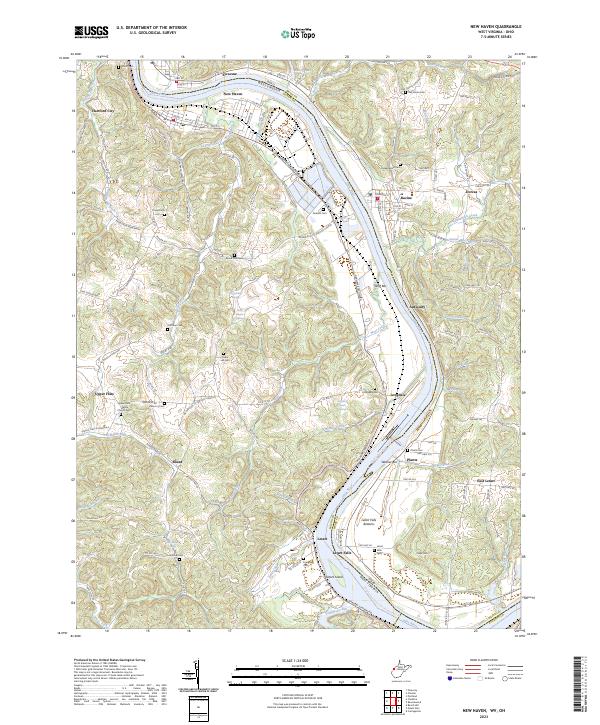 2023 New Haven2023 Print · USGSThe riverfront communities of Mason County and Meigs County are shown here in modern detail as they line the banks of the Ohio. Researchers can locate numerous local burial sites and landmarks like Upper Flats White Church Cem, Letart Falls, and the prominent Letart Island.
End of results
Showing maps 1-16 of 16
Top cities near Plants
- Point Pleasant historical maps
- Ravenswood historical maps
- Ripley historical maps
- Middleport historical maps
- Chester historical maps
- Pomeroy historical maps
See more
Frequently asked questions
- What are the different types of historical maps available for Plants?
- What is the oldest map of Plants?
- Where can I purchase historical maps of Plants for my home or office?
- Where can I download high-res historical maps of Plants?
- Are there historical topographic maps available for Plants?
- Is there historical aerial imagery available for Plants?
- Where are historical maps of Plants sourced from?