Old Maps of Atoka County, Oklahoma for Genealogy
Trace your family roots with 169 historic maps of Atoka County. These high-res maps reveal old neighborhoods, homesites, landmarks, and streets — helping you uncover where your ancestors lived and how the area evolved over time.
- Explore historic neighborhoods: Identify where your relatives may have lived in the 1800s or 1900s.
- Compare maps over time: Trace the changes in streets, buildings, and landmarks for multi-generational research.
- Perfect for genealogy & ancestry research: Used by family historians and researchers to map out lineage and migration.
These maps are an incredible resource for exploring your personal connection to Atoka County's past.
Atoka County, OK maps
(169)- 1896 Map of Coalgate, 1957 Print
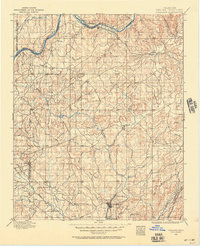 1896 Coalgate1957 Print · USGSIndian Territory in the mid-1890s shows a landscape of tribal boundaries and nascent rail towns just before the turn of the century. Genealogists and historians can trace the early foundations of Coalgate and Calvin or locate family-named features along Muddy Boggy Creek.
 - 1898 Map of McAlester
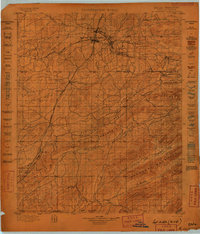 1898 McAlester1898 Print · USGSThe Choctaw Nation in the late 1890s was a landscape defined by emerging coal towns and critical rail junctions. Researchers can trace early settlements and industrial sites like South Mc Alester, Hartshorne, and Mine No. 5 along the Choctaw Oklahoma and Gulf R. R.4 unique versions available
 - 1899 Map of Coalgate
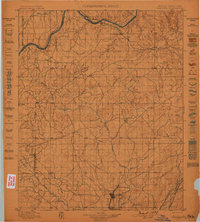 1899 Coalgate1899 Print · USGSIndian Territory at the close of the nineteenth century is captured here as the coal industry transformed the landscape. Genealogists can trace family roots in the Seminole Nation or search for early mining-era homesites in Coalgate and Phillips.
 - 1899 Map of Atoka
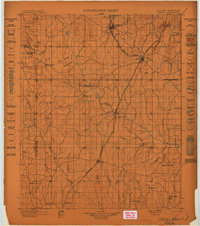 1899 Atoka1899 Print · USGSIn the final years of the Indian Territory, this map details the complex border between the Chickasaw and Choctaw Nations. Genealogists can trace early homesteads near Old Boggy Depot, the Buffalo Creek Church, and the Chickasaw Rock Academy.
 - 1900 Map of Atoka
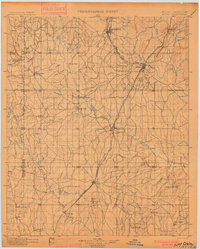 1900 Atoka1900 Print · USGSIndian Territory at the turn of the century shows the developing rail-and-river network before Oklahoma statehood. Genealogists and historians can trace original settlements like Old Boggy Depot, find the Chickasaw Rock Academy, and follow the Missouri Kansas and Texas R.R. through Atoka.4 unique versions available
 - 1900 Map of Coalgate
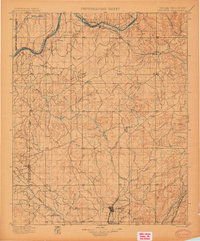 1900 Coalgate1900 Print · USGSIndian Territory at the turn of the century shows a land of tribal boundaries and emerging coal towns. Researchers can trace the early rail corridors of the M. K. and T. R. R. and locate vanished communities like Guertie, Citra, and Legal.3 unique versions available
 - 1901 Map of Antlers
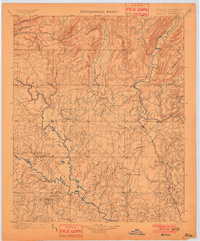 1901 Antlers1901 Print · USGSThe Choctaw Nation territory is captured here during the transitional years before Oklahoma statehood, when the railroad began to reshape the landscape. Genealogists and historians can trace early settlements like Mayhew, the site of Spencer Academy, and the path of the St. Louis and San Francisco line.
 - 1909 Map of Mc Alester
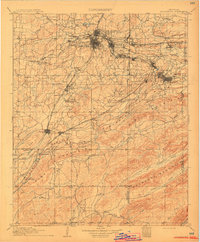 1909 Mc Alester1909 Print · USGSSoutheast Oklahoma's coal mining belt and the rugged Choctaw Nation territory are captured here in the early years of statehood. Researchers can trace the rail-side growth of McAlester and Hartshorne or locate vanished sites like Barnett Sta Haywood PO and Perryville.3 unique versions available
 - 1912 Map of Antlers
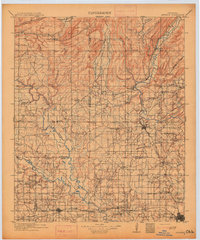 1912 Antlers1912 Print · USGSSoutheastern Oklahoma’s river valleys and growing rail towns are captured here in the decade following statehood. Genealogists can trace family roots through numerous rural landmarks like Niles Store, the Asphalt Mine, and early school sites such as Timber Hill School.3 unique versions available
 - 1925 Map of Antlers
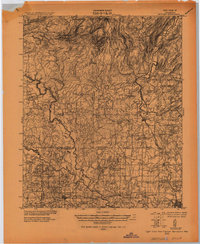 1925 Antlers1925 Print · USGSSoutheastern Oklahoma's river valleys and rail lines are documented here in the years following statehood. Genealogists can trace family roots through numerous local landmarks like Armstrong Academy, the Asphalt Mine, and many rural sites like Nelson Chapel School.
 - 1950 Map of Mcalester
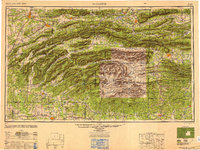 1950 Mcalester1950 Print · USGSThe Ouachita Mountains and the coal country of Southeast Oklahoma are shown here in the late 1940s. Genealogists and historians can trace the rail-driven growth of McAlester, Wilburton, and Antlers alongside the rugged terrain of Kiamichi Mountain.2 unique versions available
 - 1956 Map of Stringtown, 1958 Print
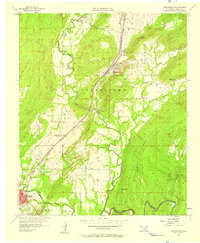 1956 Stringtown1958 Print · USGSSoutheastern Oklahoma’s rail-and-river landscape is captured here in the mid-fifties as the Missouri Kansas Texas line navigates the valley floor. Researchers can locate the Confederate Cemetery, the West Tellico School, and the river crossing at Boggy Bend Ford.4 unique versions available
 - 1957 Map of Lane NW, 1958 Print
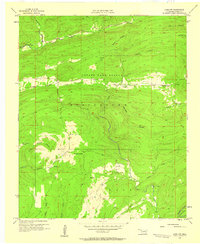 1957 Lane NW1958 Print · USGSAtoka County in the late fifties shows a rural landscape of conservation lands and small settlements. Researchers can locate Armstrong Sch, trace the winding path of Potapo Creek, and explore the topography around Fugate.2 unique versions available
 - 1957 Map of Coalgate, 1958 Print
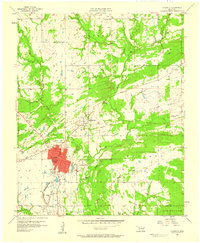 1957 Coalgate1958 Print · USGSCoalgate and the surrounding Coal County coalfields are captured here in the late fifties, showing the area's transition into a modern civic hub. Genealogists can trace family footprints at Calvary Cem, Sandmann Mine No 2, and the rural Lone Star Sch.3 unique versions available
 - 1957 Map of Farris, 1958 Print
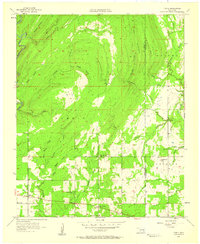 1957 Farris1958 Print · USGSSoutheastern Oklahoma in the late fifties shows a landscape of small farming communities and county-line crossings. Genealogists can trace family roots through landmarks like Round Lake Cem, Farris Sch, and the Center Point Ch.3 unique versions available
 - 1957 Map of Lehigh, 1958 Print
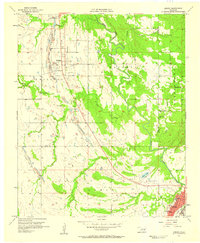 1957 Lehigh1958 Print · USGSOklahoma's coal mining heartland comes alive in this mid-century survey of the Lehigh and Atoka area. Researchers can trace family history through the Lehigh Cem, locate old Strip Mine works, and find rural landmarks like Macedonia Sch.4 unique versions available
 - 1957 Map of Coalgate SE, 1958 Print
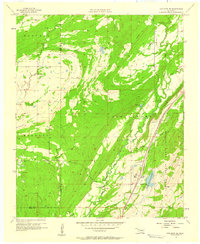 1957 Coalgate SE1958 Print · USGSSoutheastern Oklahoma in the late fifties was a landscape of state-managed lands and busy rail corridors. Researchers can trace the lineage of rural communities through Cairo Cem and Flora or follow the heavy tracks of the Kansas City Southern.3 unique versions available
 - 1957 Map of Bruno, 1958 Print
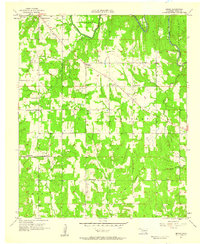 1957 Bruno1958 Print · USGSAtoka County during the late fifties shows a rural landscape where small community centers like Bruno and Stringtown thrived. Researchers can trace local heritage through numerous landmarks, including Bethany Cem, Harmony Sch, and New Zion Ch.3 unique versions available
 - 1957 Map of Lane, 1958 Print
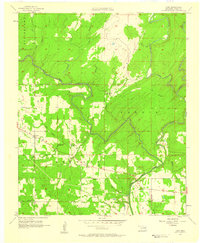 1957 Lane1958 Print · USGSAtoka County's rural interior comes into focus during the late fifties as the community of Lane and surrounding farmsteads thrived along the local waterways. Researchers can trace family roots at Butler Cem or locate old rural landmarks like Iron Stob Ch and Gidney Station.3 unique versions available
 - 1957 Map of Lane NE, 1958 Print
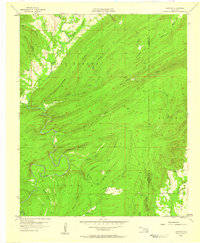 1957 Lane NE1958 Print · USGSThe Atoka and Pushmataha county line runs through these wooded hills in the late fifties, where small communities follow the creek beds. Trace early homesteads and rural landmarks like the Impson Ch (Abandoned), the Cem, and the winding McGee Creek.3 unique versions available
 - 1957 Map of Limestone Gap, 1958 Print
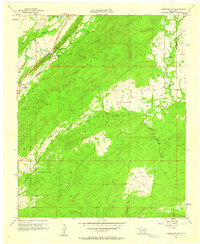 1957 Limestone Gap1958 Print · USGSAtoka County during the late fifties reveals a landscape defined by the ridgelines of the Choctaw Nation. Genealogists and historians can trace the old rail corridor of the Missouri Kansas Texas through settlements like Chockie, Burg, and Limestone Gap.2 unique versions available
 - 1957 Map of Ardmore, 1968 Print
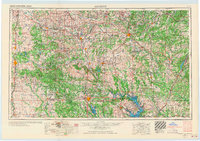 1957 Ardmore1968 Print · USGSSouth-central Oklahoma in the late fifties was a landscape of rising reservoir waters and expanding rail lines. Genealogists and historians can trace the foundations of Ardmore and Duncan or locate early recreation sites at Platt National Park and Lake Murray State Park.3 unique versions available
 - 1961 Map of Darwin, 1963 Print
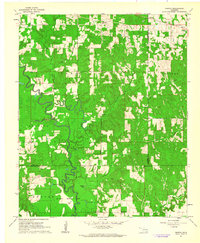 1961 Darwin1963 Print · USGSSoutheastern Oklahoma’s river bottoms and timberlands are captured here in the early sixties as small farming communities thrived. Local researchers can map the grounds of the Mc Leod Honor Farm or find family roots near Darwin Ch and Old Farris.2 unique versions available
 - 1962 Map of McAlester
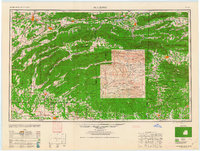 1962 McAlester1962 Print · USGSSoutheastern Oklahoma and western Arkansas are shown here during the early sixties, a time of transition for the region's mountain communities and timberlands. Researchers can trace the paths of the Kansas City Southern RR through Heavener or locate settlements like Talihina and Broken Bow near the Kiamichi Mountains.2 unique versions available
 - 1963 Map of Ardmore
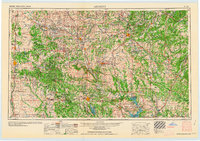 1963 Ardmore1963 Print · USGSSouthern Oklahoma during the early sixties shows a landscape defined by the Arbuckle Mountains and a booming energy economy. Genealogists and historians can trace family-named sites across the Ardmore Oil Field, find old schools like Southeastern State College, or locate historic markers such as Boggy Depot State Park.2 unique versions available
Showing maps 1-25 of 169
Top cities of Atoka County
Frequently asked questions
- What are the different types of historical maps available for Atoka County?
- What is the oldest map of Atoka County?
- Where can I purchase historical maps of Atoka County for my home or office?
- Where can I download high-res historical maps of Atoka County?
- Are there historical topographic maps available for Atoka County?
- Is there historical aerial imagery available for Atoka County?
- Where are historical maps of Atoka County sourced from?