Old Maps of Mead, Oklahoma for Academic Research
Study the evolution of Mead with 21 high-resolution historic maps. Whether you're teaching, researching, or modeling changes in land use, these maps provide essential visual documentation of urban, environmental, and geographic change.
- Analyze long-term change: Track patterns in development, transportation, and natural features.
- Ideal for environmental or urban studies: Support academic projects with primary historical map data.
- Use in the classroom or lab: Educators and researchers rely on these maps to bring historical context to life.
These maps are a powerful tool for teaching, research, and visualizing how Mead has changed over the decades.
Mead, OK maps
(21)- 1901 Map of Tishomingo
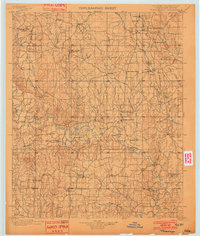 1901 Tishomingo1901 Print · USGSThe Chickasaw Nation comes to life in this late-frontier survey of Johnston County and the surrounding Indian Territory. Genealogists and historians can locate early industrial sites like the Asphalt Mines, the landmark Harley Institute, and the site of Fort Washita.4 unique versions available
 - 1901 Map of Denison
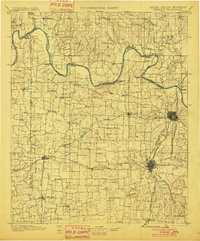 1901 Denison1901 Print · USGSThe Red River valley in the final years of the Indian Territory era was a landscape of river crossings and rail expansion. Genealogists and historians can trace the early transit networks through Willis Ferry, Cedar Mills, and the Colbert Bridge.4 unique versions available
 - 1954 Map of Sherman, 1964 Print
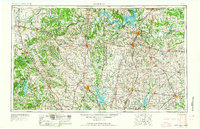 1954 Sherman1964 Print · USGSThe Red River valley and North Texas plains are captured here in the mid-fifties, showing the region as new reservoirs like Lake Texoma and Lavon Reservoir reshaped the land. Genealogists can trace family roots through specific local landmarks like Courtney P O, Pilot Grove Sch, and New Hope Ch.2 unique versions available
 - 1957 Map of Ardmore, 1968 Print
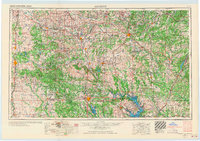 1957 Ardmore1968 Print · USGSSouth-central Oklahoma in the late fifties was a landscape of rising reservoir waters and expanding rail lines. Genealogists and historians can trace the foundations of Ardmore and Duncan or locate early recreation sites at Platt National Park and Lake Murray State Park.3 unique versions available
 - 1958 Map of Denison Dam, 1959 Print
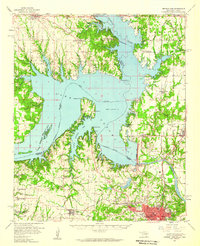 1958 Denison Dam1959 Print · USGSThe Red River valley was transformed by the late fifties, as the sprawling waters of Lake Texoma redefined the Oklahoma-Texas border. Genealogists and historians can trace the foundations of this lakeside region through sites like Willow Springs Ch, the Old Colbert Bridge, and numerous family cemeteries.2 unique versions available
 - 1958 Map of Sherman, 1959 Print
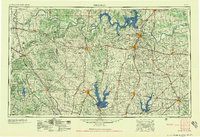 1958 Sherman1959 Print · USGSNorth Texas and Southern Oklahoma were undergoing significant development in the late fifties as the Red River Valley transit networks matured. Researchers can trace historic family-named locations such as Saddler Bend, the grounds of Perrin AFB, and early shoreline developments at Lake Texoma.
 - 1963 Map of Ardmore
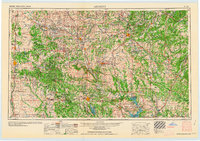 1963 Ardmore1963 Print · USGSSouthern Oklahoma during the early sixties shows a landscape defined by the Arbuckle Mountains and a booming energy economy. Genealogists and historians can trace family-named sites across the Ardmore Oil Field, find old schools like Southeastern State College, or locate historic markers such as Boggy Depot State Park.2 unique versions available
 - 1967 Map of Little City, 1968 Print
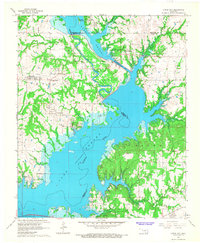 1967 Little City1968 Print · USGSThe northern reaches of Lake Texoma are captured here in the late sixties, where the Washita River was engineered to protect local industry. Researchers can find Fort Washita, the Confederate Cem, and the rerouted Old Channel near Cumberland.
 - 1982 Map of Platter, 1983 Print
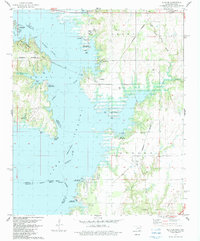 1982 Platter1983 Print · USGSLake Texoma's eastern shore in the early eighties reveals a landscape transformed by water and recreation at the Oklahoma-Texas border. Trace the rail history of the Burlington Northern or locate family burial sites at Old Woodville Cem and Platter Cem.
 - 1985 Map of Tishomingo, 1986 Print
 1985 Tishomingo1986 Print · USGSSouthern Oklahoma in the mid-eighties reveals a landscape shaped by significant water projects and conservation lands. Genealogists and historians can trace the footprints of communities like Wapanucka and Bromide alongside the Washita River and Lake Texoma.3 unique versions available
 - 1985 Map of Sherman, 1991 Print
 1985 Sherman1991 Print · USGSThe borderlands of North Texas and Southern Oklahoma are captured here in the mid-eighties, centered on the expansive waters of Lake Texoma. Researchers can trace the legacy of the regional rail economy through the Missouri-Kansas-Texas RR or explore the geography of Hagerman National Wildlife Refuge and Carpenters Bluff.
 - 2010 Map of Little City, 2010 Print
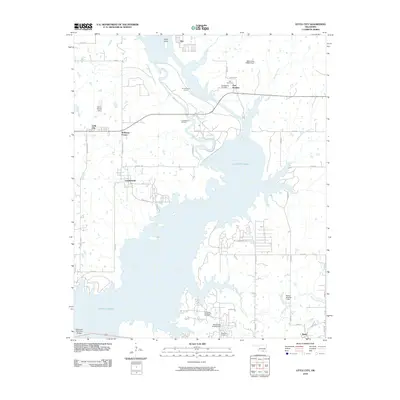 2010 Little City2010 Print · USGSThe northern shores of Lake Texoma are captured here in the early twenty-first century, showcasing a blend of frontier history and modern energy production. Researchers can locate Fort Washita and its associated Confederate Cemetery, or trace the extent of the Cumberland Oil Field.
 - 2010 Map of Platter, 2010 Print
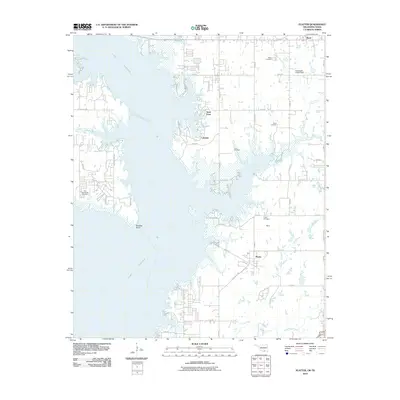 2010 Platter2010 Print · USGSBryan County and the eastern shores of Lake Texoma are captured here during the first decade of the millennium. Local history researchers can trace the locations of numerous family and community burial sites, including Old Woodville Cemetery, Love Cemetery, and Platter Cemetery.
 - 2012 Map of Little City, 2012 Print
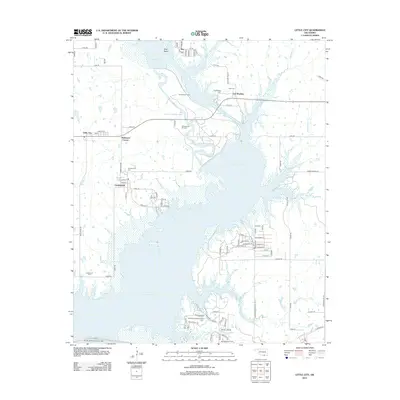 2012 Little City2012 Print · USGSBryan County at the start of the 2010s shows a landscape defined by the waters of Lake Texoma and its industrial oil fields. Researchers can trace historic sites like Fort Washita or locate family roots at the Confederate Cem and Cumberland Cem.
 - 2012 Map of Platter, 2012 Print
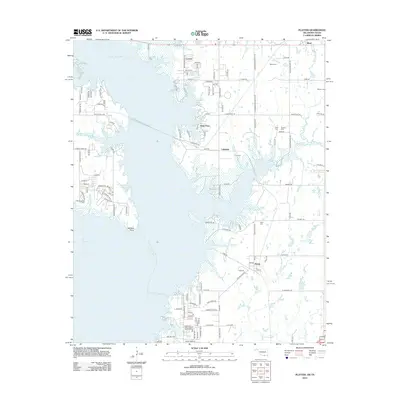 2012 Platter2012 Print · USGSLake Texoma and its branching inlets define the shoreline near the Oklahoma border in this 2012 survey. Genealogists can trace family roots through numerous small burial grounds like Old Woodville Cem, Franklin Cem, and Love Cem near the town of Platter.
 - 2016 Map of Platter, 2016 Print
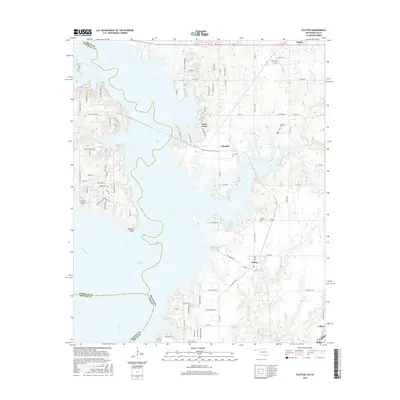 2016 Platter2016 Print · USGSThe Oklahoma-Texas borderlands are captured here in the mid-2010s as the shoreline of Lake Texoma winds through old Bryan County territory. Genealogists can locate several historic burial sites, including Old Woodville Cem, Love Cem, and Willis Cem.
 - 2016 Map of Little City, 2016 Print
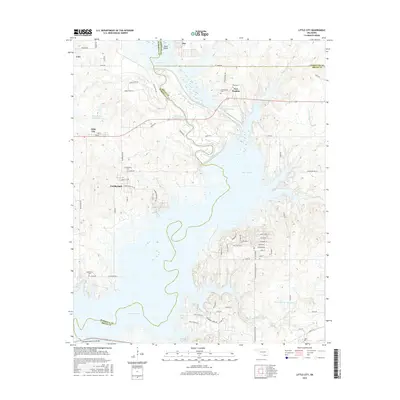 2016 Little City2016 Print · USGSThe Lake Texoma shoreline and the historic grounds of Fort Washita define this Oklahoma landscape in the mid-2010s. Researchers can trace local heritage through the Confederate Cem, Aylesworth Cem, and the small community of Little City.
 - 2018 Map of Platter, 2018 Print
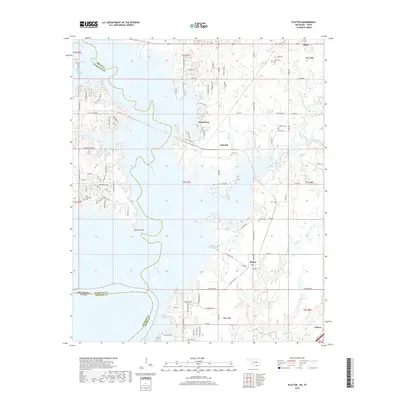 2018 Platter2018 Print · USGSThe northern shores of Lake Texoma and the Oklahoma-Texas border are captured here during the late 2010s. Researchers can trace local lineage and settlement patterns through sites like Old Woodville, Platter Cem, and the community of Mead.
 - 2018 Map of Little City, 2018 Print
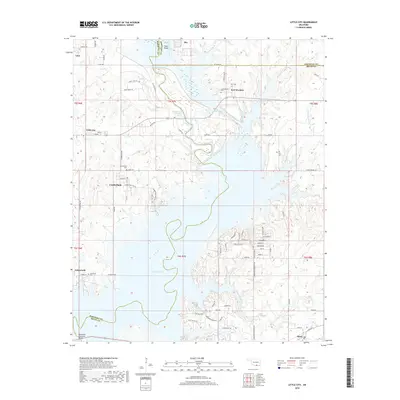 2018 Little City2018 Print · USGSThe northern reaches of Lake Texoma and the historic grounds of Fort Washita are documented here in the late 2010s. Researchers can locate family sites and local landmarks like the Confederate Cem, Cumberland, and Aylesworth.
 - 2022 Map of Little City, 2022 Print
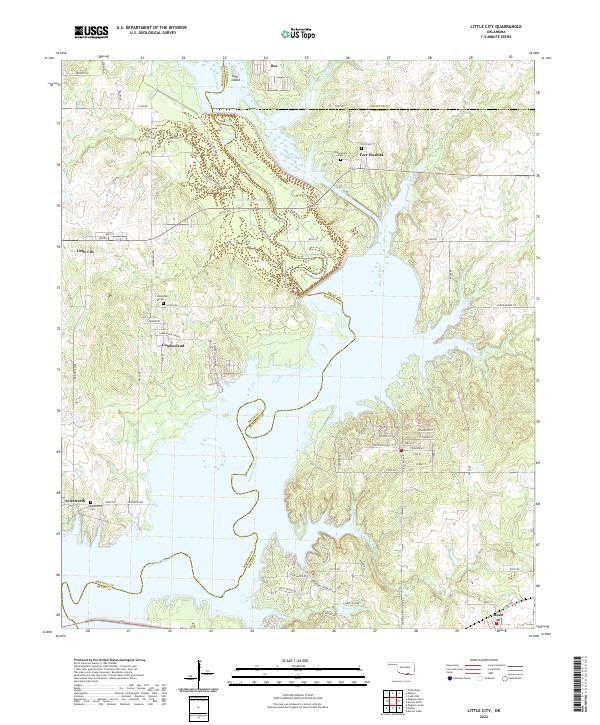 2022 Little City2022 Print · USGSThe northern reaches of Lake Texoma and the historic grounds of Fort Washita are captured here in the early twenty-first century. Genealogists and local historians can trace family locations near Cumberland Cem, the settlement of Little City, and the winding Old Channel Washita River.
 - 2023 Map of Platter, 2023 Print
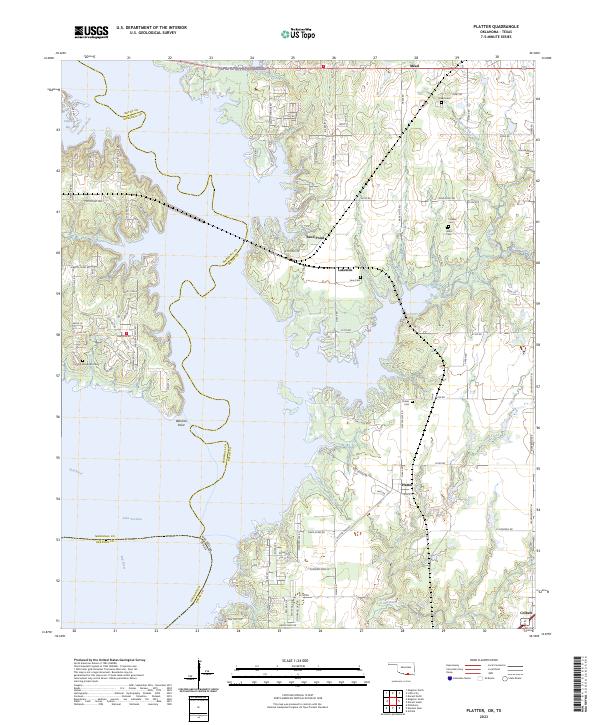 2023 Platter2023 Print · USGSThe Oklahoma-Texas borderlands around Lake Texoma appear in the early 2020s, revealing a landscape of recreational growth and rural heritage. Genealogists and local historians can trace several family burial sites, including Old Woodville Cem, Love Cem, and Harrison Cem.
End of results
Showing maps 1-21 of 21
Top cities near Mead
- Denison historical maps
- Durant historical maps
- Madill historical maps
- Tishomingo historical maps
- Calera historical maps
- Pottsboro historical maps
See more
Frequently asked questions
- What are the different types of historical maps available for Mead?
- What is the oldest map of Mead?
- Where can I purchase historical maps of Mead for my home or office?
- Where can I download high-res historical maps of Mead?
- Are there historical topographic maps available for Mead?
- Is there historical aerial imagery available for Mead?
- Where are historical maps of Mead sourced from?