1900s (20th Century) Maps of Ottawa County, Oklahoma
Explore 24 historic maps of Ottawa County from the 1900s (20th Century). These maps offer a rare glimpse into what life looked like during the 1900s — showing old roads, neighborhoods, homes, and landmarks that have changed or disappeared over time.
Whether you're researching your family's past, planning a metal detecting trip, or studying how Ottawa County's landscape evolved across the 1900s, these high-resolution maps are a powerful tool for exploring the history of this region.
- Focus on a specific era: All maps on this page are from the 1900s, giving you a focused view of this time period.
- See what’s changed: Compare century-old streets, trails, and buildings to today's modern landscape using overlays and satellite layers.
- Research with precision: Use these maps for genealogy, historical research, land use analysis, or educational projects.
- View, download, or print: Maps are fully viewable online in high resolution, and can be downloaded or printed for your own records.
Start exploring Ottawa County's history through authentic maps from the 1900s. This is your window into the past.
Ottawa County, OK maps
(24)- 1901 Map of Vinita
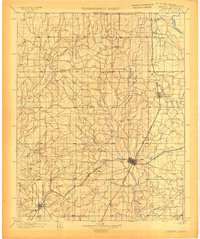 1901 Vinita1901 Print · USGSIndian Territory at the turn of the century shows a landscape of burgeoning railroad towns and Cherokee Nation settlements. Genealogists can trace family roots in early townsites like Vinita, Bluejacket, and Chelsea or locate rural homesteads near Cabin Creek.2 unique versions available
 - 1907 Map of Wyandotte, 1954 Print
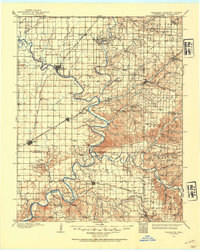 1907 Wyandotte1954 Print · USGSThe Tri-State border region at the start of the twentieth century shows a landscape of river ferries and early rail towns. Trace the locations of family landmarks like Hickory Grove Church, Goad Eagle Ferry, and rural schools from Afton to Seneca.2 unique versions available
 - 1909 Map of Wyandotte
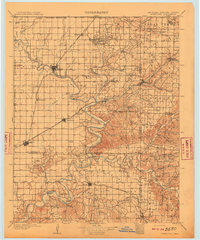 1909 Wyandotte1909 Print · USGSNortheastern Oklahoma’s river valleys and prairies are captured here just after statehood, during a period of rapid rail expansion and tribal land transition. Researchers can trace early river crossings like Rodwhite Ferry and locate historic community centers such as Hickory Grove Church or the Bluejacket School.2 unique versions available
 - 1913 Map of Vinita
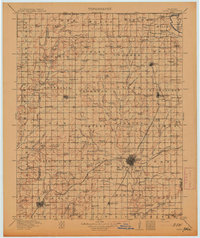 1913 Vinita1913 Print · USGSNortheast Oklahoma at the height of its rail-and-ranch era is meticulously detailed here just as the state was entering its second decade. Genealogists can trace family roots through dozens of local landmarks like W H School, Big Cabin, and the Blue Hawk School.3 unique versions available
 - 1949 Map of Seneca, 1970 Print
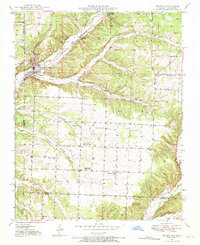 1949 Seneca1970 Print · USGSNewton County life in the late 1940s is centered on the town of Seneca and its proximity to the Oklahoma border. Genealogists can trace family footprints across several rural landmarks, including Gallemore Sch, Graves Cem, and Swars Prairie Baptist Ch.2 unique versions available
 - 1949 Map of Racine, 1973 Print
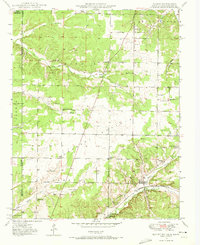 1949 Racine1973 Print · USGSNewton County was a crossroad of mining and agriculture in the late 1940s, situated at the junction of three states. Researchers can trace family history through dozens of landmarks like Tripoli Mines, Burkhart Ch, and the Gibson Cem.2 unique versions available
 - 1950 Map of Seneca
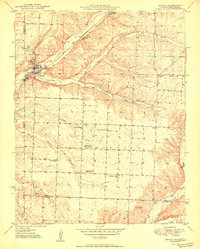 1950 Seneca1950 Print · USGSNewton County at the Missouri-Oklahoma line is shown here at mid-century, where the rail-linked town of Seneca meets the mineral-rich hills. Researchers can trace rural landmarks including the Tripoli Mine, Westview Sch, and Hollow Springs Ch.2 unique versions available
 - 1950 Map of Racine
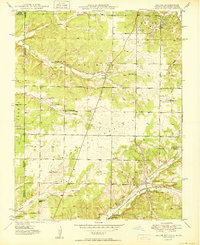 1950 Racine1950 Print · USGSNewton County's tri-state border region is captured here in the mid-century, showing a landscape shaped by mining and rural schooling. Researchers can locate family landmarks like Gibson Cem or trace the old St Louis San Francisco rail line through Racine.2 unique versions available
 - 1954 Map of Tulsa
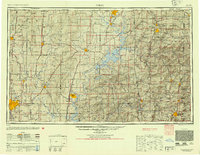 1954 Tulsa1954 Print · USGSNortheast Oklahoma and the Ozark border are shown here during a period of massive industrial and infrastructure growth. Researchers can trace the legacy of the Tri-State Mining District and the development of major reservoirs like Grand Lake O' The Cherokees.2 unique versions available
 - 1958 Map of Tulsa, 1968 Print
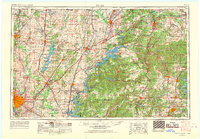 1958 Tulsa1968 Print · USGSNortheast Oklahoma and the Ozark borderlands are captured here during a massive era of reservoir construction and highway expansion. Researchers can trace the mid-century footprints of Tulsa, the sprawling Lake O' the Cherokees, and historical sites like Pea Ridge National Military Park.3 unique versions available
 - 1960 Map of Peoria, 1963 Print
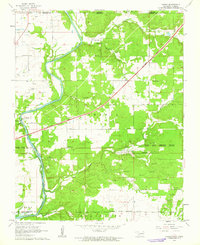 1960 Peoria1963 Print · USGSThe Oklahoma-Kansas borderlands in the early sixties reveal a complex landscape of tribal reservations and industrial mining. Genealogists and historians can trace family locations near the Peoria Cem, local schools like Elgin Sch, and numerous Tripoli Mines.2 unique versions available
 - 1961 Map of Miami SE, 1962 Print
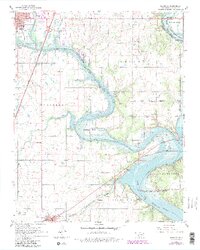 1961 Miami SE1962 Print · USGSNortheastern Oklahoma at the turn of the sixties shows a landscape shaped by tribal boundaries and the waters of the Lake of the Cherokees. Trace family roots at Bland Cem or locate former schools like McKinley Sch.4 unique versions available
 - 1961 Map of Miami NW, 1963 Print
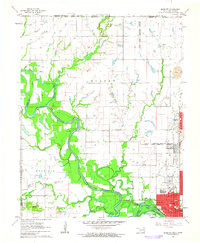 1961 Miami NW1963 Print · USGSNortheastern Oklahoma at the start of the 1960s shows a landscape defined by tribal heritage and the legacy of the Tri-State mining district. Genealogists and historians can trace Old Indian Cem and North Fairview Sch alongside the active tracks of the St Louis-San Francisco RR.2 unique versions available
 - 1961 Map of Wyandotte, 1963 Print
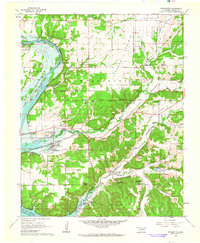 1961 Wyandotte1963 Print · USGSOttawa County communities near the convergence of the Spring and Neosho Rivers are captured here in the early sixties. Genealogists and local historians can trace the Seneca Indian Sch, find family plots at Brown Cem, and locate the old Tripoli Mine.2 unique versions available
 - 1961 Map of Miami SW, 1963 Print
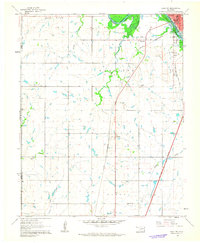 1961 Miami SW1963 Print · USGSSouthwest of Miami in the early sixties, the landscape reflects a shift from rail-side settlements to turnpike travel. Local researchers can trace family landmarks like Lone Star Ch, Coal Creek Cem, and the small community of Narcissa.2 unique versions available
 - 1961 Map of Picher, 1963 Print
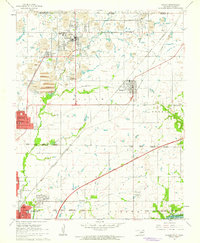 1961 Picher1963 Print · USGSOttawa County mining towns and tribal lands are captured here in the early sixties, as the lead and zinc industry shaped the landscape. Researchers can trace the industrial footprints of Century (Douthat PO) and Treece or locate family roots at Peery Cem.2 unique versions available
 - 1963 Map of Tulsa
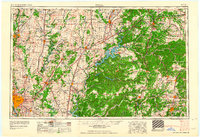 1963 Tulsa1963 Print · USGSThe Oklahoma and Arkansas borderlands are shown here in the early sixties, a time of massive reservoir construction and heavy mining. Genealogists can trace family roots through settlements like Nowata, Pryor, and Jay, or locate historical zinc and lead mines and coal mines.
 - 1964 Map of Cayuga, 1966 Print
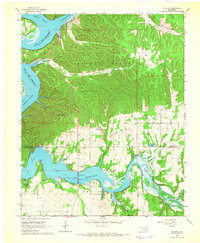 1964 Cayuga1966 Print · USGSDelaware and Ottawa Counties in the mid-1960s show a landscape shaped by the waters of the Neosho and Elk Rivers. Genealogists and historians can trace rural life through the Indian Ceremonial Grounds, Turkey Ford School, and Howard Cemetery.2 unique versions available
 - 1965 Map of Tiff City, 1966 Print
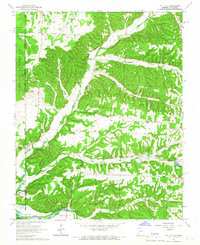 1965 Tiff City1966 Print · USGSMissouri and Oklahoma meet along these river valleys in the mid-1960s, a period of quiet rural life defined by small hill communities. Genealogists can locate family landmarks such as Keenon Cem, Hart Sch, and the Council House Indian Reservation.3 unique versions available
 - 1971 Map of Welch North, 1973 Print
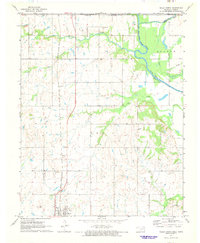 1971 Welch North1973 Print · USGSNortheastern Oklahoma and the Kansas borderlands appear in the early 1970s as a landscape of rural rail towns and prairie creek valleys. Trace the Missouri - Kansas - Texas rail line through Welch or locate family history at Russell Creek Cem and Maybelle Ch.
 - 1971 Map of Afton, 1973 Print
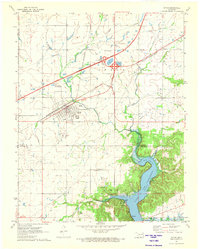 1971 Afton1973 Print · USGSAfton and Bernice sit at the crossroads of Northeastern Oklahoma in the early 1970s, where the turnpike and rail lines meet the Grand Lake shoreline. Genealogists can locate family landmarks like Mt Hope Cem and Sixkiller Cem near the winding Horse Creek.
 - 1971 Map of Afton NE, 1973 Print
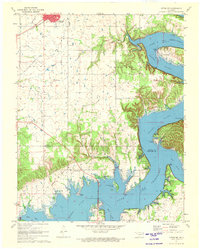 1971 Afton NE1973 Print · USGSNortheastern Oklahoma in the early seventies shows the intersection of the Missouri-Pacific rail lines and the growing shoreline of Grand Lake. You can trace old transit routes like the Old Railroad Grade and locate family landmarks such as St Elizabeth Mission and Fairland Cem.2 unique versions available
 - 1985 Map of Bartlesville
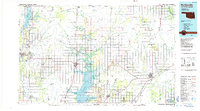 1985 Bartlesville1985 Print · USGSNortheastern Oklahoma in the mid-eighties shows a landscape defined by the Verdigris River and a complex rail network. Researchers can trace the industrial footprint of Strip Mines and find old rail hubs in Nowata and Vinita.2 unique versions available
 - 1986 Map of Neosho
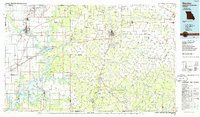 1986 Neosho1986 Print · USGSThe tri-state border region comes alive in the mid-eighties as a landscape of mining heritage and river valleys. Researchers can trace the rail lines of the Kansas City Southern Ry and locate rural landmarks like Gibson Cem and Peoria.2 unique versions available
End of results
Showing maps 1-24 of 24
Top cities of Ottawa County
- Miami historical maps
- Commerce historical maps
- Afton historical maps
- Fairland historical maps
- Quapaw historical maps
- North Miami historical maps
See more
Frequently asked questions
- What are the different types of historical maps available for Ottawa County?
- What is the oldest map of Ottawa County?
- Where can I purchase historical maps of Ottawa County for my home or office?
- Where can I download high-res historical maps of Ottawa County?
- Are there historical topographic maps available for Ottawa County?
- Is there historical aerial imagery available for Ottawa County?
- Where are historical maps of Ottawa County sourced from?