Old Maps of Justice, Oklahoma for Academic Research
Study the evolution of Justice with 13 high-resolution historic maps. Whether you're teaching, researching, or modeling changes in land use, these maps provide essential visual documentation of urban, environmental, and geographic change.
- Analyze long-term change: Track patterns in development, transportation, and natural features.
- Ideal for environmental or urban studies: Support academic projects with primary historical map data.
- Use in the classroom or lab: Educators and researchers rely on these maps to bring historical context to life.
These maps are a powerful tool for teaching, research, and visualizing how Justice has changed over the decades.
Justice, OK maps
(13)- 1901 Map of Claremore
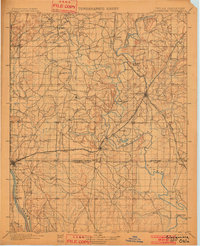 1901 Claremore1901 Print · USGSThe Cherokee, Osage, and Creek Nations converge in the Indian Territory during this era of rapid railroad expansion. Researchers can trace early settlements and tribal boundaries, locating the Island Ferry, the junction at Claremore, and early Tulsa.4 unique versions available
 - 1914 Map of Claremore, 1959 Print
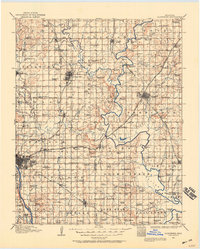 1914 Claremore1959 Print · USGSNortheastern Oklahoma was a landscape of river crossings and rail towns in the years just before the Great War. Genealogists and researchers can trace the locations of dozens of vanished rural schools like Elm Ridge School, river landmarks such as Thomas Ferry, and the early footprints of Broken Arrow and Tulsa.
 - 1916 Map of Claremore
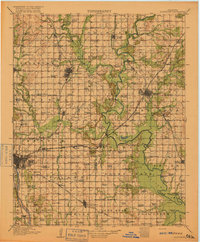 1916 Claremore1916 Print · USGSThe Verdigris River valley and the burgeoning rail hubs of Rogers and Tulsa counties are captured here just after Oklahoma statehood. Genealogists can locate family homesteads near dozens of early schools like Fair Valley School or early churches such as Greenwood Chapel.4 unique versions available
 - 1954 Map of Tulsa
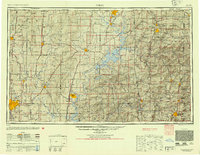 1954 Tulsa1954 Print · USGSNortheast Oklahoma and the Ozark border are shown here during a period of massive industrial and infrastructure growth. Researchers can trace the legacy of the Tri-State Mining District and the development of major reservoirs like Grand Lake O' The Cherokees.2 unique versions available
 - 1958 Map of Tulsa, 1968 Print
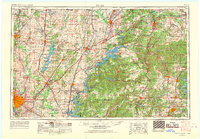 1958 Tulsa1968 Print · USGSNortheast Oklahoma and the Ozark borderlands are captured here during a massive era of reservoir construction and highway expansion. Researchers can trace the mid-century footprints of Tulsa, the sprawling Lake O' the Cherokees, and historical sites like Pea Ridge National Military Park.3 unique versions available
 - 1963 Map of Tulsa
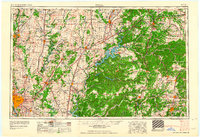 1963 Tulsa1963 Print · USGSThe Oklahoma and Arkansas borderlands are shown here in the early sixties, a time of massive reservoir construction and heavy mining. Genealogists can trace family roots through settlements like Nowata, Pryor, and Jay, or locate historical zinc and lead mines and coal mines.
 - 1963 Map of Claremore, 1964 Print
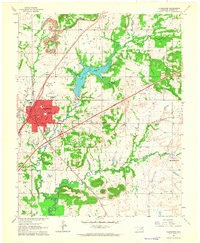 1963 Claremore1964 Print · USGSClaremore and its rural surroundings thrive in the early sixties as the Will Rogers Turnpike brings new infrastructure to the Verdigris Hills. Researchers can trace family sites like Lowrance Ranch, local schools including Justus Sch, and the grounds of Woodlawn Cem.3 unique versions available
 - 1985 Map of Tulsa
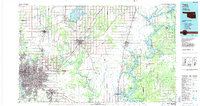 1985 Tulsa1985 Print · USGSNortheastern Oklahoma in the mid-eighties shows a landscape shaped by massive reservoirs and a bustling transportation network. Researchers can trace the path of the Will Rogers Turnpike or locate local landmarks like Mohawk Park and Oologah Lake.2 unique versions available
 - 2010 Map of Claremore, 2010 Print
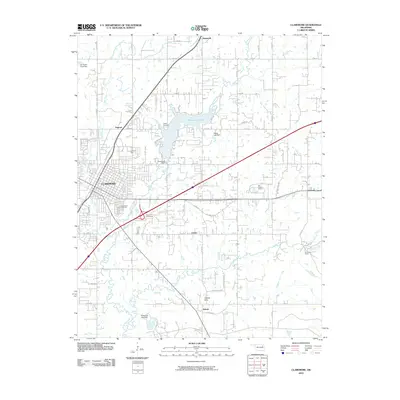 2010 Claremore2010 Print · USGSRogers County at the turn of the decade shows the city of Claremore expanding near the waters of Claremore Lake. Researchers can locate historic burial grounds at Woodlawn Cemetery or trace the rural landscape around Tiawah and Will Rogers Downs.
 - 2013 Map of Claremore, 2013 Print
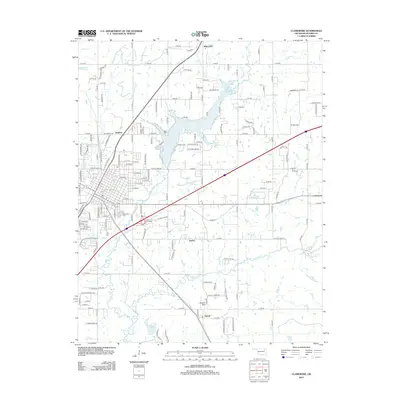 2013 Claremore2013 Print · USGSRogers County at the start of the 2010s shows a landscape where suburban growth meets established rural landmarks. Genealogists and local historians can trace family plots at Woodlawn Cem and Talber Cem or explore the shores of Claremore Lake.
 - 2016 Map of Claremore, 2016 Print
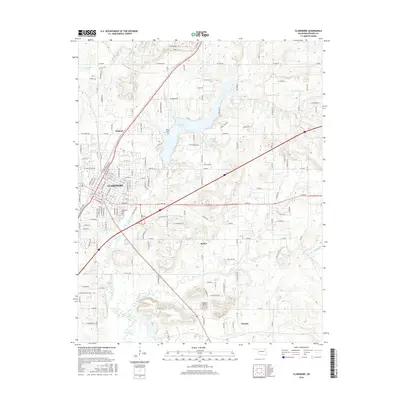 2016 Claremore2016 Print · USGSClaremore and the surrounding Rogers County prairies are documented here in the mid-2010s, showing a landscape defined by significant water bodies and rail infrastructure. Researchers can trace local history through the BNSF Railway corridor, Woodlawn Cem, and geographic landmarks like the Tiawah Hills.
 - 2019 Map of Claremore, 2019 Print
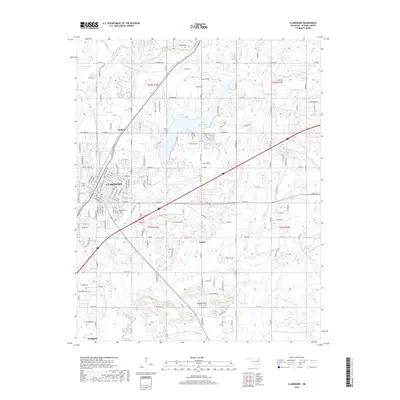 2019 Claremore2019 Print · USGSThe growing city of Claremore is shown here in the late 2010s, alongside its vital rail corridors and surrounding hills. Researchers can trace the development of urban neighborhoods and locate local landmarks like Woodlawn Cem, Lake Claremore, and the Tiawah Hills.
 - 2022 Map of Claremore, 2022 Print
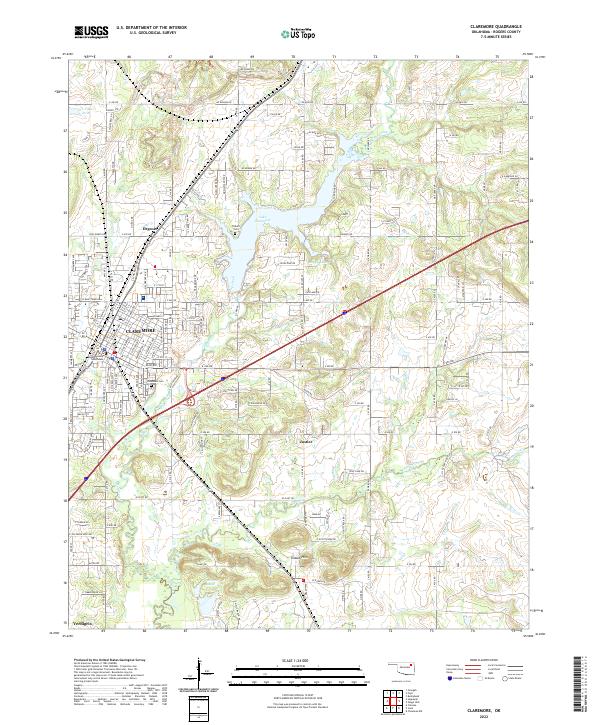 2022 Claremore2022 Print · USGSThe Rogers County seat and surrounding Tiawah Hills are shown here in the early twenty-first century as the region continues to expand. Researchers can trace the civic footprint of Claremore from the Rogers County Courthouse to Woodlawn Cem and the BNSF Railway.
End of results
Showing maps 1-13 of 13
Top cities near Justice
- Tulsa historical maps
- Owasso historical maps
- Claremore historical maps
- Pryor Creek historical maps
- Catoosa historical maps
- Verdigris historical maps
See more
Frequently asked questions
- What are the different types of historical maps available for Justice?
- What is the oldest map of Justice?
- Where can I purchase historical maps of Justice for my home or office?
- Where can I download high-res historical maps of Justice?
- Are there historical topographic maps available for Justice?
- Is there historical aerial imagery available for Justice?
- Where are historical maps of Justice sourced from?