1960s Maps of Woodward County, Oklahoma
Explore 18 historic maps of Woodward County from the 1960s. These maps offer a rare glimpse into what life looked like during the 1960s — showing old roads, neighborhoods, homes, and landmarks that have changed or disappeared over time.
Whether you're researching your family's past, planning a metal detecting trip, or studying how Woodward County's landscape evolved across the 1960s, these high-resolution maps are a powerful tool for exploring the history of this region.
- Focus on a specific era: All maps on this page are from the 1960s, giving you a focused view of this time period.
- See what’s changed: Compare century-old streets, trails, and buildings to today's modern landscape using overlays and satellite layers.
- Research with precision: Use these maps for genealogy, historical research, land use analysis, or educational projects.
- View, download, or print: Maps are fully viewable online in high resolution, and can be downloaded or printed for your own records.
Start exploring Woodward County's history through authentic maps from the 1960s. This is your window into the past.
Woodward County, OK maps
(18)- 1969 Map of Fargo, 1971 Print
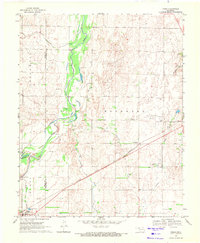 1969 Fargo1971 Print · USGSWestern Oklahoma’s prairie landscape is captured here in the late sixties, centered on the Atchison Topeka and Santa Fe rail line. Genealogists and researchers can trace the early layouts of Fargo and Tangier, as well as landmarks like Rest Haven Cem and Braunch Memorial Park.
 - 1969 Map of Mooreland SE, 1971 Print
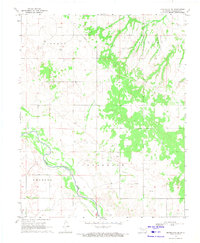 1969 Mooreland SE1971 Print · USGSNorthwest Oklahoma's river valleys and energy fields are captured here in the late sixties as the region's economy balanced farming with oil and gas extraction. Researchers can locate the Miller Cem or trace industrial sites like the Landing Strip and the banks of the North Canadian River.
 - 1969 Map of Belva, 1971 Print
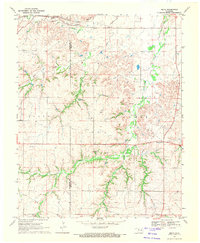 1969 Belva1971 Print · USGSMajor County in the late sixties shows a landscape in transition from ranching to an energy-producing economy. Genealogists and researchers can trace the Atchison Topeka and Santa Fe Railroad Grade or locate landmarks like Belva and Bat Cave.
 - 1969 Map of Quinlan, 1971 Print
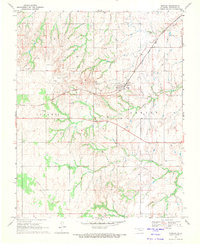 1969 Quinlan1971 Print · USGSQuinlan and the surrounding Woodward County plains are captured here in the late sixties, centered on the Atchison Topeka and Santa Fe rail line. Researchers can locate family landmarks like Red Top Cem and Union Cem or trace the early development of local Gas Wells.2 unique versions available
 - 1969 Map of Waynoka NW, 1971 Print
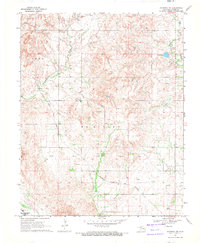 1969 Waynoka NW1971 Print · USGSWoods County in the late sixties reveals a landscape shaped by creek systems and the energy industry. Researchers can trace the Atchison Topeka and Santa Fe rail line past Morning Star Ch and the Sand Dunes of the river valley.
 - 1969 Map of Vici NW, 1971 Print
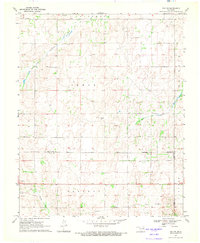 1969 Vici NW1971 Print · USGSWestern Oklahoma’s ranching and oil country is captured here during the late sixties, where county lines follow the Old Indian Treaty Boundary. Researchers can trace the courses of North Persimmon Creek and Turkey Creek alongside landmarks like local Landing Strips and a Caliche Pit.
 - 1969 Map of Woodward SW, 1971 Print
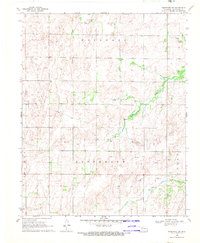 1969 Woodward SW1971 Print · USGSWoodward County's rolling prairie landscape is captured in the late sixties as the region's energy infrastructure expanded across Jefferson and Woodward townships. Researchers can locate a rural Cem and trace the paths of Indian Creek and North Persimmon Creek alongside numerous Gas Wells.
 - 1969 Map of Woodward, 1971 Print
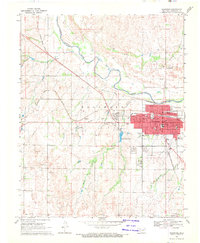 1969 Woodward1971 Print · USGSWoodward and the surrounding plains are captured in the late sixties as the city thrived as a rail and energy hub. Researchers can trace the intersection of the Atchison Topeka and Santa Fe railroad with local landmarks like Elmwood Cemetery and the Drive-in Theater.2 unique versions available
 - 1969 Map of Mooreland, 1971 Print
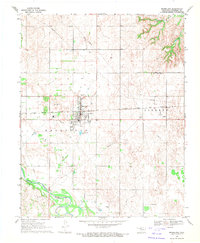 1969 Mooreland1971 Print · USGSMooreland and the surrounding plains were a busy intersection of rail and river life in the late sixties. Researchers can trace family history at the Mooreland Cem, follow the Atchison Topeka and Santa Fe line, or locate the Powerplant.
 - 1969 Map of Sharon, 1971 Print
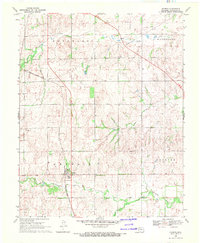 1969 Sharon1971 Print · USGSNorthwestern Oklahoma’s prairie landscape is captured here in the late sixties as the town of Sharon remains tied to its rail and energy corridors. Genealogists and local historians can locate family burial sites at Vonton Cem and North Persimmon Cem or trace the route of the Missouri - Kansas - Texas railroad.
 - 1969 Map of Cedardale, 1971 Print
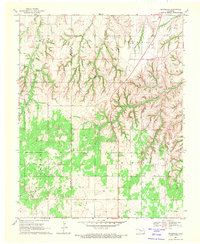 1969 Cedardale1971 Print · USGSMajor and Woodward counties meet in this late 1960s survey of the Oklahoma plains during a period of active petroleum development. Genealogists and local historians can locate Cedardale Cem, Liberty Cem, and the small settlement of Cedardale.
 - 1969 Map of Fargo SE, 1971 Print
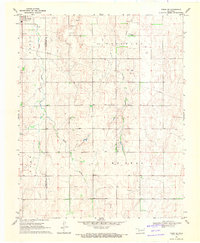 1969 Fargo SE1971 Print · USGSThe border of Ellis and Woodward counties was a landscape of remote farmsteads and growing energy sites in the late sixties. Researchers can locate the early footprints of Fargo and Keenan, or trace rural family roots at Fargo Cem and Gnadenfield Cem.
 - 1969 Map of Woodward NE, 1971 Print
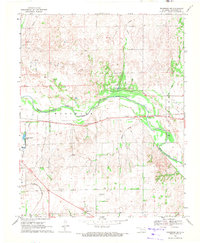 1969 Woodward NE1971 Print · USGSThe Oklahoma plains north of Woodward are captured here during a period of industrial and recreational development in the late sixties. Researchers can trace the paths of the Atchison Topeka and Santa Fe rail line and identify local landmarks like Alston and Crystal Beach Lake.
 - 1969 Map of Waynoka West, 1971 Print
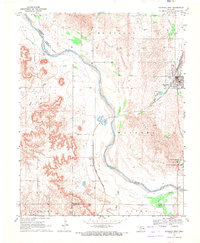 1969 Waynoka West1971 Print · USGSWoods County in the late sixties reveals a landscape defined by the winding Cimarron River and the bustling rail operations in Waynoka. Genealogists and historians can trace the rail corridor through Heman or locate the early layout of the Little Sahara State Recreation Area.2 unique versions available
 - 1969 Map of Mooreland SW, 1971 Print
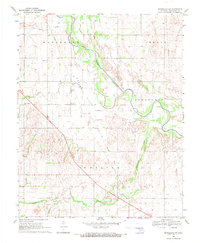 1969 Mooreland SW1971 Print · USGSOklahoma's western prairie comes into focus in the late sixties as the river cuts through the plains of Woodward County. Genealogists and local historians can locate the North Chapel Cem, trace the Old Railroad Grade, or find the Community Hall near Moscow.
 - 1969 Map of Mutual, 1972 Print
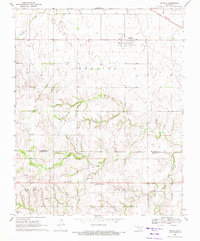 1969 Mutual1972 Print · USGSMutual and the surrounding Woodward and Dewey County borderlands are captured here in the late sixties, showing a landscape defined by ranching and the nascent energy industry. Researchers can trace the Old Indian Treaty Boundary and locate family sites like Persimmon Cem, Sunny Side Cem, or the Church of the First Born.
 - 1969 Map of Vici, 1972 Print
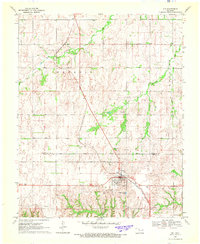 1969 Vici1972 Print · USGSDewey and Woodward Counties are captured in the late sixties as the agricultural and rail life of the Oklahoma plains centered on the town of Vici. Genealogists and historians can trace family locations near Vassar Cem, South Persimmon Ch, and the historic Old Indian Treaty Boundary.
 - 1969 Map of Mutual NE, 1972 Print
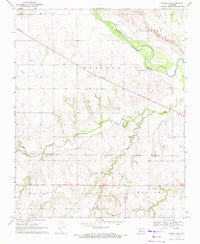 1969 Mutual NE1972 Print · USGSThe Woodward and Dewey County line area in the late sixties reveals a landscape shaped by early territories and river hydrology. Researchers can locate the Old Indian Treaty Boundary and trace family sites near Dunlap Cem and the settlement of Cestos.
End of results
Showing maps 1-18 of 18
Top cities of Woodward County
- Woodward historical maps
- Mooreland historical maps
- Fort Supply historical maps
- Sharon historical maps
- Mutual historical maps
Frequently asked questions
- What are the different types of historical maps available for Woodward County?
- What is the oldest map of Woodward County?
- Where can I purchase historical maps of Woodward County for my home or office?
- Where can I download high-res historical maps of Woodward County?
- Are there historical topographic maps available for Woodward County?
- Is there historical aerial imagery available for Woodward County?
- Where are historical maps of Woodward County sourced from?