1980s Maps of Wheeler County, Oregon
Explore 18 historic maps of Wheeler County from the 1980s. These maps offer a rare glimpse into what life looked like during the 1980s — showing old roads, neighborhoods, homes, and landmarks that have changed or disappeared over time.
Whether you're researching your family's past, planning a metal detecting trip, or studying how Wheeler County's landscape evolved across the 1980s, these high-resolution maps are a powerful tool for exploring the history of this region.
- Focus on a specific era: All maps on this page are from the 1980s, giving you a focused view of this time period.
- See what’s changed: Compare century-old streets, trails, and buildings to today's modern landscape using overlays and satellite layers.
- Research with precision: Use these maps for genealogy, historical research, land use analysis, or educational projects.
- View, download, or print: Maps are fully viewable online in high resolution, and can be downloaded or printed for your own records.
Start exploring Wheeler County's history through authentic maps from the 1980s. This is your window into the past.
Wheeler County, OR maps
(18)- 1980 Map of Monument, 1997 Print
 1980 Monument1997 Print · USGSCentral Oregon’s river-cut high country comes into focus in the early 1980s, documenting a landscape of remote ranching and timber work. Genealogists and researchers can trace local landmarks like Ritter, the Cohoe Mine, and the high reaches of Sourdough Ridge.
 - 1981 Map of Dayville
 1981 Dayville1981 Print · USGSEastern Oregon’s high-desert rangeland and timber country are captured here in the early eighties, centered on the John Day River valley. Genealogists and historians can trace isolated settlements like Izee and Suplee alongside historical mining sites including Chambers Mine.2 unique versions available
 - 1981 Map of Prineville
 1981 Prineville1981 Print · USGSPrineville and the Crooked River valley are seen here in the early eighties as the region balanced timber, ranching, and new water management projects. Genealogists and local historians can trace family-named landmarks like Watkins, locate the Cem, or find old mining sites such as the Amity Mine.
 - 1981 Map of Heppner
 1981 Heppner1981 Print · USGSNorth-Central Oregon's canyon country comes into focus in the early 1980s, centered on the high-desert plateaus and timbered slopes of Morrow County. Researchers can trace the Union Pacific rail corridor and find remote landmarks like Lonerock, Hardman, and the high peaks of the Umatilla National Forest.
 - 1981 Map of Stephenson Mountain, 1997 Print
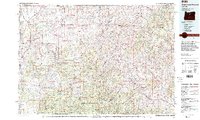 1981 Stephenson Mountain1997 Print · USGSThe high-desert ranching and mining heart of North Central Oregon is captured here in the early eighties. Genealogists and historians can trace old settlements and mineral prospects from Shaniko to the Oregon King Mine and the John Day River canyon.
 - 1981 Map of Condon, 1997 Print
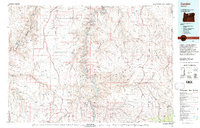 1981 Condon1997 Print · USGSNorth-central Oregon in the early eighties reveals a vast plateau landscape defined by the deep canyons of the John Day and Deschutes rivers. Researchers can trace the rural legacy of the region through small hubs like Condon, Fossil, and the Old Railroad Grade.2 unique versions available
 - 1987 Map of Rowe Creek, 1988 Print
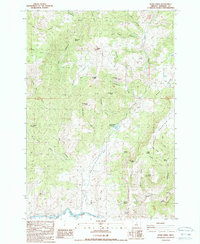 1987 Rowe Creek1988 Print · USGSWheeler County ranchlands and river canyons are documented here in the late eighties, centered on the rugged terrain north of the John Day River. Researchers can locate isolated water sources and early landmarks like Liberty Bottom, Rowe Creek Reservoir, and the Old Mill Can.
 - 1987 Map of Fossil South, 1988 Print
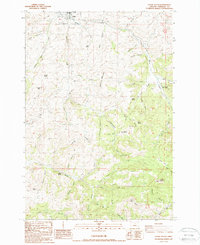 1987 Fossil South1988 Print · USGSThe town of Fossil and its surrounding canyonlands are documented here during the late eighties, showing a landscape defined by ranching and forestry. Researchers can trace local landmarks like the Cem, Fossil Butte, and the State Forestry Headquarters.
 - 1987 Map of Sutton Mtn., 1988 Print
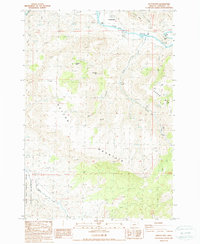 1987 Sutton Mtn.1988 Print · USGSThe riverside community of Twickenham and the surrounding high canyons are captured in the late eighties. Researchers can trace land use through 4WD trails, find a remote Cem, and explore the edges of the John Day Fossil Beds National Monument.
 - 1987 Map of Kinzua, 1988 Print
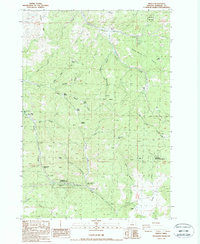 1987 Kinzua1988 Print · USGSWheeler County's timber and ranching landscape is captured here in the late eighties, centered on the former town of Kinzua. Researchers can trace the Old RR Grade and find family-named landmarks like Julie A. Henderson Pioneer Park and Prairie Ranch.
 - 1987 Map of Service Creek, 1988 Print
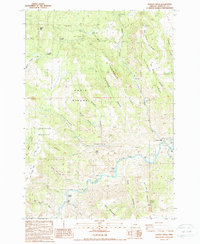 1987 Service Creek1988 Print · USGSThe John Day River and the small settlement of Service Creek are shown here in the late eighties as they navigate the high-desert terrain. Researchers can trace the path of the river through Shoofly Rapids and locate landmarks like Heidtmann Mountain and a Historical Boundary Marker.
 - 1987 Map of Muddy Ranch, 1988 Print
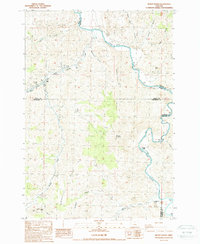 1987 Muddy Ranch1988 Print · USGSThe high desert of Jefferson and Wasco counties comes into focus during the late eighties, centered on the rugged canyons of the John Day River. Researchers can trace old property boundaries and landmarks like Muddy Ranch, Wagner Mountain, and the Rock Fort (Site).
 - 1988 Map of Keyes Mtn
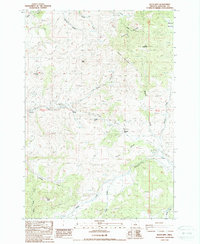 1988 Keyes Mtn1988 Print · USGSThe high ranching and timber country of Wheeler County is detailed here as it appeared in the late eighties. Researchers can trace remote routes and land use via the Mitchell Guard Station, the HH Wheeler Historical Marker, and Keyes.
 - 1988 Map of Mitchell
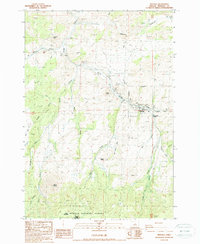 1988 Mitchell1988 Print · USGSCentral Oregon ranching and wilderness come into focus in the late 1980s around the town of Mitchell. Researchers can trace local landmarks like the Cem, the Mitchell Reservoir, and land holdings near Sargent Butte and Meyers.
 - 1988 Map of Porcupine Butte
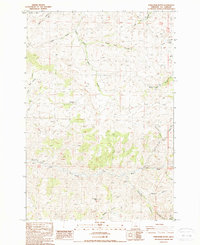 1988 Porcupine Butte1988 Print · USGSWheeler County ranching and rugged canyon lands are documented here in the late eighties. Researchers can trace land use through landmarks like Knox Ranch, the remote Stone Cabin, and industrial remnants such as the Old Mill Can and a lonely Cem.
 - 1988 Map of Clarno
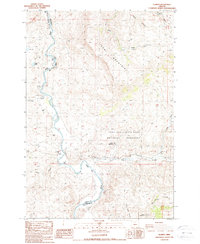 1988 Clarno1988 Print · USGSWheeler County was a landscape of remote canyons and fossil beds in the late eighties. Genealogists and researchers can trace the banks of the John Day River to find landmarks like the Tillotson Cemetery, Clarno, and Camp Hancock.
 - 1988 Map of Jennies Peak
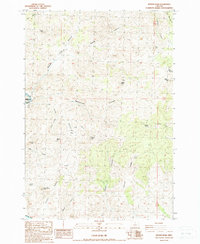 1988 Jennies Peak1988 Print · USGSThe high-desert canyonlands of Wheeler and Jefferson Counties are captured here in the late eighties as the John Day River winds through its deep valley. Researchers can trace remote landmarks like Robinson, the high summit of Jennies Peak, and crucial desert water sources at Nicholson Spring.
 - 1988 Map of Toney Butte
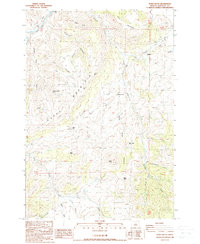 1988 Toney Butte1988 Print · USGSWheeler County ranching and upland terrain are documented here in the late eighties, showing a network of remote canyons and springs. Researchers can find old landmarks like Waldron, the Richmond Cem, and the Waldron Sch among the slopes of Horse Mountain.
End of results
Showing maps 1-18 of 18
Top cities of Wheeler County
Frequently asked questions
- What are the different types of historical maps available for Wheeler County?
- What is the oldest map of Wheeler County?
- Where can I purchase historical maps of Wheeler County for my home or office?
- Where can I download high-res historical maps of Wheeler County?
- Are there historical topographic maps available for Wheeler County?
- Is there historical aerial imagery available for Wheeler County?
- Where are historical maps of Wheeler County sourced from?