Old Maps of Clinton County, Pennsylvania for Academic Research
Study the evolution of Clinton County with 223 high-resolution historic maps. Whether you're teaching, researching, or modeling changes in land use, these maps provide essential visual documentation of urban, environmental, and geographic change.
- Analyze long-term change: Track patterns in development, transportation, and natural features.
- Ideal for environmental or urban studies: Support academic projects with primary historical map data.
- Use in the classroom or lab: Educators and researchers rely on these maps to bring historical context to life.
These maps are a powerful tool for teaching, research, and visualizing how Clinton County has changed over the decades.
Clinton County, PA maps
(223)- 1921 Map of Howard
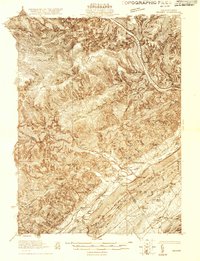 1921 Howard1921 Print · USGSThe valleys and ridges of Central Pennsylvania are captured here just as the rail-and-river economy was maturing. Researchers can trace family sites among a high density of rural schools and churches like Cedar Spring School, Hunter Run Church, and the town of Lamar.3 unique versions available
 - 1921 Map of Williamsport
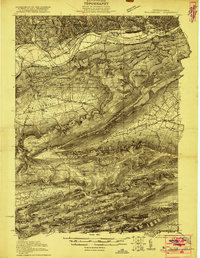 1921 Williamsport1921 Print · USGSWilliamsport and the West Branch Susquehanna valley are captured here in the early 1920s, showing a landscape defined by rail corridors and steep mountain ridges. Genealogists can locate family-named schools and social landmarks like the Morgan Valley School, Nippono Park, and Shakespeare Club.
 - 1921 Map of Lock Haven, 1958 Print
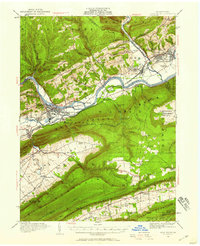 1921 Lock Haven1958 Print · USGSLock Haven and the Susquehanna River West Branch are captured in the early twenties, showing a landscape defined by industry and mountain ridges. Researchers can trace historic schools and family hamlets from Woolrich to Logan Mills, or locate the State Normal School and Great Island.2 unique versions available
 - 1923 Map of Howard
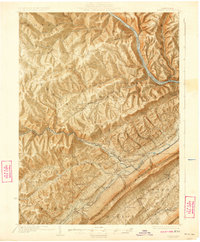 1923 Howard1923 Print · USGSThe valleys of Clinton and Center counties were bustling with rural life in the 1920s as the rail and river economy matured. Genealogists can locate over a dozen local schoolhouses like Wagner School and trace the paths of the Pennsylvania Railroad and Beech Creek Sta.6 unique versions available
 - 1923 Map of Lock Haven
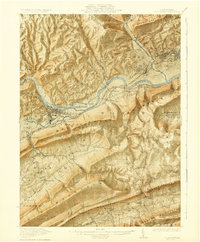 1923 Lock Haven1923 Print · USGSThe West Branch Susquehanna River corridor in the early twenties reveals a landscape of industrial river towns and isolated mountain valleys. Genealogists can locate family landmarks like the Swissdale School, Liberty Church, and the grounds of the State Normal School.7 unique versions available
 - 1923 Map of Williamsport
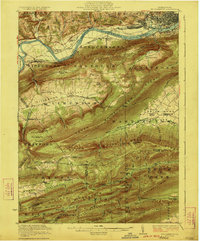 1923 Williamsport1923 Print · USGSWilliamsport and the Susquehanna riverfront are captured here in the early twenties, showing a region defined by industrial rail lines and steep ridges. You can trace the path of the Pennsylvania Canal (Abandoned) or locate rural landmarks like Nippono Park and the Captain Greene Monument.6 unique versions available
 - 1924 Map of Centre Hall, 1958 Print
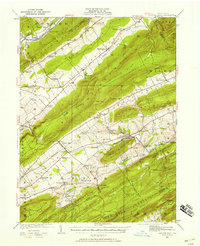 1924 Centre Hall1958 Print · USGSCentral Pennsylvania's ridge-and-valley landscape is captured here in the 1920s, showing a world of limestone springs and mountain gaps. Genealogists can locate family homesteads near Old Fort, Tusseyville, and dozens of rural schoolhouses like Gentzel School.2 unique versions available
 - 1928 Map of Snow Shoe
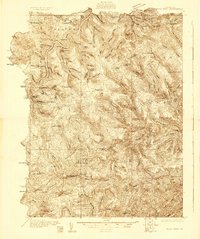 1928 Snow Shoe1928 Print · USGSCentre County's coal and timber country is documented here in the late 1920s, showing the intersection of heavy industry and wilderness. Researchers can locate active operations like Mine No 25, the village of Gillintown, and the remote Soldiers Home Camp.5 unique versions available
 - 1929 Map of Centre Hall
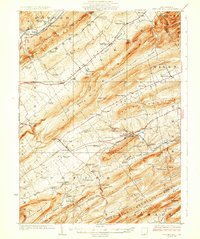 1929 Centre Hall1929 Print · USGSCentral Pennsylvania's ridge-and-valley country is shown here in the late 1920s as a landscape of rural schools and water mills. Genealogists can trace family footprints at Old Fort, Penn Cave, and dozens of school sites like Gentzel School.4 unique versions available
 - 1929 Map of Karthaus
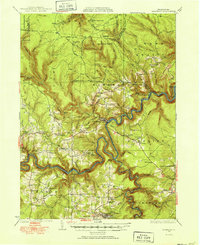 1929 Karthaus1929 Print · USGSThe West Branch Susquehanna River and its steep hollows defined life in Clearfield County during the late twenties. Researchers can trace the riverfront New York Central Railroad and find dozens of rural school sites like Fairview Sch and the community at Frenchville.3 unique versions available
 - 1931 Map of Show Shoe
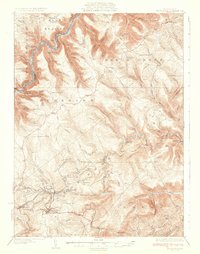 1931 Show Shoe1931 Print · USGSThe Pennsylvania coalfields and river valleys are captured here in the early 1930s, showing a rugged landscape defined by mountain camps and mining towns. Genealogists can trace family roots through industrial settlements like Clarence and Snow Shoe or locate old schools such as Cherry Run Sch.3 unique versions available
 - 1932 Map of Karthaus
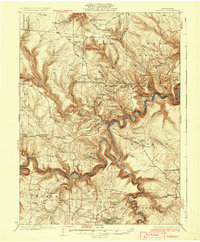 1932 Karthaus1932 Print · USGSThe Susquehanna’s West Branch winds through Clearfield and Centre Counties in the late 1920s, a landscape shaped by the rail and timber industries. Genealogists can trace family names through dozens of rural schools and churches like Mignot Sch and Fairview Ch.3 unique versions available
 - 1937 Map of Waterville
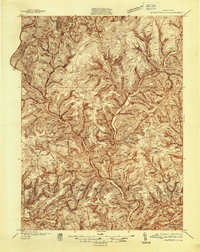 1937 Waterville1937 Print · USGSThe Pine Creek valley and its logging railroad corridors come alive in this late 1930s survey of Lycoming County. Researchers can trace the era of the Civilian Conservation Corps at CCC Camp No 129 or locate family roots at English Center, Cammal, and Okome.5 unique versions available
 - 1937 Map of Millheim
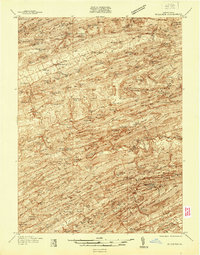 1937 Millheim1937 Print · USGSThe Seven Mountains region of central Pennsylvania is shown here in the late thirties, when rural valleys were tied together by narrow gaps. Researchers can locate family landmarks like Wolfs Chapel, Lose Sch, and vanished stopovers such as Wolfs Store.
 - 1941 Map of Millheim
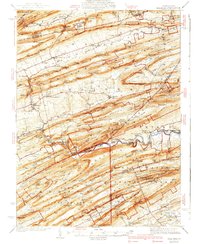 1941 Millheim1941 Print · USGSCentral Pennsylvania's ridge-and-valley landscape is documented here just before the mid-century, showing a network of mountain gaps and small valley settlements. Researchers can locate family landmarks like Wolfs Chapel, the Hironimus Sch, and the BM Sawmill along the banks of Penns Creek.3 unique versions available
 - 1943 Map of Hyner
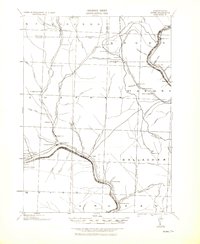 1943 Hyner1943 Print · USGSIn the central Pennsylvania highlands during the mid-1940s, the river and rail lines dictated the life of the valley. Researchers can trace the industrial corridor from Renovo Boro to remote outposts like Slate Run and Young Womanstown.
 - 1943 Map of Waterville
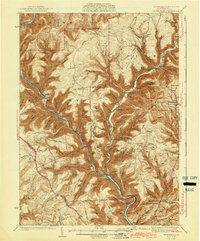 1943 Waterville1943 Print · USGSLycoming County mountain life in the early 1940s centers on the river junctions and rail sidings of the Pine Creek valley. Genealogists and hikers can trace old routes like the Silver Springs Road or find forgotten sites like Ross Siding, Carsontown, and Springer Sch.3 unique versions available
 - 1943 Map of Lewistown
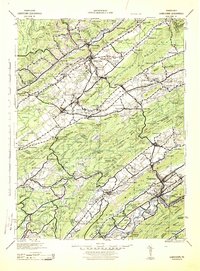 1943 Lewistown1943 Print · USGSCentral Pennsylvania's rugged ridge-and-valley landscape is documented here during the mid-forties, showing the deep integration of rail lines and mountain gaps. Genealogists can trace family footprints through numerous rural landmarks like Emma Chapel, Mattern Junction, and the McNitt School.
 - 1944 Map of Williamsport
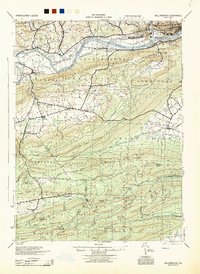 1944 Williamsport1944 Print · USGSThe West Branch Susquehanna River valley was a bustling corridor of industry and agriculture during the mid-forties. Researchers can trace the Pennsylvania RR through Linden Station or find rural schools like Riedy School and the Captain Greene Monument.
 - 1944 Map of Lock Haven
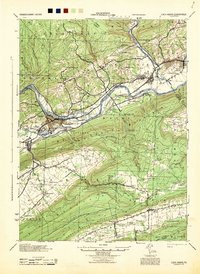 1944 Lock Haven1944 Print · USGSClinton County during the mid-forties shows a landscape defined by the river-and-rail economy and its transition to early aviation. Genealogists can trace family names at rural sites like Gravel Hill School, Fairpoint Church, and the industrial village of Woolrich.
 - 1945 Map of Driftwood, 1953 Print
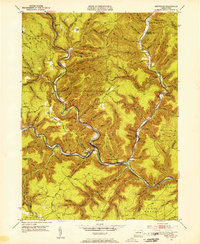 1945 Driftwood1953 Print · USGSCameron County communities thrive along the river bends and rail lines at the end of World War II. Researchers can trace the dual rail paths of the Pennsylvania and Baltimore and Ohio railroads through Driftwood and locate the First Fork Sch.4 unique versions available
 - 1945 Map of Sinnemahoning, 1954 Print
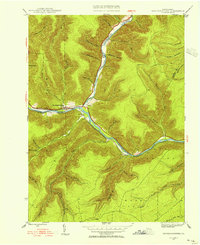 1945 Sinnemahoning1954 Print · USGSSinnemahoning and the surrounding river valleys are captured here at the height of the steam-to-diesel rail transition. Historians can trace the competing paths of the Pennsylvania and Baltimore and Ohio railroads through Jericho and past Miller Cem.5 unique versions available
 - 1946 Map of Young Womans Creek
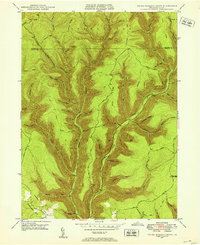 1946 Young Womans Creek1946 Print · USGSClinton County and the surrounding high ridges were deeply forested and sparsely settled in the late 1940s. Genealogists and historians can trace old timber and utility routes like the Underground Pipe Line, Greenlick Road, and the curiously named Bobsled Trail.4 unique versions available
 - 1946 Map of Renovo East, 1953 Print
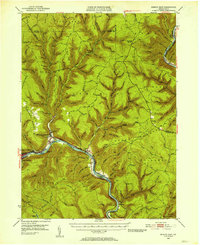 1946 Renovo East1953 Print · USGSThe industrial corridor of the West Branch Susquehanna River is seen here in the mid-1940s, showing the critical rail infrastructure of the Pennsylvania railroad. Genealogists can trace family sites in Gleasonton or Farwell and locate the St Josephs Cem.3 unique versions available
 - 1946 Map of Renovo West, 1953 Print
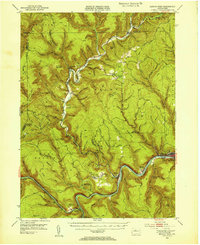 1946 Renovo West1953 Print · USGSClinton County's river valleys and ridgelines come alive in this mid-century survey of the Pennsylvania wilds. Trace the industrial footprint of the Pennsylvania RR through Renovo or find family history at Laurel Hill Cem and Summerson Cem.9 unique versions available
Showing maps 1-25 of 223
Top cities of Clinton County
- Lock Haven historical maps
- Mill Hall historical maps
- Avis historical maps
- Flemington historical maps
- Castanea Township historical maps
- Beech Creek historical maps
See more
Frequently asked questions
- What are the different types of historical maps available for Clinton County?
- What is the oldest map of Clinton County?
- Where can I purchase historical maps of Clinton County for my home or office?
- Where can I download high-res historical maps of Clinton County?
- Are there historical topographic maps available for Clinton County?
- Is there historical aerial imagery available for Clinton County?
- Where are historical maps of Clinton County sourced from?