Old Maps of Cold Spring Township, Pennsylvania for Genealogy
Trace your family roots with 49 historic maps of Cold Spring Township. These high-res maps reveal old neighborhoods, homesites, landmarks, and streets — helping you uncover where your ancestors lived and how the area evolved over time.
- Explore historic neighborhoods: Identify where your relatives may have lived in the 1800s or 1900s.
- Compare maps over time: Trace the changes in streets, buildings, and landmarks for multi-generational research.
- Perfect for genealogy & ancestry research: Used by family historians and researchers to map out lineage and migration.
These maps are an incredible resource for exploring your personal connection to Cold Spring Township's past.
Cold Spring Township, PA maps
(49)- 1892 Map of Lykens
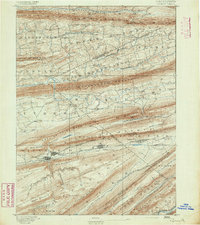 1892 Lykens1892 Print · USGSDauphin and Schuylkill counties are shown here in the late nineteenth century as the coal and rail industries shaped the valley floors. Genealogists can trace family roots in mining centers like Williamstown and Lykens or agricultural hamlets such as Rough and Ready.2 unique versions available
 - 1892 Map of Hummelstown
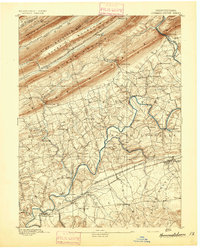 1892 Hummelstown1892 Print · USGSDauphin and Lebanon Counties were defined by a series of prominent mountain ridges and gap-dependent rail lines in the 1890s. Genealogists can trace family settlements from Hummelstown to Annville, locating landmarks like Walmers Church and Union Deposit.10 unique versions available
 - 1893 Map of Lykens
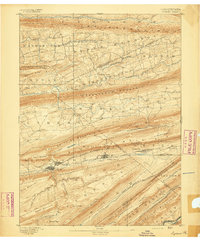 1893 Lykens1893 Print · USGSThe anthracite coal region of central Pennsylvania comes to life in the late nineteenth century, showing a landscape defined by mountain ridges and mining railways. Local historians can trace the early industrial footprints of Williamstown and Lykens or find rural homesteads near Klingerstown and Leck Kill.7 unique versions available
 - 1924 Map of Hummelstown
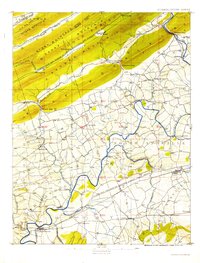 1924 Hummelstown1924 Print · USGSDauphin and Lebanon Counties in the mid-twenties show a landscape defined by mountain gaps and the reach of the Philadelphia and Reading Railroad. Researchers can trace historic church sites like Walmers Church, early industries at Union Waterworks, and vanished rail stops like Cold Spring.
 - 1943 Map of Lykens
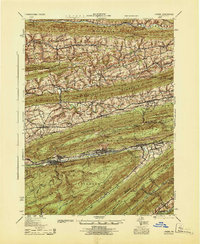 1943 Lykens1943 Print · USGSDauphin and Schuylkill counties are shown in the 1940s as a high-density corridor of anthracite coal production and valley farming. Genealogists and industrial historians can trace the Reading rail lines connecting Williamstown to an Abandoned Colliery and rural landmarks like Himmels Ch.
 - 1943 Map of Hummelstown
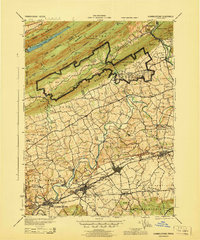 1943 Hummelstown1943 Print · USGSDauphin and Lebanon counties appear here during the Second World War as military and industrial growth transformed the countryside. Researchers can trace family landmarks and rural infrastructure, from Moonshine Ch and Union Deposit to the Hershey Zoo.
 - 1947 Map of Lykens
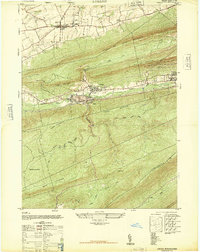 1947 Lykens1947 Print · USGSDauphin County’s northern coal valleys are captured here in the late 1940s, showing the industrial pulse of the region between massive mountain ridges. Researchers can trace the rail spurs of the Reading line and locate landmarks like the Anthracite Plant, Salladas School, and the County Fair Grounds.3 unique versions available
 - 1947 Map of Tower City
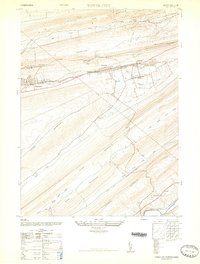 1947 Tower City1947 Print · USGSThe anthracite coal valleys of Schuylkill and Dauphin Counties are captured here in the late 1940s. Genealogists and historians can trace family locations in Tower City and Williamstown, or locate landmarks like the Porter Township High School and the Union Church.3 unique versions available
 - 1947 Map of Manada Gap
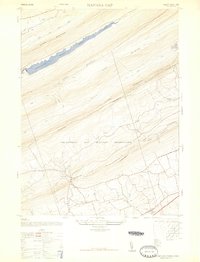 1947 Manada Gap1947 Print · USGSDauphin County’s mountainous ridges were still adjusting to a heavy military and industrial footprint just after the war. You can trace the legacy of the local iron industry at Manada Furnace or locate family roots at the Grantville School and Manada Furnace Church.3 unique versions available
 - 1947 Map of Indiantown Gap
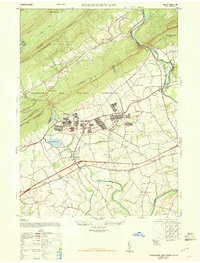 1947 Indiantown Gap1947 Print · USGSLebanon County is shown during a period of significant military and civic expansion in the late 1940s. Genealogists and historians can trace the foundations of Indiantown Gap alongside local landmarks like Moonshine Church and the newly built State Memorial Lake.2 unique versions available
 - 1950 Map of Harrisburg, 1952 Print
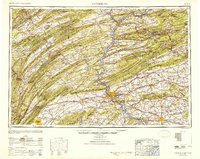 1950 Harrisburg1952 Print · USGSMid-century Central Pennsylvania comes alive through its dense rail networks and river valley settlements during the post-war industrial era. Genealogists and historians can trace family roots through hubs like Harrisburg, locate Carlisle Barracks, or follow the Pennsylvania RR through the Lebanon Valley.
 - 1955 Map of Lykens, 1958 Print
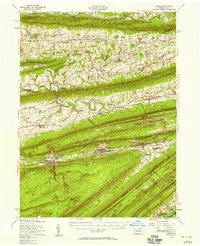 1955 Lykens1958 Print · USGSThe anthracite coal valleys of Dauphin and Schuylkill counties are shown here in the mid-1950s, a time of transition for the region's industrial landscape. Genealogists can trace family roots through numerous country landmarks like Himmels Ch, Kissingers Sch, and the Pitman Post Office.2 unique versions available
 - 1956 Map of Hummelstown, 1958 Print
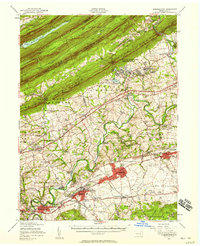 1956 Hummelstown1958 Print · USGSDauphin and Lebanon Counties are shown in the mid-1950s as the chocolate industry and military training shaped the local landscape. Genealogists and historians can trace family roots through labeled landmarks like Balsbaugh Ch, Harper Tavern, and the Manada Furnace.3 unique versions available
 - 1957 Map of Harrisburg
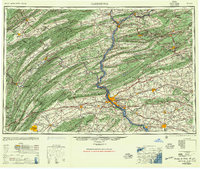 1957 Harrisburg1957 Print · USGSMid-century Central Pennsylvania comes into focus as a bustling network of rail, river, and mountain ridges. Genealogists and historians can trace the development of the State Capitol and surrounding hubs like Middletown, Columbia, and Pottsville.7 unique versions available
 - 1961 Map of Harrisburg
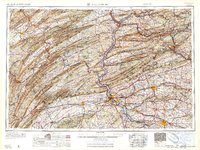 1961 Harrisburg1961 Print · USGSCentral Pennsylvania is shown at a mid-century peak of industrial and military activity, from the Susquehanna water gaps to the fertile Dutch Country. Genealogists and historians can trace the rail corridors of the Pennsylvania RR and find landmarks like Carlisle Barracks or the Anthracite Coal Fields.2 unique versions available
 - 1964 Map of Harrisburg
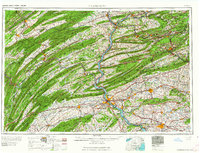 1964 Harrisburg1964 Print · USGSCentral Pennsylvania in the mid-fifties reveals a landscape shaped by ridge-and-valley geology and critical Cold War infrastructure. Researchers can trace the massive Indiantown Gap Military Reservation or the rail corridors of the Pennsylvania RR and Reading RR.
 - 1968 Map of Tower City
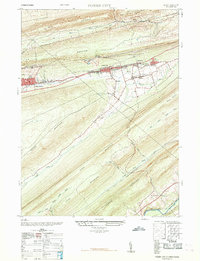 1968 Tower City1968 Print · USGSThe anthracite region's industrial footprint is on full display here in the late sixties, where valley towns are hemmed in by massive mountain ridges. Genealogists and historians can trace the foundations of Tower City and Williamstown alongside an Abandoned Coal Breaker and several local schools.
 - 1969 Map of Indiantown Gap, 1972 Print
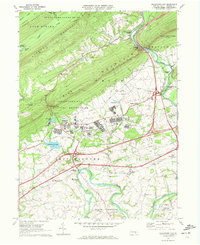 1969 Indiantown Gap1972 Print · USGSLebanon County at the close of the 1960s reveals a landscape where military training grounds and mountain trails meet historic canal towns. Researchers can trace the Union Canal, find local landmarks like Moonshine Ch, or explore the development of Indiantown Gap Military Reservation.2 unique versions available
 - 1969 Map of Lykens, 1972 Print
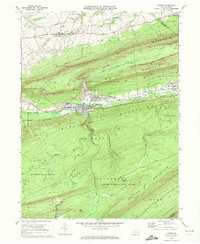 1969 Lykens1972 Print · USGSDauphin County coal country comes into sharp focus during the late sixties as industry and local recreation overlap. Researchers can trace the Penn Central rail corridor and find family sites at Fairview Cem or the Williams Valley Sch.4 unique versions available
 - 1969 Map of Tower City, 1972 Print
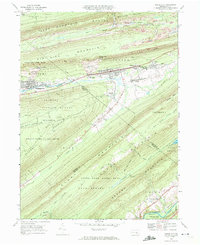 1969 Tower City1972 Print · USGSSchuylkill and Dauphin counties show a sharp contrast between coal-mining towns and deep mountain forests in the late sixties. Trace the rail-and-road corridor through Tower City and Williamstown or find the remote paths of the Appalachian Trail and Bendigo Airfield.4 unique versions available
 - 1969 Map of Grantville, 1972 Print
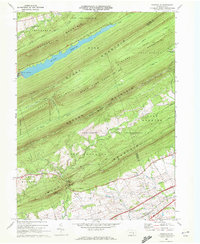 1969 Grantville1972 Print · USGSDauphin County’s ridge-and-valley terrain is captured here in the late sixties, showcasing a landscape defined by military reservations and mountain gaps. Genealogists and hikers can trace the Appalachian Trail across Sharp Mountain or locate family roots near St Pauls Cem and the village of Grantville.6 unique versions available
 - 1977 Map of Tower City, 1979 Print
 1977 Tower City1979 Print · USGSThe western Schuylkill County coal region is seen here in the late seventies, showing how the dramatic mountain ridges shaped local life. Genealogists and local historians can trace the clear street grids and valley footprints of Tower City, Orwin, and Muir.
 - 1977 Map of Indiantown Gap, 1979 Print
 1977 Indiantown Gap1979 Print · USGSLebanon County's landscape in the late seventies reveals the intersection of mountain ridges and valley farming. Trace the early layout of Indiantown Gap and local crossroads like Harper Tavern and Lickdale.
 - 1984 Map of Harrisburg, 1985 Print
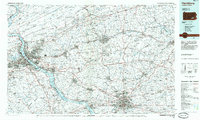 1984 Harrisburg1985 Print · USGSCentral Pennsylvania in the mid-eighties shows a landscape defined by the winding Susquehanna River and the industrial growth of its river towns. Researchers can trace the rail corridors of Amtrak and Conrail or explore the bounds of Fort Indiantown Gap Military Reservation.2 unique versions available
 - 1984 Map of Sunbury, 1985 Print
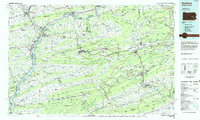 1984 Sunbury1985 Print · USGSPennsylvania coal country and the Susquehanna valley appear here in the early eighties, showcasing a landscape defined by industrial ridges and river towns. Genealogists and historians can trace rail corridors like Conrail and explore mountain settlements from Mahanoy City to Elizabethville.2 unique versions available
Showing maps 1-25 of 49
Top cities near Cold Spring Township
- Lebanon historical maps
- Colonial Park historical maps
- Hershey historical maps
- Palmyra historical maps
- Linglestown historical maps
- North Cornwall historical maps
See more
Top neighborhoods of Cold Spring Township
Frequently asked questions
- What are the different types of historical maps available for Cold Spring Township?
- What is the oldest map of Cold Spring Township?
- Where can I purchase historical maps of Cold Spring Township for my home or office?
- Where can I download high-res historical maps of Cold Spring Township?
- Are there historical topographic maps available for Cold Spring Township?
- Is there historical aerial imagery available for Cold Spring Township?
- Where are historical maps of Cold Spring Township sourced from?