1950s Maps of Groton Township, South Dakota
Explore 10 historic maps of Groton Township from the 1950s. These maps offer a rare glimpse into what life looked like during the 1950s — showing old roads, neighborhoods, homes, and landmarks that have changed or disappeared over time.
Whether you're researching your family's past, planning a metal detecting trip, or studying how Groton Township's landscape evolved across the 1950s, these high-resolution maps are a powerful tool for exploring the history of this region.
- Focus on a specific era: All maps on this page are from the 1950s, giving you a focused view of this time period.
- See what’s changed: Compare century-old streets, trails, and buildings to today's modern landscape using overlays and satellite layers.
- Research with precision: Use these maps for genealogy, historical research, land use analysis, or educational projects.
- View, download, or print: Maps are fully viewable online in high resolution, and can be downloaded or printed for your own records.
Start exploring Groton Township's history through authentic maps from the 1950s. This is your window into the past.
Groton Township, SD maps
(10)- 1952 Map of Huffton, 1954 Print
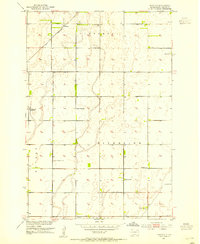 1952 Huffton1954 Print · USGSBrown County's rural townships and rail-side settlements are captured here in the early fifties during a period of infrastructure transition. Researchers can locate the Great Northern rail line and several country schools like Happy Hour Sch and the Washington Sch (Abandoned).
 - 1952 Map of Putney, 1954 Print
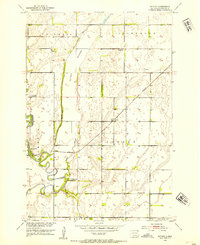 1952 Putney1954 Print · USGSBrown County's rural townships and the meandering James River are captured here in the early fifties. Genealogists and local historians can trace schoolhouse sites like Riverside Sch and the rail-side community of Putney along the Great Northern line.
 - 1953 Map of Milbank, 1958 Print
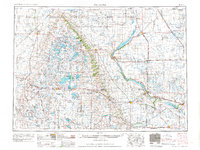 1953 Milbank1958 Print · USGSThe tri-state border region of South Dakota, North Dakota, and Minnesota is shown here during the early fifties, a landscape defined by glacial lakes and the Sisseton Indian Reservation. Researchers can trace the legacy of the western railroads, locating old stops along the Great Northern and settlements like Milbank, Webster, and Sisseton.3 unique versions available
 - 1954 Map of Groton, 1955 Print
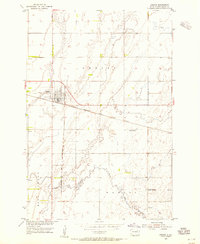 1954 Groton1955 Print · USGSGroton and the surrounding South Dakota prairie are shown in the mid-fifties as a vital rail junction and farming center. Genealogists and local historians can trace rural landmarks like the Prairie Side Sch, the Groton Cem, and the path of Mud Creek.2 unique versions available
 - 1954 Map of James, 1955 Print
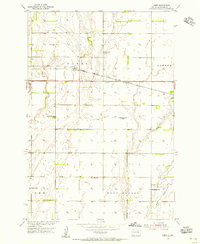 1954 James1955 Print · USGSBrown County's prairie landscape was dotted with family-named schoolhouses and rail sidings during the mid-1950s. Genealogists and local historians can trace specific community hubs like James, the Joan of Arc Sch, and the James Cemetery.2 unique versions available
 - 1954 Map of Aberdeen, 1964 Print
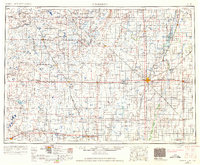 1954 Aberdeen1964 Print · USGSNortheastern South Dakota in the mid-fifties remains a world of rail-dependent prairie towns and sweeping waterfowl refuges. Genealogists can trace family roots through settlements like Eureka and Ipswich or locate rural landmarks near Richmond Lake.2 unique versions available
 - 1956 Map of Aberdeen
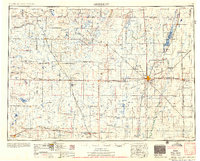 1956 Aberdeen1956 Print · USGSUpper South Dakota during the mid-fifties remains a landscape of rail-connected farming towns and expansive glacial lake basins. Genealogists and historians can trace the paths of the Minneapolis and St Louis railroad through Gettysburg or locate vanished stops near Elm Lake and Richmond Lake.
 - 1958 Map of Milbank
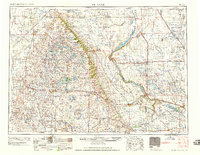 1958 Milbank1958 Print · USGSThe northern Great Plains in the late fifties show a landscape of glacial lakes and reservation lands shaped by the Great Northern railroad. Genealogists and local historians can trace the grid of settlements from Britton to Milbank and locate landmarks like Enemy Swim Lake and the Sisseton Indian Reservation.
 - 1958 Map of Andover, 1960 Print
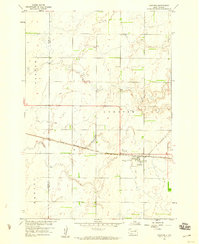 1958 Andover1960 Print · USGSAndover was a vital railroad hub in Day County during the late 1950s, centered on the Chicago Milwaukee St Paul and Pacific line. Genealogists can trace local roots at Andover Cem and All Saints Cem or locate the old Gravel Pit.2 unique versions available
 - 1958 Map of Langford SW, 1960 Print
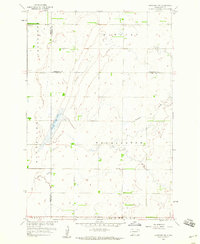 1958 Langford SW1960 Print · USGSNortheastern South Dakota's glacial landscape is captured in the late 1950s where Brown, Marshall, and Day Counties meet. Researchers can locate the Augustana Cem, the central Town Hall, and water features like Antelope Creek.2 unique versions available
End of results
Showing maps 1-10 of 10
Top cities near Groton Township
- Groton historical maps
- Claremont historical maps
- Pierpont historical maps
- Hutterville Colony historical maps
- Andover historical maps
- Putney historical maps
See more
Top neighborhoods of Groton Township
Frequently asked questions
- What are the different types of historical maps available for Groton Township?
- What is the oldest map of Groton Township?
- Where can I purchase historical maps of Groton Township for my home or office?
- Where can I download high-res historical maps of Groton Township?
- Are there historical topographic maps available for Groton Township?
- Is there historical aerial imagery available for Groton Township?
- Where are historical maps of Groton Township sourced from?