Old Maps of Portage Township, South Dakota for Academic Research
Study the evolution of Portage Township with 30 high-resolution historic maps. Whether you're teaching, researching, or modeling changes in land use, these maps provide essential visual documentation of urban, environmental, and geographic change.
- Analyze long-term change: Track patterns in development, transportation, and natural features.
- Ideal for environmental or urban studies: Support academic projects with primary historical map data.
- Use in the classroom or lab: Educators and researchers rely on these maps to bring historical context to life.
These maps are a powerful tool for teaching, research, and visualizing how Portage Township has changed over the decades.
Portage Township, SD maps
(30)- 1894 Map of Hecla
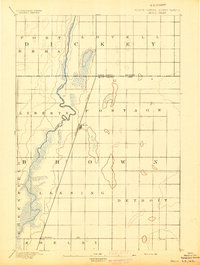 1894 Hecla1894 Print · USGSThe northern Dakota plains are captured here in the 1890s as the rail and river determined the pulse of new settlements. Genealogists and historians can trace the early township grids and rail stops like Hecla, Houghton, and the frontier hamlet of Detroit.4 unique versions available
 - 1896 Map of Columbia
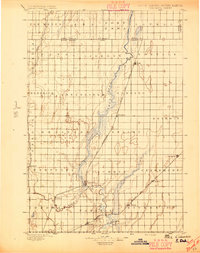 1896 Columbia1896 Print · USGSSettlement along the upper James River valley flourished in the 1890s as railroads expanded through the Dakota Territory. Trace the rail-fed growth of Columbia and Hecla alongside the waters of Sand Lake and Lake Columbia.3 unique versions available
 - 1953 Map of Hecla SE, 1955 Print
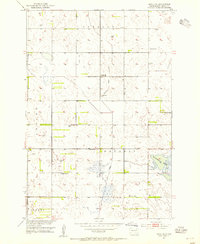 1953 Hecla SE1955 Print · USGSBrown County's rural prairie landscape is captured here in the early fifties, a time when drainage ditches and artesian wells defined local agriculture. Researchers can locate the Detroit Cem, the Landing Field, and several country schools like Heipemann Sch.2 unique versions available
 - 1953 Map of Newark SW, 1955 Print
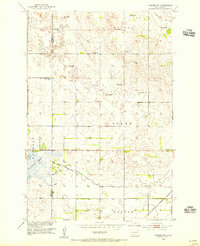 1953 Newark SW1955 Print · USGSThe borderlands of Marshall and Brown Counties are captured here in the mid-1950s, showing a landscape shaped by water management and rail. Researchers can locate the Great Northern tracks, the rural School No 3, and hydrology like Flowing Well.
 - 1953 Map of Milbank, 1958 Print
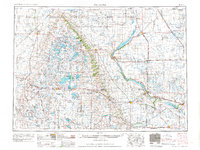 1953 Milbank1958 Print · USGSThe tri-state border region of South Dakota, North Dakota, and Minnesota is shown here during the early fifties, a landscape defined by glacial lakes and the Sisseton Indian Reservation. Researchers can trace the legacy of the western railroads, locating old stops along the Great Northern and settlements like Milbank, Webster, and Sisseton.3 unique versions available
 - 1954 Map of Aberdeen, 1964 Print
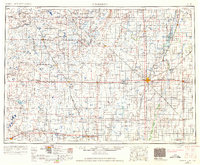 1954 Aberdeen1964 Print · USGSNortheastern South Dakota in the mid-fifties remains a world of rail-dependent prairie towns and sweeping waterfowl refuges. Genealogists can trace family roots through settlements like Eureka and Ipswich or locate rural landmarks near Richmond Lake.2 unique versions available
 - 1956 Map of Aberdeen
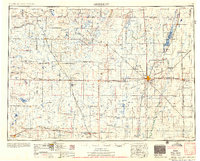 1956 Aberdeen1956 Print · USGSUpper South Dakota during the mid-fifties remains a landscape of rail-connected farming towns and expansive glacial lake basins. Genealogists and historians can trace the paths of the Minneapolis and St Louis railroad through Gettysburg or locate vanished stops near Elm Lake and Richmond Lake.
 - 1956 Map of Newark NW, 1957 Print
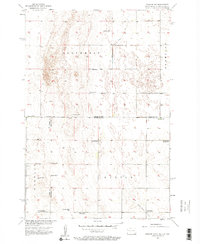 1956 Newark NW1957 Print · USGSThe North Dakota and South Dakota borderlands remained a quiet agricultural frontier in the mid-fifties, dominated by isolated farmsteads and township grids. Genealogists can trace the shift in rural education through sites like School No 1 and several others marked School No 4 (Abandoned) or School No 2 (Abandoned).2 unique versions available
 - 1956 Map of Hecla NE, 1957 Print
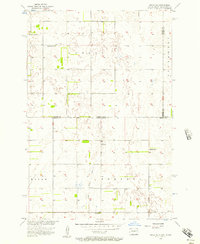 1956 Hecla NE1957 Print · USGSThe Dakota state line in the mid-1950s reveals a sprawling agricultural landscape defined by its rural school districts and township boundaries. Genealogists can trace family homesteads near landmarks like Eaton Sch No 2, Tiry Sch, and the Flowing Well.3 unique versions available
 - 1958 Map of Milbank
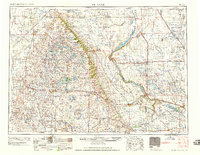 1958 Milbank1958 Print · USGSThe northern Great Plains in the late fifties show a landscape of glacial lakes and reservation lands shaped by the Great Northern railroad. Genealogists and local historians can trace the grid of settlements from Britton to Milbank and locate landmarks like Enemy Swim Lake and the Sisseton Indian Reservation.
 - 1979 Map of Sisseton, 1980 Print
 1979 Sisseton1980 Print · USGSNortheastern South Dakota and the North Dakota borderlands appear here in the late seventies, centered on the high glacial plateau. Genealogists and historians can trace the Sisseton Indian Reservation and rail-stop towns like Britton and Lake City.
 - 1985 Map of Elm River
 1985 Elm River1985 Print · USGSSpanning the state line during the mid-eighties, this area shows a landscape of river-fed reservoirs and agricultural colonies. Genealogists and historians can locate communal settlements like Spring Creek Colony and rail stops along the Burlington Northern Railroad or the Chicago and North Western Railroad.2 unique versions available
 - 2011 Map of Newark NW, 2011 Print
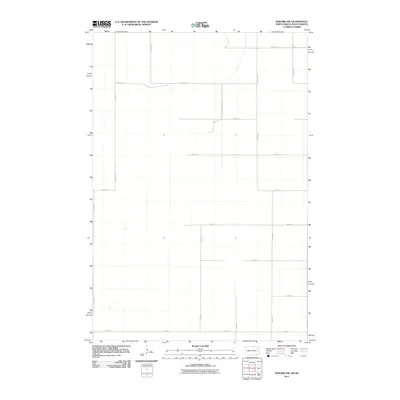 2011 Newark NW2011 Print · USGSBrampton Township and the surrounding prairie lands are captured here at the start of the 2010s, showing the precise grid of the northern plains. Researchers can trace rural property lines and access routes like 100th St SE, 115th Ave SE, and 416th Ave.
 - 2011 Map of Hecla NE, 2011 Print
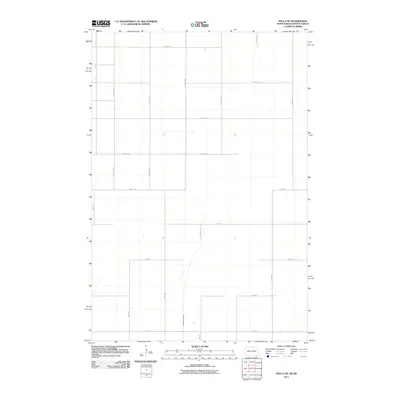 2011 Hecla NE2011 Print · USGSPortage Township at the turn of the twenty-first century shows a landscape entirely defined by its agricultural grid along the state line. Researchers can trace the drainage patterns of the Portage Detroit Ditch and the precise section lines of 100th St SE and 408th Ave.
 - 2012 Map of Newark SW, 2012 Print
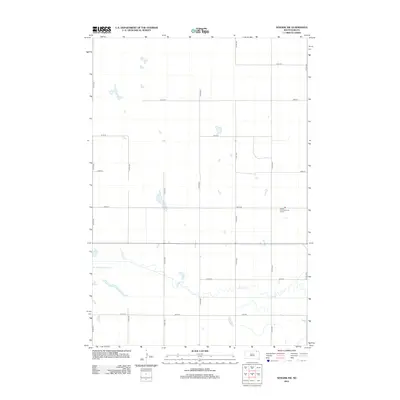 2012 Newark SW2012 Print · USGSPortage Township at the start of the 2010s shows a landscape of precision-gridded section roads and prairie wetlands. Local researchers can trace the agricultural footprint of the Sunset Farmers Co-op Colony and the meandering drainage of Crow Cr.
 - 2012 Map of Hecla SE, 2012 Print
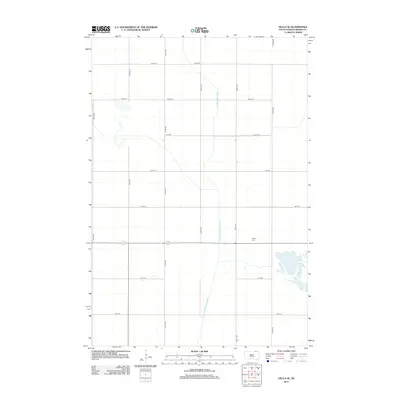 2012 Hecla SE2012 Print · USGSThe rural grid of Brown County is laid out in precise detail during this 2012 survey of South Dakota's northern plains. Researchers and genealogists can pinpoint the exact location of the Detroit Cem and trace the paths of water management projects like the Crow Creek Drainage Ditch.
 - 2014 Map of Hecla NE, 2014 Print
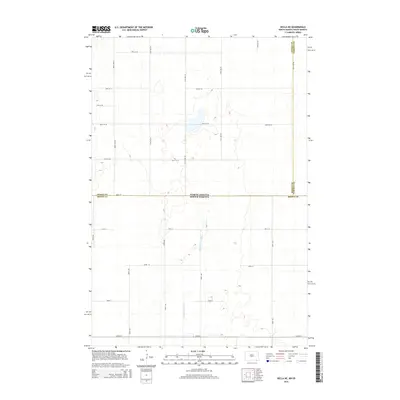 2014 Hecla NE2014 Print · USGSThe northern plains at the Dakota border appear as a vast grid of section-line roads and prairie wetlands in this mid-2010s survey. Researchers can trace the path of the Portage Detroit Ditch as it crosses from Dickey Co into Brown Co.
 - 2014 Map of Newark NW, 2014 Print
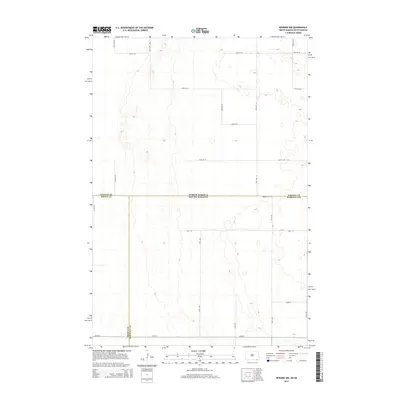 2014 Newark NW2014 Print · USGSCrossing the state line into the northern plains during the early 2000s, this area shows the intersection of several counties in a remote agricultural landscape. Genealogists and historians can trace the exact section lines and rural routes like 104th St, 120th Ave SE, and the boundary of Sargent Co.
 - 2015 Map of Newark SW, 2015 Print
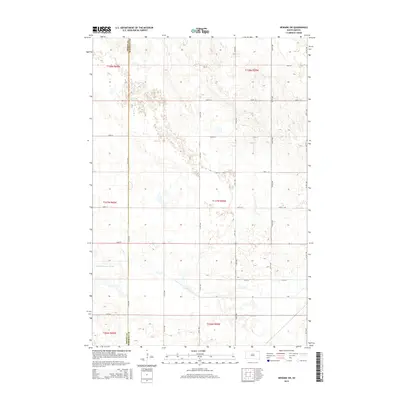 2015 Newark SW2015 Print · USGSThe wetlands of the South Dakota prairie are captured here in the mid-2010s, where the county line separates agricultural tracts. Researchers can trace the drainage patterns of Renzienhausen Slough and the rural road grid near Crow Cr.
 - 2015 Map of Hecla SE, 2015 Print
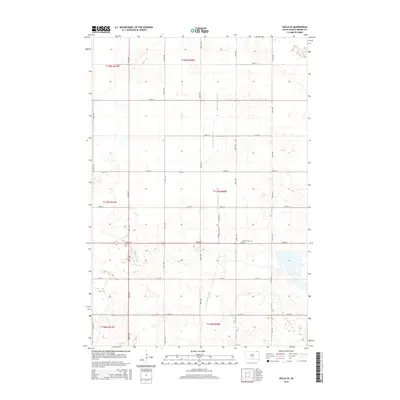 2015 Hecla SE2015 Print · USGSAgricultural Brown County is captured here in the mid-2010s, showcasing a landscape of section-line roads and prairie water management. Genealogists and local historians can locate the Detroit Cem and trace the paths of the Crow Cr Drainage Ditch and Portage Detroit Ditch.
 - 2017 Map of Hecla SE, 2017 Print
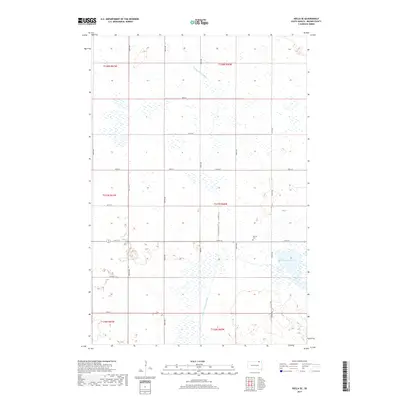 2017 Hecla SE2017 Print · USGSBrown County’s rural townships are documented in this 2017 survey, showing the enduring agricultural layout of the South Dakota prairie. Genealogists can locate the Detroit Cem and the settlement of Detroit, or trace drainage features like the Portage Detroit Ditch.
 - 2017 Map of Newark SW, 2017 Print
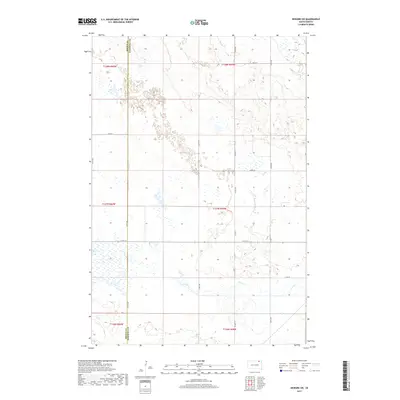 2017 Newark SW2017 Print · USGSPortage Township in the mid-2010s is defined by its rural grid and extensive glacial wetlands along the Brown Co Marshall Co line. Researchers can trace land ownership across the prairie via Co Hwy 11 and the winding course of Crow Cr.
 - 2018 Map of Hecla NE, 2018 Print
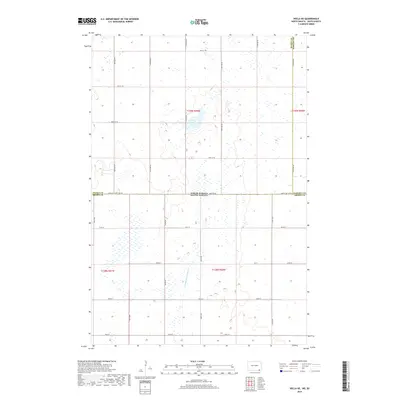 2018 Hecla NE2018 Print · USGSThe borderlands of the Dakotas appear here in the early twenty-first century, showing a landscape defined by industrial-scale drainage and section-line roads. Trace the path of the Portage Detroit Ditch and the exact path of 100th St State Line Rd.
 - 2018 Map of Newark NW, 2018 Print
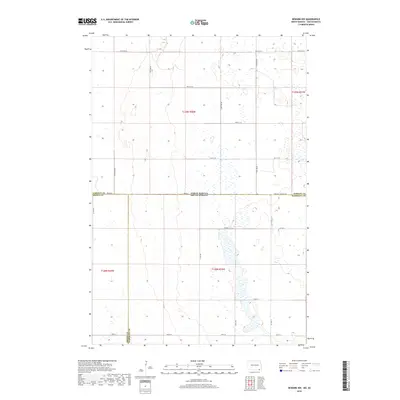 2018 Newark NW2018 Print · USGSThe North Dakota and South Dakota borderlands are captured here in the late twenty-teens, showing a landscape of prairie potholes and seasonal wetlands. Genealogists and historians can trace the precise meeting of four counties along Co Hwy 11 and 100th St.
 - 2020 Map of Hecla NE, 2020 Print
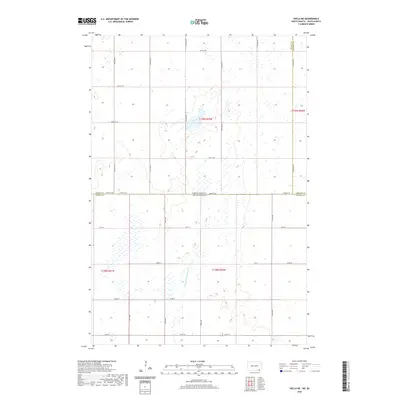 2020 Hecla NE2020 Print · USGSThe North Dakota and South Dakota borderlands are captured here in the early twenty-first century, showing a landscape defined by industrial-scale agriculture and water management. Researchers can trace the path of Portage Detroit Ditch and the intersection of Dickey, Sargent, and Brown counties.
Showing maps 1-25 of 30
Top cities near Portage Township
- Hecla historical maps
- Clement Township historical maps
- Claremont historical maps
- Brampton Township historical maps
- Ludden historical maps
Frequently asked questions
- What are the different types of historical maps available for Portage Township?
- What is the oldest map of Portage Township?
- Where can I purchase historical maps of Portage Township for my home or office?
- Where can I download high-res historical maps of Portage Township?
- Are there historical topographic maps available for Portage Township?
- Is there historical aerial imagery available for Portage Township?
- Where are historical maps of Portage Township sourced from?