Old Maps of Hawkins County, Tennessee for Hiking & Exploration
Hike through history with 172 historic maps of Hawkins County. Explore old trails, ghost towns, and forgotten backroads — perfect for outdoor adventurers and local explorers.
- Rediscover forgotten places: Map out old mining camps, roads, and footpaths that no longer exist on modern maps.
- Layer with modern tools: Combine with LiDAR or satellite views to plan hikes through historical terrain.
- Made for exploration: Popular among hikers, overlanders, and local history lovers.
Use these maps to find adventure and explore the hidden past of Hawkins County.
Hawkins County, TN maps
(172)- 1883 Map of Morristown
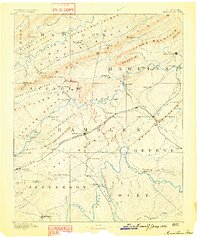 1883 Morristown1883 Print · USGSEast Tennessee in the 1880s is defined by the convergence of mountain ridges and the vital rail corridor through Morristown. Researchers can trace the early industrial landscape of the region through landmarks like Witt's Foundry, Tate's Springs, and the historic Bean's Station.
 - 1887 Map of Jonesville
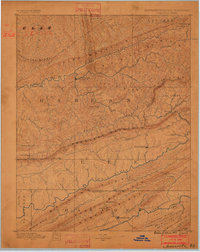 1887 Jonesville1887 Print · USGSThe rugged borderlands of Virginia, Kentucky, and Tennessee are captured in the late nineteenth century during a time of isolated valley settlements. Genealogists and historians can trace family locations near Jonesville, Sneedville, and the remote Kyle's Ford along the Powell River.
 - 1891 Map of Jonesville
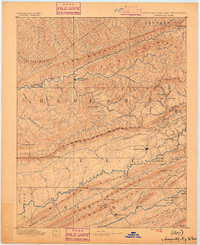 1891 Jonesville1891 Print · USGSThe tri-state borderlands of Virginia, Kentucky, and Tennessee are captured here in the late nineteenth century. Researchers can trace early river crossings and mountain settlements like Poteet Ford, Shafers P.O., and Mt Pleasant.9 unique versions available
 - 1892 Map of Greeneville
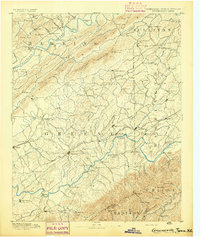 1892 Greeneville1892 Print · USGSEast Tennessee in the late nineteenth century was a landscape of river-crossing ferries and mountain gaps centered on Greeneville. Genealogists and historians can trace the early rail corridor of the East Tennessee Virginia and Georgia R. R. and locate family-named sites like Britton Ferry and Evans X Rds.
 - 1893 Map of Morristown
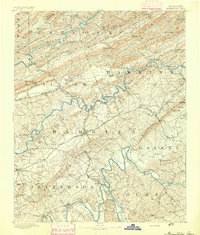 1893 Morristown1893 Print · USGSEast Tennessee in the 1890s was a landscape of deep mountain ridges and vital rail junctions centered around Morristown. Researchers can trace the nineteenth-century river economy through numerous crossings like Cloud Ferry and find early industry at Lotspeachy Mill.
 - 1894 Map of Estillville, 1909 Print
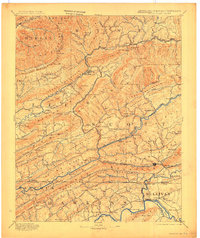 1894 Estillville1909 Print · USGSThe Appalachian highlands at the turn of the century show a landscape of isolated mountain hollows and emerging rail hubs. Genealogists can trace family footprints across river crossings like Speer Ferry and vanished industry at Zion Mills or Brick Store.3 unique versions available
 - 1895 Map of Morristown
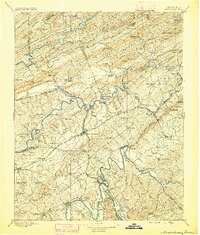 1895 Morristown1895 Print · USGSThe East Tennessee ridge-and-valley country comes alive in the late nineteenth century as a hub of rail and river transit. Trace the routes of old Evans Ferry or locate vanished stops along the Southern R.R. near Morristown and Bull Gap.5 unique versions available
 - 1896 Map of Greeneville
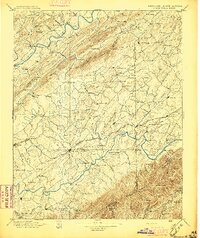 1896 Greeneville1896 Print · USGSUpper East Tennessee thrives in the late nineteenth century as a hub of rail travel and river commerce centered around the county seat. Genealogists can trace family roots through numerous crossroads and post offices like Chissolms P. O., Hawes X Roads, and Britton Ferry.2 unique versions available
 - 1904 Map of Greeneville
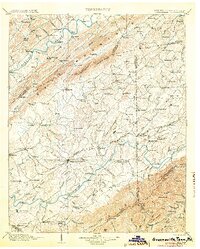 1904 Greeneville1904 Print · USGSEast Tennessee at the turn of the century reveals a land of ridge-valley farms and early educational centers. Genealogists can trace family roots through historic settlements like Surgoinsville, early institutions like Washington College, and landmarks such as Bashors Mill.4 unique versions available
 - 1935 Map of Surgoinsville
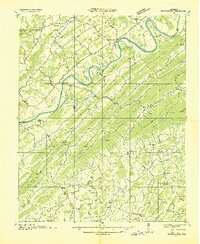 1935 Surgoinsville1935 Print · USGSHawkins and Greene counties are shown in the mid-1930s as the Tennessee Valley Authority began documenting the Holston River corridor. Genealogists can trace early homesteads and landmarks like Hennard Mill, Alumwell Academy, and Beech Creek Cem among the numerous mountain hollows.
 - 1935 Map of Baileyton
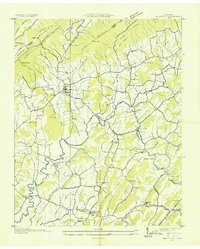 1935 Baileyton1935 Print · USGSNortheastern Tennessee in the mid-1930s shows a landscape of small farming hamlets and mountain gaps. Genealogists can trace family names at Babbs Mill, Dotys Chapel, and scattered schoolhouses like Cross Anchor Sch and Piney Grove Sch.
 - 1935 Map of Lovelace
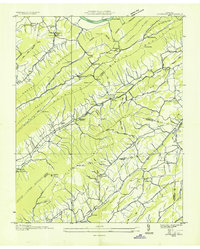 1935 Lovelace1935 Print · USGSHawkins and Sullivan counties are captured here in the mid-thirties, showing a landscape of ridge-top beacons and creek-side mills. Researchers can trace rural family life through landmarks like Dykes Mill, Mountain View Sch, and the Airway Beacon atop the peaks.
 - 1935 Map of Moggasin
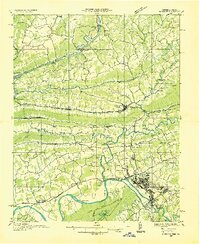 1935 Moggasin1935 Print · USGSThe Virginia-Tennessee borderlands appear here in the mid-1930s, showing the early industrial growth of Kingsport and Gate City. Trace family roots at Wolfe Cem or locate old mills like Speers Ferry Mill along the Clinch River.
 - 1935 Map of Rogersville
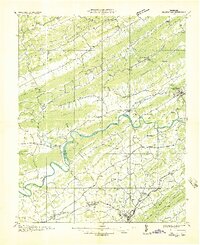 1935 Rogersville1935 Print · USGSHawkins and Greene Counties come alive in the mid-1930s, showing a landscape of ridge-top schools and river-bottom farms. Genealogists can trace family footprints near Pressmans Home, Bulls Gap, and local centers like Macedonia Ch.
 - 1935 Map of Tate Springs
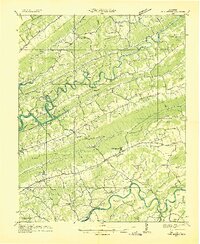 1935 Tate Springs1935 Print · USGSThe river valleys of Grainger County are captured here in the mid-1930s as the Tennessee Valley Authority began planning the reservoir. Trace family history through local landmarks like Lawson Mill, Swan Island Ferry, and the community at Tate Springs.
 - 1935 Map of Kyles Ford
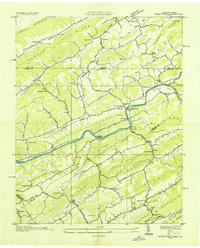 1935 Kyles Ford1935 Print · USGSHancock County and the Clinch River are captured in the mid-1930s, documenting a time when river fords and mountain gaps defined travel. Researchers can locate remote schools and cemeteries like Wallens Bend Sch, BLEDSOE CEM, and the settlement at Eidson.
 - 1935 Map of Looneys Gap
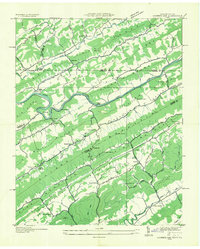 1935 Looneys Gap1935 Print · USGSNortheast Tennessee and Southwest Virginia are captured here in the mid-1930s, showing a landscape of river-bottom farms and ridge-top gaps. Researchers can locate vanished landmarks like Donald Mill, Tignors Ford, and the old Snow Flake settlement.
 - 1935 Map of Lee Valley
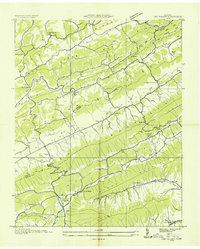 1935 Lee Valley1935 Print · USGSThe Clinch Mountain ridges of Hancock and Hawkins counties come into focus during the mid-thirties, showing a landscape defined by mountain gaps and valley farming. Genealogists can locate family landmarks like Murrell Town, Trents, and Gills Chapel tucked among the steep slopes.
 - 1935 Map of McCloud
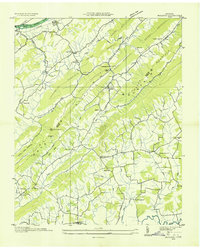 1935 McCloud1935 Print · USGSThe rural borderlands of Hawkins and Greene counties are captured here in the mid-1930s, showing a landscape defined by ridges and creek-side settlements. Genealogists can locate family-named sites like Butcher Valley, Kite Cem, and several local schools including Grigsby Sch.
 - 1935 Map of Kingsport
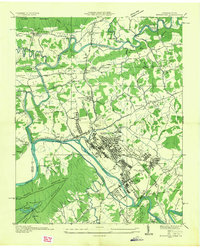 1935 Kingsport1935 Print · USGSKingsport and the surrounding Holston River valley are captured in the mid-thirties as industrial growth began to reshape the landscape. Researchers can locate community anchors like CCC Camp 2427, Sensabaugh Tunnel, and the sprawling Eastman complex.
 - 1935 Map of Burem
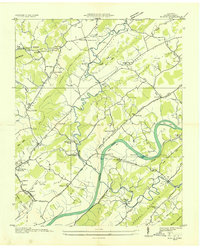 1935 Burem1935 Print · USGSHawkins County is captured here in the mid-1930s, showing a river-valley landscape shaped by the Holston River and Southern Railway. Genealogists can trace family roots through numerous local landmarks like Alumwell Academy, Hennard Mill, and Yellow Store.
 - 1935 Map of Swan Island
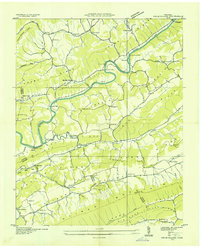 1935 Swan Island1935 Print · USGSHancock County life in the mid-1930s was defined by the ridges and the river, showing a landscape of small farms and vital ferry crossings. Researchers can trace ancestral footprints at Leffew Store, Ida Chapel, and the river landings at Swan Island Ferry.
 - 1935 Map of Russellville
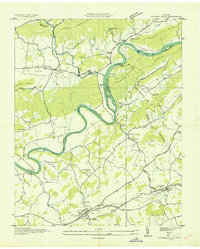 1935 Russellville1935 Print · USGSThe Holston River valley in the mid-1930s reveals a landscape of river ferries, mineral springs, and rail-side towns. Genealogists and local historians can trace the foundations of Russellville, Whitesburg, and Mooresburg, along with rural landmarks like Kings Mill and Bright Ferry.
 - 1935 Map of Stonypoint
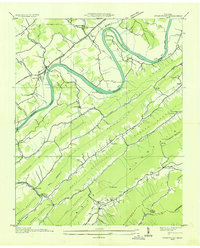 1935 Stonypoint1935 Print · USGSHawkins and Greene counties in the mid-1930s are captured here as the Tennessee Valley Authority began its regional transformation. Researchers can trace ancestral lands near Surgoinsville, locate old schools like Maxwell Academy, or find the County Ferry crossing the Holston River.
 - 1935 Map of Plum Grove
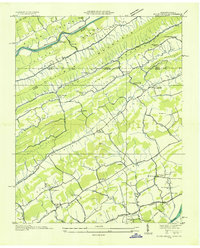 1935 Plum Grove1935 Print · USGSCrossing the Tennessee and Virginia border in the mid-1930s, this survey documents the ridge-and-valley settlements of Hawkins and Scott counties. Genealogists can locate family-named sites like Fansler and Wildcat or trace roots at Amos Chapel and Oak Lawn School.
Showing maps 1-25 of 172
Top cities of Hawkins County
- Church Hill historical maps
- Rogersville historical maps
- Surgoinsville historical maps
- Mooresburg historical maps
- Bulls Gap historical maps
Frequently asked questions
- What are the different types of historical maps available for Hawkins County?
- What is the oldest map of Hawkins County?
- Where can I purchase historical maps of Hawkins County for my home or office?
- Where can I download high-res historical maps of Hawkins County?
- Are there historical topographic maps available for Hawkins County?
- Is there historical aerial imagery available for Hawkins County?
- Where are historical maps of Hawkins County sourced from?