1950s Maps of Obion County, Tennessee
Explore 22 historic maps of Obion County from the 1950s. These maps offer a rare glimpse into what life looked like during the 1950s — showing old roads, neighborhoods, homes, and landmarks that have changed or disappeared over time.
Whether you're researching your family's past, planning a metal detecting trip, or studying how Obion County's landscape evolved across the 1950s, these high-resolution maps are a powerful tool for exploring the history of this region.
- Focus on a specific era: All maps on this page are from the 1950s, giving you a focused view of this time period.
- See what’s changed: Compare century-old streets, trails, and buildings to today's modern landscape using overlays and satellite layers.
- Research with precision: Use these maps for genealogy, historical research, land use analysis, or educational projects.
- View, download, or print: Maps are fully viewable online in high resolution, and can be downloaded or printed for your own records.
Start exploring Obion County's history through authentic maps from the 1950s. This is your window into the past.
Obion County, TN maps
(22)- 1950 Map of Obion
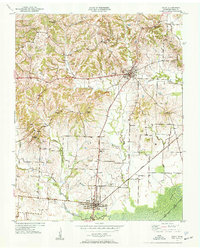 1950 Obion1950 Print · USGSObion County at the midpoint of the century shows a landscape transitioning between traditional river life and modern infrastructure. Genealogists can locate family-named sites such as Beard Cem, Rose Hill Cem, and the community around Englewood Ch.2 unique versions available
 - 1950 Map of Rives, 1970 Print
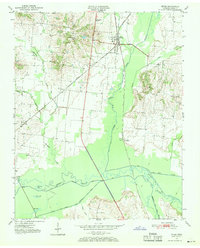 1950 Rives1970 Print · USGSRives and the surrounding Obion County bottomlands are captured here during the mid-century as the region's rail-and-river economy flourished. Genealogists and historians can trace family-named sites like McCutchen Heights, Pleasant Hill Ch, and the intersection of two major railroads at Rives.2 unique versions available
 - 1951 Map of Obion
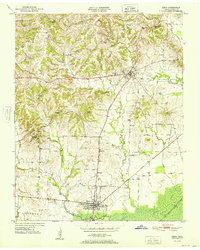 1951 Obion1951 Print · USGSObion County's river-bottoms and upland farms are captured here in the early fifties as the local rail-and-road network matured. Researchers can trace rural lineages through numerous family-named landmarks like Beard Cem, Simpson Cem, and the church at Ebenezer Ch.
 - 1951 Map of Rives
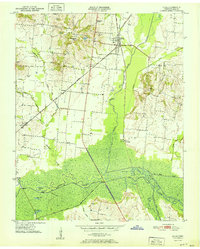 1951 Rives1951 Print · USGSObion County at the start of the 1950s shows a landscape of rail junctions and reclaimed river bottomlands. Researchers can locate family-named settlements like Moffatt and Polk or trace the early church and cemetery locations at Pleasant Hill Ch and Sardis Cem.
 - 1951 Map of Cayce, 1952 Print
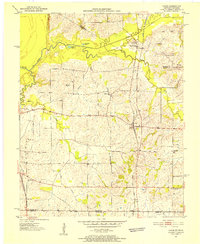 1951 Cayce1952 Print · USGSThe Kentucky-Tennessee borderlands appear here in the early postwar era as a landscape of rural churches and rail crossings. Genealogists and historians can trace family locations near Cayce, Alexander Cem, and the tracks of the Gulf Mobile and Ohio.2 unique versions available
 - 1951 Map of Bondurant, 1952 Print
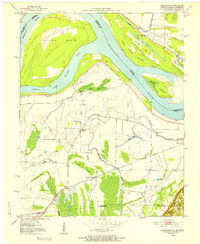 1951 Bondurant1952 Print · USGSThe Kentucky-Tennessee borderlands and the Mississippi River bottoms are captured here during the early fifties. Genealogists and historians can trace the Illinois Central rail line through rural hubs like Bondurant, Sassafras Ridge, and Tyler.
 - 1951 Map of Hickman, 1953 Print
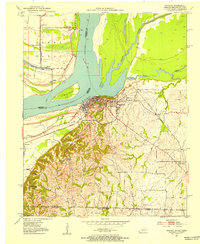 1951 Hickman1953 Print · USGSThe river bluffs at Hickman overlook a complex tri-state landscape during the early 1950s. Genealogists and local historians can trace the foundations of rural Kentucky and Missouri life through landmarks like Dorena Sch, Poplar Grove Ch, and the Illinois Central railroad lines.
 - 1952 Map of Lane, 1953 Print
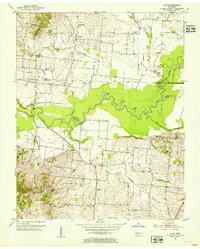 1952 Lane1953 Print · USGSDyer and Obion counties meet along the winding river flats of West Tennessee in the early fifties. Genealogists and historians can trace established rural communities and landmarks like Sharps Ferry, Cloverdale School, and Emmaus Church.2 unique versions available
 - 1952 Map of Crutchfield, 1953 Print
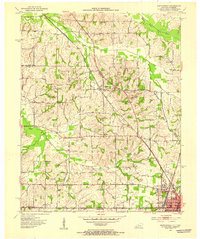 1952 Crutchfield1953 Print · USGSWestern Kentucky and the Tennessee borderlands are captured here in the early fifties during a period of steady rural growth. Researchers can trace local lineage through numerous landmarks like Huddleston Cem, Ledbetter Sch, and the Carr Institute in South Fulton.
 - 1952 Map of Miston, 1953 Print
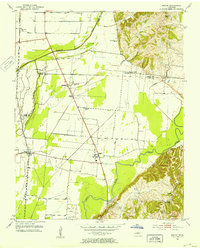 1952 Miston1953 Print · USGSDyer and Lake counties in the early fifties were defined by the winding Obion River and the small hamlets along the Illinois Central tracks. Genealogists can trace family roots through several local landmarks like Horn Ridge Cem, Cunningham Sch, and Bogota.2 unique versions available
 - 1952 Map of Water Valley, 1953 Print
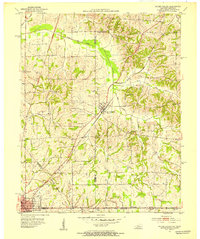 1952 Water Valley1953 Print · USGSIn the early 1950s, the border between Kentucky and Tennessee was a landscape of rail-driven towns and winding bayous. Genealogists and historians can trace family roots through landmarks like Camp Beauregard Cem, the settlement of Feliciana, and the Illinois Central rail line.
 - 1952 Map of Water Valley, 1957 Print
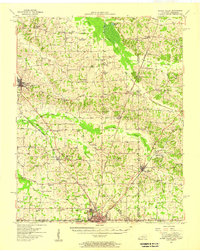 1952 Water Valley1957 Print · USGSWestern Kentucky and northern Tennessee are captured here in the early fifties as the Illinois Central railroad linked farming hubs and small towns. Genealogists can trace family names through dozens of landmarks like Camp Beauregard Cem, McWhort Cem, and Shiloh Sch Ch.
 - 1954 Map of Rutherford, 1955 Print
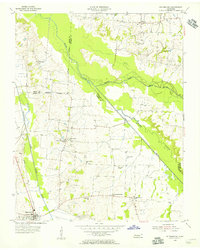 1954 Rutherford1955 Print · USGSGibson County in the mid-1950s is a landscape of river forks and rural rail lines. Trace family history through local landmarks like China Grove Sch, Walnut Grove Ch, and the Gulf Mobile and Ohio railroad through Rutherford.3 unique versions available
 - 1954 Map of Union City, 1955 Print
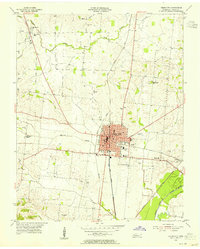 1954 Union City1955 Print · USGSMid-century Obion County comes alive in this survey of Union City and its surrounding rail corridors. Researchers can trace the heritage of local families through landmarks like East View Cemetery, McDowell Chapel, and Woodland Mills.2 unique versions available
 - 1954 Map of Hickman, 1966 Print
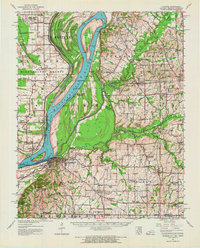 1954 Hickman1966 Print · USGSThe tristate river country of Kentucky, Missouri, and Tennessee is captured here during the mid-century era of river control and rural rail. Genealogists can trace family landmarks like Sylvan Shade Sch, Dorena, and the river landings at Williams Ldg.
 - 1955 Map of Hickman
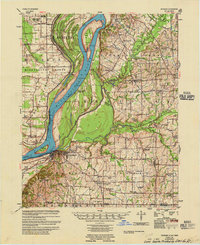 1955 Hickman1955 Print · USGSMid-century life along the Mississippi River meanders is captured here during a period of heavy river engineering and rural expansion. Genealogists can trace family names and local sites like Sassafras Ridge Cem, Dorena Ch, and the Illinois Central rail line.2 unique versions available
 - 1955 Map of Bayouville
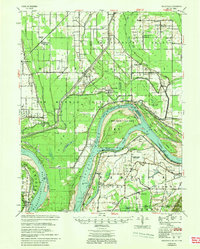 1955 Bayouville1955 Print · USGSThe river bottomlands of the Missouri-Kentucky border are shown in the mid-1950s as a landscape of intensive levee engineering and rural community nodes. Researchers can locate many now-obscure sites like Henderson Mound, Barnes Ridge Ch, and the school at Madrid Bend.
 - 1956 Map of Gardner
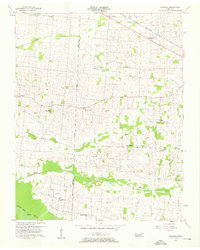 1956 Gardner1956 Print · USGSWeakley and Obion counties are captured here in the mid-fifties, showing a rural Tennessee landscape defined by family farmsteads and the Nashville Chattanooga and St Louis rail line. Researchers can locate numerous family-named landmarks such as Shaddtown Cem, McKinney Cem, and Alamo Ch.3 unique versions available
 - 1956 Map of Reelfoot Lake, 1957 Print
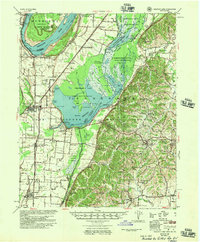 1956 Reelfoot Lake1957 Print · USGSNorthwest Tennessee in the 1950s was a landscape defined by the shifting waters of the Mississippi and the cypress brakes of Reelfoot. Researchers can trace rural lineages through sites like Crocketts Chapel & Cem, Star of Bethlehem Ch, and the defunct rails of the Illinois Central Railroad.
 - 1956 Map of Harris, 1958 Print
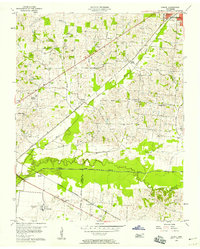 1956 Harris1958 Print · USGSThe borderlands of Obion and Weakley Counties are shown in the mid-fifties, centered on the North Fork Obion River. Researchers can trace old rail lines like the Illinois Central and find family landmarks like Morris Slave Cem and Pierce Station.3 unique versions available
 - 1956 Map of Mc Connell, 1958 Print
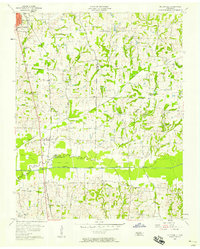 1956 Mc Connell1958 Print · USGSWeakley County at the end of the steam era shows a landscape defined by the Illinois Central railroad and rural community centers. Genealogists can locate family landmarks like Chestnut Glade Sch, McFall Cem, and the church at Ruthville.3 unique versions available
 - 1956 Map of Dyersburg, 1960 Print
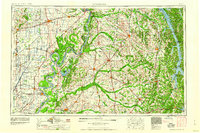 1956 Dyersburg1960 Print · USGSThe Four Rivers region comes alive in the mid-fifties, capturing the intricate borderlands of Tennessee, Kentucky, and Missouri. Genealogists and historians can trace the rail-and-river networks connecting Dyersburg, Caruthersville, and the shoreline of Reelfoot Lake.4 unique versions available
End of results
Showing maps 1-22 of 22
Top cities of Obion County
- Union City historical maps
- South Fulton historical maps
- Troy historical maps
- Obion historical maps
- Hornbeak historical maps
- Rives historical maps
See more
Frequently asked questions
- What are the different types of historical maps available for Obion County?
- What is the oldest map of Obion County?
- Where can I purchase historical maps of Obion County for my home or office?
- Where can I download high-res historical maps of Obion County?
- Are there historical topographic maps available for Obion County?
- Is there historical aerial imagery available for Obion County?
- Where are historical maps of Obion County sourced from?