1950s Maps of Rutherford County, Tennessee
Explore 20 historic maps of Rutherford County from the 1950s. These maps offer a rare glimpse into what life looked like during the 1950s — showing old roads, neighborhoods, homes, and landmarks that have changed or disappeared over time.
Whether you're researching your family's past, planning a metal detecting trip, or studying how Rutherford County's landscape evolved across the 1950s, these high-resolution maps are a powerful tool for exploring the history of this region.
- Focus on a specific era: All maps on this page are from the 1950s, giving you a focused view of this time period.
- See what’s changed: Compare century-old streets, trails, and buildings to today's modern landscape using overlays and satellite layers.
- Research with precision: Use these maps for genealogy, historical research, land use analysis, or educational projects.
- View, download, or print: Maps are fully viewable online in high resolution, and can be downloaded or printed for your own records.
Start exploring Rutherford County's history through authentic maps from the 1950s. This is your window into the past.
Rutherford County, TN maps
(20)- 1950 Map of Walterhill
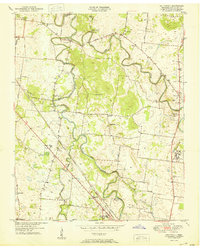 1950 Walterhill1950 Print · USGSMid-century Rutherford County comes to life through the winding forks of the river and the hallowed grounds of the Stones River National Military Park. Researchers can trace the old paths of Old Jefferson or locate family roots near Hickory Grove Ch and Burleson Cem.5 unique versions available
 - 1950 Map of Murfreesboro, 1952 Print
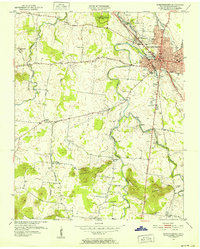 1950 Murfreesboro1952 Print · USGSMurfreesboro and the surrounding Rutherford County countryside are captured here just after the war. Local historians can trace the NASHVILLE CHATTANOOGA AND ST LOUIS RR corridor and locate historic sites like Stones River National Military Park or the Washington Cemetery.5 unique versions available
 - 1951 Map of Rover
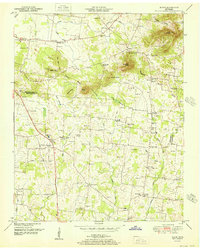 1951 Rover1951 Print · USGSBedford and Rutherford Counties were still largely defined by dispersed farmsteads and family-named ridges in the years following World War II. Genealogists can trace dozens of rural burial sites and landmarks like Puckett Store, Kingdom Ch, and the Woodson Cem.
 - 1951 Map of Chapel Hill
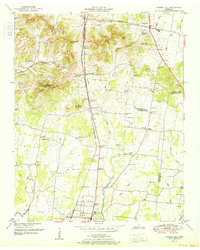 1951 Chapel Hill1951 Print · USGSMid-century Middle Tennessee is captured here as a landscape of family farms and railroad hamlets along the Louisville and Nashville line. Genealogists can trace hundreds of family names through sites like Riggs Crossroads, Edwards Grove Ch, and Marrs Hill Cem.
 - 1951 Map of Webbs Jungle
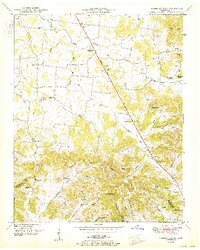 1951 Webbs Jungle1951 Print · USGSRutherford and Bedford Counties are shown here in the early 1950s, centered on the strategic crossing at Hoovers Gap. Family researchers can locate many rural landmarks including Buchanan School, the Millersburg Cem, and New Hope Church.2 unique versions available
 - 1951 Map of Fosterville
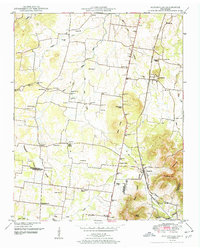 1951 Fosterville1951 Print · USGSIn the early 1950s, this portion of Middle Tennessee remained a landscape of rural schoolhouses and family cemeteries along the railroad. Genealogists and local historians can trace the foundations of Christiana and Fosterville or locate family sites like Alexander Cem and Blankenship Ch.2 unique versions available
 - 1951 Map of Deason
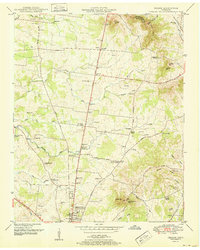 1951 Deason1951 Print · USGSBedford and Rutherford counties are mapped here in the early fifties, showing the rural networks around SHELBYVILLE. Genealogists can trace family names at the McCuistion Cemetery or locate old school sites like McDale Sch and Coops Academy.
 - 1952 Map of La Vergne, 1954 Print
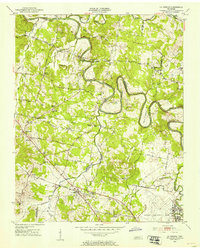 1952 La Vergne1954 Print · USGSThe rural border of Davidson and Rutherford counties is documented here in the early fifties, showing a landscape defined by the winding Stones River. Genealogists and historians can locate numerous small burial sites like Eskridge Cem and the Slave Cem, alongside landmarks such as Sewart Air Force Base.2 unique versions available
 - 1953 Map of Beech Grove, 1958 Print
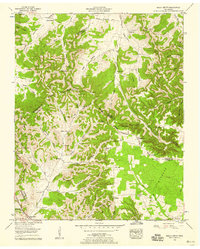 1953 Beech Grove1958 Print · USGSThe Tennessee hills north of Manchester come to life in the early 1950s, showing a landscape of family hollows and ridge-top cemeteries. Genealogists can trace deep roots through sites like Jernigan Hill Church, Gossburg Sch, and Mt Hebron Cem.2 unique versions available
 - 1956 Map of Vine, 1957 Print
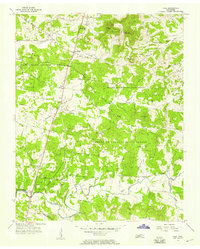 1956 Vine1957 Print · USGSWilson County's cedar glades and crossroad hamlets are preserved here during the mid-fifties. Genealogists and historians can trace family locations near Bairds Mill, Adams Grove Ch, and the winding path of Hurricane Creek.2 unique versions available
 - 1956 Map of Dillton, 1957 Print
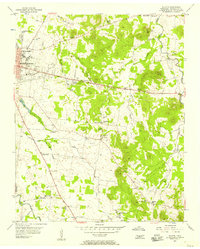 1956 Dillton1957 Print · USGSRutherford County in the mid-fifties shows the expansion of Murfreesboro near Middle Tennessee State College and the surrounding rural hamlets. Local historians can trace old community hubs like Dillton, Mankinville, and Floraton, along with landmarks like Taylors Chapel and Todds Lake.3 unique versions available
 - 1956 Map of Gladeville, 1957 Print
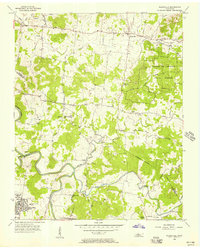 1956 Gladeville1957 Print · USGSMid-century Tennessee is captured here as rural crossroads like Gladeville meet military growth at Stewart Air Force Base. Genealogists can trace family landmarks like Browns Cem and the John Colemon Sch among the timber of the Cedars of Lebanon State Forest.5 unique versions available
 - 1956 Map of Columbia, 1960 Print
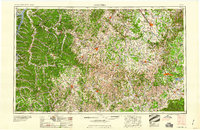 1956 Columbia1960 Print · USGSMiddle Tennessee in the mid-fifties presents a landscape of established river towns and critical rail hubs before the arrival of the modern interstate system. Researchers can trace the routes of the Louisville and Nashville railroad or locate historic landmarks like Stones River National Military Park and the Tennessee National Wildlife Refuge.6 unique versions available
 - 1956 Map of Nashville, 1971 Print
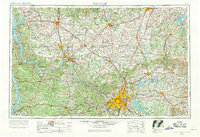 1956 Nashville1971 Print · USGSThe Tennessee-Kentucky borderlands come into focus in the mid-1960s as major reservoir projects transformed the Cumberland and Tennessee river valleys. Researchers can trace the rail networks of the Louisville and Nashville and visit sites like Fort Campbell and Fort Donelson National Military Park.2 unique versions available
 - 1957 Map of College Grove, 1958 Print
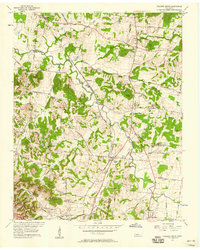 1957 College Grove1958 Print · USGSWilliamson County was a landscape of rail-connected farming hamlets and country churches during the late fifties. You can trace the Louisville and Nashville Railroad through College Grove or locate the historic Newton Cannon Cem and Kirkland Sch.4 unique versions available
 - 1957 Map of Rockvale, 1958 Print
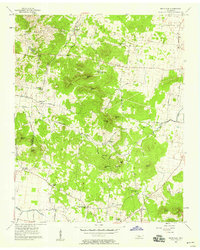 1957 Rockvale1958 Print · USGSRutherford and Williamson counties in the late fifties show a landscape of high knobs and rural crossroads. Genealogists can locate family landmarks like Dyer Cem and Carlton Cem or trace the early paths of Windrow Road and Almaville Road.2 unique versions available
 - 1957 Map of Lascassas, 1958 Print
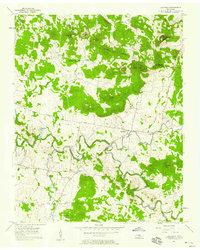 1957 Lascassas1958 Print · USGSRutherford County in the late fifties is captured here as a landscape of river-valley farms and high knobs. Genealogists can trace family roots through numerous sites like Patterson Cem, Walnut Grove Ch, and the community of Lascassas.3 unique versions available
 - 1957 Map of Smyrna, 1958 Print
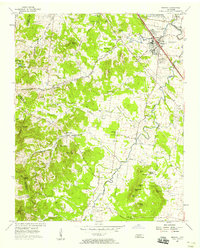 1957 Smyrna1958 Print · USGSSmyrna and northern Rutherford County are captured here in the late fifties as rural life met the expansion of the Sewart Air Force Base. Trace family landmarks like the Sam Davis Home, Rosenwald Sch, and the Mapleview Cem.4 unique versions available
 - 1957 Map of Nolensville, 1958 Print
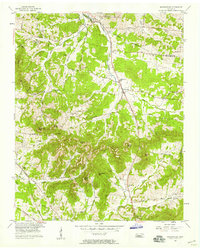 1957 Nolensville1958 Print · USGSMid-century Williamson and Davidson Counties reveal a landscape of family farms and rural churches before modern development. Genealogists can trace ancestral ties through Battle Cem, Pettus Cem, and community centers like Nolensville School.4 unique versions available
 - 1959 Map of Nashville
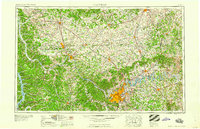 1959 Nashville1959 Print · USGSMiddle Tennessee and Southern Kentucky come into focus during the late fifties, showing the region's transition into a modern transportation and military hub. Researchers can trace the sprawling Fort Campbell Military Reservation or locate historic rail stops along the Tennessee Central Ry and Illinois Central RR.
End of results
Showing maps 1-20 of 20
Top cities of Rutherford County
- Murfreesboro historical maps
- Smyrna historical maps
- La Vergne historical maps
- Eagleville historical maps
Frequently asked questions
- What are the different types of historical maps available for Rutherford County?
- What is the oldest map of Rutherford County?
- Where can I purchase historical maps of Rutherford County for my home or office?
- Where can I download high-res historical maps of Rutherford County?
- Are there historical topographic maps available for Rutherford County?
- Is there historical aerial imagery available for Rutherford County?
- Where are historical maps of Rutherford County sourced from?