1900s (20th Century) Maps of Sequatchie County, Tennessee
Explore 40 historic maps of Sequatchie County from the 1900s (20th Century). These maps offer a rare glimpse into what life looked like during the 1900s — showing old roads, neighborhoods, homes, and landmarks that have changed or disappeared over time.
Whether you're researching your family's past, planning a metal detecting trip, or studying how Sequatchie County's landscape evolved across the 1900s, these high-resolution maps are a powerful tool for exploring the history of this region.
- Focus on a specific era: All maps on this page are from the 1900s, giving you a focused view of this time period.
- See what’s changed: Compare century-old streets, trails, and buildings to today's modern landscape using overlays and satellite layers.
- Research with precision: Use these maps for genealogy, historical research, land use analysis, or educational projects.
- View, download, or print: Maps are fully viewable online in high resolution, and can be downloaded or printed for your own records.
Start exploring Sequatchie County's history through authentic maps from the 1900s. This is your window into the past.
Sequatchie County, TN maps
(40)- 1935 Map of Soddy
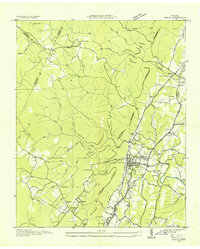 1935 Soddy1935 Print · USGSThe Cumberland Escarpment meets the industrial valley floor north of Chattanooga in the mid-1930s. Researchers can trace family roots at Hotwater Cem or locate the old Rathburn Station along the Southern Railway.
 - 1935 Map of Mount Airy
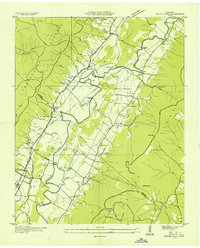 1935 Mount Airy1935 Print · USGSBledsoe County is documented here in the mid-1930s, showing the agricultural valley between the plateau and the ridge. You can trace early family sites like Ewtonville Siding, Walkers Ford, and Sunny Side Sch along the river and rail lines.
 - 1935 Map of Smart Mountain
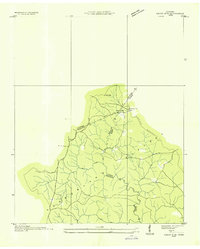 1935 Smart Mountain1935 Print · USGSThe Cumberland Plateau highlands are captured here in the mid-1930s at the junction of Van Buren, Bledsoe, and Sequatchie counties. Local historians can trace the foundations of the community at the Hitchcock Sch and Hitchcock Cem near Smart Mtn.
 - 1936 Map of Palmer
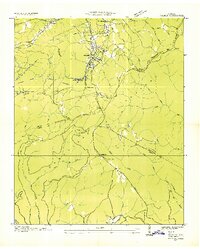 1936 Palmer1936 Print · USGSMid-1930s Grundy County comes alive through this look at the plateau's rail-and-coal industry. Trace the complex narrow gage routes serving the Clifty Mines or locate family roots near Tatesville and Griffith Sch.
 - 1936 Map of Daus
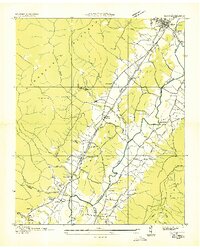 1936 Daus1936 Print · USGSThe Sequatchie Valley was a bustling corridor of rail and river industry in the mid-1930s, caught between the Cumberland Plateau and Walden Ridge. Genealogists and historians can locate old schools and cemeteries like John Henry Chapel Sch, Stone Cem, and the community of Cartwright.
 - 1936 Map of Henson Gap
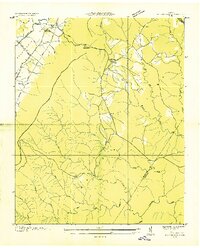 1936 Henson Gap1936 Print · USGSThe Tennessee highlands near Henson Gap are captured in the mid-1930s as the TVA modernization began to reach these rural ridges. Genealogists and local historians can trace family land near Lewis Chapel Sch, Davis Chapel Ch, and the banks of Soddy Creek.
 - 1936 Map of Ketner Gap
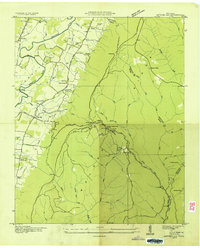 1936 Ketner Gap1936 Print · USGSMarion and Sequatchie counties appear in the mid-1930s as a landscape of isolated coal mines and ridge-top gaps. Genealogists and historians can trace family locations through Grayson Cem, Sulphur Springs Sch, and the industrial sites at Barnes Mine.
 - 1936 Map of Fairmount
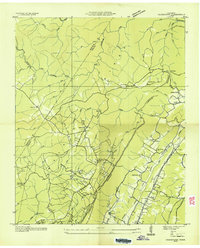 1936 Fairmount1936 Print · USGSThe plateau communities of Walden Ridge are captured here in the mid-1930s as modern infrastructure reached these mountain settlements. Genealogists can trace family footprints through numerous landmarks like Sawyer Cem, Fairmount Sch, and Union Springs Ch.
 - 1936 Map of Savage Point
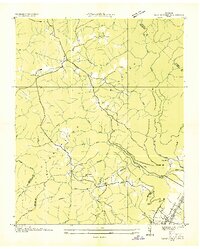 1936 Savage Point1936 Print · USGSThe high Cumberland Plateau meets the Sequatchie Valley during the mid-1930s, showing the early reach of regional power lines. Researchers can find family burial sites like Mc Laughlin Cem, the local Fredona Sch, and Travis Mill on the creek.
 - 1943 Map of Ketner Gap, 1960 Print
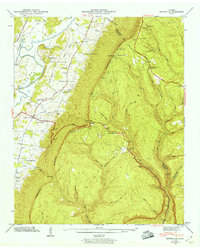 1943 Ketner Gap1960 Print · USGSMarion and Sequatchie Counties are shown here during the early 1940s as the river valley and plateau transitioned into the modern era. Family historians can locate several local landmarks, from Kelley Chapel and Powells Crossroads to the Suck Creek Sch and Pickett Cem.5 unique versions available
 - 1945 Map of Fairmount, 1957 Print
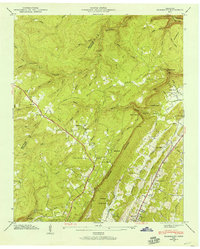 1945 Fairmount1957 Print · USGSThe Cumberland Plateau meets the valley floor north of Chattanooga in the mid-1940s. Local researchers can trace family landmarks along Sawyer Road and locate rural hubs like Lone Oak, Summertown, and the Nathan L Bachman Sch.
 - 1946 Map of Savage Point
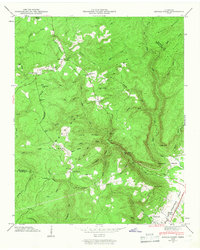 1946 Savage Point1946 Print · USGSThe town of Dunlap and the surrounding heights of the Cumberland Plateau are captured here in the mid-1940s. Genealogists and historians can trace local landmarks like Sequatchie County High Sch, King Cem, and Cagle.4 unique versions available
 - 1946 Map of Henson Gap
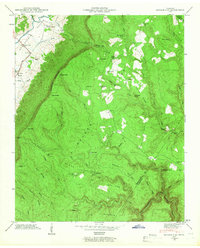 1946 Henson Gap1946 Print · USGSThe Cumberland plateau and Sequatchie valley meet in the mid-1940s at a time of rural reliance on traditional ridge communities. Genealogists and local historians can trace family landmarks like Lewis Chapel, Lewis Cem, and the Alvin C. York Highway.4 unique versions available
 - 1946 Map of Fairmount, 1947 Print
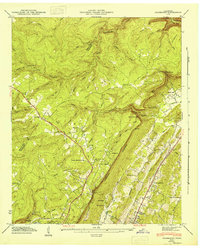 1946 Fairmount1947 Print · USGSHamilton County uplands and the plateau settlements north of Chattanooga are captured here just after the war. Genealogists can locate family landmarks like Vandergriff Cem and Levi Cem or trace rural routes like the William Howard Taft Highway.
 - 1946 Map of Ketner Gap, 1947 Print
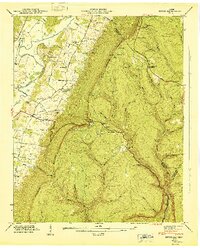 1946 Ketner Gap1947 Print · USGSThe Tennessee mountains meet the valley floor in the 1940s as rural life centers around family-named gaps and hollows. Researchers can locate ancestral homesteads near Pickett Cem, Hicks Chapel Sch, and the crossroads at Powells Crossroads.
 - 1946 Map of Daus, 1956 Print
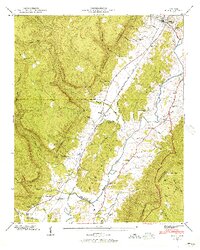 1946 Daus1956 Print · USGSThe Sequatchie Valley is captured just after the war as the mountain and valley economies intertwined. Genealogists and historians can trace family roots through numerous sites like Hatfield Cem, New Hope Ch, and the rail stops at Daus and Dunlap.6 unique versions available
 - 1946 Map of Soddy, 1960 Print
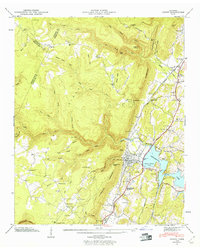 1946 Soddy1960 Print · USGSHamilton County settlement meets the newly formed Chickamauga Lake shoreline in the years following the second World War. Genealogists can trace family roots through the Soddy-Daisy High School and numerous burial grounds like Lovelady Cem and Millsaps Cem.2 unique versions available
 - 1946 Map of Smartt Mountain, 1962 Print
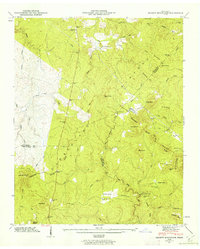 1946 Smartt Mountain1962 Print · USGSHigh atop the Cumberland Plateau in the mid-1940s, this area spans the intersection of three Tennessee counties during a period of remote mountain settlement. Genealogists can locate family landmarks like Jordan Rock House, Bellview Church, and the Hitchcox Cem.4 unique versions available
 - 1946 Map of Mount Airy, 1965 Print
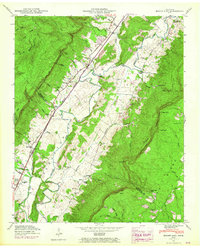 1946 Mount Airy1965 Print · USGSBledsoe County is shown in the mid-1940s, with later revisions capturing the valley's development along the Sequatchie River. Researchers can trace old family sites and rural landmarks like Mount Airy Ch, Collier Cem, and the Brush Creek Siding rail stop.4 unique versions available
 - 1947 Map of Daus
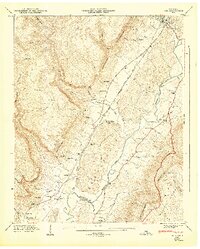 1947 Daus1947 Print · USGSThe Sequatchie Valley floor and the steep Cumberland Escarpment appear here just after the war, at a peak of rail-and-river connectivity. Researchers can trace family history through a dozen rural landmarks like Stone Cem, Cedar Spring Sch, and Daus.
 - 1947 Map of Soddy
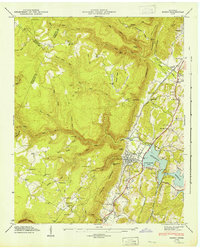 1947 Soddy1947 Print · USGSSoddy and the Tennessee Valley landscape are captured here in the late 1940s as the new reservoir and traditional industry met. Genealogists can trace family roots through the Soddy Cem, Mowbray Sch, and old rail stops like Rathburn Station.
 - 1947 Map of Henson Gap
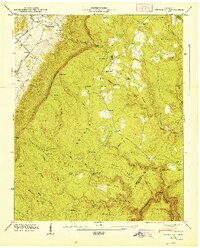 1947 Henson Gap1947 Print · USGSThe Tennessee mountain plateau meets the valley floor just after the war, revealing a landscape of high ridges and isolated homesteads. Genealogists can trace family footprints at Lewis Cem, Davis Chapel, and the community hub at Lewis Chapel Sch.
 - 1947 Map of Smartt Mountain, 1948 Print
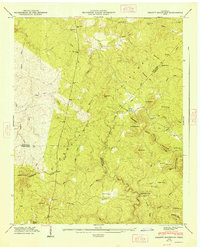 1947 Smartt Mountain1948 Print · USGSThe Cumberland Plateau of Van Buren and Bledsoe Counties is captured here in the mid-1940s, revealing a landscape of ridge-top churches and isolated valley cemeteries. Genealogists can trace family roots at Miller Cem, Bellview Ch, and the landmark Jordan Rock House.
 - 1947 Map of Mount Airy, 1948 Print
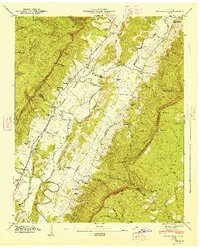 1947 Mount Airy1948 Print · USGSThe Sequatchie Valley was a vital transport and farming corridor in the late 1940s, hemmed in by the massive Cumberland Escarpment. Genealogists and historians can trace community roots at Mount Airy, Ewtonville, and several family burial grounds like Collier Cem and Hughes Cem.
 - 1947 Map of Savage Point, 1948 Print
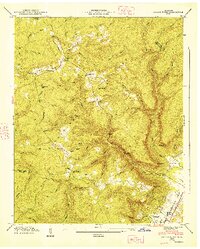 1947 Savage Point1948 Print · USGSThe Sequatchie Valley and Cumberland Plateau meet in this mid-century survey as the town of Dunlap begins its post-war growth. Researchers can trace rural lineages through sites like Lands Chapel, King Cem, and the Sequatchie County High Sch.
Showing maps 1-25 of 40
Top cities of Sequatchie County
Frequently asked questions
- What are the different types of historical maps available for Sequatchie County?
- What is the oldest map of Sequatchie County?
- Where can I purchase historical maps of Sequatchie County for my home or office?
- Where can I download high-res historical maps of Sequatchie County?
- Are there historical topographic maps available for Sequatchie County?
- Is there historical aerial imagery available for Sequatchie County?
- Where are historical maps of Sequatchie County sourced from?