Old Maps of Pigeon Forge, Tennessee for Academic Research
Study the evolution of Pigeon Forge with 27 high-resolution historic maps. Whether you're teaching, researching, or modeling changes in land use, these maps provide essential visual documentation of urban, environmental, and geographic change.
- Analyze long-term change: Track patterns in development, transportation, and natural features.
- Ideal for environmental or urban studies: Support academic projects with primary historical map data.
- Use in the classroom or lab: Educators and researchers rely on these maps to bring historical context to life.
These maps are a powerful tool for teaching, research, and visualizing how Pigeon Forge has changed over the decades.
Pigeon Forge, TN maps
(27)- 1886 Map of Knoxville
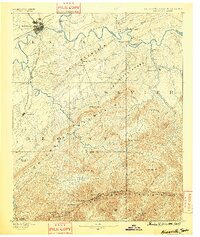 1886 Knoxville1886 Print · USGSEast Tennessee in the late nineteenth century was a landscape of river ferries and mountain coves centered around the growing hub of Knoxville. Genealogists can locate family landmarks like Spencer Cabin, Montvale Springs, and the old Brabsons Ferry river crossing.
 - 1892 Map of Knoxville
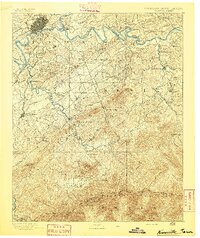 1892 Knoxville1892 Print · USGSEastern Tennessee in the late nineteenth century shows a landscape of river-valley commerce transitioning into the Great Smokies. Genealogists can trace early homesteads near Sevierville or locate landmarks like Porter Academy and Boyd Ferry.
 - 1894 Map of Knoxville
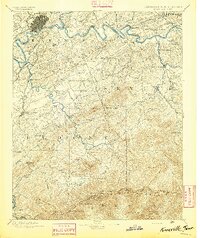 1894 Knoxville1894 Print · USGSThe Tennessee valley meets the high Smokies in the 1890s, revealing a landscape of river ferries, mountain coves, and emerging rail towns. Genealogists and historians can trace early crossings at Boyd Ferry, established schools like Porter Academy, and the early footprints of Gatlinburg and Pigeon Forge.
 - 1895 Map of Knoxville
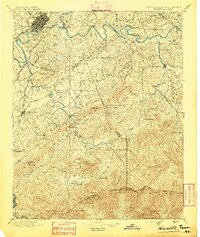 1895 Knoxville1895 Print · USGSThe Tennessee and French Broad Rivers converge in this late-nineteenth-century survey of East Tennessee’s rising landscape. Trace the early rail lines and mountain crossings that shaped life for families in Sevierville, Gatlinburg, and Maryville.2 unique versions available
 - 1901 Map of Knoxville
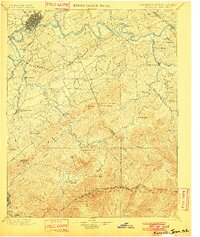 1901 Knoxville1901 Print · USGSThe East Tennessee borderlands meet the high Smokies at the turn of the century. Genealogists can trace early homesteads and crossroads near Sevierville and Maryville, or find landmarks like Cade Cove and Gatlinburg before they became tourist hubs.5 unique versions available
 - 1935 Map of Walden Creek
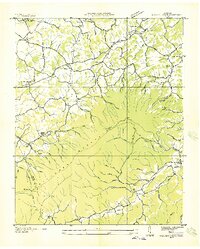 1935 Walden Creek1935 Print · USGSMid-1930s Sevier County comes alive in this survey of the Chilhowee foothills and Walden Creek valley. Genealogists and historians can trace the foundations of local communities through landmarks like the Harrison-Chilhowee Institute, Cusick, and the DuPont Cem.
 - 1935 Map of Sevierville
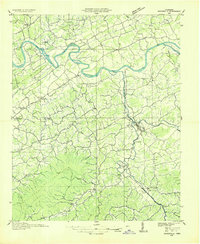 1935 Sevierville1935 Print · USGSSevier County during the mid-1930s is captured here in transition, showing the river-dependent communities along the French Broad River before modern development. Genealogists and historians can trace early school sites like Seven Islands Sch and old river crossings such as Trundle Ferry.
 - 1935 Map of Pigeon Forge
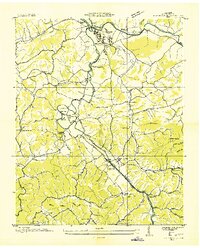 1935 Pigeon Forge1935 Print · USGSSevier County appears in the mid-thirties as a network of river-bottom farms and mountain hollows before the rise of modern tourism. Genealogists can locate family landmarks such as McCooksville, Henderson Springs, and the Williamsburg Sch.
 - 1940 Map of Pigeon Forge
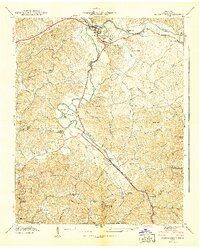 1940 Pigeon Forge1940 Print · USGSSevier County during the pre-war period shows the early development of Pigeon Forge and the established county seat at Sevierville. Genealogists and historians can trace family locations near Mc Mahan Cem, Henderson Springs, and the Williamsburg Sch.
 - 1941 Map of Walden Creek
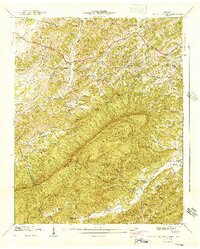 1941 Walden Creek1941 Print · USGSSevier County in the early 1940s is a landscape of mountain ridges and remote valley settlements. Genealogists can locate family landmarks like the Harrison Chilhowee Academy, Dupont Cem, and numerous rural schoolhouses such as Laurel Grove Sch.2 unique versions available
 - 1953 Map of Walden Creek, 1955 Print
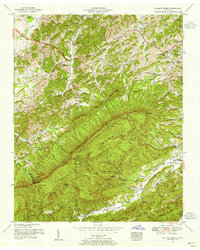 1953 Walden Creek1955 Print · USGSSevier County in the early fifties shows a landscape of deep hollows and high ridges before the era of modern development. Genealogists can trace family roots through numerous mountain churches and schools like Antioch Church, Benson School, and Ivy Hill Cemetery.4 unique versions available
 - 1955 Map of Knoxville
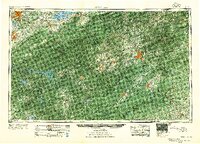 1955 Knoxville1955 Print · USGSThe Southern Appalachians and the Smoky Mountains are shown here at a peak of mid-century development and conservation. Genealogists and historians can trace the early road networks connecting Gatlinburg, Waynesville, and the Cherokee Indian Reservation across the high ridges.
 - 1956 Map of Pigeon Forge, 1958 Print
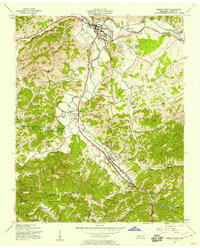 1956 Pigeon Forge1958 Print · USGSSevier County was undergoing a significant shift toward modern tourism during the 1950s. Genealogists and local historians can trace family homesteads near Henderson Springs, locate old burials at Shiloh Mem Cem, or identify vanished landmarks like the Drive-in Theater.3 unique versions available
 - 1957 Map of Knoxville, 1966 Print
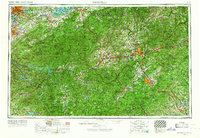 1957 Knoxville1966 Print · USGSThe Southern Appalachians of Tennessee and North Carolina are mapped here during the mid-twentieth century as new highways reached the high country. Genealogists and historians can trace the topography between Knoxville and Asheville, locating family landmarks near Fontana Lake or along the Blue Ridge Parkway.4 unique versions available
 - 1960 Map of Knoxville
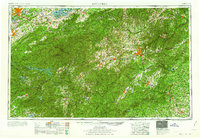 1960 Knoxville1960 Print · USGSThe Southern Appalachians come alive in the 1950s, showing the intersection of new national park tourism and deep-rooted mountain industry. Trace old rail lines like the Clinchfield RR and find high-altitude landmarks from Mt Le Conte to the Cherokee Indian Reservation.2 unique versions available
 - 1964 Map of Knoxville
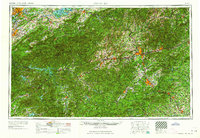 1964 Knoxville1964 Print · USGSThe Southern Appalachians and Great Smokies are captured here during the mid-sixties, showing the rugged borderlands of Tennessee and North Carolina. Researchers can trace historic mountain routes like U S 441, the expanse of Pisgah National Forest, and the growing footprints of Asheville and Knoxville.
 - 1983 Map of Knoxville, 1984 Print
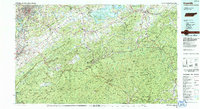 1983 Knoxville1984 Print · USGSThe Tennessee valley and the rising Smokies are captured here in the early eighties, showing the region as the tourism and transit hub of the Southern Appalachians. Researchers can trace the layout of the University of Tennessee or locate rural landmarks like Shady Grove Ch and Pleasant Hill Cem.
 - 2010 Map of Pigeon Forge, 2010 Print
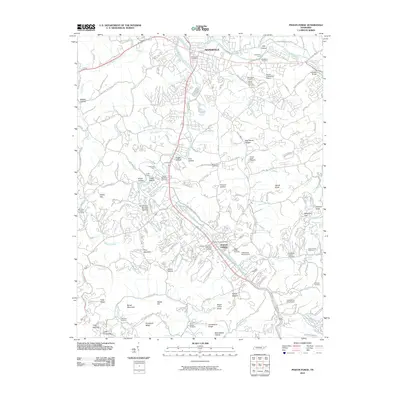 2010 Pigeon Forge2010 Print · USGSSevierville and Pigeon Forge are shown during a period of significant valley growth along the Little Pigeon River. Researchers can trace family sites at Shiloh Memorial Cemetery, find old river crossings like Large Ford, and locate landmarks such as Hodsdon Bridge.
 - 2010 Map of Walden Creek, 2010 Print
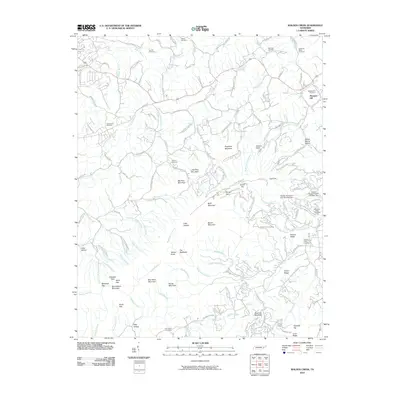 2010 Walden Creek2010 Print · USGSThe foothills near Pigeon Forge are captured here in the early twenty-first century, showcasing a landscape of winding creek hollows and ridges. Researchers can locate numerous historic burial sites like Zion Hill Cemetery and Waldens Creek Cemetery or trace landmarks such as House Mountain.
 - 2013 Map of Pigeon Forge, 2013 Print
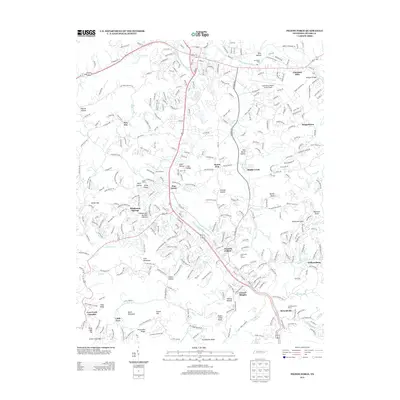 2013 Pigeon Forge2013 Print · USGSPigeon Forge and the surrounding Sevier County foothills are captured here in the early twenty-first century as tourism and residential growth reshaped the valley. Researchers can trace historic family-named locations and community landmarks from Mount Zion and Henderson Springs to Williamsburg.
 - 2013 Map of Walden Creek, 2013 Print
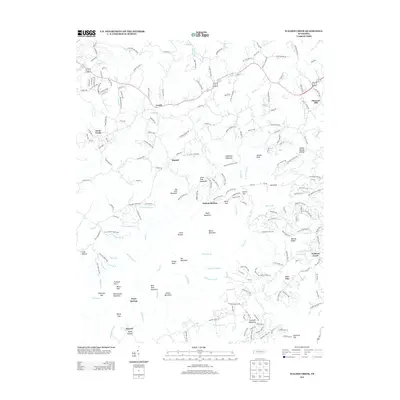 2013 Walden Creek2013 Print · USGSThe Sevier County highlands east of Pigeon Forge are shown here in the early twenty-first century, before recent growth. Genealogists and local historians can trace family-named hollows and mountain gaps like Millstone Gap, Doyle Springs, and Yellow Spring Hollow.
 - 2016 Map of Walden Creek, 2016 Print
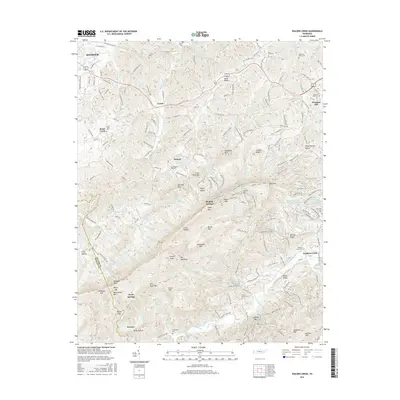 2016 Walden Creek2016 Print · USGSThe foothills of Sevier County come into sharp focus here during the mid-2010s, showing the ridge-and-valley landscape south of Seymour. Genealogists and local historians can locate many rural burial sites including Zion Hill Cem, Ivy Hill Cem, and Chinquapin Cem.
 - 2016 Map of Pigeon Forge, 2016 Print
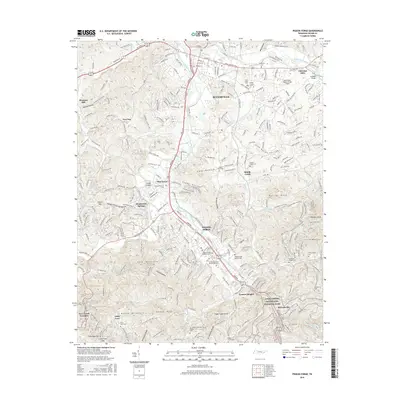 2016 Pigeon Forge2016 Print · USGSSevierville and Pigeon Forge are shown here as the bustling centers of the Smokies gateway just a few years ago. Researchers can locate many family landmarks and burial sites, including Shiloh Memorial Cem, Henderson Springs, and the McMahan Chapel Cem.
 - 2019 Map of Pigeon Forge, 2019 Print
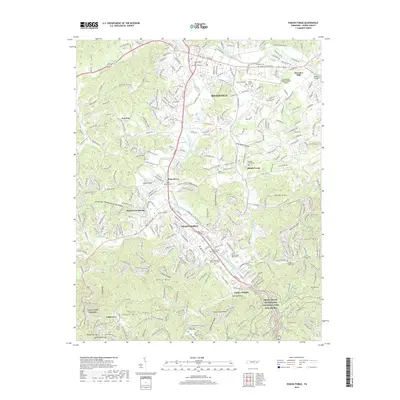 2019 Pigeon Forge2019 Print · USGSSevier County and the foothills of the Smokies appear in high detail during this era of modern expansion. Researchers can trace numerous local burial sites and landmarks, from Shiloh Memorial Cem to the Gatlinburg-Pigeon Forge Airport.
 - 2019 Map of Walden Creek, 2019 Print
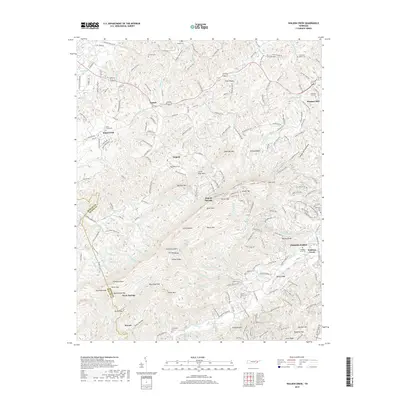 2019 Walden Creek2019 Print · USGSThe outskirts of Pigeon Forge meet the rising ridges of Sevier County in this modern survey. Genealogists and local historians can trace family locations through numerous named burial sites like Zion Hill Cem and settlements such as Dupont and Cusick.
Showing maps 1-25 of 27
Top cities near Pigeon Forge
- Knoxville historical maps
- Sevierville historical maps
- Gatlinburg historical maps
- Dandridge historical maps
- Pittman Center historical maps
- Townsend historical maps
Top neighborhoods of Pigeon Forge
- Middle Creek historical maps
- Mount Zion historical maps
- Henderson Springs historical maps
- Pine Grove historical maps
- Waldens Creek historical maps
- Conner Heights historical maps
Frequently asked questions
- What are the different types of historical maps available for Pigeon Forge?
- What is the oldest map of Pigeon Forge?
- Where can I purchase historical maps of Pigeon Forge for my home or office?
- Where can I download high-res historical maps of Pigeon Forge?
- Are there historical topographic maps available for Pigeon Forge?
- Is there historical aerial imagery available for Pigeon Forge?
- Where are historical maps of Pigeon Forge sourced from?