1940s Maps of Williamson County, Tennessee
Explore 12 historic maps of Williamson County from the 1940s. These maps offer a rare glimpse into what life looked like during the 1940s — showing old roads, neighborhoods, homes, and landmarks that have changed or disappeared over time.
Whether you're researching your family's past, planning a metal detecting trip, or studying how Williamson County's landscape evolved across the 1940s, these high-resolution maps are a powerful tool for exploring the history of this region.
- Focus on a specific era: All maps on this page are from the 1940s, giving you a focused view of this time period.
- See what’s changed: Compare century-old streets, trails, and buildings to today's modern landscape using overlays and satellite layers.
- Research with precision: Use these maps for genealogy, historical research, land use analysis, or educational projects.
- View, download, or print: Maps are fully viewable online in high resolution, and can be downloaded or printed for your own records.
Start exploring Williamson County's history through authentic maps from the 1940s. This is your window into the past.
Williamson County, TN maps
(12)- 1941 Map of Carters Creek
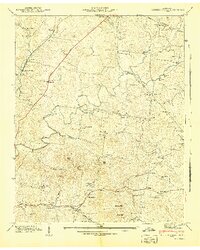 1941 Carters Creek1941 Print · USGSCentral Tennessee at the start of the 1940s reveals a landscape of rural schoolhouses and family cemeteries along the Andrew Jackson Highway. Trace early mineral industry at the Phosphate Mine or locate ancestral sites like Old Brick Ch and Buford Cem.2 unique versions available
 - 1942 Map of Lebanon, 1944 Print
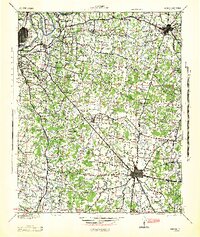 1942 Lebanon1944 Print · USGSMiddle Tennessee at the start of the war years reveals a landscape of historic homesteads and burgeoning military infrastructure. Genealogists and historians can trace family locations near The Hermitage, follow the Tennessee Central rail lines, or locate the newly established Smyrna Air Base.
 - 1944 Map of Shelbyville
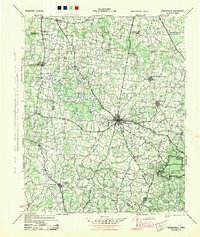 1944 Shelbyville1944 Print · USGSMid-century Middle Tennessee is captured here during the wartime mobilization of the 1940s. Genealogists and researchers can trace family lands near Bugscuffle, Shelbyville Mills, and the expansive Camp Forrest Military Res.
 - 1946 Map of Leipers Fork, 1966 Print
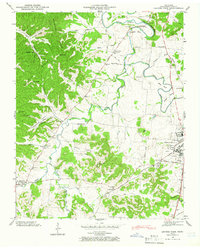 1946 Leipers Fork1966 Print · USGSPost-war Williamson County comes into focus in this mid-century survey of the river valleys and ridges west of Franklin. Genealogists can locate family-named sites like Smith Cem and Perkins Cem or trace the rural crossroads of Leipers Fork and Southall.2 unique versions available
 - 1946 Map of Bethesda, 1974 Print
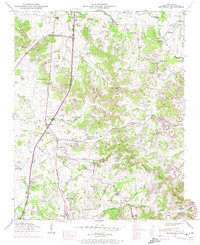 1946 Bethesda1974 Print · USGSWilliamson County's rural heartland is captured here in the mid-1940s, showing a landscape defined by the Tennessee River Valley Divide. Researchers can trace dozens of family burial sites like Hardeman Cem and old schoolhouses including Westwood Sch.
 - 1946 Map of Spring Hill, 1975 Print
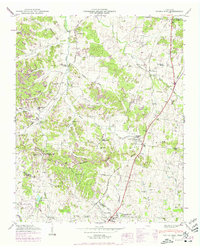 1946 Spring Hill1975 Print · USGSMid-century Middle Tennessee comes into focus as the Louisville and Nashville railroad tracks cut through the hills of Maury and Williamson Counties. Genealogists and historians can trace family plots like Harrison Cem and Patton Cem alongside landmarks such as Thompsons Station and the Mt Laverne School.3 unique versions available
 - 1947 Map of Rally Hill, 1948 Print
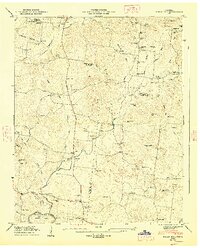 1947 Rally Hill1948 Print · USGSMid-century Middle Tennessee comes to life in this survey of the Maury and Williamson county line. Genealogists can trace family roots through dozens of sites like Derryberry Cem or visit vanished crossroads like Rally Hill and Lunns Store.4 unique versions available
 - 1949 Map of Leipers Fork
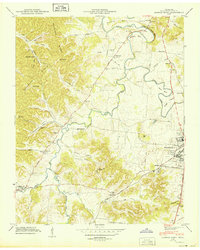 1949 Leipers Fork1949 Print · USGSWilliamson County in the late 1940s reveals a landscape of tight-knit valley communities and historic river crossings. Genealogists and researchers can locate family sites like Hogeye Ch, Hillsboro Sch, and the Smith Cem along the Harpeth River.
 - 1949 Map of Franklin
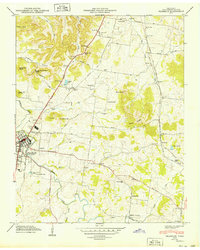 1949 Franklin1949 Print · USGSMid-century Williamson County centers on the thriving town of Franklin and the winding Harpeth River valley before the era of modern subdivision. Genealogists can trace family heritage through dozens of sites like Confederate Cem, Mallory Sch, and the Rest Haven Cem.3 unique versions available
 - 1949 Map of Bethesda
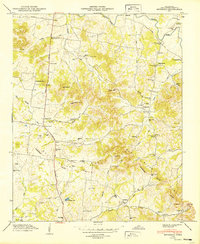 1949 Bethesda1949 Print · USGSSouthern Williamson County appears here in the late 1940s, showing a landscape defined by the Tennessee Duck River Valley Divide. Genealogists can trace family roots through dozens of local sites like Sprott Cem, Bethesda Sch, and the community of Peytonsville.3 unique versions available
 - 1949 Map of Spring Hill
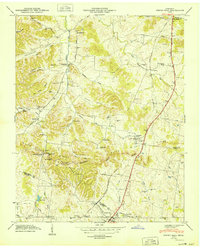 1949 Spring Hill1949 Print · USGSSpring Hill and Thompsons Station are shown here in the late 1940s as central hubs for the local rail and road networks. Genealogists can trace family-named sites such as Harrison Cem, West Harpeth School, and McCormack Crossing along the old pike.
 - 1949 Map of Chapel Hill, 1966 Print
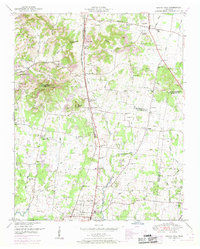 1949 Chapel Hill1966 Print · USGSMid-century Middle Tennessee comes to life here as the rail-and-road network connects rural Marshall and Rutherford counties. Genealogists can trace family landmarks across dozens of sites like Riggs Chapel, Holtland (PO), and the Marrs Hill Cem.2 unique versions available
End of results
Showing maps 1-12 of 12
Top cities of Williamson County
- Franklin historical maps
- Brentwood historical maps
- Nolensville historical maps
- Fairview historical maps
- Thompson's Station historical maps
Frequently asked questions
- What are the different types of historical maps available for Williamson County?
- What is the oldest map of Williamson County?
- Where can I purchase historical maps of Williamson County for my home or office?
- Where can I download high-res historical maps of Williamson County?
- Are there historical topographic maps available for Williamson County?
- Is there historical aerial imagery available for Williamson County?
- Where are historical maps of Williamson County sourced from?